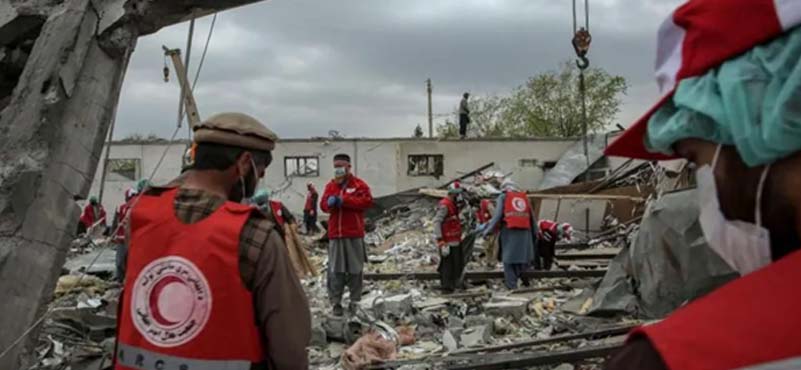
India’s western neighbour – the terror driven, ever turbulent Pakistan appears to be, once again in the throes of grave political instability spreading across all its provinces and currently very seriously, in the Pak occupied Jammu and Kashmir (POJK) region. Since many years, Pakistan continues to confront multiple political, economic, social and security challenges to its well-being. Is Pakistan a failed or failing state or as the renowned American strategic analyst, the late Stephen Cohen, had opined, some years back, that Pakistan is a flailing state!
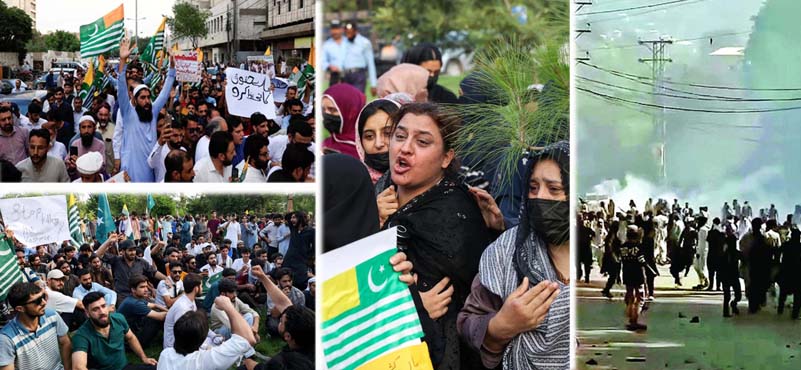
Though POJK has been politically restive since decades owing to Islamabad’s unfair and partisan policies towards this annexed territory, currently the situation has assumed violent proportions. Today, severe civil unrest, harsh military crackdowns and near boycott of currently held elections has taken place in POJK. Legislative assembly elections have been conducted under unprecedented military deployment with thousands of troops deployed across the region. These elections have been held after months of protests led by the Joint Awami Action Committee (JAAC) over fundamental rights, political autonomy, painful inflation and high electricity bills have erupted into deadly clashes leaving over a hundred fatalities. Protestors are demanding fundamental human rights, better governance reforms and subsidised basic utilities for their sustenance. However, locals are facing severe crackdowns and internet shutdowns.
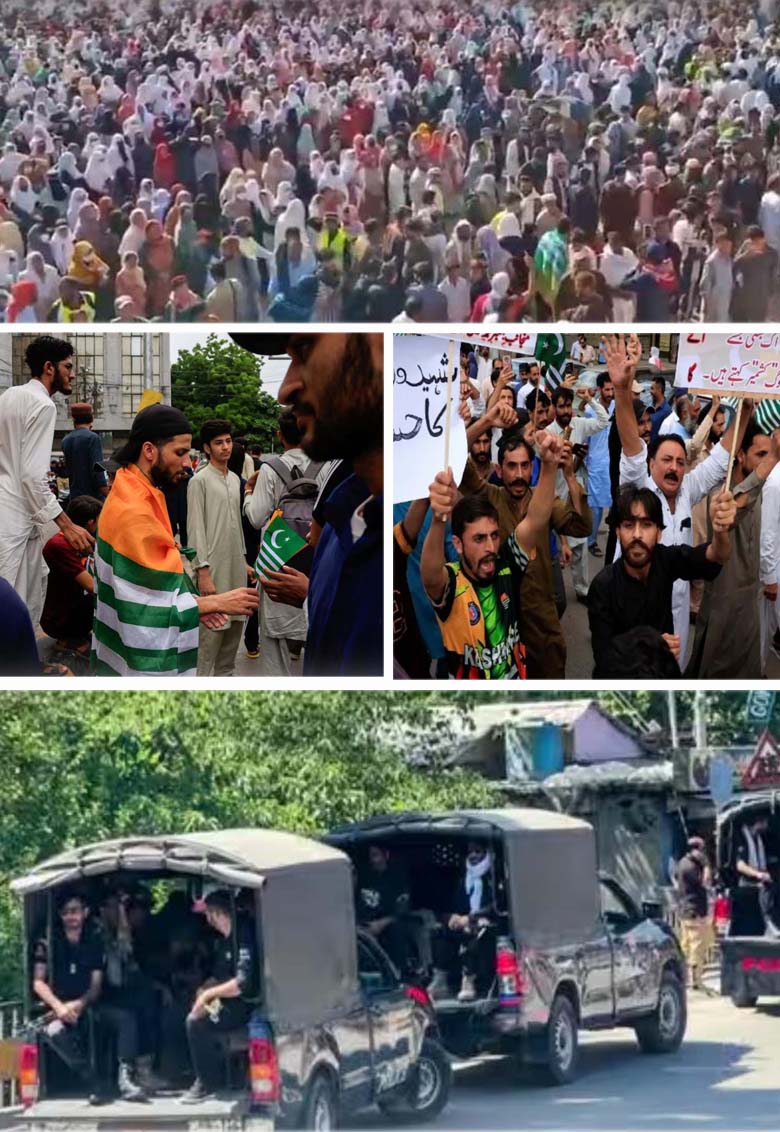
Pakistani security forces are facing severe international outrage for using live ammunition resulting in many deaths of civil protestors in areas like Mirpur and Rawalakot in POJK. Even Amnesty International and other global human rights watchers have asked for independent investigations into the alleged use of excessive force. JAAC and many local groups have shunned the polls protesting against a large number of reserved seats for outside refugees in the assembly that the locals allege allows Islamabad to keep a stern hold on local governance. Further, elections rigging by Islamabad in POJK is a common grievance blamed by locals. The discontent in POJK from the Pakistani establishment is likely to deteriorate further with locals, as many analysts surmise, seeking independence from Pakistan. No wonder that a few days back, the Pakistani Defence Minister Khwaja Asif provocatively equated anti-Pak protestors in POJK with India labelling both as “enemies of Pakistan” and ruling out any dialogue with them. India too has criticised the Pakistani government of brutality and oppression in POJK.
Pakistani human rights violations in this region have not been given their due admonishment by the western media. Meanwhile, former J&K Chief Minister Farooq Abdullah has asked the Centre that if it is of the opinion that POJK is part of India why is it not speaking forcefully regards Pakistani govt’s atrocities in that region. He has also appealed to the international community to pay heed to the misery of the Kashmiris in POJK. Also. former J&K Chief Minister Mehbooba Mufti has spoken criticising Pak Army’s brutal action against local Kashmiris as 30 civilians have died in the last couple of days in Army’s firing.
Pakistan’s major internal security crisis, since decades, is the widespread insurgency in its largest yet vastly impoverished province, Balochistan. Since the treacherous annexation by Pakistan after its founder Mohd Ali Jinnah tricked the Khan of Kalat to accede to Pakistan in March 1948, Balochistan has been in ferment, off and on since then, a low intensity yet inordinately prolonged insurgency continues in POJK. However, with Punjab dominated Pakistan, skimming the province’s rich mineral reserves and ploughing back only meagre amounts into Balochistan, the province has risen in revolt against Islamabad in a telling manner. It will be pertinent to mention that some Baloch rebels also reside in neighbouring Iran’s Sistan and Balochistan provinces. The Balochistan Liberation Army (BLA), Balochistan Liberation Front and the Baloch Republican Guards are at forefront of the Baloch struggle. As the Chinese Pakistan Economic Corridor (CPEC) which is the ambitious flagship China’s Belt and Road Initiative (BRI) is of vital strategic importance as it avoids the Malacca Straits, China is and will continue to pump in more money and resources into the CPEC. Pakistan thus will continue to be financially bailed out by China. However, the Baloch rebels have also been violently attacking Chinese engineers, doctors and labour in the region to discourage them from being part of the CPEC. Nearly 31 Chinese technical personnel have been killed in the last 3 years or so by the Baloch rebels. China, meanwhile, has earmarked $60 billion for the CPEC and Pakistan will go out in full force to squash the recent insurgency campaign. They have been picking up Baloch youngsters under their “Kill and Dump policy “which has further aggravated local Baloch citizens. Baloch rebels too have been attacking successfully Pak Army installations.
Another faultline for Pakistan which has distinctly emerged in the last few years has been the rise of the Tehreek-e-Taliban Pakistan (TTP) which is a predominantly Pathan cum Sunni outfit owing allegiance to Deobandi fundamentalism. Known also as Pakistani Taliban, it maintains close relations with the Afghan Taliban and is active in Pakistan’s Khyber Pakhtunkhwa province, Northern Balochistan and Southern Sindh regions. It has been active targeting Pakistani Security Forces posts, govt assets and is renowned for carrying out suicide bombings especially in Shia mosques and non-Sunni targets. The TTP has, however, been designated as a terrorist organisation by the UN and US. Pakistani officials have repeatedly accused Kabul for providing safe havens to various anti-Pak militant groups, a charge which Kabul denies.
A major reason, since years, for Pakistan’s implosion is its alarmingly precarious financial state. Pakistan’s total debt, in early 2026 was a whooping US $138 bn and by end March 2026 its external debt had climbed to over US $92 bn—half of it to China which continually bails it out as does Saudi Arabia for various services rendered to it by Pakistan! The US too assists Pakistan in obtaining soft loans from the IMF to survive. However, Pakistan’s escalating adverse financial health remains a major cause of its increasing political instability. The fact also remains that owing to the ongoing US-Israel War with Iran, Pakistan has also gained marginally in its foreign relationships with the US, Iran and Saudi Arabia. That discreetly it would be sharing information with its generous mentor, China, is well on the cards.
It is but natural that whatever happens in neighbouring Pakistan also may impact India. As, unfortunately, there appears to be no way forward with Pakistan owing to its consistent terror pursuing policies and an unnecessary rabid anti-India orientation, India has to remain more than alert regards Pakistan especially bearing in mind the adverse collusive relationship between China and Pakistan directed against it. Thus, our overall security preparedness, primarily based on own security and technological sovereignty embellished with self-reliance in arms and equipment, and with us harmonizing our relations with our neighbours has to be further improved for peace and progress in the region. The foreseeable future appears to throw up myriad serious challenges for India. And thus by sincerely adopting an all-nation approach and shunning petty and electoral considerations, India’s political leadership and the Opposition must synergise for the nation’s growth and well-being.
ABOUT THE AUTHOR
 Lt Gen Kamal Davar is a veteran of the 1965 and 1971 wars and was wounded in action in the 1965 ops. In his 41 years of distinguished service has served in NEFA, Nagaland,Assam, Punjab and J&K. Was a member of the Indian Training Team in Iraq. Commanded the entire Ladakh sector, was Chief of Staff in Nagrota ( J&K) and later commanded the Corps in Punjab. After a short stint as DG Mech Forces was selected by the Government to raise India’s Defence Intelligence Agency. Is a prolific writer and a sought after speaker on strategic matters.