

Loving what you do is a necessary spark, but it is only the opening scene. Great work demands something far fiercer: a consuming commitment that converts enthusiasm into sustained, measurable action. Half measures and polite interest will not move systems, markets, or fields- “Faint heart never won a fair lady”, as the old saying goes. Exceptional achievement requires “junoon” — an almost untrammelled obsession that turns curiosity into mastery, setbacks into calibrations, and daily routines into rituals of improvement “rite de passage”, so to speak.
Pure passion is just wishful thinking; it feels like momentum, but it goes nowhere without follow-through. On the flip side, commitment without passion is a hollow grind—just going through the motions after the meaning is gone. But when you lock them together, they become a real powerhouse: focused, resilient, and always moving forward.
Why Intensity Matters?
 The observable gap between competent performers and world-changing achievers is rarely explained by innate talent alone. Psychological and economic research shows that the primary drivers of high performance are deliberate practice, goal-directed persistence, and sustained attention. Insights from neuroscience and behavioural economics confirm that sheer effort is necessary but not sufficient for high performance. Instead, as Anders Ericsson’s research on deliberate practice demonstrates, true skill development requires specific, targeted repetition paired with continuous feedback to unlock exponential growth. Real breakthroughs require sustained motivation and sharp focus—the ability to focus our limited mental energy towards high-impact tasks
The progress of industries and economies follows a similar logic. Technological leaps and productivity surges stem not from occasional brilliance but from concentrated, long-duration investments by individuals and firms. The Industrial Revolution, the green-energy transition, and the information-age boom all required people and institutions that refused to stop refining their methods until problems yielded. It needs no clairvoyance to perceive that when commitment is intense and sustained, the power of compounding (familiar to those working in the financial and banking sector) turns small, consistent advantages accumulated over years into breakthroughs that outsiders often christen “genius”.

Historical and Modern Exemplars
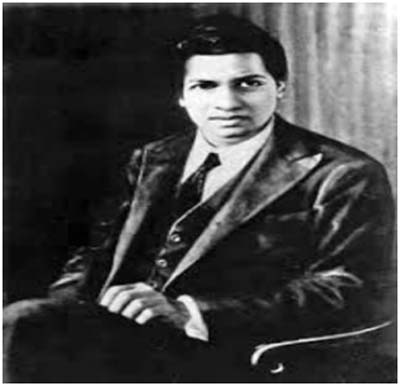
History’s transformative figures illustrate what junoon looks like in practice. Srinivasa Ramanujan’s notebooks brimmed with raw insight because he lived inside mathematical problems for years, cultivating intuition that defied standard training. Marie Curie tolerated scientific isolation and grave health risks to isolate radium and demonstrate radioactivity as a new domain.
Nikola Tesla pursued electrical inventions with such single-minded intensity that financial collapse and social marginalisation could not silence his experiments. In every instance, exceptional results came from a quiet, stubborn grit: putting in the hours, testing relentlessly, and playing the long game.
Great things happen to those who don’t stop believing, trying, learning, and course-correcting, as and when necessary. This point of view is neither new nor unparalleled. A swan looks like swimming smoothly on water, but within the water, there is restless paddling. Nothing is worth it without struggle. Such people do not think out of the box; they think like there is no box. A couplet on work obsession captured this thought succinctly,
“मेरा जुनून ही मेरी पहचान बन गया,
हर रोज़ का संघर्ष मेरी उड़ान बन गया।”
Translation: My passion became my identity;
Every day’s struggle became my flight.

Modern-day cases teach the same lesson. Elon Musk’s work ethic and mission-driven iteration at SpaceX and Tesla illustrate how sustained, high-velocity effort can reconfigure entire sectors; the firms’ progress hinged less on isolated breakthroughs than on unrelenting cycles of build-test-learn. In software, the rise of platforms such as Google and Amazon was propelled by teams committed to continuous improvement, data-driven iteration, and prioritised focus on a small set of high-impact problems. These cases show that intense passion, when channelled strategically, operates as an engine for large-scale change, thereby substantiating Napoleon Hill’s thesis, “Patience, persistence and perspiration make an unbeatable combination for success”.
As I have repeatedly argued in over a dozen papers over the years, the pressure to grow and diversify is relentless. Navigating market volatility requires a growth strategy anchored in continuous innovation and business process re-engineering (BPR). The necessity of this radical disruption is mirrored historically in the transformative work of figures like Albert Einstein, Nikola Tesla, and Srinivasa Ramanujan. These people believe that success is not permanent, failure is not final. These people are successful on the outside but feel disconnected on the inside, caught in the cacophony of this world and sensing there’s something more. In some ways, these people could possibly be misfits in generally accepted social norms, mores and order, and their deviant behaviour may make them psychological and sociological case studies.

Junoon as a disciplined mindset
True junoon isn’t about drama, glamour, or blind obsession. It is a quiet discipline—the kind that accepts the daily boredom of hard work because it plays the long game. It rejects shortcuts because depth always beats flash. Instead of waiting around for a single flash of inspiration, it focuses on constant, daily refinement. In the end, it’s these small, steady efforts that quietly change everything in a manner which is difficult to visualise initially.
Small improvements compound. But just 1% better each day could lead to roughly thirty-seven times improvement (James Clear’s book Atomic Habits). Math doesn’t matter how small the daily gain feels; over a year, it turns a barely noticeable habit into a completely different thing and thereby alters the rules of the game.
Great leaders anchor themselves to a clear goal but stay entirely flexible in how they get there. This mix of stubborn resolve and agile thinking allows them to treat mistakes as valuable lessons and use criticism as fuel to improve. This strand of thought is well reflected in a classic motivational couplet by Muhammad Iqbal (also known as Allama Iqbal) in his Persian poetic work Asrar-i-Khudi (The Secrets of the Self) (published in 1915),
“ख़ुदी को कर बुलंद इतना कि हर तक़दीर से पहले,
ख़ुदा बंदे से ख़ुद पूछे, बता तेरी रज़ा क्या है।”
English Translation:
Raise your selfhood to such heights that before every destiny is ordained,
God Himself asks you, “Tell Me, what is it that you desire?”
This discipline is built on a set of complementary habits of mind. The first is clarity of focus. Once people identify the few priorities that truly matter, they stop wasting mental energy on repeatedly deciding what deserves their attention. That freed-up attention is then channelled into purposeful work, enabling deeper concentration and far greater progress. Consequently, two people may invest the same number of hours, yet produce vastly different outcomes because one works with focused intent while the other remains distracted.
The second is a certain honesty with failure. Most people flinch from clear feedback because it stings; the ones who improve fastest get used to the sting and use it. A failed attempt, looked at squarely, is just data pointing toward the next adjustment — and that willingness to look is what separates someone who repeats the same mistake for years from someone who stops making it after a few tries.
The third is a longer clock. It’s easy to chase whatever pays off this week. It’s much harder to keep working toward something that won’t show results for years — but that patience is exactly what lets small improvements cumulatively to something that seems externally like a sudden leap.
How Commitment Multiplies Returns
Look at how a modern industry grows, and you’ll find the same pattern underneath it. Engineers who care enough to keep shaving costs down, incremental improvements manifested in the Japanese philosophy of “Kaizen”, eventually make the product cheap enough so that new markets open. Bigger markets draw more talent and more investment, which funds the next round of improvements and the whole thing starts again, a little further than before. Similarly, artists who refine craft over decades develop distinctive voices that change aesthetic standards; policymakers who obsess over policy design produce scalable institutional innovations. Societal progress rarely follows from many trying casually; it comes from a few refusing to stop.
Practical Structure: Converting Passion into Practice
There’s a recognisable path from what one person commits to and what eventually changes at the level of a whole society. It starts small: someone with real passion stops spreading themselves thin and narrows in on the handful of things that matter. That narrowing is what makes deliberate practice possible in the first place, and practice, done long enough, turns into genuine skill. Mastery quietly builds confidence—not the fleeting confidence of optimism, but the enduring assurance that comes from repeated practice and proven competence. That confidence enables people to take calculated risks rather than settle for safe choices. The most consequential breakthroughs rarely result from reckless gambles; they emerge from informed decisions shaped by continuous learning, experimentation, and adaptation. This feedback loop compounds quickly. It takes one person’s expertise and builds it into an organisational strength, eventually driving massive technological and cultural shifts.
Sustaining passion over the long run is not about discovering a single magic formula; it is about building a set of disciplined practices. The first step is choosing a purpose large enough to inspire years of effort, yet specific enough to shape tomorrow’s actions. A vague ambition such as “build better batteries” rarely survives setbacks. A concrete goal such as “reduce the cost of electric propulsion by 80 % within a decade” has a different power: it is precise enough to measure, challenge, and refine, while remaining significant enough to matter even five years from now.
From there, the daily habits need something to answer to. Weekly and quarterly targets, made visible rather than kept in your head, are what keep good intentions from quietly evaporating into busyness – targets should be quantifiable, difficult but not impossible.
Attention must be guarded almost stubbornly — saying no to the shallow commitments that fill a calendar, protecting long stretches of uninterrupted time, and building in small barriers against the pull of a phone or an inbox. None of it works without honest feedback. Deliberate practice, blunt critique from people who know better, and a habit of recording what happens — these make failure cheap enough that you can afford to have it often and learn something each time.
It also helps to keep returning to first principles: understand why something is true before you try to improve on it, then push at the edges once the foundation is solid. Keep the goal constant but remain flexible in how you pursue it. Adapt your strategy whenever evidence demands it and treat obstacles as opportunities to innovate rather than reasons to cling to an outdated plan. Safeguarding your physical and mental well-being through adequate sleep, regular exercise, and meaningful rest, for sustained excellence is impossible without a healthy body and mind.
Organisations flourish when leaders institutionalise junoon by aligning incentives with long-term goals, shielding teams from unnecessary distractions, and rewarding continuous learning and improvement rather than isolated successes. By contrast, institutions that prioritise short-term optics over enduring progress undermine the very conditions needed for deep commitment, innovation, and sustained excellence.
When Intensity Becomes Toxic
Intensity can slip into unhealthy obsession. The “Lakshman Rekha”, i.e., the red line, is crossed when relentless pursuit sacrifices essential human needs, leads to ethical compromise, or becomes a denial of reality. Signs of toxicity include chronic sleep deprivation, social isolation that undermines judgment, and repeated rationalisations of harmful trade-offs.
Avoiding toxic intensity requires clear boundaries and disciplined safeguards. Protecting physical health and personal relationships should remain non-negotiable. Equally important are cultivating diverse perspectives to challenge confirmation bias, embedding strong ethical standards and independent review mechanisms, and measuring success not merely by outcomes, but also by sustainability, integrity, and the human costs incurred along the way.
The Economic Case for Cultivating Junoon
For policymakers and organisations, fostering disciplined, long-term commitment is not simply a matter of value; it is an economic imperative. Economies and firms that invest consistently in long-horizon research and development, safeguard intellectual property, and build a culture of continuous skill development create ecosystems where innovation and productivity compound over time. I have repeatedly argued for about four decades that India’s development experience demonstrates how sustained investment in manufacturing, infrastructure, and human capital can drive transformative gains in productivity
Similarly, policies that strengthen vocational training, provide multi-year research funding, and facilitate long-term financing for strategic projects generate returns that far exceed their initial costs.
At the firm level, explicit investment in employee deep-skilling, protected experimentation budgets, and leadership that models adaptive persistence produces more innovative outcomes than a culture of short-term metrics. Economies that support failure as part of an iterative learning process tend to see higher start-up survival and faster diffusion of technological improvements.
Execution is the Key
The idea can come from anyone- from your peers, friends, relatives, thought leaders from a different part of the world. But it’s the execution which is the key to success. Let me give a simple example. There is an intense passion, a strong drive, a fire in the belly in the youth in some parts of India, particularly Bihar, Orissa, eastern U.P. and Rajasthan, to make it to the Civil Services. All these young people are deluged with advice to work hard, plan their work, and work their plan. But ultimately, the study must be done by the student himself/ herself. Such examples can easily be multiplied from diverse fields. You can have the best coaches in the world, but unless you can perform on the field, such advice is meaningless – the catalogue of Gary Sobers, Sachin Tendulkar, Shane Warne, Pele, Messi, Roger Federer, Rafael Nadal, Novak Djokovic, Serena Williams, etc. is seemingly endless.
On a personal note, my father, Prof. D. D. Sharma, who earned his PhD from Edinburgh University in 1966 and served with distinction as a Professor of English in India and abroad for more than three decades, held a firm view on education. He believed that while schools and colleges play an important role in a student’s development, their influence extends only so far. He would pose a simple yet penetrating question: “Ultimately, who studies—the child or the school?” His point was that learning, perseverance, and intellectual growth depend primarily on the student rather than the institution.
My wife, Archana Choudhary, a distinguished officer of the Indian Revenue Service (IRS), respectfully disagreed. She argued that outstanding schools provide far more than classroom instruction; they create an environment that nurtures the holistic development of young minds. The ethos of an institution, its culture of excellence, the quality of peers and teachers, and the broader ecosystem during a student’s formative years lay the foundation for lifelong learning and achievement. In many ways, she believed, a school is a microcosm of life itself. It inculcates discipline, resilience, curiosity, the determination never to give up, and the habit of striving for excellence—qualities that serve individuals well throughout their lives.
Her concluding argument was both affectionate and difficult to refute. She would remind my father that having studied at Edinburgh University—one of the world’s leading universities for centuries—he himself exemplified the transformative power of a great institution. How, she would ask with a smile, could he then argue that the school matters only to a limited extent?
Both viewpoints have considerable merit. One emphasises the primacy of individual effort; the other underscores the enduring influence of a nurturing educational ecosystem. Together, they illustrate an enduring truth: excellence is shaped by the interplay of personal commitment and institutional support.
A Call to Action
If you aspire to design, lead, invent, or write something that endures, begin with junoon—but give it structure. Passion may ignite ambition, but steadfast commitment transforms it into lasting achievement. Channel your passion into disciplined daily habits, measurable goals, and a willingness to seek honest feedback. Guard your attention as your asset. Anchor your efforts to a purpose ambitious enough to inspire a lifetime of commitment, yet clear enough to shape your actions every single day. Celebrate small, consistent victories, and view setbacks not as defeats but as valuable lessons that sharpen your judgment, strengthen your resolve, and accelerate your growth.
The sky is not the limit for those who love what they do and refuse to do it half-heartedly. It is only a reference point. The true boundary is the degree of commitment you bring — the combination of obsessive clarity and disciplined practice. Aim beyond complacency; burn for the work; then persist until your efforts outlast the noise.
Consider two engineers facing the same messy problem with the same resources.
The first treats it as a low-priority task, testing ideas only when they find a spare moment. Months pass with little to show for it.
The second tackles it with daily discipline. They block out dedicated hours, run continuous micro-tests, log every result, and pivot weekly based on hard data.
After a year, the first engineer has a basic prototype. The second has a scalable system built on a mountain of validated data. What looked like natural talent was simply a disciplined routine that turned hours into real impact.
History rewards those who persevere. Economies advance when individuals and institutions choose depth over distraction, discipline over impulse, and persistence over novelty. Junoon—fierce passion anchored in unwavering commitment—is not merely an inspiring ideal; it is a practical principle for anyone seeking to build, create, or achieve something that endures. As the age-old Sanskrit literature stressed,
“अनारतं तेन पदेषु लम्भिता विभज्य सम्यग्विनियोगसत्क्रियाः।
फलन्त्युपायाः परिबृंहितायतीर् उपेत्य संघर्षमिवार्थसंपदः॥ “
Translation: Success comes by constant effort in the right direction with proper means, like streams converging after struggles to yield fruit.
Verse 15 of Canto 1 of the Sanskrit mahākāvya Kirātārjunīya by Bhāravi, the 6th century
ABOUT THE AUTHOR
 Dr. Manoranjan Sharma is Chief Economist, Infomerics, India. With a brilliant academic record, he has over 250 publications and six books. His views have been cited in the Associated Press, New York; Dow Jones, New York; International Herald Tribune, New York; Wall Street Journal, New York.