The New Battle-space
India’s next Chief of Defence Staff will assume office at a defining moment in global military history. The wars in Ukraine and the Middle East, instability in the Red Sea, expanding Indo-Pacific rivalry, and India’s own operational experiences during Operation SINDOOR have demonstrated that future conflicts will be multi-domain, technology-driven, psychologically contested, and fought at accelerated operational tempos.
Drones, cyber warfare, artificial intelligence, precision strikes, electronic warfare, and information operations are rapidly changing the character of combat. Simultaneously, maritime contestation and supply-chain vulnerabilities are reshaping the relationship between military conflict and economic stability.
India faces this transformed environment under uniquely demanding conditions. To the North, China continues to exert sustained military pressure while expanding its maritime reach. To the West, Pakistan persists with proxy warfare, drones, and calibrated instability under the nuclear threshold.
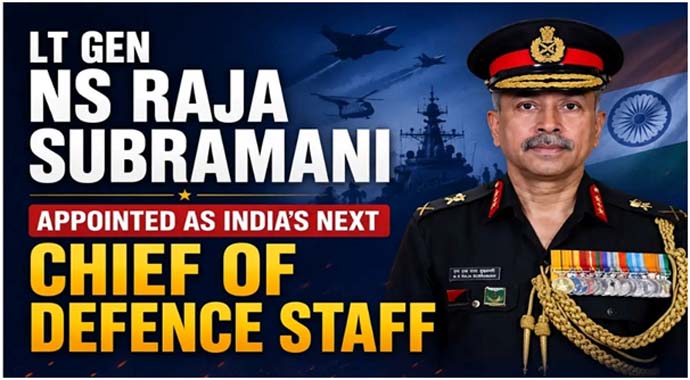
As Lt Gen N S Raja Subramani prepares to assume office, he inherits not merely a military appointment, but one of the most consequential institutions in India’s higher defence management since Independence.
Beyond this he inherits a strategic environment where cyber-attacks may precede missiles, drones may arrive before armour, and perception management may shape conflict before the first shot is fired.

The Unfinished Agendas Before the Next CDS
1. Completing Theatre Command Reforms. The foremost unfinished agenda remains the transition towards integrated theatre commands. Future wars will demand unified operational structures capable of synchronised responses across land, air, maritime, cyber, and space domains.
The challenge before the next CDS will be to build consensus while preserving operational flexibility and inter-service confidence. Theatreisation cannot succeed through bureaucratic compulsion alone. It will require military statesmanship, trust-building, and a shared war-fighting philosophy across the Services.
2. Accelerating Decision-Making Cycles. Recent conflicts have shown that speed of decision is becoming as important as firepower itself. India’s military structures still remain relatively process-heavy in several areas of procurement, operational coordination, and technological adaptation. The next CDS will be expected to strengthen:
- Faster command networks.
- Integrated battlefield communication systems.
- Real-time intelligence fusion.
- Decentralised operational responsiveness.
In future wars, delayed decisions may become strategic liabilities.
3. Integrating Drone Warfare into Core Military Doctrine.
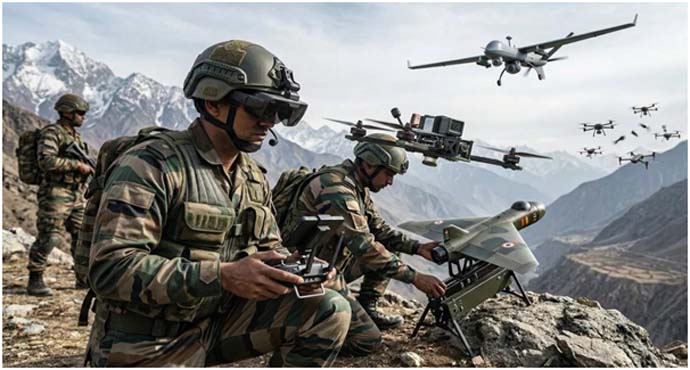
Post–Operation SINDOOR and lessons from recent Middle Eastern conflicts have demonstrated that drones are no longer support systems but central instruments of battlefield dominance. India must rapidly develop:
- Swarm drone capability.
- Counter-drone architecture.
- AI-enabled targeting.
- Loitering munitions integration,.
- Tri-service unmanned warfare doctrines.
The unfinished challenge is not procurement alone, but doctrinal integration into mainstream war-fighting philosophy.
4. Building a Credible Counter-Hybrid Warfare Framework. Future adversaries are unlikely to rely solely upon conventional military confrontation. Conflict may increasingly involve drones, cyber-attacks, proxy actors, information warfare, psychological operations, economic disruption, and social destabilisation. India still lacks a fully integrated national hybrid warfare response structure. The next CDS will need to strengthen coordination between military, intelligence, cyber, space, and internal security agencies under a coherent national framework.
5. Developing Cyber and Space as Operational Domains. Cyber and space can no longer remain adjunct capabilities. They are becoming central operational theatres. The next CDS will need to strengthen:
- Military satellite resilience,
- Anti-jamming capability,
- Cyber deterrence,
- Offensive cyber integration,
- Secure battlefield networks.
The future battlefield may be disrupted digitally before it is contested kinetically.
6. Redefining Air Power Employment in Integrated Ops.
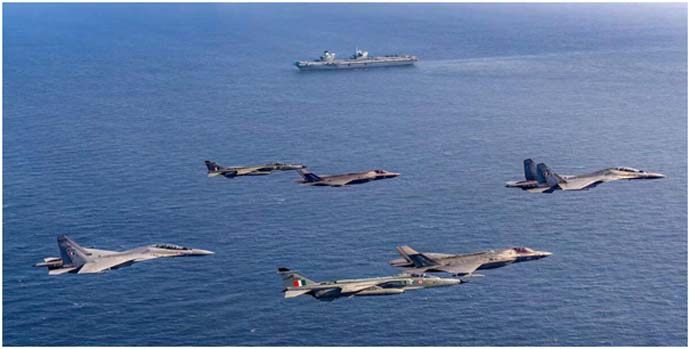
One of the most sensitive unfinished agendas remains the integration of air power within future theatre structures. Recent wars have demonstrated that aerospace power now shapes battles far beyond traditional close-air support roles. The next CDS will need to evolve consensus on:
- Strategic air asset allocation.
- Integrated targeting.
- Missile defence coordination.
- Long-range precision strike doctrine.
- Air-space integration.
The future battlefield will increasingly be decided through integrated aerospace dominance.
7. Strengthening Maritime Deterrence in the Indian Ocean.
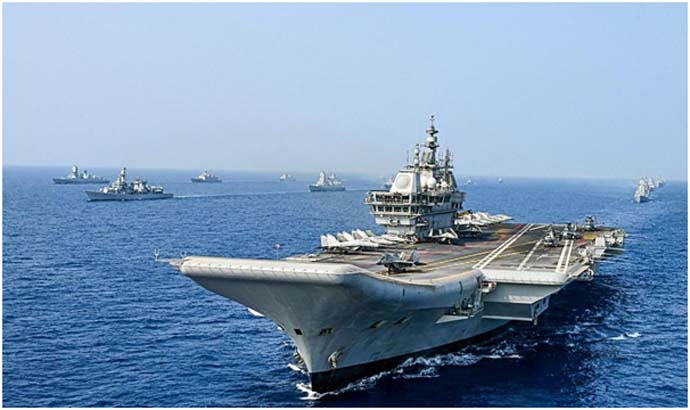
The Middle East crisis has once again highlighted the fragility of global energy routes and sea lanes. India’s maritime responsibilities are expanding rapidly amid growing Chinese naval presence across the Indo-Pacific. Key unfinished priorities include:
- Integrated maritime theatre structures.
- Undersea surveillance capability.
- Island infrastructure strengthening.
- Anti-submarine warfare.
- Long-range maritime strike capability.
- Logistics partnerships across the Indian Ocean.
A continental power may survive maritime vulnerability temporarily. An aspiring major power cannot.
8. Reforming Logistics and Battlefield Sustainment. Recent conflicts have reaffirmed that logistics remains decisive in prolonged warfare. Ammunition management, fuel supply chains, battlefield mobility, maintenance systems, and wartime industrial replenishment are now inseparable from operational effectiveness. India requires deeper integration of:
- Joint logistics nodes.
- Transportation networks.
- Supply resilience.
- Wartime industrial capacity.
Integrated logistics remains one of the least glamorous but most critical unfinished reforms.
9. Creating a National Military Technology Ecosystem. India’s defence modernisation still suffers from fragmented procurement cycles and uneven indigenous integration. The next CDS will need to become the principal driver of:
- Defence innovation.
- Private-sector integration.
- AI-enabled military systems.
- Cyber capability.
- Semiconductor resilience.
- Joint technology prioritisation.
Future wars will increasingly reward technological ecosystems rather than isolated military platforms.
10. Strategic Infrastructure and Border Preparedness. Infrastructure is now a core component of deterrence. Border roads, tunnels, airfields, logistics hubs, communications networks, and advanced landing grounds directly shape operational responsiveness. India’s infrastructure competition with China particularly along the Northern frontiers has become inseparable from military preparedness itself.
The next CDS will need to ensure closer integration between strategic infrastructure planning and operational military requirements across both continental and maritime theatres.
11. Balancing Continental Pressures with Maritime Priorities. India’s strategic culture remains predominantly continental despite the Indo-Pacific becoming central to global geopolitics. The next CDS must ensure that maritime strategy receives sustained institutional attention without diluting continental preparedness against China and Pakistan. This balance between continental compulsions and maritime aspirations will shape India’s long-term strategic posture.
12. Advancing Civil-Military Fusion. Modern wars increasingly blur the line between civilian technological capacity and military capability. Future conflicts will depend upon industrial resilience, digital infrastructure, telecommunications, transportation systems, cyber networks, and technological innovation ecosystems. The next CDS will need to deepen civil-military fusion through:
- Defence-industrial integration,
- Private-sector participation,
- Dual-use technology development,
- Research partnerships,
- Coordinated national mobilisation frameworks.
National security can no longer remain confined within military institutions alone.
13. Joint Training and Integrated Military Education. Jointness cannot remain limited to headquarters structures. It must become part of military culture itself. The next CDS will need to strengthen:
- Integrated professional military education.
- Cross-service exposure,.
- Joint operational doctrines.
- Common strategic curricula.
- Tri-service training structures.
Future military leadership will increasingly require officers capable of thinking beyond service boundaries while retaining professional specialisation.
14. Preserving Morale and Institutional Dignity During Transformation. Large-scale reforms inevitably generate uncertainty within the Services. The next CDS will need to ensure that operational effectiveness, morale, and institutional dignity remain protected during transformation. Concerns relating to:
- Pay and allowances.
- Parity with sections of the civil services.
- Warrant of precedence.
- Veterans’ issues.
Broader perceptions of institutional respect cannot simply be dismissed as administrative matters. Military transformation cannot succeed if the soldier feels institutionally diminished while operational expectations continue to rise. A nation that expects unlimited sacrifice from its armed forces must ensure that professional dignity, fairness, and institutional respect remain non-negotiable.
15. Evolving the CDS into a Strategic National Security Institution. The office of CDS itself remains a work in progress. The next phase will require the CDS to evolve beyond military coordination into:
- Long-range strategic planning,
- Integrated capability development,
- Civil-military synchronisation,
- Defence diplomacy,
- National security integration.
The future CDS will increasingly function not merely as the senior-most military officer, but as one of the principal architects of India’s strategic power in an era of multi-domain competition.
The CDS as the Interface Between Military Power and National Power
The role of the CDS is steadily evolving beyond military coordination into strategic statecraft. Modern conflict increasingly blurs distinctions between military capability, industrial capacity, technology ecosystems, cyber resilience, diplomacy, infrastructure, and economic endurance. India’s rise as a major power will depend not merely upon economic growth or geopolitical ambition, but upon whether the nation can build an integrated national security architecture capable of responding to a turbulent century.
The coming decade may well determine the strategic balance across the Indo-Pacific for generations. In that larger contest, India’s armed forces will require technological depth, operational synergy, institutional confidence, industrial resilience, and unified strategic purpose.
The unfinished agenda before the next CDS is therefore not merely the integration of the Services, but the integration of India’s military power with the nation’s larger strategic ambitions.
ABOUT THE AUTHOR

Lt Gen Rajeev Chaudhry (Retd) is a social observer and writes on contemporary national and international issues, strategic implications of infrastructure development towards national power, geo-moral dimension of international relations and leadership nuances in changing social construct.