Navigating Geopolitics, Supply Risks, and the Clean Energy Transition
Energy security has long been a central pillar of India’s economic strategy. As the world’s third-largest energy consumer and the fastest-growing major economy, India’s development trajectory depends critically on reliable, affordable, and diversified energy supplies. However, the ongoing conflict involving the United States, Israel, and Iran, and the resulting disruption to shipping through the Strait of Hormuz, has once again highlighted the fragility of global energy systems and the vulnerabilities faced by import-dependent economies such as India.
For India, this moment is not merely a crisis to be managed, but a strategic inflection point, which underscores the urgency of rethinking energy security in a world where geopolitics, markets, and the energy transition are increasingly intertwined. The crisis underscores the urgency of strengthening India’s energy security through diversification, technological innovation, and accelerated energy transition.
 Energy Security in a Changing Landscape
India’s energy security challenge is shaped by a dual reality: rapidly rising demand and persistent import dependence. As the world’s third largest energy consumer, India imports nearly 90 percent of its crude oil, over half of its natural gas and around 60 percent of its liquefied petroleum gas requirements. Much of these imports originate in, or transit through, the Gulf region, making the Strait of Hormuz a critical artery in India’s energy lifeline.
The current disruption has brought this vulnerability into sharp focus. Supply bottlenecks, rising freight and insurance costs, and delays in shipments have already begun to affect domestic energy availability. The impact is visible not only in industrial supply chains but also in household consumption, particularly in cooking fuel markets.
These developments reinforce a fundamental reality: energy security today extends far beyond resource availability. It is equally about logistics, maritime security, financial risks, and geopolitical stability. In an interconnected global system, disruptions in a narrow maritime corridor can cascade across economies thousands of kilometres away.
Energy security in this context involves not only securing physical supplies but also ensuring resilience against geopolitical shocks. Policymakers therefore emphasize strategies such as expanding strategic petroleum reserves, diversifying import sources, promoting domestic production, and accelerating the shift towards renewable energy.
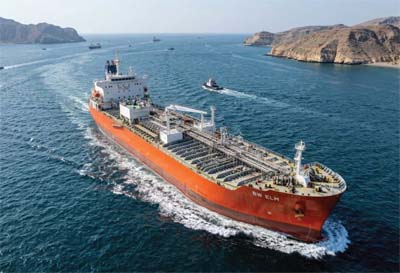 The Strategic Importance of the Strait of Hormuz
The Strait of Hormuz, located between Iran and the Arabian Peninsula, is one of the world’s most important energy chokepoints. Nearly 20 percent of global oil consumption and LNG trade passes through this narrow waterway, making it vital for global energy markets.
For India, the significance is even greater. Estimates suggest that around 40–50 percent of India’s crude oil imports, i.e., around 2.5 million barrels per day, pass through the Strait of Hormuz, creating a major strategic vulnerability. India’s economy remains extremely sensitive to oil price shocks. A $30 rise in crude prices could lift inflation by 2 percentage points and push the current account deficit closer to 2.5 percent of GDP. In practical terms, this means that any disruption in this corridor, whether due to military conflict, sanctions, or maritime restrictions, can quickly affect India’s energy supply chain.
Recent geopolitical developments have dramatically demonstrated this risk. Maritime activity through the Strait is estimated to have declined by as much as 95 percent during the recent conflict, highlighting the scale of disruption possible in times of crisis. Even short-term restrictions can have immediate consequences for global oil prices and shipping costs.
Emerging Challenges for India
The Gulf conflict has heightened risks of supply disruptions and price volatility, pushing crude prices above $100 per barrel and intensifying inflationary pressures. However, Brent crude is not an accurate gauge for India; the Indian Basket price, which stood at $150 per barrel as of March 19, 2026, better reflects the impact on domestic refiners and external balances. This gap, driven by India’s heavier reliance on sour crude (Oman and Dubai oil) imports, underscores its heightened vulnerability to global shocks.
India’s continued dependence on the Middle East, particularly for LPG where about 60 percent is imported, has already resulted in shipping delays and reduced availability, underscoring the fragility of supply chains. These disruptions have broader macroeconomic implications. Higher energy prices can fuel inflation, widen fiscal deficits through increased subsidy burdens, and dampen economic growth by raising input costs across sectors. For a fast growing economy with rising energy demand, such shocks can have significant spillover effects.
Beyond economics, energy security also carries a strategic dimension. Heavy reliance on a limited set of suppliers and critical transit routes, such as the Strait of Hormuz, exposes India to external risks and can constrain strategic autonomy during periods of geopolitical instability.
From Vulnerability to Resilience: India’s Strategic Response
India has, over the years, adopted a multi-pronged strategy to enhance its energy resilience. A central pillar of this approach has been the diversification of supply sources. Today, India imports crude oil from around 40 countries, including Russia, the United States, and several African producers. This diversification reduces dependence on any single region and provides a degree of flexibility in times of crisis.
However, diversification is not without limits. Logistical constraints, longer shipping routes, cost differentials, and geopolitical considerations restrict how quickly supply chains can be reconfigured. The current crisis illustrates that while alternatives exist, they cannot fully insulate the economy from short term disruptions.
Efforts have also been made to reduce reliance on the Strait of Hormuz. A growing share of India’s crude imports now arrives through alternative routes, reflecting improvements in supply chain resilience. Complementing this is the development of strategic petroleum reserves, which provide a critical buffer against short term supply shocks.
Domestic policy measures have further strengthened resilience. Investments in refining capacity, initiatives to improve energy efficiency, and policies to promote upstream exploration are aimed at reducing structural dependence on imports over time.
Macroeconomic Implications of Energy Shocks
Energy price volatility has immediate and far reaching macroeconomic consequences for India. A sharp increase in crude oil prices can quickly feed into inflation, widen the current account deficit, and strain fiscal balances. Higher energy costs also raise input prices across sectors, affecting industrial competitiveness and economic growth.
The current crisis illustrates how energy shocks are no longer confined to commodity markets. Rising logistics costs, disruptions in global shipping, and uncertainty in financial markets amplify their impact. In this context, energy security becomes central to macroeconomic management, influencing monetary policy, fiscal strategy, and external sector stability.
The Energy Transition as a Strategic Imperative
While the current crisis exposes India’s vulnerabilities, it also reinforces the urgency of accelerating the transition to a more secure and sustainable energy system. India has made notable progress, with over 50 percent of its electricity capacity now from non-fossil sources, compared to about 32 percent in 2014, with capacity exceeding 242 GW, out of roughly 485 GW.
The country has crossed 100 GW of solar capacity and is targeting 500 GW of non-fossil capacity by 2030, with the aim of meeting around half of its energy needs from renewables. These gains are supported by policy measures such as competitive bidding, production linked incentives, expansion of transmission infrastructure, and investments in energy storage. Flagship schemes like PM KUSUM and PM Surya Ghar are further promoting decentralised and household level energy resilience.
Emerging Pillars of Long-Term Energy Security
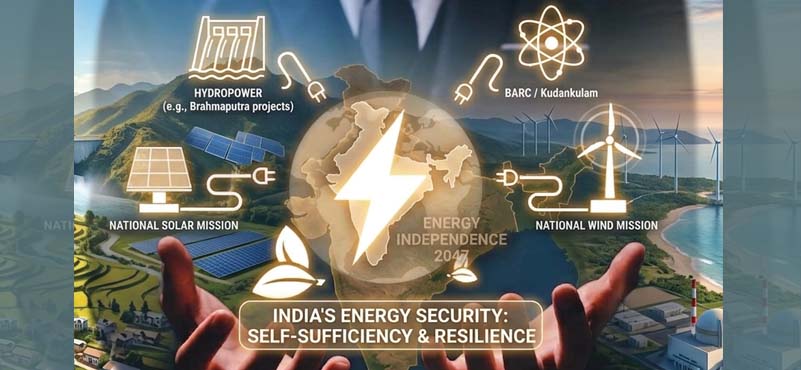
India’s energy strategy rests on diversification and transition. Rapid expansion of solar, wind, and hydro is reducing import dependence, while green hydrogen and biofuels aim to cut fossil fuel use in key sectors. Nuclear energy is expected to provide reliable base load power, supported by investments in storage to stabilise an increasingly renewable grid.
At the same time, electrification, especially in clean cooking, must become a policy priority. A phased transition from LPG to electric cooking, supported by targeted subsidies, reliable power supply, and incentives for efficient appliances, can significantly reduce dependence on imported fuels while strengthening household energy security. Countries such as China have already demonstrated the scalability of electric cooking solutions alongside rapid electrification, offering useful lessons for India. Deeper energy partnerships across regions are also reinforcing long term resilience.
India’s immediate response has focused on maintaining supply and protecting consumers through prioritised domestic allocation, demand rationalisation, and increased sourcing from non-Gulf suppliers. Strategic reserves and inventories have cushioned short term disruptions, but remain stopgap measures.
Structural constraints persist. Coal will remain significant, while grid limitations and renewable intermittency demand sustained investment in transmission and storage. At the same time, dependence on global supply chains for clean energy technologies introduces new geopolitical risks.
India’s long term strategy is anchored in its net zero commitment by 2070, announced by Prime Minister Narendra Modi at COP26, with a target to reduce carbon intensity by 45 percent by 2030. Achieving this will require a decisive shift towards cleaner energy, greater efficiency, and scaled deployment of new technologies.
Conclusion: A Crisis as Catalyst
The disruption of energy flows through the Strait of Hormuz represents a defining moment for India’s energy security strategy. It highlights the risks associated with external dependence while reinforcing the importance of resilience, diversification, and strategic foresight.
India’s response demonstrates a growing capacity to manage short term shocks through diversification of supply, strategic reserves, and proactive policy measures. Yet the deeper lesson of the crisis is that long term energy security cannot be achieved through incremental adjustments alone.
Instead, it requires a structural transformation of the energy system—one that reduces dependence on volatile fossil fuel markets while building a diversified, resilient, and sustainable energy architecture.
By accelerating the transition towards renewable energy, strengthening domestic capabilities, and investing in emerging technologies such as nuclear power and green hydrogen, India can move from a position of vulnerability to one of resilience and strategic autonomy. In this sense, the current crisis, while disruptive, may ultimately serve as a catalyst for building a more secure and future ready energy system.
ABOUT THE AUTHOR
 Dr Debesh Roy is Chairman, Institute for Pioneering Insightful Research Pvt. Ltd. (InsPIRE), a research and consultancy firm focused on policy-relevant work in economics and climate change. An economist and development professional with 38 years of experience, including over three decades at NABARD, he specialises in macroeconomic policy, agriculture, rural finance, and climate change.