Bereft of the traditional support from its Western allies, the US finds itself isolated in their war effort. One can almost hear the mutterings of scorned lovers, “Not my circus, not my monkeys”.
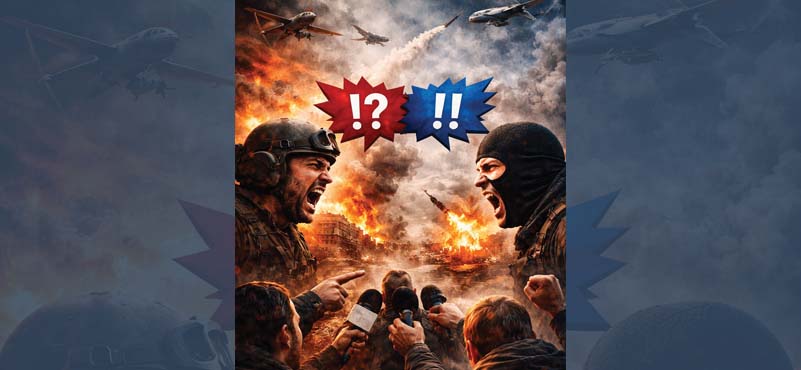
The US-Israel-Iran war continues, but with a difference. There is fake news, there is propaganda and then there is a never-ending supply of half-truths. Ah! I forget the social media platform ‘Truth’, which is invariably far from it.
Media factories working overtime and having a heyday. For all that our senses are inundated with, something does not seem to be going as per plan.
It has long been asserted by geopolitical watchers that Iran should never be mistaken for Iraq. It is a gross blunder to make when you make war plans on maps alone. A feel of the geography is a must, but there are far too many other factors that need to be kept in mind during pre-conflict war gaming.
For one, the Iranians or let me say the Persians, are a very proud race. They derive their pride from ancient civilizational roots. In recent times, economic boycotts and attempts at international isolation have energised them to an even more resilient level. Most of them have probably mentally prepared themselves for the long haul.
This has not happened overnight. They have been watching their neighbourhood very closely for the last couple of decades. They have seen Libya, Syria, Iraq, Yemen, Lebanon and Gaza burning and getting destroyed.
These nations of course, became easy pickings due to a variety of factors. Centralized control, population faultlines, military inferiority, lack of strategic depth, economic choking and insufficient timely support from allies being just a few.
A lot has come out in the social media regarding Iran’s mosaic defence strategy. A doctrine that is claimed to have been devised to keep the war effort going even after the elimination of senior political and military leadership.
Mosaic defence is easier said than done. While unbridled autonomy to smaller units seems very seductive, there would always be issues of logistics, allocation of resources, finances, command and control and alignment with larger objectives. Only postwar analysis will bring out the true worth of these claims. However, social media has already spread a notion of successful resolute defence by the Iranians.
Today’s wars are fought on many fronts. The coercive impact of physical destruction may or may not surface, even many years after the war. But ironically, the social media front is the one which gives an immediate sense of ‘notion of victory or defeat’ more than anything else. The United States certainly appears to be not winning, if not exactly losing on this front.
The whole world is aware how the Iraq war was justified because of possession of WMDs. Post the war and the destruction of an entire country, these claims were found to be untrue and acknowledged by the allies as well. Information awareness has increased manifold since then.
It is not so easy to spin your way out of a tricky and embarrassing situation anymore. The tragic result of false premises has not faded from public memory, including that of domestic audiences in the US. No way the international community is buying similar stories without credible evidence this time.
Iran had long been projected as a pariah state, an evil empire in other words. The main crutch used for this publicity had been its nuclear ambitions. A signatory to the NPT, Iran had tried unsuccessfully to alter this perception for long.
The world also saw the ugly charade of diplomatic forays being played out to restrict Iran’s nuclear ambitions. It did appear that Iran was tending to play ball and behave according to IAEA’s diktats. But the die had been cast well before that, and the negotiations were just one more formality to be gotten out of the way.
The breakout of the war has somehow diluted their vile image. They now come across as an entity which was ready to reform but was not allowed to.
Iran’s progress towards weapon-grade uranium enrichment has always been an existential concern for Israel. Conversely, Israel’s nuclear capabilities are well acknowledged universally, although they have never openly admitted to the same to avoid sanctions.
So, Iran also feels highly vulnerable with such overwhelming capability in its neighbourhood. This mutual suspicion will never change unless both countries are simultaneously pushed towards nuclear disarmament, which is nothing short of a pipedream.
Presumably, the US must be having valid reasons linked to oil-pricing, arms sales and protection of dollar behind waging this war. However, it somehow appears that they are the proxy for Israel in this conflict and not the other way around. Were they misled and taken for a ride by Israeli diplomacy? It is anybody’s guess but their motives and justifications certainly seem unconvincing to all and sundry.
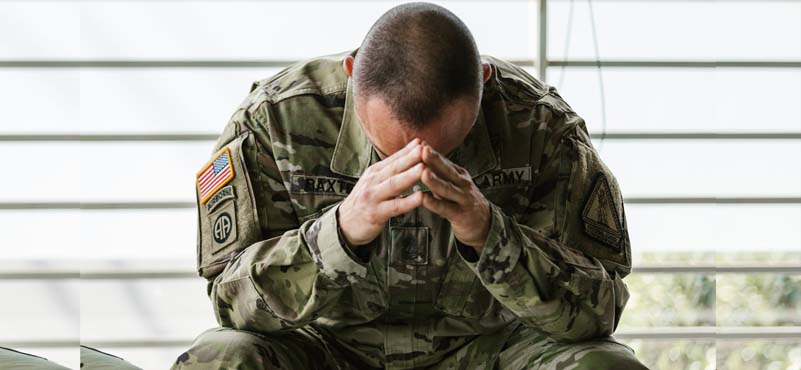
Although the US forces do not have much choice in the matter, a military which does not feel a credible moral force behind its deployment will always be short of conviction and motivation. One can get a sense of such disillusionment amongst the rank and file from whatever is coming out of the war zone.
They also appear to have to have underestimated Iran’s response of widening the conflict to other gulf countries. Hormuz is Iran’s home territory, and they have been able to choke it effectively with minimal effort. This was always going to be so in case of a flare up beyond a red threshold. Elementary, my dear Watson. A serious error of judgement by some in making some assumptions, it seems.
Even the rest of the war effort by Iran has been based on low-cost technology. Drones and ballistic missiles have been the main instruments of war. The drones have penetrated hitherto safe havens as the cost of air defence by Iron dome and Patriot like systems is disproportionately enormous.
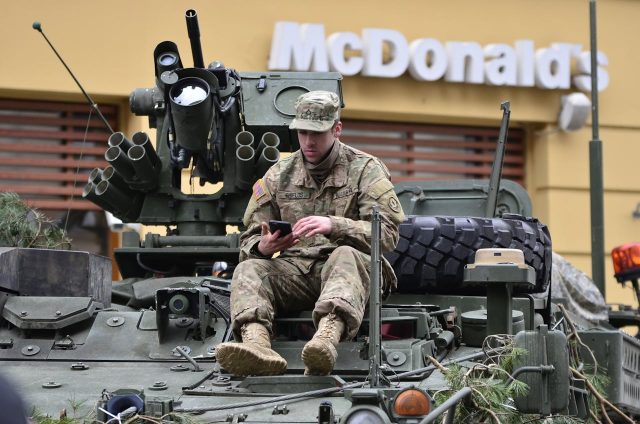
Destruction of American radars, the blue-on-blue fighter aircraft (3x F15s) kills by Kuwaiti air defence, loss of costly drones and a KC 135 tanker is revealing far too many chinks in the armour. Shoddy preparation levels due to hurried deployment are showing, and it is probably too late to make amends.
The US-Israeli forces were able to ward of the drone and missile threat in the initial waves. There is however never an endless supply of air defence weapons and that too at a location so remote from homeland. Expensive weapons have been consumed, and replacement supply chains are overly stretched because Iran is not falling like the predicted nine pins.
The ballistic missiles may have caused limited physical damage on the ground but their passage to and through neutral countries has let the cat out amongst the pigeons. Civil aviation has come to a grinding halt, and the closure of the strait has impacted critical movement of energy supplies.
The pinch of inevitable rise in oil and gas prices is being felt at the farthest reaches of the planet. Incidentally, since Iran has apparently responded to the American-Israeli offensive, they are projecting it righteously as an integral part of their self-defence.
They are being widely perceived as the former in the David-Goliath fable. The whole world irrespective of ideologies and affiliations, inwardly roots for the underdog. Even more so, for a spirited underdog.
The US problem appears to be the leadership at the very top. With a person at the helm who does not appear to entertain contrarian views kindly, close advisors tend to say what he would like to hear. In simple terms, it is called sycophancy. It is likely that he has been fed a far too optimistic picture of own capabilities and a possible joyride to victory.
The Iranian resistance despite losing Khomeini and a fair number of senior commanders in the beginning, has taken them by surprise. They have not capitulated. I can imagine what expletives he might be using in the war board room. With no Rajguru to show the right path, being the face of an ill-conceived campaign, must be frustrating.
It is not surprising at all that the NATO members and all other Western allies have done their calculations and refused to be part of the campaign. The refusal to send warships to patrol the Strait of Hormuz for providing safe passage is as open a snub, as it possibly can be.
Most of the allied world leaders have been antagonized by the way they were treated during the tariff wars. Their egos have been hurt badly by innocuous threats on social media by the chief protagonist.
The biggest calamity has been their trust in the big brother who is gaining in unpopularity with his in-the-face abrasiveness. Sub-consciously, they are looking beyond the transactional paradigm and their refusal to be a part of a coalition, is their way of getting even. One can almost hear the mutterings of scorned lovers, “Not my circus, not my monkeys”.
Bereft of the traditional support from its Western allies, the US finds itself isolated in their war effort. Only lip service is coming through, and the obvious hypocrisy is hurting. They have never felt this lonely and isolated ever and they have only themselves to blame.
Next comes the conditions for withdrawal from the scene of action. It is a classic anti-access, area denial scenario playing out. If an expeditionary force does not penetrate the fort in the first wave, the degree of difficulty while digging in outside the fort’s precincts increases by the day.
Pulling out without any tangible gains to show, will be humiliating for the US. For all the bluster and the bravado, it is anybody’s guess when they will swallow their pride and decide to vacate the scene of action. Till it happens, the US will unfortunately remain the picture-perfect, global villain for setting the world on fire.
No conventional diplomatic parleys were done at the UN or outside to stich together a unified force, the requirement for which is being felt belatedly. World opinion was not aligned and moderated as a preparatory homework. Alas, it is a catch-up battle being fought.
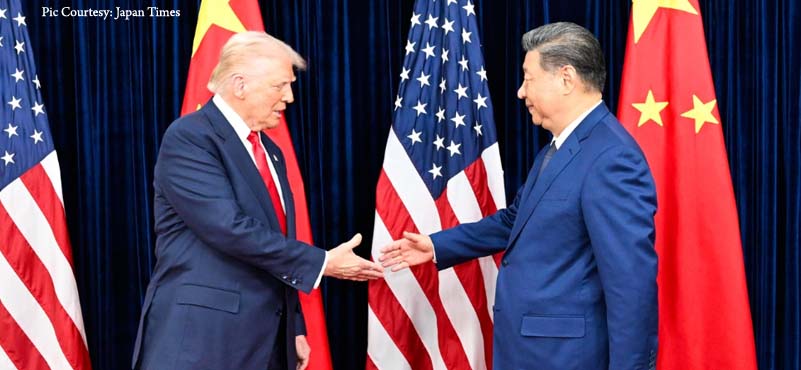
China and Russia are smiling from a distance. Russia making windfall gains from its renewed sale of oil and gas. China can firm up their Taiwan plans as the US needs to divert resources from that theatre. They also get to consolidate by rising in stature as a more responsible superpower.
An overall perception is that while the outcome is not certain, at this interim stage, someone out there is not appearing to be losing.
Crystal ball grazing is a good pastime these days. US does not anymore have the appetite for a long and sustained engagement overseas. Vietnam, Iraq and Afghanistan have drained them out adequately. They will therefore hesitate to put any boots on ground in fear of escalation.
The yanks love quick deals and shoot & scoot, if possible. I would not be surprised if they pull out in anywhere between a week to two months with claims of a grand victory and all mission objectives achieved. Israel will probably continue the mopping up operations.
Iran will be battered and bruised. They will however come out with their heads not hanging, signifying a moral victory.
Notwithstanding the ensuing inflation, energy shortages and stock-market crashes, the rest of the onlooking world will keep wondering what was this all about.
And the perception war? Oh, that! Someone is not winning and the other one is not losing.
After all, a draw salvaged from the brink of certain defeat is always celebrated like a triumph.
Not an umpire,
Horax (Casper)
ABOUT THE AUTHOR
 Air Vice Marshal Rajeev Hora is a Qualified Flying Instructor and an Experimental Test Pilot with over 3800 flying hours on multiple types of aircraft. His last appointment was as AOC HQ MAO at Mumbai. Previously held appointments are AOC Adv HQ WAC (Jaipur), Comdt Aircraft and Systems Testing Establishment (ASTE), Deputy Comdt AFA, AOC AFS Bidar and Deputy Technical Manager (Air) in the Acquisition Wing of MoD. He has earlier commanded a Jaguar squadron and was also the Team Leader of the IAF’s Hawk Aircraft Project Team in the UK.