Spectacular Victory
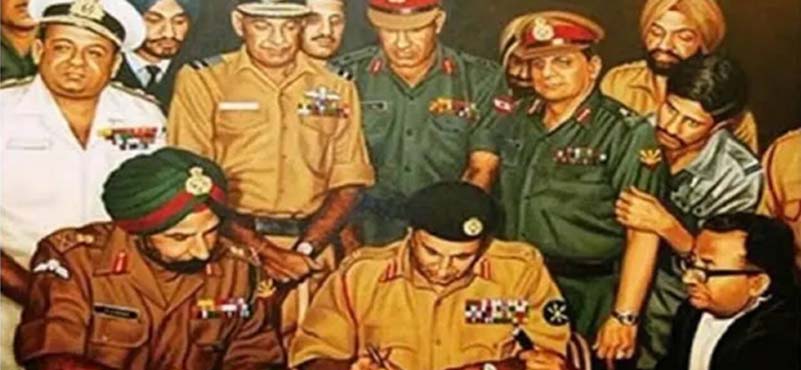
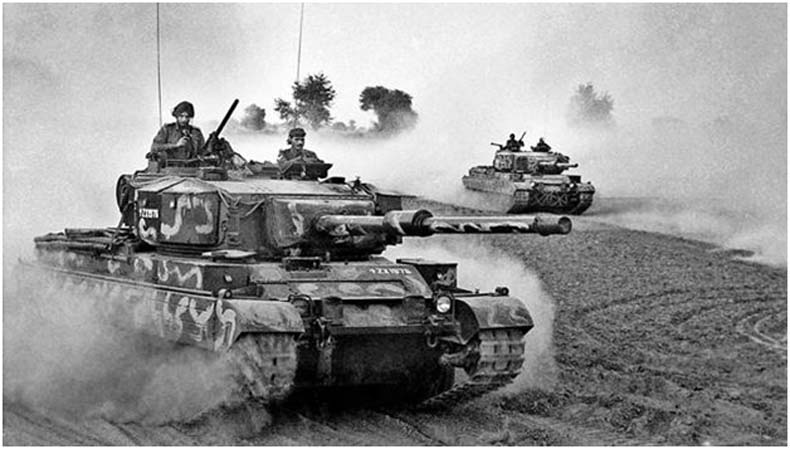
16 December marks the day when 54 years ago, on 16 December 1971, Pakistan lost the war and signed the instrument of surrender. It was an unparalleled victory. The Indian Armed Forces had taken just under a fortnight to vanquish the Pakistani military, and bring about the surrender of 93,000 Pakistani soldiers. The professionalism, patriotism, dedication, determination, resolve, and courage of the Armed Forces stood out. There were many other factors behind this victory, leadership at all levels, politico- military coordination, diplomacy, intelligence, the Central Armed Police Forces particularly the Border Security Force, railways and the role played by the Mukti Bahini.
The valour of the Indian Armed Forces has never been in doubt, but an account by Sydney Schanberg, the Pulitzer winning American journalist, as published by the New York Times post the War is a great tribute to the Army. This is what he wrote:
“I don’t like sitting around praising armies. I don’t like armies because armies mean wars. But this (Indian) army was something. They were great all the way.”
An analysis of the Indian response through 1971 reveals that diplomatic efforts and the military preparations were undertaken simultaneously. Checkmating the United States, and holding the Chinese, was a result of a coordinated national security approach.
To quote Kapil Kak “it was the unparalleled synergy among the political, military and diplomatic dimensions of the national crisis management and decision making that enabled India to take the initiative……. to achieve the desired political strategic outcome.”
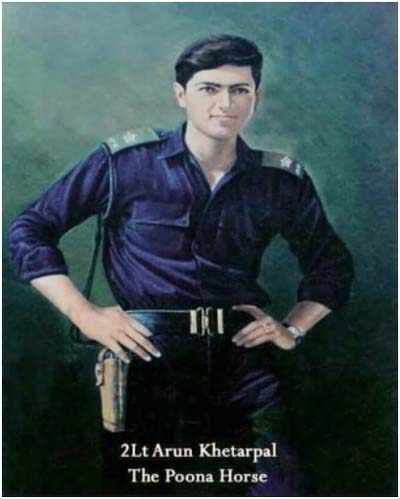 As per General VN Sharma the former Army Chief, one of the ‘Great Lessons’ from the Indo-Pak war in 1971 is that fighting a war is not just a military affair, but a ‘Total Affair’ that includes politics and diplomacy. He has emphasised that war is not merely a military endeavour but a comprehensive national effort that seamlessly integrates various government departments and agencies.
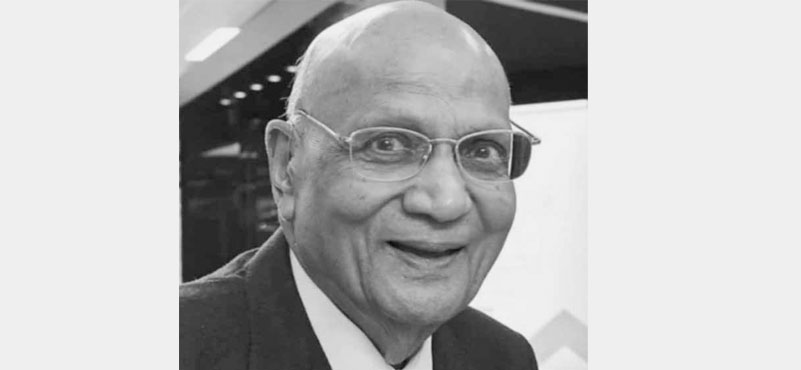
The Defence Minister Rajnath Singh speaking during his address at the PC Lal Memorial Lecture 2022 said, “The 1971 war is the finest example of the whole-of-govt approach not only for the armed forces but also for the national security.”
Today and in future combat is no longer confined to the traditional domains but is steadily expanding to newer domains such as cyber, space, the electromagnetic spectrum, and the digital space. Further, with the expanding scope of the canvas of National Security, the Armed Forces are not equipped to meet with all the challenges and threats by themselves; hence it is now imperative to look at a whole of government approach towards national security.
National Security
For most, National Security is strictly a matter of military power, capability, and readiness, but clearly defining National Security in a context of conventional military warfare is passe. The canvas includes economic security, socio- political security, energy security, homeland security, cybersecurity, human development security, environmental security and much more.
Today, apart from the traditional territorial threats and hard power, soft power, climate change, ransomware, critical minerals to artificial intelligence, and social media, everything can be termed as national security. It is true that economic globalization and rapid technological changes have increased the number of unconventional threats. However, while new threats are being added to the realm of National Security the old ones remain. Expansion and not contraction of National Security issues is more the rule than the exception.
In India’s case, problems regarding territorial threats that have not been resolved are like dormant but live volcanoes, where no one can predict the next eruption. Such urgent National Security priorities, result in not only demanding attention, but also resources.
In theory, National Security should be easy to define. Any threat that directly, or even indirectly challenges the sovereignty or territorial integrity of a nation, constitutes a valid National Security concern. But there are other threats do as well, including internal security challenges. A steady expansion of qualifying concerns includes energy security, food security, nuclear proliferation, drug trafficking, terrorism, cyberattacks, protection of citizens abroad and foreign markets among many others. In fact, COVID even added pandemic protection to the list. Threats to infrastructure, energy supplies, vulnerable economic infrastructure can also pose National Security concerns; as can climate change.
Militaries used to focus only on the threats from land, sea, and air, but today, cyberspace, space and the cognitive domain have become complex terrains of conflict. In fact, it is the multidomain threat that is now the concern which is uppermost.
The geopolitical landscape is also changing rapidly with the international system being rewritten by contesting power centres, technological disruptions and shifting alliances. New domains of competition – cyber, space, information and cognitive warfare are blurring the lines between peace and conflict.
Shiv Shankar Menon, former National Security Advisor, while delivering the Air Chief Marshal PC Lal Memorial Lecture in 2012, stated, “Our definition of security has gradually expanded over time – from the defence of our territory to include providing the necessities for our existence and growth, such as energy and water, and to larger issues of global and regional security. We now speak of traditional and nontraditional security challenges.” In other words, national security cannot only be assessed from political and militaristic frameworks. The fact is that national security must consider and reinforce a nation’s values to appropriately prioritise threats and interests.
The Whole of Nation Approach
A “whole-of-nation” approach to National Security involves multiple government departments, both military and civilian, working across boundaries, ensuring coordination and cooperation to achieve shared goals and an integrated government response in security-related matters.
Such an approach is essential to study the challenges and threats to national security, in a comprehensive manner. This holistic approach to National Security is imperative if India is to meet today’s challenges comprehensively.
The National Security structure needs to operate as a system rather than a collection of separate compartments. A whole of nation approach to planning, programming, and budgeting National Security is a concept that establishes a unified effort between inter-governmental agencies to maximize all available resources.
The convergence of military and civilian resources and systems for maximising a nation’s ability to express its comprehensive national power, both during war and peacetime, is imperative. Cementing the symbiotic relationship between economic, human, and traditional security is an imperative for a nation’s long-term development.
No wonder the External Affairs Minister, S Jaishankar, during his address at the Army Commanders Conference in October 2024 urged that a more ‘whole of the Government’ approach is needed to effectively advance national security.
Operation Sindoor
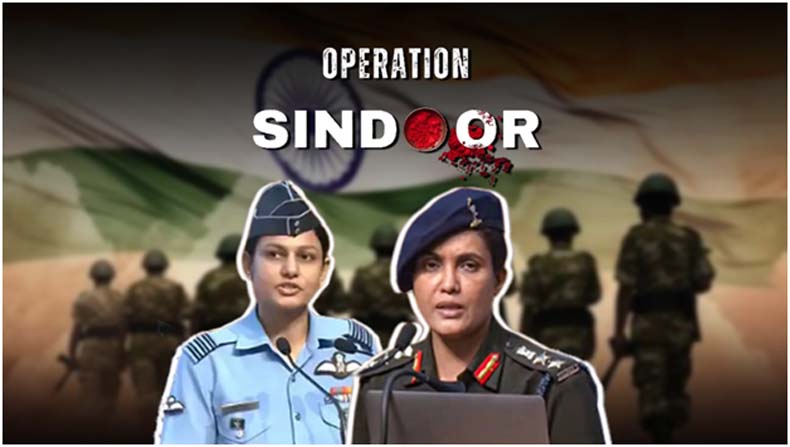
In an age of multi-domain warfare, India’s national security architecture has demonstrated the strength of jointness and strategic foresight during Operation Sindoor, which was initiated on 07 May 2025, in the aftermath of the Pahalgam terror attack. It showcased a calibrated, tri-services response that embodied precision, professionalism, and purpose. Operation Sindoor, successfully achieved its military objectives in under four days. A key highlight of the operation was the clear articulation of both national and military objectives, complemented by seamless coordination among the Services and effective civil-military integration.
While speaking at the Chankya Defence Dialogue President Murmu stated that ‘the recent success of Operation Sindoor stands as a defining moment in our counter-terror and deterrence strategy. The world took note not only of India’s military capability but of India’s moral clarity to act firmly, yet responsibly in the pursuit of peace.’
The above underscores that India’s national security is anchored not just in military strength but in the seamless integration of political will, strategic foresight, and joint operational capability. The example of Operation Sindoor illustrates how multi-domain warfare demands synergised responses, combining the strengths of all three Services with civil-military coordination.
But future conflicts will have a greater infusion of technology and artificial intelligence and would be increasingly fought in the digital and shadowy grey zones of cyberspace, space and cognitive domains. They would need an integrated ‘Whole-of-Nation’ approach with even greater Civilian Military Fusion for ensuring success.
To quote the Raksha Mantri Rajnath Singh while speaking at the Army War College in August this year. ’Future wars will not merely be battles of weapons; they will be a combined play of technology, intelligence, economy, and diplomacy. The nation which masters the triangle of technology, strategy and adaptability will emerge as the true global power. This is the moment to learn from history and write a new one; this is the moment to anticipate the future and shape one,” is what he stated.
Conclusion
The Indian Armed Forces do not need to prove their loyalty. Our Armed Forces must become the first choice of every educated, able-bodied Indian. We require the best brain and brawn to serve the nation. Only in the hands of such future generations of soldiers, will India be secure. This may not be the right time to try new recruitment schemes, perhaps safer to rely on old trusted and proven measures.
Will there be no more Pahalgam(s) or Galwan(s)? Can any bureaucrat or diplomat guarantee that there will no war? What if Op Sindoor had carried on for another few days, or weeks, or months? In the prevailing security environment with hostility around within the neighbourhood, India needs to put everything aside and concentrate on building hard power. All bureaucratic encumbrances, procedures, road blocks need to be put aside, along with the L-1. Either buy or make, all our requirements must be addressed post haste.
Every Politician, Bureaucrat, Diplomat, General, Admiral, Air Marshal and all others, need to work together for a common cause. That time is now when everyone needs to come together, where all in power act in concert, with each and every Indian playing his/her part. That is the primary need of the hour.
For India it is application of the whole of nation approach, that needs to be ensured. It is not enough to have strong, well equipped defence forces, it is the resolve to use them expeditiously, when the time comes that will define National Security.
One effective way to encourage coordination and collaboration in implementing a whole-of-government approach is to bring representatives from interagency entities together for realistic training with their military counterparts, in readiness for times when they are called upon to work together, in times of future conflicts. Only through greater engagement in peace time, will military and civilian personnel work seamlessly with each other, when we need to engage each other in times of cascading and unpredictable crises.
It is not that time that any manifesting problems can be brushed aside, or under the carpet, in the understanding that we have time, and we can tackle them when we must. Or, for the next incumbent to tackle, for those sitting in important positions of power. We have huge learning curve behind us, with no room for one upmanship, allowing domain experts to decide what is best. We have every expertise available, and friends to reach out to, when necessary. The road to own 2026 in terms of national security must inevitably be “the whole of nation approach”.
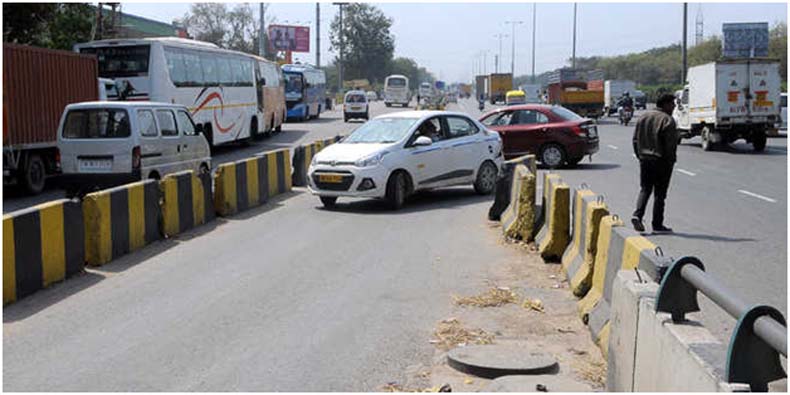
While the war clouds are on the outside, there is a warzone inside, too. There is as much traffic flowing from the wrong side, as on the right side. Breaking rules and red lights are the preferred norm. Not just on the roads, but everywhere else where there is an opportunity. Discipline is cardinal, and a national discourse that instills this sense of ensuring being on the right side, is a priority. The task is gigantic, as the nation wakes up to the task of cleaning our rivers, cleaning garbage on the streets; the Swachh Bharat campaign need not be forgotten, it only needs strengthening. Civil society needs to become more civil, with every Indian rising to the challenge.
The fact is that the dynamics that imperil national security today will not disappear – rather, new challenges will keep appearing. India, indeed most nations around the world, is living through one of the most defining moments in its history, and how it navigates this period will determine its long-term national goals. We need a collaborative effort to devise collective solutions. The lessons of 1971 should be our guiding light. Nation building is not just the prerogative of the government, or of leadership, but every Indian.
ABOUT THE AUTHOR
 Maj Gen VK Singh, VSM was commissioned into The Scinde Horse in Dec 1983. The officer has commanded an Independent Recce Sqn in the desert sector, and has the distinction of being the first Armoured Corps Officer to command an Assam Rifles Battalion in Counter Insurgency Operations in Manipur and Nagaland, as well as the first General Cadre Officer to command a Strategic Forces Brigade. He then commanded 12 Infantry Division (RAPID) in Western Sector. The General is a fourth generation army officer.
 Major General Jagatbir Singh was commissioned into 18 Cavalry in December 1981. During his 38 years of service in the Army he has held various command, staff and instructional appointments and served in varied terrains in the country. He has served in a United Nations Peace Keeping Mission as a Military Observer in Iraq and Kuwait. He has been an instructor to Indian Military Academy and the Defence Services Staff College, Wellington. He is a prolific writer in defence & national security and adept at public speaking.