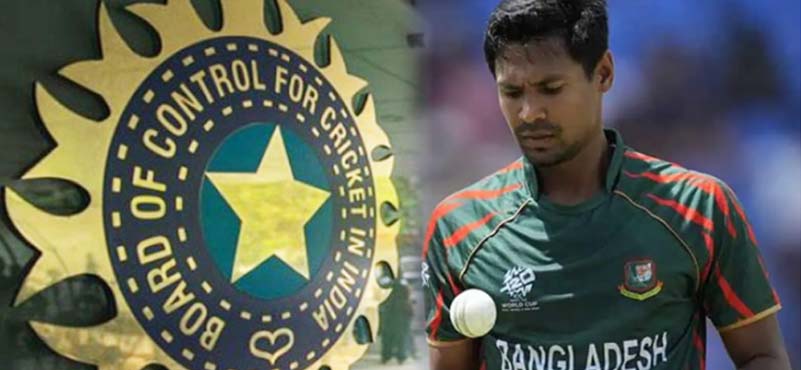
Bangladesh pacer Mustafizur Rahman — a well-known left-arm fast bowler — was picked up by Kolkata Knight Riders (KKR) in the IPL 2026 auction for a big sum (₹9.20 crore), making him the only Bangladesh player to attract a franchise bid this season. Shortly after that, the Board of Control for Cricket in India (BCCI) instructed KKR to release Mustafizur from their squad ahead of IPL 2026. The IPL governing body didn’t give a detailed cricketing reason, instead citing “recent developments” as influencing the decision.
Some political figures and public voices in India opposed Bangladesh players’ participation following internal unrest and violence against minorities in Bangladesh, which fuelled the backlash. Critics say the move looked politically motivated or influenced by non-sporting factors, rather than purely based on cricketing criteria. It was largely seen as a move, made best to avoid any chances of backlash based on any possible public sentiment.
Bangladesh responded strongly: the government ordered an indefinite ban on IPL broadcasts in Bangladesh in protest of Mustafizur’s exclusion. BCB said they would not send their national team to play T20 World Cup matches in India unless conditions changed — including raising security concerns linked back to this IPL incident.
Sporting leagues like the IPL have operated independently of state diplomacy — but this row merged those spheres. Bangladesh’s response — a broadcast ban and relocation requests — showed how deeply symbolic the decision became domestically. The dispute threatened Bangladesh’s participation in a major ICC event, which has real financial, sporting, and diplomatic implications. Ultimately, with no agreement reached, the ICC replaced Bangladesh with Scotland in the 2026 T20 World Cup lineup.
Did ICC maintain its neutral role and emphasized sport-governing principles over political pressure, prioritizing the original co-host schedule? Not to overlook that the ICC has a chairman who was former head of BCCI, and the son of India’s Home Minister. BCCI has unmatched clout in ICC, given its proven capacity to fund the ICC, as India is the world’s biggest cricketing donor, especially when counting funds and sponsorships. Many foreign teams can be seen sporting Indian labels as sponsors. Could ICC have gone against the BCCI and the Indian stand? Though, to be fair, no government statement was issued throughout this episode, as government stayed out.
The attacks on minorities in Bangladesh are most unfortunate, utterly reprehensible and most condemnable. It is also true that our relations with them have never been so low as of now. Yet, we have not given up on them, nor on any of our neighbours. We never will. Our hope and effort will always be to live like close family. These strains, we hope, will fade away, sooner than later. But till such time, newer pin pricks are best avoidable. And especially those that strike the chord of an average citizen, like cricket does in our sub-continent.
Pacer Mustafizur Rahman was best left out of the pick of players, even better, left excluded from eligible players, if this crisis could have been seen through. Now, making a martyr of him, by dropping him, we have a crisis on hand, which as best avoidable. One hopes this does not get blown up as another instance of big brother lording over its smaller neighbours, at will. Which are repercussions we can scare afford at this juncture in global power play, now entering our own region, by the day.