Brazil’s Oct 25 Second Round Presidential Elections
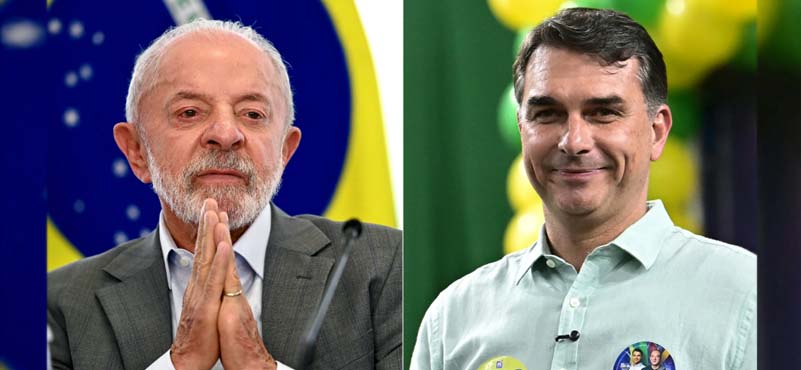
After trailing in the first round of Presidential elections, President Lula won the second round and the Brazilian Presidency by a convincing 51.79% of the popular vote against Flavio Bolsonaro Jr’s 48.21% on October 25, 2026. The loser, contesting the elections from the US with little support even from his own right-wing alliance, fled the country to the US via Argentina and Ecuador, illegally circumventing the Brazilian judiciary which had asked him to hand all passports because he was considered a flight risk in an ongoing money laundering investigation.
Given his longstanding pro-poor track record and social policies and his successful, consistent and fearless demonstration of Brazil’s real strategic autonomy during Trump 2.0, President Lula deserved to be re-elected for the fourth time, especially given all of the odds caused primarily by President Trump’s and BigTech, especially Meta’s, unprecedented and blatant interference and bias in favour of Bolsonaro Jr.
While Brazil remains deeply divided and polarized, democracy won. This is not just a great victory for Brazil and its people, but also for the Amazon Basin, its indigenous inhabitants, the global environment and climate change to which the Amazon rainforests preservation is central. It is also a victory for all Latin America since it has stemmed the continent’s far-right drift, for the Global South and the entire civilized world!
This is also particularly good news for the BRICS Alliance for at least two reasons. First, Brazil under President Lula’s leadership, has arguably, been the most consistent and credible member of the original 2006 quartet which created it, now being the only surviving member of its four founders. The second reason is that if Bolsonaro Jr. had won, he is likely to have bent under Trump pressure to reduce Brazil’s strategic autonomy in the BRICS and join a US led security alliance in Latin America which would have been disastrous not just for the BRICS but also for Latin America and the whole Global South.
India would do well to genuinely welcome President Lula’s return to the Presidency. It is good news not just for the BRICS Alliance which is critical for India but also for the growing bilateral Brazil-India partnership. In fact, there is a lot India can learn from Brazil, including on how it handles President Trump and its relationship with the US in a more genuinely strategic autonomous manner than it currently does.
Lessons in Democracy from Serbia
Julian Assange, the Wikileaks founder, is reported to have told an interviewer in Belgrade over a decade ago that Serbia was “a country where the future happens first.” Who could have imagined that Serbia today would be at the forefront of global democratic change.
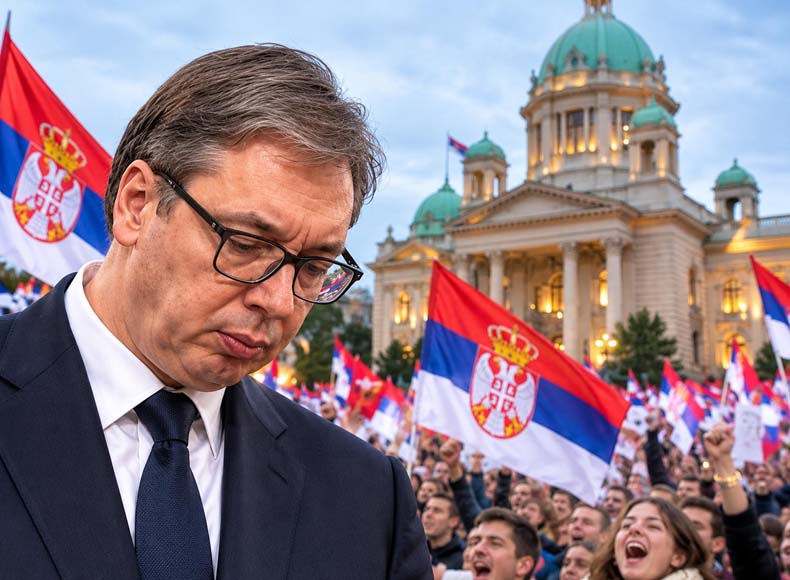
Serbia’s dictator Aleksandar Vucic was defeated in early elections he had called by the Student List, a student-backed list of candidates which has broken the monopoly of all political parties, incumbent and opposition. This was a culmination of a two-year peaceful protest movement that had called for Vucic, who has ruled with an iron fist from 2014, to step down to put an end to rampant corruption and unaccountability in the Balkan country.
The Serbian people’s big democratic victory happened more under the global radar than Lula’s in Brazil on the same day, October 25. Nevertheless, it is at least equally, if not more, significant as a portend of a possible democratic future. Sparked by the collapse of a railway station canopy that killed 16 people in Novi Sad in November 2024, this victory for democracy marks a profound political shift and shows what the power of students, Gen Z and the broader younger generation is capable of when they harness widespread discontent.
What the Serbian people chose on October 25 under the broad umbrella of the Student List were 250 candidates who ran for parliament, 134 of whom hold PhDs, 44% of whom are women and 135-140 of whom are now projected to enter parliament. This is truly unprecedented, innovative and novel, unlike any democratic political platform ever seen anywhere in the world.
What is equally extraordinary is that their agreed slogans (not just changing the people in power but changing the rules that enable monopolization of political power and the subjugation of state institutions and citizens’ lives to the control of those in power) and 11 point agreed platform (e.g. accountability and independent institutions, independent judiciary, seizure of unjustly acquired wealth, fighting monopolies, affordable housing, better health care, protecting agricultural land and water resources, free media, education reform, job security) clearly resonate with similar demands of other ongoing student protests not just in other parts of Europe (e.g. France, Belgium, Italy, Albania) but in the Global South including India.
For almost 2 years, students democratically debated almost every aspect of Serbia’s economy, the economic power of local oligarchs as well as issues such as healthcare and education before developing their 11-point joint programme. One key feature was the student movement’s ability to rally a large and diverse group of professionals and other people who came together against Vucic despite their political differences.
The diverse group of 250 student-backed candidates (e.g. lawyers, professors, economists, actors, health professionals, sports stars, farmers) have achieved what no other country has so far—-a truly “We the Peoples” victory! The world should be watching this experiment closely and learning the right lessons from it even though they are yet to prove if they can effectively govern the country.
While there are many differences between both the population size of Serbia (a relatively low 6 million) and other larger and more culturally and religiously diverse European and Global South countries including India which continue to see large-scale student protests, and the immediate and fundamental causes of the protests differ case to case, there is enough commonality to ensure important lessons for all of them. The student movements in all these countries should learn what to do while incumbent governments should learn what not to do. If either side ignores the lessons from this extraordinary democratic experiment, they will do so at their own peril.
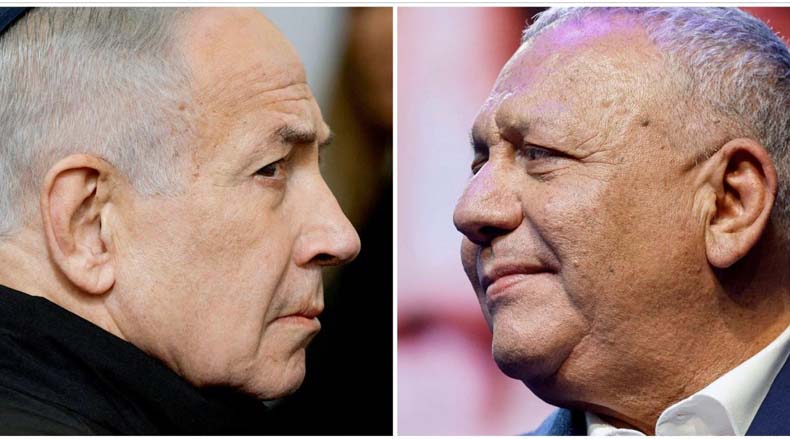
Israel’s Existential Election
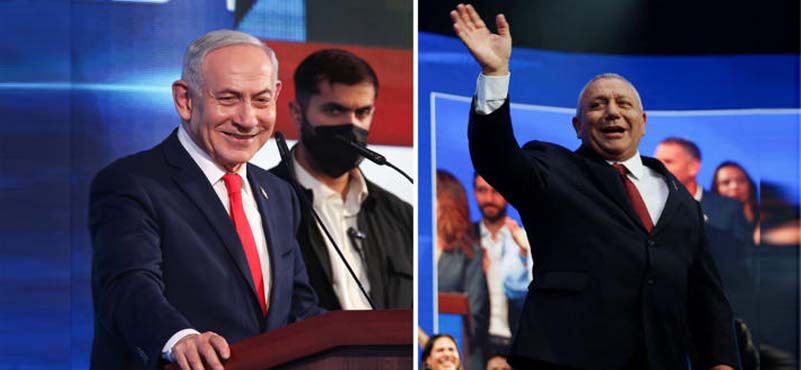
Israel has no easy options in its current crises. The future character of the Israeli state itself—whether it will be an inclusive democracy or a racist, xenophobic, religiously bigoted Zionist state, continuing to be led by an International Criminal Court designated war criminal, PM Netanyahu, is really what was up for election.
The results are mixed. While it can be argued that extreme racism and religious bigotry triumphed because Netanyahu’s coalition appears to have won 53 seats in the 120 seat Knesset, (Israeli parliament), it can also be argued that inclusive democracy prevailed to some extent because Netanyahu’s coalition has lost its majority (61 seats) while the two parties which represent the Arab Israeli minority population (Joint List and Ra’am) had an unprecedented outcome, doubling their seats from 10 to 19, which represents just under 16% of the total seats, almost equivalent to their 20% share of Israel’s population.
If the leadership of the Opposition coalition now shows the foresight and courage to form a creative alliance with these two Arab Israeli parties who theoretically hold the balance of power, they will have a total combined 67 seats in the Knesset, comfortably more than the 61 needed to form a majority government. If this happens democracy and inclusion would have won while racism, bigotry and xenophobia which define the Netanyahu coalition will have lost, at least for now.
The future of the Israeli state will, therefore, be defined by whether the leadership of the Opposition coalition has the courage to choose the Arab Israeli parties over Netanyahu and his far-right religious and other zealots as their coalition partners.
The verdict on this, due by next week, could go either way. Israel’s disproportionate military response over the last three years which followed the October 7, 2023 Netanyahu government security failure has been facilitated by the majority of Israeli society which has swerved to the far right, with some polls indicating that 93% of Israelis continue to support what recent Nobel Peace Prize laureate, South African Judge Navi Pillay officially termed a “genocide” in her role as Chair of the UN backed Independent International Commission of Inquiry on the Occupied Palestinian Territory, including East Jerusalem and Israel in its report dated 16 September 2025. The Commission, under its current Chair, Justice Muralidhar, not only repeated this charge earlier this year but made it again at the UN General Assembly in New York as recently as a few days ago when he said that Israel has continued to “commit war crimes, crimes against humanity and the crime of genocide.”
While the leader of Yashar, which leads the Opposition has ruled out any collaboration with the Arab Israeli parties, the leader of its coalition partner, Yair Golan, the leader of the Democrats, which is an important part of that coalition, has now openly called for such an alliance.
The situation remains fluid and will likely only clarify in the coming weeks unless there is an Opposition coalition-Arab Israeli Party alliance of some sort in the next few days which India should welcome. This is a perfect opportunity for India to distance itself from the religiously bigoted, racist and genocidal Netanyahu regime which it has been too closely allied with thus far and return to an alliance which is more likely to agree to a two-state solution with the Palestinians in the future with whom India have had a very long and close historical relationship.
ABOUT THE AUTHOR

Kamal Malhotra is Distinguished Visiting Professor at the NALSAR University of Law, Hyderabad, India and a Non-Resident Senior Fellow at TEPAV, The Economic Policy Research Foundation of Turkey. He was a Non-Resident Senior Fellow, Boston University between 2022-2025.
Mr Malhotra retired from the United Nations in September 2021 after a rich career including as its Head and Representative of the Secretary General in Vietnam, Turkiye and Malaysia. He was UNDPs Senior Adviser on Inclusive Globalization prior to that. Other positions held include Director, Overseas and Aboriginal Programme, OXFAM Australia and Director, International Institute of Rural Reconstruction, Philippines. Mr Malhotra also co-founded and co-directed Focus on the Global South.