Introduction
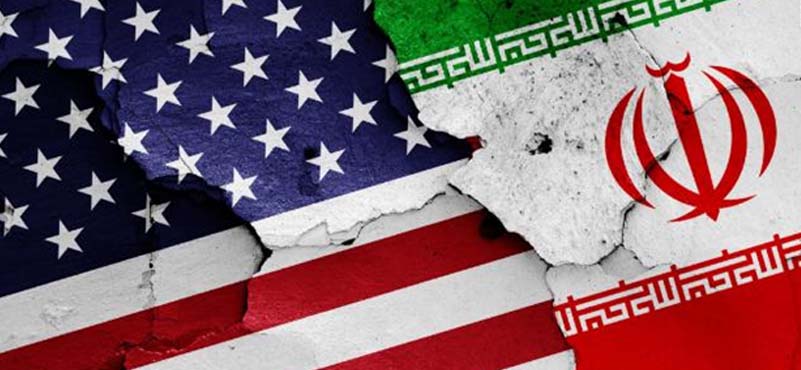
As the situation is once again spiraling out of control as on 8 June 2026, there are a number of factors that are responsible for it. At the foremost one would hold Donald Trump accountable for starting a war of which he had no idea of the repercussions, or where it would end. Secondly, the state of relations between Trump and Benjamin Netanyahu are also suspect. While outwardly both US and Israel suggest that the two leaders are on the same page, but evidently there appears to be a fallout, with Tel Aviv charting its own course. Third and equally important is the Lebanon and Iran sponsored non state actors’ contribution towards the conflagration. All said and done the Middle East is back to war, with no possible solution in sight.
For years, President Donald Trump had blamed his predecessors for plunging the country into “forever wars” in the Middle East. The war on Iran has now crossed the 100-day mark and President Trump is now finding it very hard to find an exit from a conflict that never panned out as envisaged.
President Trump’s declaration that he is making a “final determination” on a proposed agreement with Iran has pushed the latest round of diplomacy to a critical moment, but the fluctuations between a ‘deal’ and ‘no deal’ continue. He now seems to be caught between two extremes: Tehran’s demand for an end to attacks and financial relief, and pressure from hawks in his party to “finish the job” or at least not to sign a bad deal. The competing pressures have, so far, kept an agreement to end the war out of reach. Hence, there are actions taking place that include missile attacks and Israel’s offensive in Lebanon that are detrimental to and overshadowing the negotiations.
To quote Senator Mark Warner; the Vice Chairman of the Senate Intel Committee, “Donald Trump keeps claiming the war is about to end… but the truth is, America is still striking Iran. He’s breaking every promise, starting new forever wars, and raising costs on everything.”
Further, Iran has managed to retain its chokehold over the Strait of Hormuz, causing energy prices to soar, fueling inflation and piling pressure on Trump ahead of midterm elections. Hence Trump needs to find a way out in which Iran does not emerge as the victor. Unfortunately, his current choices seem to swing between escalation and humiliation.
Fear of Getting Stuck
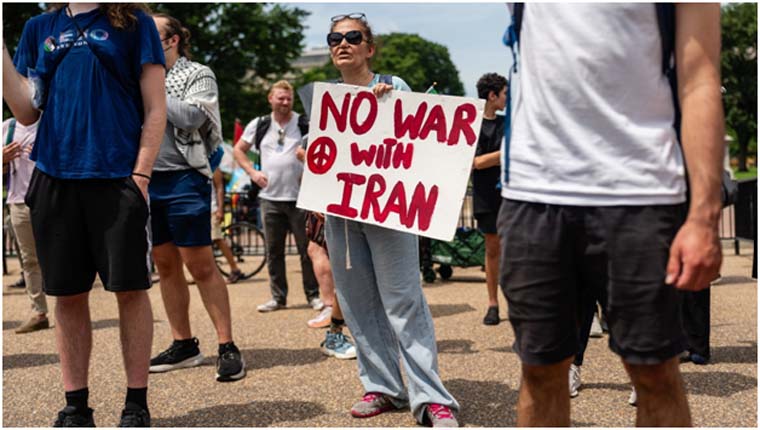
Trump’s war on Iran has raised the haunting images of interventions in the past. During congressional hearings in late April, Democratic Representative John Garamendi called the war a “quagmire” and a “political and economic disaster at every level.” Defence Secretary Pete Hegseth responded aggressively, accusing Garamendi of being defeatist and “handing propaganda to our enemies.”
Perhaps quagmire was not the best metaphor. It is so often associated with the Vietnam War, in which US troops were bogged down for years. Indeed, precisely because American leaders now fear such quagmires, they are reluctant to send significant ground forces into situations in which they may get stuck as happened in Afghanistan and Iraq.
Instead, in the current Iran conflict, the US is relying on missiles, airpower, and weapons systems enhanced by algorithms and AI. Fighting in this way, however, means that the application of military power can only be coercive, pressuring the enemy in the hope that it eventually complies with its demands. The US cannot simply take Tehran, as it did when it marched on Baghdad and toppled Saddam Hussein’s government.
Trump administration’s frustration today is that the Iranian regime is still refusing to comply as is evidenced by the latest round of negotiations. The fact is that the core objectives of Operation Epic Fury, effecting regime change and eradicating Iran’s nuclear program have not been achieved. And with Iran’s closure of the Strait of Hormuz, the overall situation is far worse than it had been before the start of the conflict.
Operation Epic Fury has not produced the sort of victory claimed in ‘a short war’. The conviction that military and technological advantages would allow a state to defeat an enemy with the speed, direction, and ruthlessness of an initial attack. Russia, Israel and now the US has presumed that their significant military superiority would quickly overwhelm their adversary but this has not been the case.
The strategy believed that moving fast with tremendous force and superior technology would incapacitate adversaries and achieve swift success. AI promised faster decision-making and execution. But history has a lesson; wars are easier to start and more difficult to conclude.
Cease Fire
On 08 April as the cease-fire took effect, Hegseth claimed that “Iran begged for this cease-fire” and that “Operation Epic Fury was a historic and overwhelming victory on the battlefield.” But is that the case? If so the Strait of Hormuz would not be blocked. In fact, Iran has acted not as if it has been defeated but as if it has used the war to strengthen its position. As things stand nearly two months later, the operation has failed to achieve its stated political objectives, and it is not even clear how the resumption of military operations, which US has threatened on several occasions in recent weeks would improve matters.
Instead of the Iranian regime collapsing, it has been reinforced as the hard-liners of the Islamic Revolutionary Guard Corps have used the war to tighten their hold over the country. The Strait of Hormuz, the vital sea corridor through which so much of the world’s oil passes, is now functionally closed. The US counter-blockade of ships using Iranian ports and targeting Iran through by defensive military strikes has now added to the strain on the global economy.
Aside from the fact that Trump had claimed that the strikes against Iranian enrichment plants in June 2025 had “obliterated” the Iranian nuclear program, he now claims that the economic pain caused by this war is a price worth paying to deny Iran a nuclear weapon.
Though Iran has shown resilience its economy is suffering, the public’s basic needs can barely be met. The war has helped the regime consolidate its hold on the country, but it has absorbed many blows.
The problem for Trump is that the longer the impasse continues the more the world and his own population will feel the economic consequences. Trump wants to declare victory, but to do so he desperately needs some short-term concessions from Iran to justify his having launched this war. Tehran is not inclined to offer those concessions; as this fight is existential for them.
However, the conflict with Iran will likely not be a forever war of the kind that so troubles US policymakers, simply because it has yet to draw in American boots on the ground. Unfortunately, the US has succumbed to the short-war fallacy and now finds itself trapped.
The End State
Military power tempts its wielders into believing that they can end conflicts easily and to their advantage, but that rarely happens. An exception being Operation Sindoor when India chose to accept Pakistan’s ceasefire offer as it had met its aims and no longer needed to escalate the conflict.
For the US, there is a further lesson. Its military planning has become geared to defeating enemies with high-tempo and complex operations, striking numerous targets with great rapidity. AI has supercharged this approach, allowing them to reduce the time between the detection of a target and that target’s elimination and striking numerous targets simultaneously. But a faster war machine does not guarantee a wiser war. Unfortunately, the emphasis on speed and destruction has obscured an important element in any military strategy: how to secure the desired political consequences of any action.
The US assumed that Iran would be unable to cope with the initial strikes. They did not think through what might happen if the regime did not fold immediately, nor did they fully consider the range of options Iran had at its disposal to cause problems for them and their allies. The fact is that they were unprepared for the horizontal escalation response by Iran in which they targeted the Gulf countries.
Then there is Israel, the elephant in the room that fears a deal will leave its core concerns; Iran’s stockpile of enriched uranium its ballistic missile program and regional proxy network largely unaddressed, while easing economic pressure on Tehran.
The US raid into Caracas to abduct Venezuelan President Nicolás Maduro, in January, at least aligned the means with limited ends. But that template cannot be replicated everywhere.
The reluctance to use ground forces, especially against a significant opponent, means that even a battered enemy can resist and will be able to find ways to retaliate.
To quote General Hasnain, “the traditional understanding of war rested upon clear binaries — peace and war, military and civilian domains, victory and defeat. That assumption is now under strain. Modern conflict rarely progresses towards unconditional victory. Instead, state and non-state actors seek positional advantage and strategic leverage while carefully avoiding escalation beyond politically manageable thresholds, a reality well illustrated by current conflict conditions”.
For the world has been plunged into a crisis of someone else’s making, military pressure has increased instability, rattled markets and heightened uncertainty without producing a lasting solution. The consequences of this conflict are not localized but are felt worldwide.
The longer the conflict drags on, the greater the economic and geopolitical damage to both sides and the wider world. The key question is now whether either side can define a realistic political end state that allows them to stop fighting without appearing to surrender as neither side possesses the ability to achieve a clean, decisive victory at an acceptable cost.
Exactly two months after announcing the ceasefire on 8 April 2026, West Asia is again engulfed in flames. What will be the future course of the war and where US, or Israel, or Iran like to take it remains uncertain. How many countries in the neighbourhood would be affected also remains to be seen. Pakistan’s role or its failed role is also clear for all to see. How will China and the rest of the world react to the continued closure of Hormuz? Will the impeachment of Trump put an end to the crisis? Is all this leading towards Armageddon?
ABOUT THE AUTHOR
 Maj Gen VK Singh, VSM was commissioned into The Scinde Horse in Dec 1983. The officer has commanded an Independent Recce Sqn in the desert sector, and has the distinction of being the first Armoured Corps Officer to command an Assam Rifles Battalion in Counter Insurgency Operations in Manipur and Nagaland, as well as the first General Cadre Officer to command a Strategic Forces Brigade. He then commanded 12 Infantry Division (RAPID) in Western Sector. The General is a fourth generation army officer.
 Major General Jagatbir Singh was commissioned into 18 Cavalry in December 1981. During his 38 years of service in the Army he has held various command, staff and instructional appointments and served in varied terrains in the country. He has served in a United Nations Peace Keeping Mission as a Military Observer in Iraq and Kuwait. He has been an instructor to Indian Military Academy and the Defence Services Staff College, Wellington. He is a prolific writer in defence & national security and adept at public speaking.