When Buildings Tell Better Stories Than Hotels Built From Scratch
There is something about walking into a hotel that used to be something else entirely.
A tea factory in the Sri Lankan hills. A spy headquarters on Whitehall. A hospital on the banks of the Ganges. An Ottoman monastery in Istanbul. These are not hotels that need a marketing brochure. The story does the selling.
Adaptive reuse, the conversion of old industrial, institutional, or commercial buildings into hotels, is having a real moment. And not just for sentimental reasons.
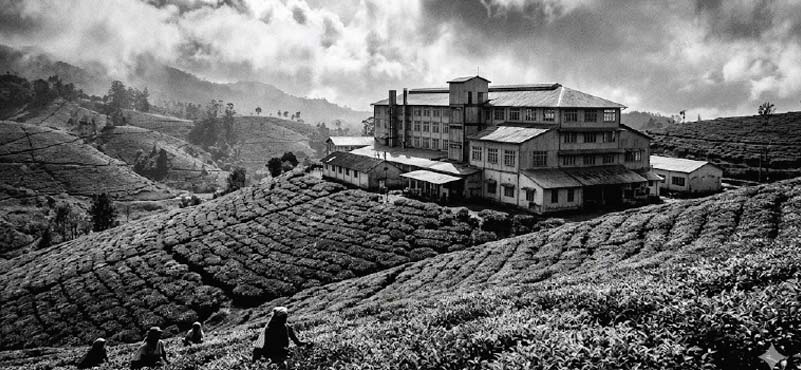 The Factory: Heritance Tea Factory, Nuwara Eliya, Sri Lanka
In 1992, an Aitken Spence director visited an abandoned tea factory on the Hethersett Estate, 2,000m above sea level, surrounded by mist and mountains. Most people would have seen a liability, he saw a hotel.
The upper floor wilting rooms became 50 guest rooms. The drying room became the reception, complete with a steel-latticed atrium. The original machinery stayed put, preserved and on display. The TCK 6685 restaurant was built inside a converted railway carriage. The hotel opened in 1996, won commendation at the South Asia Architecture Awards that same year, and by 2001 had claimed a merit award at the UNESCO Asia Pacific Heritage Awards. It is still, 29 years later, the highest hotel in Sri Lanka and one of the most written-about.
The real estate lesson here is simple, the building was a stranded asset with almost no alternative use. By converting it into a luxury hotel, Aitken Spence created something that cannot be replicated anywhere. The story is the competitive moat.
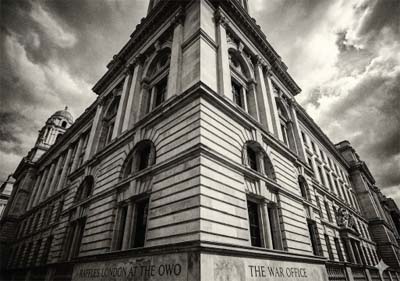 The War Office: Raffles London at The OWO, Whitehall, UK
The Old War Office was built in 1906 using 26,000 tons of Portland stone and 25 million bricks. Winston Churchill ran his Secretary of State for War operations from here. Ian Fleming reportedly conceived James Bond while working as a Naval Intelligence Officer in this building. It was closed to the public for over a century.
By the early 2000s it was decaying. In 2014, the UK government sold the lease to the Hinduja Group and Onex for £350 million. What followed was an eight-year, $1.6 billion restoration involving thousands of craftspeople and 37 consultant firms. The result was Raffles London at The OWO, which opened in 2023 as the brand’s first UK hotel – 120 rooms, nine restaurants & three bars and a Guerlain spa across four level along with 85 residences starting at $11.5 million.
Churchill’s former Army Council Room is now the Churchill Suite. The Granville Suite is named after Christine Granville, his favourite spy. The old Spies Entrance is now the private entry for residents.
The building that was costing money to sit empty now generates some of the most valuable room revenue in London. And the global press coverage before a single guest checked in was essentially free marketing worth millions. That is what genuine heritage does.
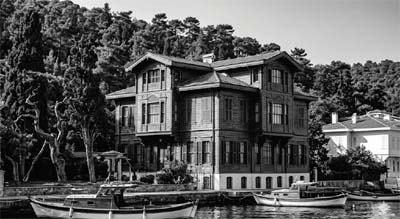 The Ottoman Monastery: Viceroy, Princes Islands, Istanbul
Buyukada, the largest of the Princes’ Islands in the Sea of Marmara, has no cars. Just horses, bicycles, and water. The Viceroy Hotels project here was anchored by a restored Ottoman mansion, complemented by a traditional Yali seafront residence, private cottages, an ESPA spa, a private lagoon and rooftop gardens. 77 keys. Four dining venues.
In a market where new-build luxury hotels chase the same design language globally, a restored Ottoman mansion on a car-free island offers something money alone cannot manufacture: authenticity.
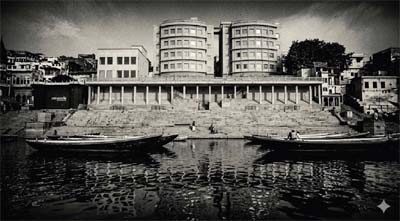 The Hospital: Avantika by the Ganges, Varanasi, IHCL
A private hospital in Varanasi closed its wards in 2010. The building sat on the banks of the Ganges, its architecture intact, its location impossible to replicate. IHCL saw the opportunity and opened Avantika by the Ganges under its SeleQtions brand in December 2025. 43 keys, 28 of which have uninterrupted views of the river. Design anchored in the five elements. An all-vegetarian restaurant celebrating Banarasi culinary traditions.
A building designed to heal the body, now designed to heal the spirit. IHCL did not acquire Ganges riverfront land and build from scratch. That is nearly impossible today. The hospital’s bones were the starting point, and that is exactly what made the economics work.
What About India?
Here is where it gets interesting for those of us who watch Indian real estate.
Think about the aging industrial and commercial buildings sitting largely unused across our metros. Andheri in Mumbai, built out in the 1970s and 80s, has entire pockets of old MIDC industrial estates, mill compounds, and dated office stock that the market has largely moved past. Delhi has its share of colonial-era institutional buildings and old cantonment structures. Bangalore’s older commercial precincts, built when the city was a very different place, increasingly sit awkward next to glass towers.
The question is not whether these buildings have potential. Many of them do, especially the ones with character, location, or history. The question is whether Indian hospitality will start looking at them the way Aitken Spence looked at a ruined factory in 1992.
A Final Thought
Spaces carry memory and when that memory is honoured rather than erased, it often becomes the most compelling hospitality offering of all.
The best hotels in the world have always sold more than beds. They sell experiences, context, and the feeling of being somewhere that simply could not exist anywhere else. A tea factory in the Sri Lankan mist, a war office on Whitehall, a hospital on the Ganges, an Ottoman mansion on a car-free island: they are not exceptions to what makes a great hotel. They are, perhaps, the definition of it.
India has plenty of buildings with stories still to tell. Someone just needs to be bold enough to listen.
A warm thank you to Raghavendra Shanbhag and Rohan Ranade for contributing these stories and bringing these remarkable conversions to life.
ABOUT THE AUTHOR
 Nikhil Shah, CFA is Senior Executive Director – Hotels & Hospitality, Capital Markets, India at CBRE, based in Mumbai. With two decades of experience spanning hospitality investment, banking, private equity, and capital raising, he leads transaction advisory and investment strategy for India’s hospitality sector within CBRE’s broader Asia Pacific platform. This article was first published on his Linkedin page.