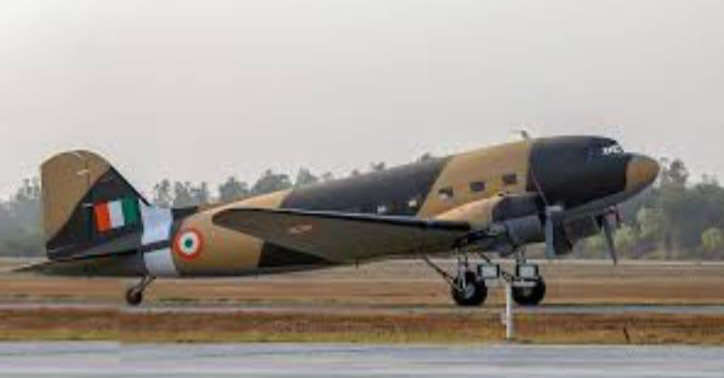
Every institution has its founding moment a single act that defines, forever, what it is really for. For the Indian Air Force’s transport fleet, that moment came on the morning of 27 October 1947. The ink on Kashmir’s Instrument of Accession had barely dried when IAF which had just seven Dakota light transport aircraft began moving Indian Army troops to Srinagar the very next morning. Tribal raiders armed by Pakistan were fifty kilometres from Srinagar. The road was compromised. The weather was hostile. And a young air force, born less than ten weeks earlier, found itself holding the thin thread by which a valley and perhaps the course of Indian history would be saved or lost.
Only the impromptu airlift to Srinagar in October 1947 saved the Kashmir Valley. A hundred planes landed every day on the improvised airfield, bringing in troops, ammunition and supplies, and evacuating casualties and refugees. The Air Force and civilian pilots of these Dakotas defied the mountains, the weather, and fatigue to continue the airlift till the valley was saved. Air Commodore Mehar Singh a man whose airmanship will never be adequately celebrated led six Dakotas of 12 Squadron across the Himalayan ranges, negotiating the Zojila and Fatula Passes, and became the first pilot to land at an improvised strip at Leh, saving Ladakh from the invaders. That act of aviation courage, by a pilot in a lightly loaded twin-piston transport, established the foundational principle of Indian military thought: in this country, with these frontiers, the man who controls the air bridge controls the battle.
The Douglas C-47 Dakota was our first real transport aircraft. A World War II workhorse pressed into the service of a freshly born democracy, it was neither fast nor capacious. But it was the machine through which the IAF first understood that strategic outcomes can hinge on how quickly you can get thirty soldiers and their ammunition from one side of a mountain to the other.
The First Generation
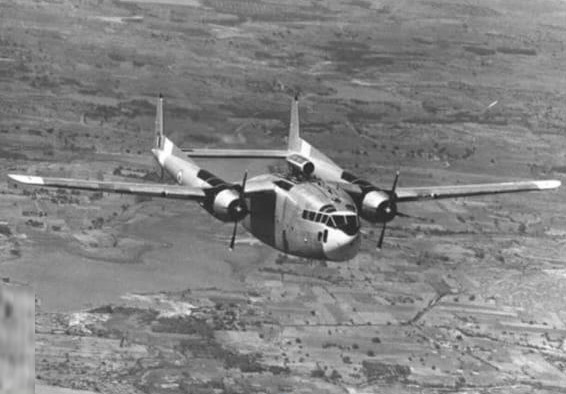
Through the 1950s, the IAF expanded its transport fleet with urgency driven by the geography of its borders. The Fairchild C-119G Flying Boxcar the “Packet” became the workhorse of the high altitude supply mission. By February 1954, No. 12 Squadron became the first to convert to the C-119G Packet aircraft, capable of lifting three times the load of a Dakota. In March 1958, they marked the first landing of this aircraft in Leh. The subsequent addition of the J-3400 jet pack enabled Squadron Leader Raje to land a Packet at Daulat Beg Oldi in July 1962. The Packet operating at Daulat Beg Oldi at 5,065 metres, without paved surface, without instrument landing aids, without any meaningful weather forecasting beyond a radio-telephone with a ten-mile range represents a standard of aviator courage and aircraft utilisation that the modern transport force would do well to remember.
The Canadian DHC-4 Caribou arrived in the immediate aftermath of the 1962 debacle a blunt acknowledgement of how desperately the IAF needed a dedicated short-field tactical transport. The IAF began to receive the DHC-4 Caribou, two being presented by the Canadian Government as assistance in the wake of the Sino-Indian conflict, and 16 more being ordered, with deliveries commencing in September 1963, resulting in the establishment of No. 33 Squadron. The Caribou’s ability to operate from short, rough strips made it invaluable in the northeast theatre and along the Himalayan axis, roles it performed quietly and faithfully until 1986.
The Antonov An-12 the Soviet equivalent of the C-130 gave India its first genuine medium-lift, four-engine turboprop capability. The Indian Air Force inducted the first An-12 in 1961, when it raised No. 44 Squadron “The Himalayan Geese”. The An-12’s contribution to the 1962 war is one of the least discussed and most consequential chapters of that conflict. When the first 14.5 ton AMX tank was being loaded at Chandigarh, the tail of the An-12 buckled down and the nose lifted into the sky. A new ramp was created, tyres and logs placed under the tail to support it, and the tank was gingerly driven in. No one was sure whether the aircraft’s centre of gravity was within limits luckily it was. Six tanks were positioned at Chushul, and that stopped the ingress of the Chinese in that area. The Chushul tank airlift improvised, dangerous, and conducted in plain sight of the enemy is a perfect metaphor for what transport aviation in India has always had to do: the strategically decisive, technically audacious, operationally unglamorous work that makes the difference between holding ground and losing it.
By the late 1960s, the IAF’s airlift component consisted of two squadrons with An-12Bs, three with C-119Gs, three with C-47s, two with Otters, and one each with Il-14s and Caribous. It was a polyglot fleet western, Soviet, Canadian held together by the ingenuity of ground crews who often maintained aircraft using outdated manuals and improvised spares. It was, in every sense, the transport force of a developing nation operating at the limits of its material resources. That it performed as well as it did is a tribute to a generation of aviators who asked no questions about the quality of the tools provided to them.
The Soviet Consolidation: An-32 and Il-76 (1984–2008)
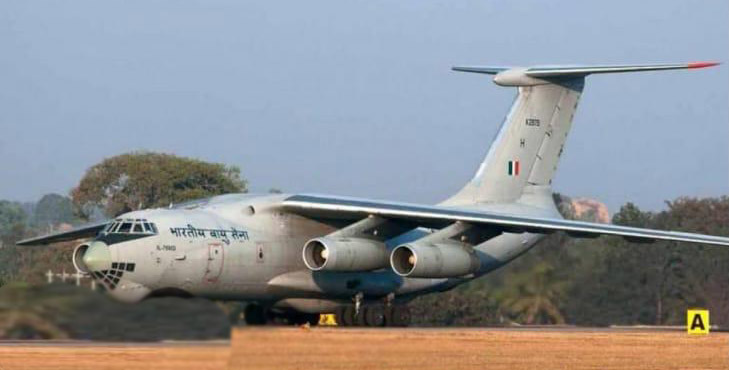
In the early 1980s, the transport fleet was modernised with the induction of Il-76 aircraft at 40 tonnes and An-32 aircraft at 4–6 tonnes. The Il-76 “Gajraj” transformed India’s strategic conception of airlift. Deliveries to the IAF began in 1985, and the aircraft were used in the Maldives in 1987 and in Sri Lanka during 1987–1990. The Il-76 flew pioneering missions like airlifting Bofors Howitzers to Thoise and T-72 tanks to Jaffna and Ladakh. Operation Cactus in November 1988 India’s airborne intervention in the Maldives was the Il-76’s finest hour, a 400 strong parachute contingent airlifted non-stop 2,000 kilometres to the Malé airport in under nine hours, quelling a coup before it could consolidate. That is what strategic airlift looks like when it works.
The An-32 “Sutlej” became the workhorse of the mountains, the northeast, and every domestic HADR mission for the next four decades. Inducted between 1984 and 1991 in numbers exceeding 100, it was a solid, reliable aircraft for its time. But even as it was being inducted, the medium gap was taking shape. The An-32 carried 4–6 tonnes. The Il-76 carried 40+. Between them lay an operational vacuum the 20–30 tonne range that no aircraft in the inventory could reliably fill. For over two decades, that gap was papered over by misemploying Il-76s on missions they were too large for and An-32s on missions they were too small for. The cost was felt in aircraft fatigue, operational inefficiency, and strategic inflexibility.
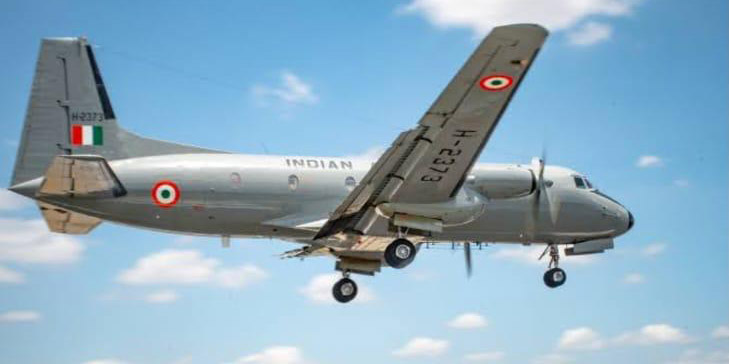
The Soviet Union’s collapse in 1991 transformed manageable ageing into accelerating crisis. The heavy-lift Il-76MDs were being grossly over-utilised and fast running out of spares, the An-32s were finishing their nominal 25-year technical life, and the HS 748 Avros were breaking every record for longevity with no replacements in sight. Half or fewer of the aircraft on strength were making it to the flight line each morning.
The Western Pivot and the Structural Gap (2008–2022)
The 2008 planned acquisitions of C-130Js and C-17s opened a new chapter. This marked a step change in capability the C-17’s 74.8 tonne payload was a huge increase over the 43 tonne Il-76. The C-17 has since proved its worth in exercises as well as in HADR missions like the evacuation of Indian nationals from Yemen in April 2015 and relief operations following the Nepal earthquake the same month.
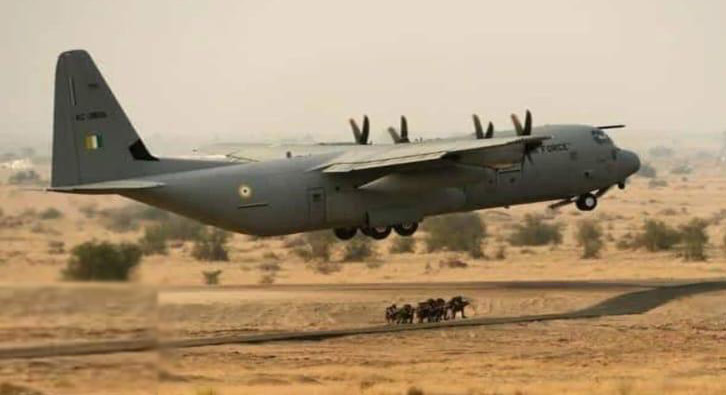
The C-130J, deployed with 77 Squadron, became the IAF’s special operations instrument of choice. It set the world record for the highest military landing at Daulat Beg Oldie, elevation of 16,000 ft in August 2013 writing a new chapter in the same place where Sqn Ldr Raje’s Packet had blazed a trail half a century earlier. But the C-130J was bought for a specific role special operation. With a payload ceiling of 20 tonnes and procurement through the US Foreign Military Sales route that denied India precision GPS and other critical systems due to CISMOA constraints, it was never designed to be India’s mass airlift workhorse.
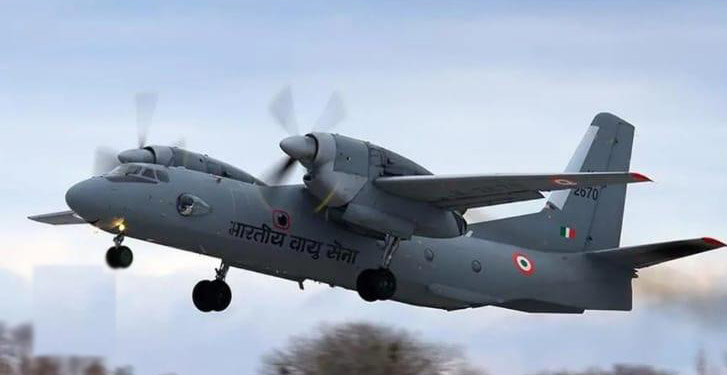
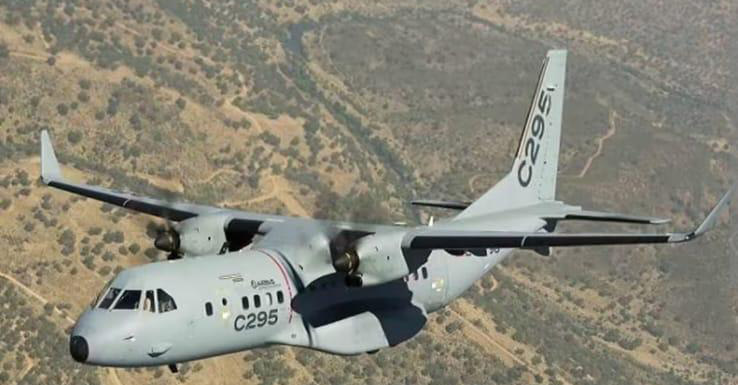
The C-17 production line closed. India’s fleet froze at 11 aircraft. And the An-32s, despite a 2009 Ukrainian upgrade programme, continued their slow, inevitable decline. The An-32 fleet dipped below 50% serviceability due to aging airframes and spare parts shortages. The IAF entered the 2020s with a fleet architecture that looked increasingly hollow at its centre: abundant light tactical lift from C-295s and An-32s at the bottom, genuine strategic lift from C-17s at the top, and almost nothing credible in between.
The 2020 Galwan standoff made this hollowness visible to every planner in South Block. Fifty thousand troops had to be sustained across Ladakh through a winter of confrontation. Roads were contested or congested. Weather was unrelenting. The Il-76s that provided surge strategic lift were operating with serviceability rates that made their deployment a matter of institutional prayer as much as operational planning. The transport gap was no longer an abstract staff college problem — it was a live operational liability.
The Medium Transport Aircraft
The requirement for a medium transport aircraft something between the An-32 and the Il-76 had been formally acknowledged since 2001. The Indo-Russian joint development programme for the Il-276, launched with considerable fanfare in 2007, consumed fifteen years and produced nothing. Design disagreements, cost-sharing deadlocks and the fundamental incompatibility of Russian and Indian institutional timelines killed it. When the programme was cancelled in 2016, the IAF found itself where it had started minus fifteen irreplaceable years.
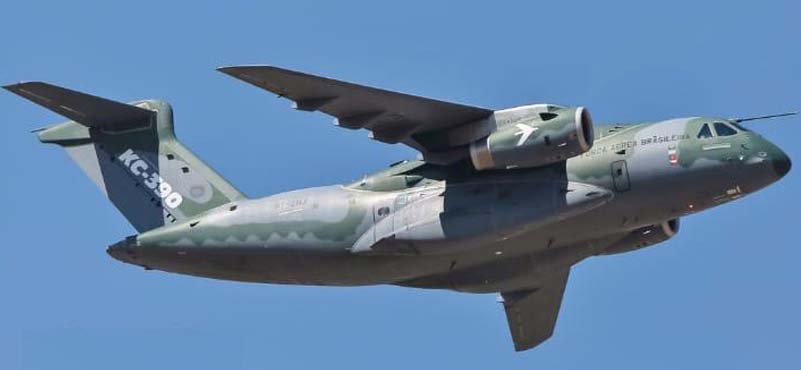
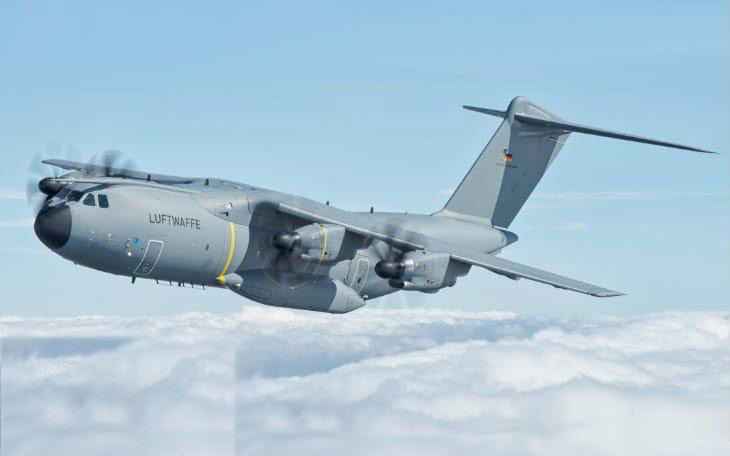
What followed was a series of RFIs in December 2022, then again with an expanded payload ceiling accompanied by the usual bureaucratic processing that characterises large Indian defence acquisitions. Four candidates emerged: Lockheed Martin’s C-130J (payload 20t), Embraer’s KC-390 Millennium (26t), Airbus’s A400M Atlas (37t), and Russia’s proposed Il-276 (20t). Then came a single operational requirement that cut through all the ambiguity, the Zorawar tank of Indian Army.
India’s indigenously developed 25 tonne light tank, designed for high-altitude warfare in Ladakh, crystallised the minimum payload threshold for the MTA. Any aircraft that could not lift a Zorawar from a plains airfield to a mountain Advanced Landing Ground was operationally irrelevant to the IAF’s core deterrence requirement. This requirement effectively eliminated the C-130J from the race. The remaining credible contenders became Embraer’s C-390M and Airbus’s A400M. Just as the An-12 crews improvised a ramp of tyres and logs to load AMX tanks at Chushul in 1962, India’s planners in 2024 defined their minimum acceptable capability around the armoured vehicle they needed to fly into the mountains. History repeating itself, sixty years on, with greater sophistication but the same underlying logic.
On 3 March 2026, the Defence Procurement Board cleared the proposal to acquire 60 Medium Transport Aircraft under the “Buy and Make” category at an approximate cost of ₹1 lakh crore ($11 billion). The project includes delivery of 12 aircraft in flyaway state from the manufacturer, with the remaining 48 produced in India.
Strategic Airlift
The Il-76’s induction in 1985 did not merely add a heavier aircraft to the inventory it fundamentally changed what India could do in the world. For the first time, the country possessed the ability to project military force and deliver national will over oceanic distances, at short notice, without asking anyone’s permission. The acquisition of strategic airlift capability was demonstrated during Operation Cactus, when within fifteen hours of President Gayoom’s appeal, the strike force of 50 Independent Parachute Brigade was airborne from Agra. Two Il-76 aircraft of the Indian Air Force, escorted by six Mirage 2000s, airlifted the paratroopers non-stop over 3,700 kilometres and landed them at Malé International Airport, with the Indian Army restoring government control within hours. It was the cleanest demonstration of what a strategic airlift fleet actually buys a nation not just the ability to move cargo, but the ability to act decisively when every hour matters. The Il-76 would go on to become India’s workhorse of goodwill as much as its instrument of deterrence. About 70,000 sorties were flown by the IAF’s transport and helicopter force in support of nearly 100,000 troops and paramilitary forces in Sri Lanka, transporting men, equipment, rations and evacuating casualties without a single aircraft lost or mission aborted. The Tsunami of 2004 saw the Il-76 over the Andamans within hours of the disaster; the 1990 Gulf crisis saw Indian nationals airlifted from Kuwait in the largest civilian evacuation in history. Wherever the map showed crisis whether a cyclone off Odisha, a coup in the Indian Ocean, or a civil war in the Gulf the Gajraj was there, often before the world had finished debating whether to respond.
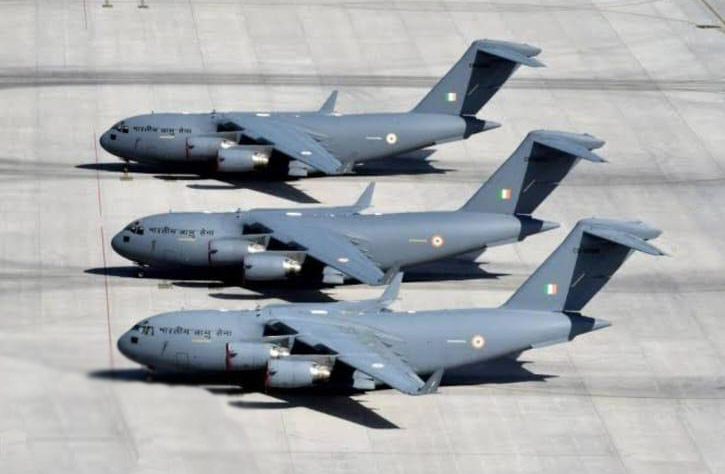
Yet for all its operational legacy, the Il-76 was always a first-generation strategic instrument powerful, but aging, and progressively more difficult to sustain after the Soviet Union’s collapse. The transformation came with the induction of the Boeing C-17 Globemaster III from 2013 onwards, and the difference was immediately visible. C-17s became the workhorse of any operation requiring heavy lift for the Indian Armed Forces or the Government of India, deployed across a vast range of scenarios like rapid troop deployment to Ladakh during the 2020–21 border standoff with China, evacuation of Indian nationals from Yemen, rescue sorties to Nepal after the 2015 earthquake, and the evacuation of Indians from war torn South Sudan in 2016. A C-17 even executed a precision airdrop of Combat Rubberised Raiding Craft and a platoon of MARCOS commandos in an operation to rescue the MV Ruen, a cargo vessel hijacked by Somali pirates in December 2023 demonstrating that in the right hands, a transport aircraft is not merely a logistics tool but a precision instrument of national power. In December 2018, Exercise Bahubali gave India a clear-eyed picture of its own surge airlift capacity: 16 fixed-wing transport aircraft C-17s, Il-76s and An-32s — airlifted almost 500 tonnes of equipment to Ladakh in a single coordinated wave from Chandigarh, completing the entire operation in under six hours. On the international stage, the C-17 became India’s calling card as a net security provider delivering humanitarian aid to Turkey following the 2023 earthquake, flying 42 transport aircraft sorties in COVID-19 relief operations, evacuating 76 Indians and 36 foreign nationals from Wuhan in February 2020, and airlifting 374 tonnes of drinking water to a thirsty Maldives during the 2014 water crisis in just two days. It moved currency notes during demonetisation exercise by the government in 2016. In bilateral exercises from Exercise Garuda with the French Air and Space Force, where C-17 Globemaster flew in support of Su-30MKI fighters alongside French Rafales in complex operational scenarios, to joint deployments with the US, UK and Australian air forces the C-17 gave Indian transport aviation a credibility it had never previously possessed on the world stage. India had arrived, not just as a consumer of global security, but as a provider of it. The tragedy is that only eleven of these aircraft exist in the inventory, the production line is permanently closed, and no follow-on is possible. That ceiling eleven C-17s, fourteen ailing Il-76s, and a dwindling An-32 fleet is precisely why sixty new medium transport aircraft are not a procurement decision. They are a strategic necessity.
What Sixty Aircraft Actually Mean
The number 60 needs to be understood not as a fleet count but as a strategic statement. The IAF now views the MTA programme not as a single-fleet replacement but as a dual-role recapitalisation effort intended to eventually replace both the ageing An-32 tactical transports and the heavy-lift Il-76 fleet. The RFP is expected to emphasise payload flexibility, range, and operations from semi-prepared airfields.
Sixty modern jets or advanced turboprops in the 26–37 tonne class will give India approximately four to five full airlift squadrons of contemporary capability. They will be able to deliver the Zorawar to a Ladakh ALG, refuel a Rafale over the Arabian Sea in buddy-buddy configuration, airdrop a para battalion into a contested zone, carry BrahMos missiles to a partner air force across the Indo-Pacific as the IAF’s C-17s did with the Philippines in April 2024 and evacuate Indian nationals from a collapsing state, all within the same airframe type. That is not fleet replacement. That is a generational transformation of India’s power projection architecture.
The IAF’s real focus is on long term resilience, cost effective lifecycle management, and the ability to sustain the fleet domestically over the next four to five decades. This is where the programme’s industrial dimension becomes as important as its operational one. The “Buy and Make” structure 12 flyaway, 48 India-produced is not an accounting arrangement. It is the deliberate construction of an aerospace manufacturing ecosystem that India has never had. The C-295 assembly line at Vadodara, the TLMAL empennage facility, the proposed Embraer Mahindra MRO hub these are the foundations of an indigenous airlift industrial base that could, in thirty years, give India the ability to sustain and eventually develop its own transport platforms. That is a strategic investment, not a procurement transaction.
The MTA competition today points strongly toward the Embraer KC-390 Millennium. Its jet propulsion, 26-tonne payload, proven multi-role capability, and crucially Brazil’s permissive technology transfer posture makes it the candidate best aligned with India’s convergent requirements of capability, cost and sovereignty. Brazil is more likely to offer favourable technology transfer terms than either the US or Europe, and this could directly support India’s ambition of developing its own civil airliner. The strategic logic is compelling an OEM unconstrained by ITAR, willing to transfer the technology at sub system level rather than merely at the assembly stage, is worth more to India’s long term aerospace ambitions than a marginally superior aircraft hedged behind export control walls.
ABOUT THE AUTHOR
 Air Marshal (Dr) Sanjeev Kapoor (Retd) a pilot, with over 8000 hrs of flying. He is a flying instructor and a pioneer in aerial refuelling in IAF. He commanded the air-to-air refuelling squadron, a large operational base, Air Force Academy and National Defence Academy. He holds an Airline Pilot License and is part of various think tanks, boards and studies.