
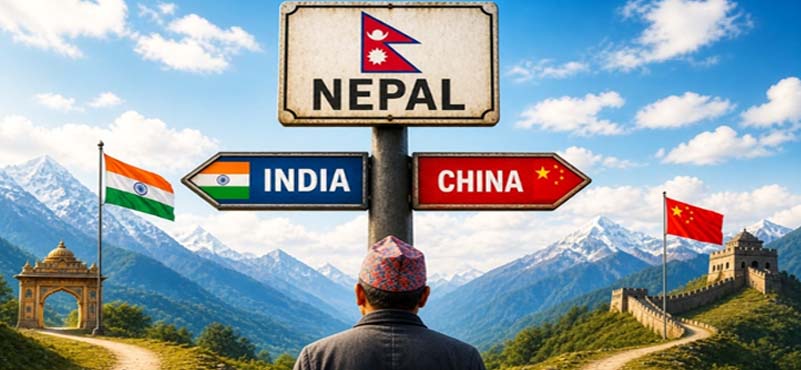
From civilizational closeness to strategic uncertainty and the space China was quick to occupy.
Civilizational Bonds, Strategic Blind Spots
The latest flashpoint came on 03 May 2026, when Nepal formally objected to the Kailash Mansarovar Yatra route via Lipulekh Pass, reiterating its territorial claims and once again bringing unresolved fault lines in India-Nepal relations to the forefront.
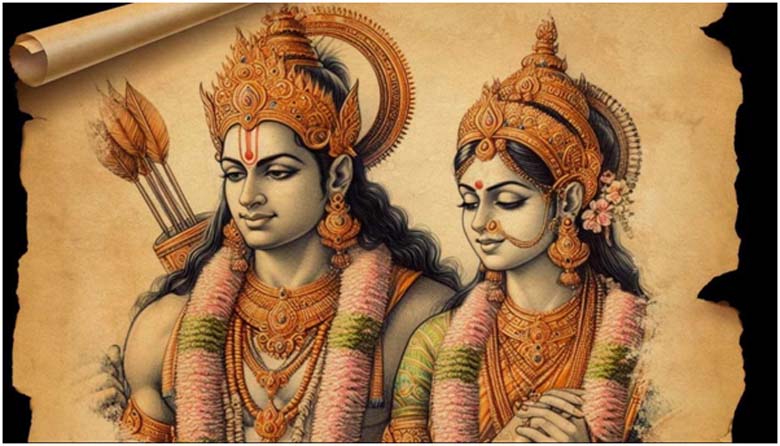
Few international relationships in the world are as deeply rooted in shared civilization as that between India and Nepal. Bound not by treaties alone but by religion, culture, geography, and kinship, the two nations have historically functioned less like neighbours and more like extensions of a common civilizational space. Civilisational memory traces the sacred union of Lord Ram of Ayodhya and Mata Sita of Janakpur to 5103 BC, symbolising a timeless bond between India and Nepal that predates modern borders and statecraft.
The open border, unique in South Asia, allows seamless movement of people, goods, and ideas. Generations of Nepali citizens have served in the Indian Army, particularly in the famed Gorkha Regiments, reinforcing a bond of blood and honour. Pilgrimage circuits, including the sacred journey to Kailash Mansarovar, further deepen this shared spiritual geography.
Yet, beneath this profound intimacy lay a structural asymmetry. The modern state relationship was shaped significantly by the Treaty of Sugauli signed on 04 Mar 1816, which defined Nepal’s territorial limits, and later by the India–Nepal Treaty of Peace and Friendship, which institutionalized close cooperation in defence, trade, and movement.
While intended to ensure mutual security and prosperity, the 1950 treaty gradually came to be viewed in Nepal as unequal. Provisions relating to defence cooperation and economic access were perceived as favouring India disproportionately. Over time, this perception created a quiet but persistent discomfort.
The core contradiction emerged here: India saw the relationship as natural and permanent; Nepal increasingly viewed it through the lens of sovereignty and autonomy. This divergence—subtle at first—would later widen into mistrust.
The First Crack: Memory of Coercion and Asymmetry
The first major rupture in India–Nepal relations did not arise from ideology or territorial conflict, but from perception—specifically, the perception of coercion.
The 1989 trade and transit crisis marked a turning point. For India, it was a policy disagreement linked to treaty negotiations and Nepal’s procurement of Chinese military equipment. For Nepal, however, it became a defining moment of vulnerability—an episode that exposed its economic dependence and geographic constraints.
The disruption of essential supplies, including fuel, left a deep imprint on Nepal’s national psyche. It reinforced a narrative that India could—and would—use its geographic advantage to exert pressure when its interests were challenged. This memory endured.
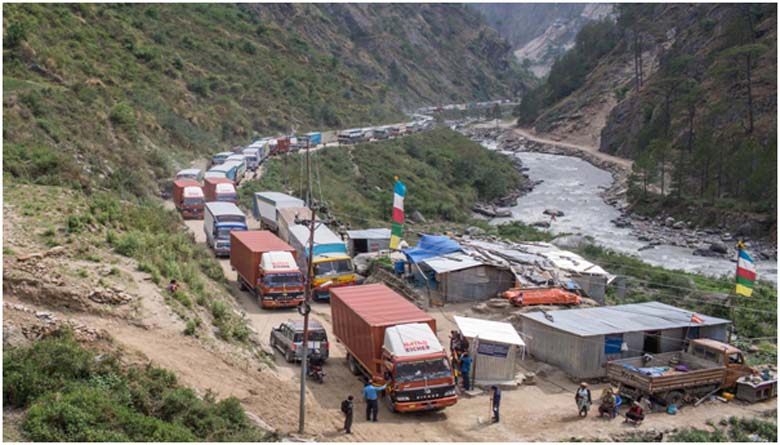
Even decades later, it shaped Nepal’s strategic thinking, particularly its desire to diversify partnerships and reduce reliance on India. It also fostered a political narrative where asserting independence from India became synonymous with nationalism.
In geopolitics, perception often outweighs intent. What India viewed as a tactical decision was internalized in Nepal as structural dominance. This psychological shift laid the foundation for future distrust—and made Nepal more receptive to alternative partnerships, particularly with China.
2015: The Defining Strategic Error
If 1989 planted the seed of mistrust, 2015 ensured it took root irreversibly. Following Nepal’s adoption of a new constitution, protests erupted in the Terai region, particularly among Madhesi groups who felt politically marginalized. The unrest disrupted key border points through which essential goods flowed from India into Nepal.
What followed was a severe supply crisis. Fuel, medicines, and daily necessities became scarce. While India maintained that the disruption was due to internal protests, Nepal widely perceived the situation as an unofficial blockade. This distinction—technical versus perceptual—proved decisive. For the Nepali public, the crisis reinforced an old fear: that India could choke Nepal’s lifelines during moments of political disagreement.
The impact was immediate and profound:
- Anti-India sentiment surged across political and social spaces.
- Nationalist narratives gained strength.
- Political parties began leveraging sovereignty as a central theme.
- China emerged as a viable alternative partner.
2015 marked the loss of the Nepali street. India may have retained formal diplomatic ties, but it lost emotional goodwill—a far more critical asset in a relationship built on proximity and trust. The consequences of that shift continue to reverberate today.
Border Disputes: From Geography to Identity
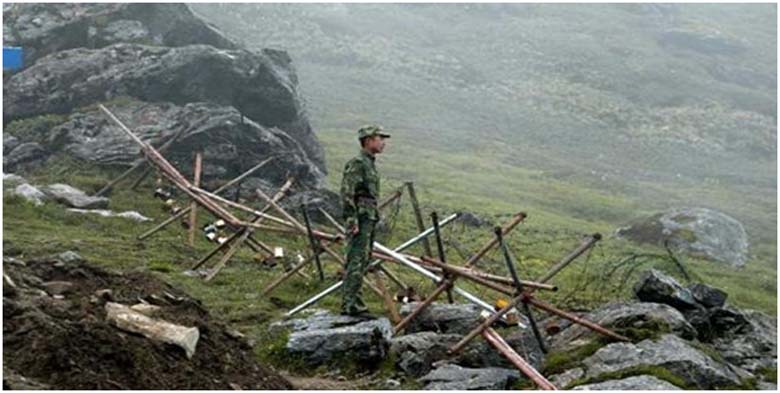
Territorial disputes between India and Nepal are not new. However, what changed in recent years is the politicization of these disputes into national identity issues. The Kalapani–Lipulekh–Limpiyadhura region became the focal point of this transformation. India’s infrastructure development near Lipulekh Pass and Nepal’s subsequent release of a new political map in 2020 intensified tensions.
What had long been a manageable boundary disagreement suddenly acquired symbolic significance. Maps became instruments of nationalism. Political leaders in Nepal framed territorial claims as assertions of sovereignty. Public discourse hardened, leaving little room for compromise.
The transformation was critical: A negotiable issue became a non-negotiable identity marker. When geography turns emotional, diplomacy becomes constrained—and resolution becomes politically costly.
Agnipath and the Gorkha Disconnect
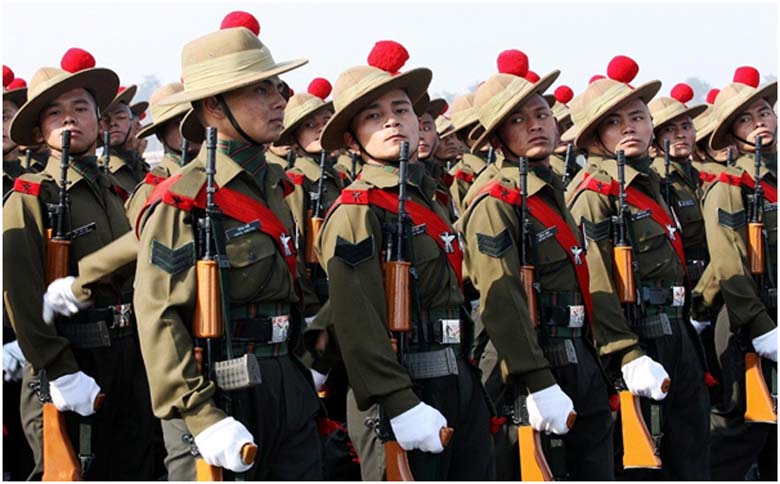
Among all recent developments, the impact of the Agnipath Scheme on India–Nepal relations has been uniquely sensitive. For decades, recruitment of Nepali citizens into the Gorkha Regiments has served as a cornerstone of bilateral ties. It has provided economic opportunities for Nepali families while reinforcing deep military and emotional connections between the two nations.
The Agnipath scheme, which introduced short-term military service, altered this arrangement fundamentally. Nepal raised concerns regarding:
- Pension and long-term welfare.
- Job security for recruits.
- Impact on returning soldiers.
- Lack of prior consultation.
For India, Agnipath was a domestic reform aimed at modernizing the armed forces. For Nepal, it was a disruption of a historic institution that symbolized trust and partnership.
The disconnect was not about policy—it was about process. By not engaging Nepal adequately before implementing such a significant change, India inadvertently signalled that the Gorkha relationship could be redefined unilaterally. This created:
- Strategic discomfort in Nepal.
- Political hesitation in permitting recruitment.
- Erosion of defence cooperation trust.
When legacy institutions are altered without dialogue, trust erodes quietly but deeply.
China’s Strategic Entry: Filling the Vacuum
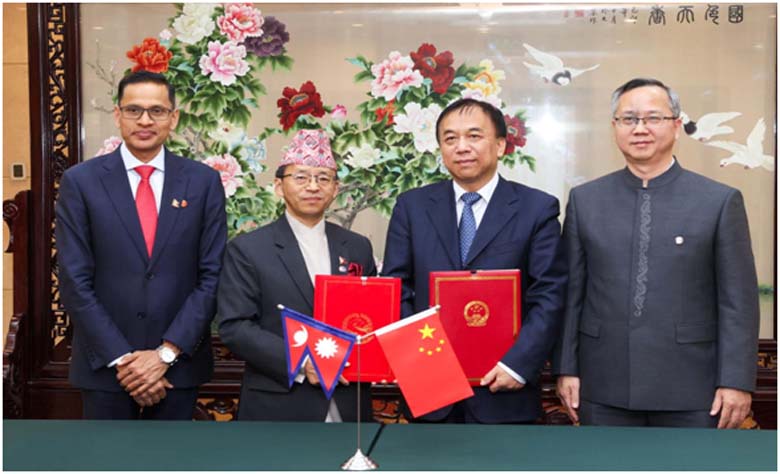
China’s growing presence in Nepal is often described as expansionist. In reality, it is better understood as opportunistic and strategic. Through the Belt and Road Initiative, China has positioned itself as a provider of connectivity, investment, and alternatives. Its approach operates across three dimensions:
- Infrastructure Diplomacy. Roads, airports, and proposed rail links signal long-term commitment. Even when projects face delays or operational challenges, their visibility reinforces China’s presence.
- Political Signalling. China offers Nepal a narrative of strategic autonomy—an option beyond dependence on India.
- Strategic Depth. By strengthening ties with Nepal, China gains influence across the Himalayan region without direct confrontation.
However, this engagement is not without limitations:
- Debt concerns.
- Project viability issues.
- Governance challenges.
Yet, perception again matters more than perfection. China did not displace India—it capitalized on India’s inconsistencies.
Nepal’s Internal Flux: The Multiplier Effect
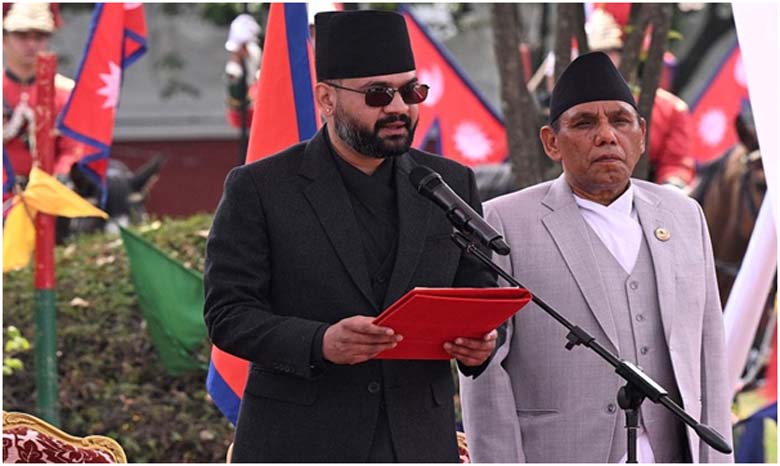
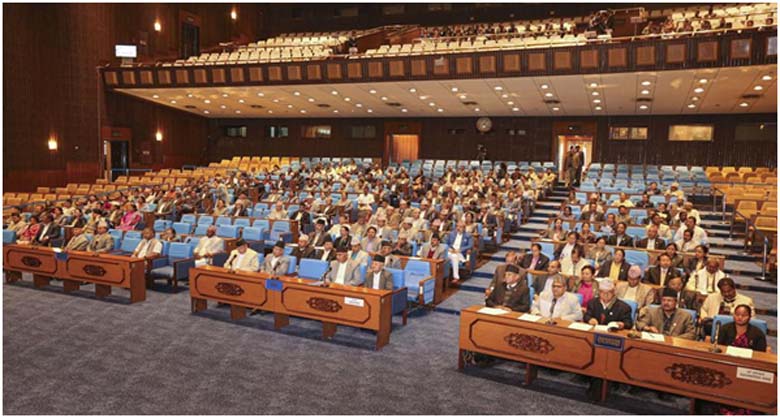
To understand India–Nepal relations, one must also understand Nepal itself—a nation in constant political transition. From monarchy to republic in 2008, followed by years of coalition instability, Nepal’s internal political landscape has remained fluid. Governments have changed frequently, policies have shifted, and strategic positions have evolved accordingly.
The emergence of younger leadership, including figures like Balendra Shah, reflects a new political energy—more assertive, more nationalist, and less willing to operate within traditional frameworks. This internal volatility has amplified external tensions.
India often engaged Nepal through established political channels, expecting continuity. China, in contrast, engaged the state more structurally, maintaining consistency despite leadership changes.
India negotiated with governments.
China engaged the system.
That distinction proved consequential.
Where India Went Wrong
This is the central diagnosis. India’s missteps were not singular—they were cumulative:
- Strategic Overconfidence. Assuming cultural proximity would guarantee alignment.
- Episodic Engagement. Reacting during crises rather than maintaining sustained engagement.
- Communication Failure. Losing the narrative within Nepal’s public discourse.
- Policy Insensitivity. Underestimating the impact of actions like 2015 disruptions and Agnipath.
- Delivery Deficit. Slow execution compared to China’s visible initiatives.
The fundamental error: India relied on history; China invested in strategy.
Way Ahead: Rebuilding Trust, Not Just Influence
The path forward requires recalibration, not reaction.
- Treaty Modernization. Revisit the 1950 framework to reflect contemporary realities.
- Institutional Dialogue. Create permanent mechanisms for border and transit issues.
- Defence Reset. Rebuild Gorkha recruitment on mutually agreed terms.
- Infrastructure Delivery. Prioritize speed, transparency, and completion.
- Narrative Engagement. Engage Nepal’s youth, academia, and media directly.
India must transition from being Nepal’s default partner to its preferred partner.
Conclusion
From the civilizational unity symbolized by Ram and Sita to the contemporary tensions over Lipulekh, India–Nepal relations have traversed a complex path. This is not a story of sudden breakdown—but of gradual drift.
China did not break this relationship. It entered the space created by mistrust, miscalculation, and missed opportunities.
The future of India–Nepal ties will depend not on correcting the past—but on redefining the approach.
Respect, consistency, and delivery—not sentiment—will determine the next chapter.
ABOUT THE AUTHOR

Lt Gen Rajeev Chaudhry (Retd) is a social observer and writes on contemporary national and international issues, strategic implications of infrastructure development towards national power, geo-moral dimension of international relations and leadership nuances in changing social construct.