
The Pattern of Conflicts
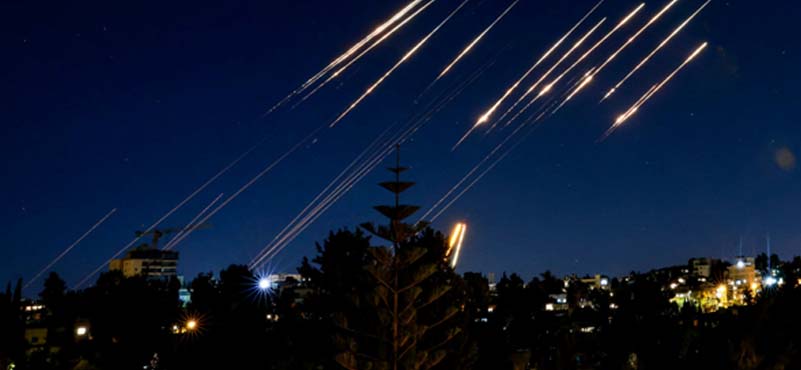
Operation Desert Storm in 1991 saw the US and its coalition allies launch a massive land, air, and sea offensive. It was a marked change from the gruelling and unsuccessful war in Vietnam. The speedy victory even led to talk of a new era of warfare, a so-called revolution in military affairs. In theory the adversary would be defeated through speed and manoeuvre, with real-time intelligence provided by smart sensors guiding immediate attacks using smart weapons.
However, the counter-insurgency campaigns in Afghanistan and Iraq, which followed, came to be labelled “forever wars,” and saw the same coalition being bogged down. The military campaign in Afghanistan was the longest in US history, and in the end, despite being pushed out at the start of the US invasion, the Taliban eventually returned in 2021.
Russia too has felt the pain of protracted conflict. Ukraine war was supposed to be over in a matter of days but over four years later the conflict persists, which has been dominated by grinding, attritional warfare, rather than bold and audacious offensives, as witnessed on the same terrain in World War II.
Similarly, when Israel launched its invasion of Gaza, in retaliation for Hamas’s 07 October 2023 assault, then US President Joe Biden urged that the Israeli operation should be “swift, decisive, and overwhelming.” Instead, it has continued for years, and in the process expanded to other fronts in Lebanon, Syria, and Yemen. Though a fragile cease-fire was reached in January 2025 but Gaza has been flattened and the humanitarian losses are akin to a genocide.
The initiation of the Iran War was probably shaped on thinking regarding the advantages of short wars, in which major outcomes were to be decided in the first days of combat. In this case the first strike aimed at the elimination of Ayatollah Khamenei was supposed to pave the way for the collapse of the regime which had been facing internal pressures. But instead, it galvanized the Iranians. By now, it is obvious that the war is of a qualitatively different nature than most other US wars these past few decades, and the pain is being felt across the globe.
Looking Back in History
In the summer of 1914 European military leaders were confident that the war would be “over by Christmas, instead, the fighting characterised by devastating trench warfare along almost static frontlines, lasted until November 1918.
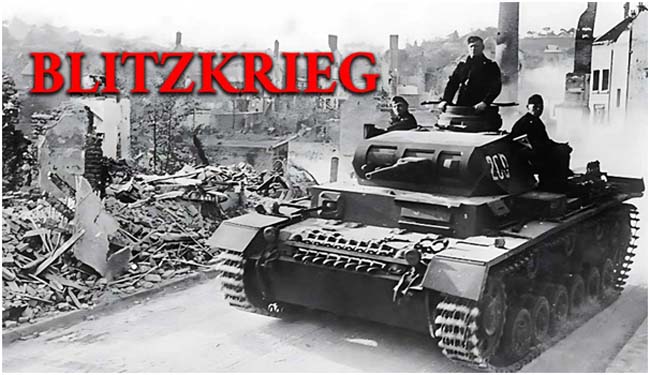
In 1940, Germany overran much of Western Europe in a matter of weeks by means of a blitzkrieg, bringing together armour and airpower. But it failed to bring victory and after initial rapid advances against the Soviet Union in 1941, it was drawn into a brutal war with enormous casualties on both sides, that would only end nearly four years later, with the division of Germany. In both world wars, the key to victory lay in stamina and the ability to sustain conflict.
The Korean War lasted over three years, and the US troops remained in Vietnam for over a decade. This is not to say that modern armed conflicts never end in quick victories. In June 1967, it took Israel less than a week to decisively vanquish a coalition of Arab states in the Six-Day War. The 1971 War which resulted in the liberation of Bangladesh took just thirteen days for India to defeat Pakistan. Operation Sindoor took 88 hours of precise and calibrated targeting before Pakistan asked for a ceasefire.
In the Indian context while our conventional wars have been short but our unresolved border issues have remained and the proxy war in J&K has persisted.
Need to Plan for the Unknown
For a country initiating conflict, the advantages of short wars point towards immediate success at a bearable cost. By contrast, even admitting to the possibility that a war could become protracted may seem to betray doubts about the ability of one’s military to overcome an adversary.
The idea of short swift wars and surprise offensives producing decisive victories may be embedded in political and bureaucratic thinking. But time and again, forces that undertake them have shown how difficult it is to bring a war to an early and satisfactory conclusion.
Unfortunately, there is a tendency as is being witnessed in Iran, that countries with an immense power differential tend to assume that their significant military superiority will quickly overwhelm opponents. This overconfidence means that they fail to appreciate the limits of military power and set objectives that cannot be achieved. Underestimating the enemy’s political as well as military resources is one of the main reasons that short-war strategies fail.
The bigger problem is that by focusing on immediate battlefield results, instead of the end-state, they often neglect the broader elements necessary for success, such as achieving the conditions for a durable peace, or effectively managing an occupied country in which a hostile regime has been toppled, but a legitimate government has yet to be installed, as was witnessed in Iraq.
Another example is Afghanistan. The US had a clear “short war” plan for overthrowing the Taliban in 2001, which it implemented successfully and efficiently using regular forces combined with the Afghan-led Northern Alliance. But there was no clear strategy for the next stage. The problems the US faced were caused not by a stubborn opponent fighting with regular forces, but by endemic violence, in which the threats were irregular and emerged out of civil society. Without external forces to prop up the government, the Taliban was able to return.
The US has historically underestimated the fact that nationalism is a motivating factor, while believing that superior military force and technological supremacy are enough to subdue its target country. But discounting nationalist sentiment, as the US did in its interventions in Vietnam, Afghanistan, and Iraq, entangled them in unwinnable wars. No wonder President Donald Trump seemed surprised by Iran’s retaliatory strikes against its neighbours. “Nobody expected that. We were shocked. … They fought back.”
The challenge therefore is not simply planning for long wars rather than short ones, but planning for wars that have a workable end-state with realistic objectives, however long they may take to realize.
A Comparison of the Costs of War
The strategy for short war is geared towards moving fast, with an element of surprise and with sufficient forces and overwhelming the enemy before they can mount an adequate response.
Short wars are fought with whatever resources are available at the time; long wars require the development of capabilities that are geared to changing operational imperatives, as demonstrated by the continual transformation of use of drones that is being witnessed in the Ukrainian Conflict. While in contrast long wars require constant adaptation and evolution: the longer a conflict lasts, the more pressure there is for innovations in tactics and technologies that might yield a breakthrough.
Short wars may present only temporary disruptions to a country’s economy and society and do not require extensive supply lines; while long wars demand strategies for maintaining popular support, functioning economies, and secure ways to re-arm, re-stock, and replenish troops.
Gaza is a case in point, where the war has raged for over two years and a fragile ceasefire is now in place. But has the war ended with something approximating a victory, as the conflict has caused huge numbers of civilian casualties and widespread destruction of civilian areas and infrastructure? The Israeli government had set as its objective the complete elimination of Hamas, which it has not achieved.
Even for a great power, failure to prepare for, and then rise to meet these challenges could be disastrous. Militarily, Iran has not only survived American firepower, but matched it. Economically, it has triggered the worst energy shock in modern history and taken control of the world’s most strategic chokepoint Hormuz. Iran has no doubt been able to able build adequate capability to stall the US.
Lessons for India
The above brings out adequately that India needs to think through the possibility of a major conflict along our borders. We do not have friendly neighbours and relations can be termed as hostile along most of our land borders. Where they are not openly hostile, the powers in question are under the influence of those who are hostile. Therefore, at when hostilities are openly declared, one cannot predict, but there have been enough opportunities in the recent past where localised incidents could have become an all-out war. For example, Kargil, Parliament attack, 26/11, Uri, Pulwama, Galwan, Sindoor…. The answer lies in planning and preparation.
India’s military planning, till not too long ago, was to plan for a 40-day war. Accordingly, all the weapons, ammunition, stocking, reserves were done to cater for 40 days of intense fighting. Then suddenly, it was decided that India cannot afford such largesse or luxury of maintaining so much reserves, it is too expensive, and why indulge in such large quantities, when the war, if at all, will be only for 10 days, as America is likely to intervene and stop the war. Thus, the reserves began to be scaled down. But will it happen like that? Can one be so sure? Can we not see what is going on across the world? Are our neighbours also equipped for a 10-day war, or more?
India must dispel the myth of short wars. Such a narrative was possibly conceived to justify ammunition shortages. The Ukraine, Gaza, Iran, Wars have upended many of the theories of war, including one that modern wars will be short and swift.
War Wastage Reserves (WWR). Ammunition, along with the weapon system required to fire it, form the most important pre-requisite for battle. Ammunition comprises of various categories and parts. For example, there is small arms ammunition, tank ammunition, Artillery ammunition, and Missiles, to name a few. These ammunitions come as a whole or in parts, for example the cartridge case separately and the fuze separately. The WWR must cater for all types, categories, parts, sub parts etc, so that the weapon has a corresponding ammunition, in sufficient numbers to sustain the anticipated duration of war.
The aspect of WWR is the greatest lesson one needs to learn from the present conflicts across the world. As stated earlier, India has been scaling down the requirement of reserves, repeatedly stating that war will last only 10 days, of which there is no guarantee. Therefore, India requires to carry out an urgent and immediate recalculation, not only the initial stocking but also the sustenance. Building the industrial base for manufacture and re-supply, is a prerequisite to winning wars, and along with this comes the dependence on the private sector. The government needs to lay down consistent policies and ensure financial commitments. The security of nations cannot be outsourced, nor can it be dependent on other nations. Inadequacies in military–industrial complexes must be identified and created. What war may demand, no one can predict with certainty, but intelligent military predictions must be made. Forewarned is forearmed.
All these have multiple lessons but what stands out is the need to develop hard power for which developing a strong military industrial base and being self-reliant is imperative.
Conclusion
But the question that needs to be asked is how realistic it is to plan for wars that do not have a clear aim regarding the end-state. It is one thing to sustain a protracted counter-insurgency campaign, but quite another to prepare for a conventional conflict that involves continuing and substantial losses of personnel, equipment, ammunition, and critical infrastructure over an extended period.
Next is the investment in resources to prepare for a long war. Here the answer may not lie in preparing for wars of indefinite duration, but in developing doctrines of victory that are realistic in their political objectives and manner in which they are to be achieved.
During the Cold War, the main reason the two sides did not devote extensive resources to preparing for a long war was the assumption that nuclear weapons would be used sooner rather than later. Fortunately, the mutually assured destruction was a deterrent that prevented war.
Wars are initiated by political decisions in most cases with the assumption that they will be short. But the more difficult political decision is when to bring the fighting to an end.
For any country, the prospect of a long drawn-out or unending hostility has significant economic and political costs. Iran and Iraq fought for ten years before Ayatollah Khomeini while accepting the UN ceasefire said; ‘It’s Worse Than Poison,’
Though wars cannot be avoided, their military and political objectives must be realistic and attainable and set in ways that can be achieved by the military resources available. One of the great allures of military power is that it promises to bring conflicts to a quick and decisive conclusion but that may not always be the case.
In the current war in Iran there seems to have been a critical misalignment in defence planning regarding the tendency of the war to drag on and Israel and the US seem to have fallen into the trap of a “short war.”
The truth is that often initial battle plans do not play as planned and have bitter consequences. To quote the Prussian Field Marshal Molkte the Elder; “no plan survives contact.”
ABOUT THE AUTHOR
 Maj Gen VK Singh, VSM was commissioned into The Scinde Horse in Dec 1983. The officer has commanded an Independent Recce Sqn in the desert sector, and has the distinction of being the first Armoured Corps Officer to command an Assam Rifles Battalion in Counter Insurgency Operations in Manipur and Nagaland, as well as the first General Cadre Officer to command a Strategic Forces Brigade. He then commanded 12 Infantry Division (RAPID) in Western Sector. The General is a fourth generation army officer.
 Major General Jagatbir Singh was commissioned into 18 Cavalry in December 1981. During his 38 years of service in the Army he has held various command, staff and instructional appointments and served in varied terrains in the country. He has served in a United Nations Peace Keeping Mission as a Military Observer in Iraq and Kuwait. He has been an instructor to Indian Military Academy and the Defence Services Staff College, Wellington. He is a prolific writer in defence & national security and adept at public speaking.