Objectives: Operation Epic Fury
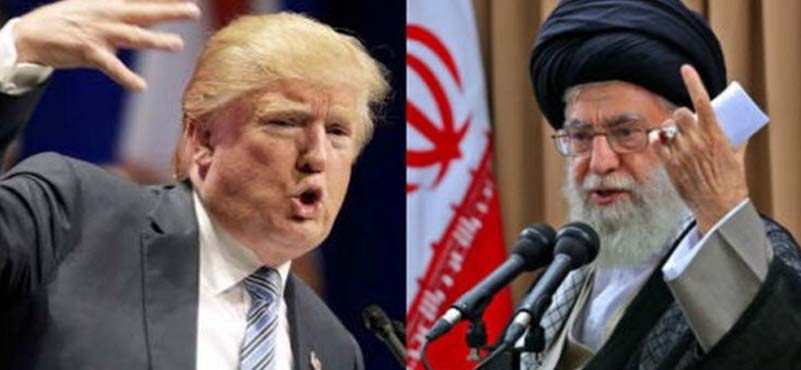
Since Operation Epic Fury,” began on 28 February, US & Israeli strikes have targeted military and security infrastructure and eliminated Ayatollah Khamenei and several senior Iranian Commanders. But Iran has managed to absorb the initial shock and maintain its missile barrage despite heavy US electronic jamming and technological superiority by adopting a doctrine of “centralised planning and decentralised execution.”
The burden of war is increasing not only for those directly involved but also the Gulf States, as well as the wider world. Shipping through the Strait of Hormuz which caters for the transit of roughly a fifth of the world’s oil and gas supplies, has nearly come to halt. Several of the world’s largest container shipping lines have suspended services, severely disrupting the global energy supply chain and triggering a sharp rise in oil and gas prices. The closure of regional airspace has not only adversely affected travel but has also dealt a significant blow to the broader global economy.
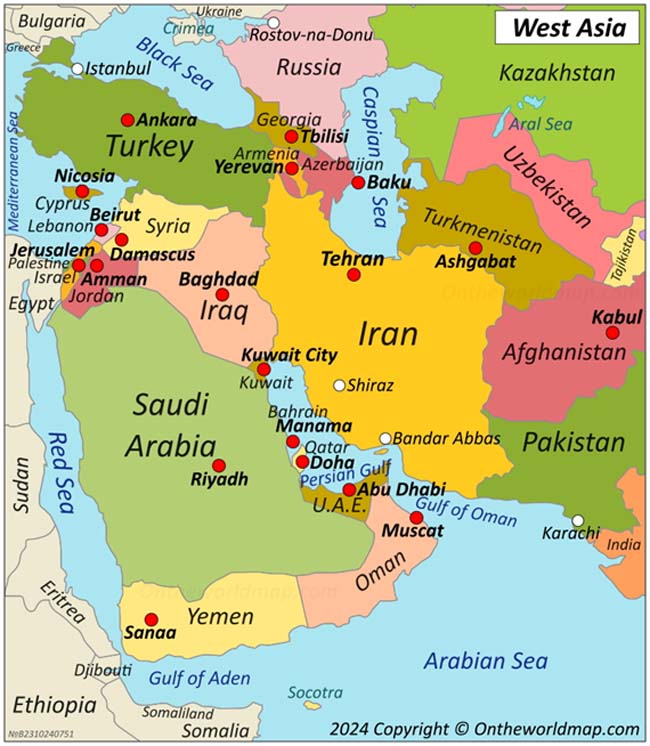
Iran’s aim is probably to spread enough devastation to separate its neighbours from the US and block the flow of crude oil. With no early end of the war in sight there is growing fear of a global economic recession.
While the US–Israel campaign has four main objectives: eliminate Iran’s ballistic missile threat, destroy its naval capability, disrupt its missile and drone production infrastructure, and cut off Tehran’s pathway to a nuclear weapon. But there is also one more objective that has been enunciated by President Trump and that is regime change. With this in mind, he told NBC in a phone call; “We want to go in and clean out everything,” “We don’t want someone who would rebuild over a 10-year period.
However, since the operation began, neither Washington nor Israel has deployed ground forces, relying instead on airpower and naval strikes. Speaking to reporters on 04 March, White House Press Secretary Karoline Leavitt said deploying US ground troops into Iran is not part of the current military strategy, but declined to rule out the option entirely. “It’s not part of the current plan, but I’m not going to remove an option for the President that is on the table.”
Leavitt suggested that previous administrations had sometimes narrowed their strategic space by prematurely dismissing potential actions before fully assessing how unfolding developments might alter the situation.
The present approach, she indicated, is designed to preserve maximum latitude for decision-making. The calibrated message reflects a broader doctrine in US national security policy: maintain ambiguity to strengthen deterrence while avoiding premature escalation.
US Boots on Ground
For now, the Trump administration insists the current strategy relies on air and naval power rather than ground forces. But the possibility of sending ground forces has nonetheless become a central question as the conflict intensifies. When asked about the issue earlier this week, President Donald Trump himself declined to rule it out.
“Like every President says, ‘There will be no boots on the ground.’ I don’t say it,” Trump told The New York Post. “I say ‘probably don’t need them,’ [or] ‘if they were necessary’.”
The Chairman of the Joint Chiefs of Staff, Gen Dan Caine avoided discussing the possibility of deploying troops. “I am not going to comment on US boots on the ground. I think that is a question for policymakers. And I do not make policy, I execute policy,” he told reporters.
The growing confrontation has also triggered sharp debate in Congress, where some lawmakers fear the US could be drawn into a prolonged war.
Senator Richard Blumenthal, a Democrat from Connecticut after attending a classified briefing said; “I am more fearful than ever after this briefing that we may be putting boots on the ground and that troops from the United States may be necessary to accomplish objectives that the administration seems to have.”
He also said the briefing left him with unanswered questions about the administration’s long-term strategy. “I also am no clearer on what the priorities are going to be of the administration going forward, whether it is destroying the nuclear capacity of Iran, or simply the missiles or regime change, or stopping terrorist activities” he said.
Senator Elizabeth Warren also a Democrat voiced similar concerns and said the situation was “so much worse than you thought,” accusing the administration of launching the war without demonstrating an imminent threat to the United States.
Republican lawmaker James Comer said while most members of Congress hoped to avoid such a scenario, it could not be ruled out. “If there are boots on the ground, I hope they’re not on the ground any longer than the boots on the ground were in Venezuela,” he told News Nation. “But sometimes that’s unavoidable in a situation like this.”
But by categorically refusing to rule out “boots on the ground,” officials appear determined to preserve military and diplomatic flexibility as the conflict continues to unfold.
The Players at the Periphery of Iran
But the boots on ground need not be American or Israeli troops as two of Iran’s neighbours are the Kurds, the fourth largest ethnic group in the Middle East, who are amongst the largest stateless people inhabiting four countries namely Turkey, Syria, Iraq and Iran, while the other are the Balouch, a Sunni population inhabiting the backward province of Sistan–Balouchistan in Eastern Iran and Balouchistan in Pakistan.
Iranian Kurdish opposition groups in exile in Northern Iraq stated that they have had plans to cross the border for decades. As per reports six opposition groups which recently formed a coalition, were coordinating with each other politically and militarily.
“We have been preparing for this for the past 47 years, since the age of the Islamic Republic,” said Hana Yazdanpana, of the Kurdistan Freedom Party (PAK), which claims to have the biggest armed force.
She said first, the US needs to pave the way. “We can’t move if the air above us is not cleaned”. “And we need the regime’s weapons depots to be destroyed. Otherwise, it would be suicidal. The regime is very brutal, and the most advanced weapon we have is a Kalashnikov.” – Probably, a hint for weapon transfers.
The White House has denied a report that US President Donald Trump was considering arming the Kurds many of whom were trained by US forces in the past to fight against the Islamic State (IS) group in Iraq.
However, President Donald Trump has spoken to Masoud Barzani and Bafel Talabani the heads of the Kurdistan Democratic Party, or KDP, and the Patriotic Union of Kurdistan, or PUK, the two main Kurdish parties in Iraq to discuss the situation in Iran.
As per reports Trump had asked the Iraqi Kurds to militarily support the Iranian Kurdish groups in operations in Iran and to open the border to allow the Iranian Kurdish groups to move freely back and forth.
Kurdish fighters previously supported the US against Saddam Hussein in Iraq. The group also helped the fight against the Islamic State in Syria. But the Kurds have also been betrayed earlier, first by the Shah of Iran in 1975 and recently when Trump sided with the transitional government in Damascus. Hence there are fears that the US may not keep any promises it may make.
The Baloch make an estimated 2 percent of the Iranian population of 93 million, most of whom inhabit the Eastern province of Sistan which shares a border with the Balochistan province of Pakistan. They are neither Persian nor Shia and have been suppressed since ages.
The Sistan-Balochistan and Balochistan provinces in Iran and Pakistan, respectively, are witnessing ethno-separatist insurgencies. If the Iranian regime’s grip on Sistan-Balochistan weakens due to ongoing conflict, Baloch ethno-separatist groups are likely to take advantage of the situation which in turn could benefit the US.
Instability in one country rarely stays within its boundaries and often spills over into neighboring states, especially when the borders are porous.
For Pakistan with an insurgency raging and gathering strength in Balochistan and the near simultaneous start of conflict with Afghanistan and Iran, its entire Western border is now a war zone.
The Asim Munir Connection
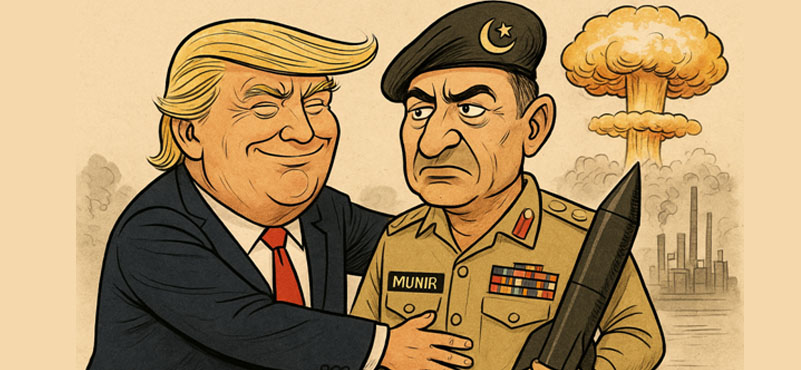
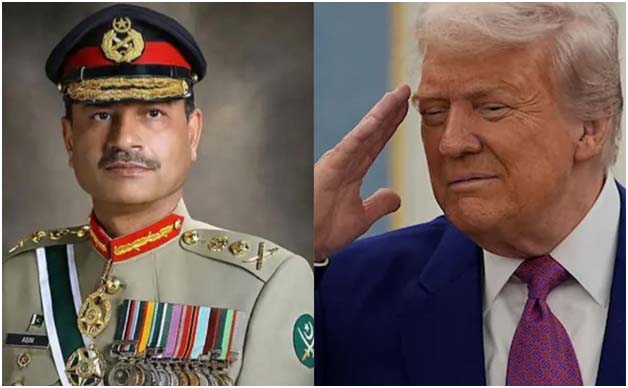
It is well possible that Donald Trump had planned the attack on Iran many months ago, or at the very start of his second term. And if so, his friendship with Field Marshal Asim Munir makes sense. The one thought any American President or Military General would have had was where to find a secure firm base to induct boots on ground into Iran. It is likely that Donald Trump saw Pakistan as that secure base. With Jacobabad, a traditional airfield and staging area for US troops being readily available, it is well possible that the cooperation and logistic facilities of Pakistan would go a long way in achieving Donald Trump‘s, Iran dream.
While all this sounds plausible , will it actually suit Pakistan to have the Baluchis providing a secure base to the Americans and taking the battle into Iran, through Iran’s south-eastern flank? What will happen once the Americans withdraw? It could well result in a Taliban like situation, in which Pakistan suddenly finds armed and trained Baluchis, now fighting the Pakistanis, instead of the Iranians. But one thing is clear, that America is only going to look at their own self-interest, they couldn’t care what will happen after they withdraw. They just have one aim in mind, that they want to achieve at whatever cost. So, this is a very nebulous area, and we will have to wait and watch how it unfolds.
Analysis
The political rhetoric from Washington reveals that despite the military momentum being claimed, a physical entry into Iran may be necessary in order to accomplish its laid down objectives. But the reality is that Iran’s varied terrain and a lack of a secure base either in its East in Iraq or West in Baluchistan holds numerous challenges for launching a traditional ground invasion involving tanks and massed infantry.
A traditional invasion to occupy territory may not be viable, due to Iran’s complex geopolitical environment, rugged geography, and demographic density, all of which provide Iran with a distinct defensive advantage. The other option is launching an amphibious assault which also not practical due to the Strait of Hormuz being controlled by Iran. The different pattern of warfare could therefore be more hybrid in nature.
This could also involve limited efforts by Special Forces infiltrating specific points to execute precise sabotage or intelligence-gathering missions, followed by rapid extraction.
Before Trump, the US has traditionally insisted on loftier principles in wars, saying for instance it was seeking to install democracy in its wars in Afghanistan and Iraq. But now Secretary of Defence, Pete Hegseth has sought to differentiate the Iran operation from past long-running US wars in Iraq and Afghanistan, saying the war is not an effort to build democracy in Iran. “No stupid rules of engagement, no nation-building quagmire, no democracy-building exercise, no politically correct wars. We fight to win and we don’t waste time or lives.”
But it is also increasingly clear that the US has started a war at Israel’s behest and cannot clearly articulate its own reasons for why this attack was necessary, and what objective they are pursuing. As a result, they have no concept of the endgame, and the assumptions under which they went in seem to be collapsing.
Conclusion
A prolonged American war with boots on the ground would further destabilise an already volatile regional situation. Despite its immense military power, the US cannot assume victory; Trump seems to have forgotten the lessons of America’s two-decade war in Afghanistan and the 2003 invasion of Iraq. Today this war has plunged the world into a deeper economic and geopolitical crisis.
Arming the Kurds and Baloch populations on the periphery of Iran, hoping that they will provide the ground component to the aerial bombardment is a possibility. But this idea risks the spread of the war as Turkey and Pakistan will both view this with great concern. Turkish leaders fear that an uprising among Iran’s Kurdish population could reignite Kurdish separatist activity, while turmoil in Iran could push many Iranian Balouch into Pakistan.
The fact is that, the war does not look like it will be over soon. With the prospect of protracted conflict, both sides therefore need to take stock of their resource position to be able to sustain the burdens that conflict will inevitably bring.
The earlier calculation was that Iran was weak enough that an air-only campaign will be enough to eliminate the twin threat of its missile capabilities and latent nuclear programme while breaking its ability to repress its population.
As history is being written now, the next phase of this war may be decided by marching across Iranian soil. But with more unknowns than knowns in the escalation path the question is whose boots they will be and what will the map of the region be thereafter.
ABOUT THE AUTHOR
 Maj Gen VK Singh, VSM was commissioned into The Scinde Horse in Dec 1983. The officer has commanded an Independent Recce Sqn in the desert sector, and has the distinction of being the first Armoured Corps Officer to command an Assam Rifles Battalion in Counter Insurgency Operations in Manipur and Nagaland, as well as the first General Cadre Officer to command a Strategic Forces Brigade. He then commanded 12 Infantry Division (RAPID) in Western Sector. The General is a fourth generation army officer.
 Major General Jagatbir Singh was commissioned into 18 Cavalry in December 1981. During his 38 years of service in the Army he has held various command, staff and instructional appointments and served in varied terrains in the country. He has served in a United Nations Peace Keeping Mission as a Military Observer in Iraq and Kuwait. He has been an instructor to Indian Military Academy and the Defence Services Staff College, Wellington. He is a prolific writer in defence & national security and adept at public speaking.