A Public Health Emergency That No One Is Treating Seriously
Every year, so this year, too, as winter has unfolded into North India, Delhi is swallowed by the now too familiar grey haze. Schools would get shut. Flights divert will begin. Masks have returned in pieces, not everybody is howling, they are learning to accept it as a new way of life. Hospitals might fill with patients gasping for clean air, God forbid. Is that what we are waiting for? Till that happens, are we all soaking in the pollution in slow steps?
Beyond announcements, concerns being expressed, advisories and blame games, real action remains painfully absent. Except for possibly, the first of its kind, protests from concerned citizen groups. Will these wake up the authorities, towards having a clear road map ensuring a better quality of air for us to breathe? Such protests, though they begin with utmost good intents, soon get mired in some controversy or the other; here too, these are showing the same signs, much to the loss of the more solution seeking citizens.
Delhi’s pollution has become a seasonal disaster — predictable, devastating and shockingly unmanaged. Year on year, with no lasting solution in sight, not even as a short term.
Yes, we did see one big decision. The artificial rains, to dampen the air. Unfortunately, this did not work. At least we did try. Or else, this too would have been constantly thrown at governments as one possible solution. What will work, must first be tried. Something would. This did not.
The numbers are horrifying. Air quality routinely hits “severe” and “hazardous” levels — categories that, globally, would trigger city-wide shutdowns. In Delhi, life goes on. Children walk to school through toxic air that can permanently scar developing lungs. The elderly and the vulnerable are forced to stay indoors for weeks. Respiratory illnesses, cardiac emergencies, strokes, and premature deaths rise sharply every winter. Doctors now warn that living in Delhi is equivalent to smoking several cigarettes a day. This is not pollution. This is a public health emergency. Those who can afford, both money and time, are getting away to other cities like Goa! Or, to the hills, as better places to live in. But then, not everyone cannot get away. Why should they, you might ask? It is their city, they have a right to healthy air, and they must demand it.
Despite the annual tragedy, over recent years, witnessing the heady days of the previous government, and now as the first year of the present one, what has changed? Almost nothing.
If winter is here, can spring be far behind? Yes, seasons will give way, one to the other, and then we will be back to a fresh cycle, again. Each winter brings the same ritual: committees are formed, meetings held, statements issued, and temporary restrictions imposed. By the time spring returns, the urgency evaporates — until the next season of smog. It is now as good as an OTT series, starting from when, a decade ago, till now, with some series forecasting hopefully some better times ahead. No sector is held meaningfully accountable, as life goes on, merrily if you like, complaining if you like, whether you like or do not like.
Vehicles will and continue to choke the city.
Construction dust remains rampant. GRAP is in force, but who cares.
Crop residue burning spikes without real alternatives.
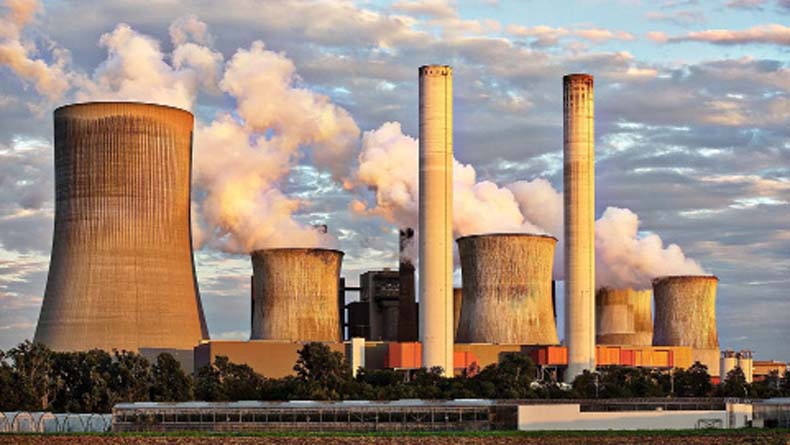
Industries skirt regulations.
Waste burning becomes invisible at night.
Is Delhi fighting a 21st century air crisis with 20th century tools and zero urgency?
Solutions exist, they are known, documented, tested globally — yet rarely implemented with seriousness. It is concerted action that is needed.
Protecting Public Health is the first and foremost step. What we need are Immediate health advisories based on hourly AQI, honest and truthful sharing of facts, for the citizen to know and act. Also, we need to ensure plenty of air purifiers in all schools and hospitals. The government may like to make using masks as compulsory, providing free or subsidized masks for vulnerable groups. These should be basic protections.
Enforcing What Already Exists must be the simultaneous action, with a certain force of law. If Delhi simply enforced its own rules — on construction dust, waste burning, old vehicles, industrial fuel norms — air quality would improve significantly. These are much in order, already. Some degree of implementation is there, too, but not 100%. Enforcement remains weak, inconsistent and selective.
Stubble burning, we are told, is a major contributor to winter spikes, yet farmers still lack affordable machines, viable alternatives and incentives to adopt no-burn methods. There is a body of opinion that believes these are not the big factor, but they do contribute. Somewhere, it all adds up, and everything must come into play together. Announcements don’t cut pollution. Actions do. We need action on all fronts, all at once. Delhi cannot fight alone. NCR states must act together. But coordination is fragmented, political, and often absent, at least it is not in public domain.
What will lessen the burden is clean mobility like electric buses, more metro lines, last-mile connectivity — these are slow-moving commitments. The shift is nowhere near the scale required.
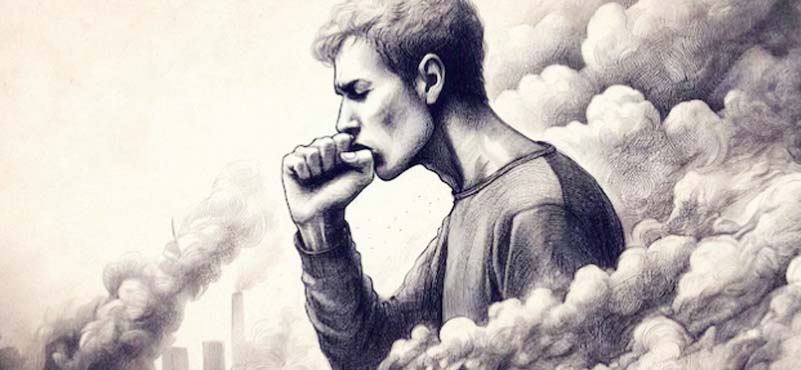
Meanwhile, have Delhi’s residents learned to adapt to the poison in their lungs — to accept masks, trapped windows, cancelled outdoor life, and coughing children as winter norms. A city does not deserve this. Its people do not deserve this. The silence of decisive action is costing lives. Every year. Quietly. Consistently.
The Way Forward
Delhi’s air crisis demands the urgency of a natural disaster, because it is one — only slower, longer, and more damaging. We need political will, regional cooperation, strict enforcement, and farmer-first solutions. Without these, Delhi will keep living in a toxic loop, year after year. The question is no longer what needs to be done. It is when someone will finally do it — and whether that moment will come before more lives are lost to an invisible, preventable killer.
PMO flags vehicles, cites transport as key spoiler
According to official data for the capital region, the average PM10 levels from October 15 to November 25 have been around 295 ug/m3, while the average PM2.5 levels have been 171 ug/m3 during this same period. The WHO’s safe standards specify that PM2.5 levels (24 hours) should not exceed 15ug/m3 and PM10 45 ug/m3.
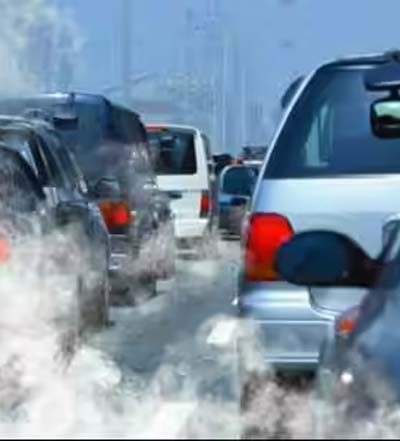 Data from the Decision Support System (DSS) of the Indian Institute of Tropical Meteorology showed that the transport sector remained the major contributor to air pollution this season, accounting for 14-20% between November 1 and 22. The Centre for Science and Environment’s analysis of DSS data estimated that half of particulate matter pollution can be caused by vehicles alone in the winter.
Vehicles have previously been flagged as top pollutants in studies carried out by multiple agencies, such as IIT-Kanpur, Energy Research Institute and SAFAR. In 2018, an emissions inventory prepared by The Energy Resources Institute (TERI) found that the transport sector’s contribution to emissions was the highest at 81 per cent, followed by power plants at seven per cent.
What has also triggered the shift in focus to transport is data showing that farm fire incidents have been declining. The count has been at a five-year low for this season from September 15 to November 24 — 27,720 cases detected in Punjab, Haryana, UP, Rajasthan and MP, compared to 32,584 in 2024, 54,727 in 2023, 65,881 in 2022 and 85,915 in 2021.