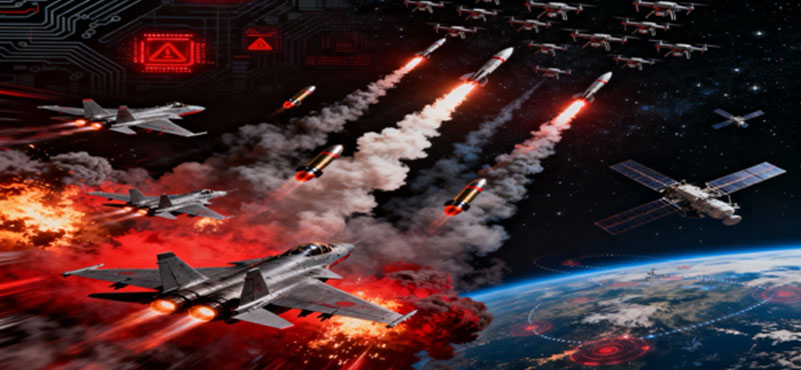
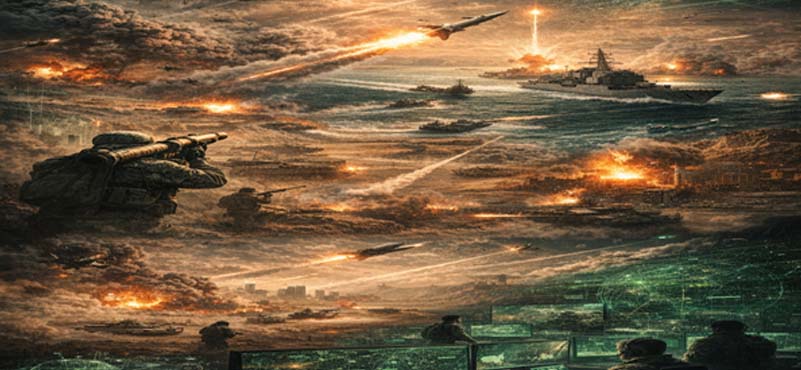
The ongoing conflict involving Iran has moved beyond a regional disturbance. It has become a real-time laboratory of modern warfare. Across deserts, coastlines, and digital networks, it has shown how quickly traditional doctrines break down when faced with hybrid, data-driven, and psychologically complex battlespaces. What emerges is not just a single lesson but a set of urgent imperatives that challenge how professional militaries think, plan, and fight.
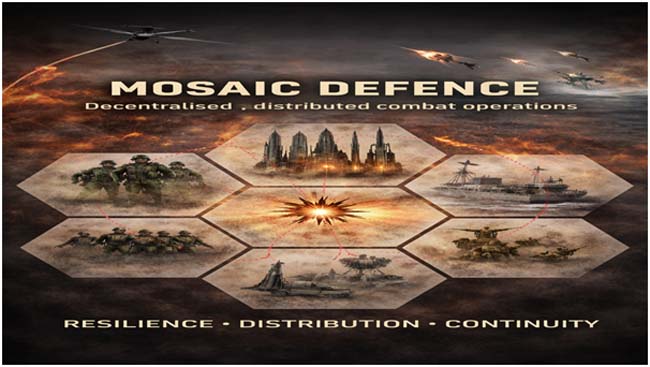
The primary and most lasting lesson is the importance of resilience. The Iranian resistance has shown that national endurance cannot be measured solely by battle readiness or economic metrics. Despite sustained precision strikes, its forces adapted, improvised, and recovered. The mosaic defence doctrine, based on resilience, distribution, and continuity, came to the fore. Decentralised production, pre-conflict stockpiling, and societal resilience maintained combat capability even under heavy attrition. This reveals a deeper truth: war outcomes are influenced as much by cultural resilience and organisational flexibility as by firepower. Any strategy based on quick collapse is therefore inherently fragile.
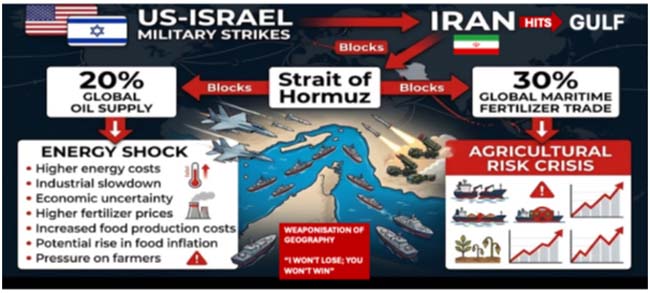
Second, asymmetry has evolved into a structured approach to war. Geography, especially the Strait of Hormuz, was not just a passive setting but an active weapon. By combining mines, fast boats, and unmanned systems, Iran turned a narrow waterway into a strategic tool. Energy flows became both targets and means of coercion. Disrupting maritime traffic imposed costs far beyond the battlefield. This shows that control over chokepoints and resource routes now holds coercive power comparable to battlefield victories.
Third, the traditional idea of a gradual escalation ladder has broken down. The conflict demonstrates how quickly actions cross domains and thresholds. Tactical incidents have prompted strategic responses within compressed timelines. Cyber intrusions, drone attacks, and long-range strikes now blend into a near-simultaneous exchange. Decision-making cycles have shrunk to a point where hesitation could become irrelevant. Command systems must therefore adapt to pre-delegation, supported by strong situational awareness, without losing political control.
Fourth, the character of warfare has changed. Battles are no longer just linear fights across clear fronts. Instead, they occur across multiple levels: underground networks, contested airspace, the electromagnetic spectrum, and orbital assets. Terrain still matters, but it now combines with data and timing. Defensive systems use depth, concealment, and mobility to make targeting harder. This requires planners to shift from static maps to a dynamic, multi-domain view of conflict.
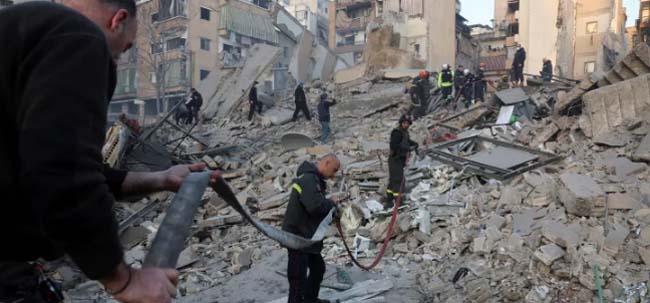
Fifth, information superiority has proven fragile. Electronic warfare, cyber operations, and deception campaigns have compromised data integrity on a large scale. Systems relying on clean inputs have struggled when faced with spoofing and saturation. Artificial intelligence, often considered a stabilising advantage, has revealed weaknesses when provided with corrupted data. This highlights the importance of human oversight, redundancy, and the capacity to operate in degraded information environments.
Sixth, manoeuvre warfare has not disappeared, but it has evolved. Mass and concentration, once decisive, now call for precision targeting. In their place, dispersion and fluidity prevail. Small, networked units, enabled by unmanned systems, have carried out distributed manoeuvres that complicate detection and response. The focus shifts from holding ground to shaping effects. Initiatives at lower levels become crucial, requiring training cultures that reward adaptability rather than strict adherence to plans.
Seventh, the nuclear dimension is experiencing a subtle yet significant shift. What seems to be changing is not capability but judgment. Advances in precision-strike systems have transformed the operational landscape. They allow actors to approach sensitive targets closely enough to signal intent without necessarily provoking catastrophic escalation. This creates a narrower, more ambiguous space, defined by calibrated risk rather than outright confrontation. The strikes near Dimona exemplify this pattern. Proximity sends a message. The goal is not destruction but exerting pressure, prompting the other side to reevaluate its assumptions. Nuclear stability, once rooted in predictability, now faces challenges from precision and ambiguity.
Eighth, cognitive warfare has become a crucial layer. Information campaigns, amplified through digital platforms, shape perceptions both inside and outside the conflict zone. Narratives of resistance, victimhood, and legitimacy influence morale and political will. The battlefield now extends to the minds of populations and decision-makers. Achieving military success without controlling the narrative risks strategic failure.
Ninth, the conflict highlights the erosion of geographical boundaries in war. Actions in one theatre have effects across continents through energy markets, cyber networks, and global supply chains. Proxy actors have expanded their operational reach, while economic tools have either supported or undermined military efforts. War is no longer confined; it spreads through interconnected systems, requiring responses that combine military, economic, and technological measures.
Tenth, missiles and unmanned systems have solidified their dominance. Precision strike capabilities, combined with persistent surveillance, enable continuous targeting cycles. The integration of C5ISR, artificial intelligence, and real-time data processing shortens the route from detection to destruction. Platforms are now expendable; networks and data are crucial. Militaries must therefore focus on network resilience as much as on weapon lethality. The new military architecture relies on inexpensive autonomous systems, AI-assisted targeting, commercial satellite imagery, resilient communication powered by Quantum technology, integrated sensor-shooter kill webs empowered by C5ISR, and cyber warfare. The need is for Functional Commands before the suggested Integrated Theatre Commands and cross-domain synergy.
An important and sobering lesson is in strategic autonomy. Despite alliances and partnerships, major powers have shown limits to direct involvement. States have largely borne the burden of their own conflicts. This reinforces the enduring principle that national security ultimately depends on indigenous capacity, sustained logistics, and political will. External support can complement, but not replace, the national effort.
For countries like India, these lessons are significant and require self-examination. The urgency to secure maritime chokepoints, strengthen critical infrastructure, develop resilient command networks, and invest in local defence capabilities is now a practical necessity driven by real conflicts.
The Iran war offers little comfort to traditionalists. It questions assumptions, shortens timelines, and blurs boundaries. Its message is clear: warfare is becoming faster, less predictable, and more interconnected. Adaptation is not optional; it is essential for survival in the emerging battlespace.
The mosaic of the Iran War demands introspection. Doctrines shaped in 20th-century moulds falter under 21st-century pressures. Resilience requires societal mobilisation; asymmetries call for pre-emptive measures; rapid escalation necessitates pre-emptive stances. For India, balancing China and Pakistan, these needs are urgent—strengthen chokepoints, secure data grids, and disperse nuclear assets. Global powers must also abandon hubris. Adaptation is essential for survival; it is not optional: prepare for the unpredictable, or fall victim to it.
ABOUT THE AUTHOR
 Lieutenant General A B Shivane, is the former Strike Corps Commander and Director General of Mechanised Forces. As a scholar warrior, he has authored over 200 publications on national security and matters defence, besides four books and is an internationally renowned keynote speaker. The General was a Consultant to the Ministry of Defence (Ordnance Factory Board) post-superannuation. He was the Distinguished Fellow and held COAS Chair of Excellence at the Centre for Land Warfare Studies 2021 2022. He is also the Senior Advisor Board Member to several organisations and Think Tanks.