

I sometimes wonder what life really is. At first glance, it seems to tempt us toward simplification. Its countless complexities and ups and downs make us borrow language from systems, risk models, and efficiency frameworks—imagining that life, too, can be optimised, standardised, and reduced to a “one-size-fits-all” formula: inputs and outputs, effort and reward, cause and effect.
But it doesn’t take clairvoyance to see that life doesn’t stick to these rules; it resists modelling. It challenges neat solutions. It acts less like a straightforward equation and more like a dynamic, evolving function—nonlinear, discontinuous, sometimes chaotic. We try to fit it into dashboards and deliverables—laptops, keyboards, meetings, metrics—yet some vital part always slips through the abstraction, through strict but inflexible templates. The puzzle of life isn’t a system to be solved; it’s a reality to be lived.

Beyond Reduction: Life Refuses to Be Simplified
There is an arrogance in assuming life can be reduced to binaries. It is not a sequence of zeros and ones; it is gradients, textures, contradictions—light and shadow coexisting in the same moment. Contrary to popular perception, life quietly resists simplification and reductionism. Unlike the binary computer language of 0s and 1s, it has multiple shades and hues and cannot be confined to rigid frameworks and watertight compartments. Life lives in the margins: in pauses between conversations, in unstructured time, in the unquantifiable residue of experience. Often, what escapes measurement defines meaning—yet we persist in simplifying it.
To be sure, there is a certain elegance in routine. Like a repeating sequence, it creates continuity, a reassuring pattern through which meaning can accumulate. Consistency is structure; it is the scaffolding that allows us to build a lasting edifice. The Turtle Theory clearly suggests that you don’t have to move fast. You just have to keep moving – with patience, direction and pace. Progress, as we have seen the world over, doesn’t need speed; it needs consistency. This is why, it’s often said that consistency is what transforms average into excellence. The names, for example, of Pablo Picasso, Pele, Diego Maradona, Don Bradman, and Sachin Tendulkar immediately come to mind. Accordingly, we chase clarity through compression. But there is a flip side to it, there is also a case against excess consistency, against having so much structure that it becomes undesirable.
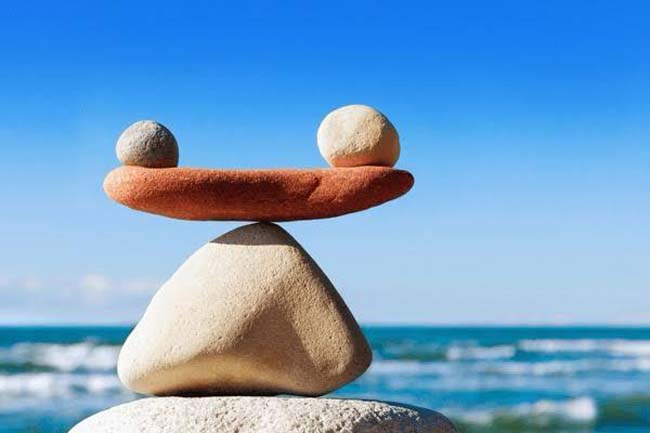
The Seduction—and Danger—of Structure
Routine has its beauty. It offers rhythm, continuity, and coherence; it builds stability and enables accumulation. Discipline, consistency, and structure are not trivial virtues; they are the basis of any meaningful life. But structure, when unexamined, mutates. What begins as rhythm can decay into repetition. What feels like order can harden into rigidity. And what once enabled growth can eventually suffocate it. Too much structure does not create stability; it creates stagnation. This is the paradox of life and living: we need structure to function, yet too much of it diminishes our capacity to feel alive, to live a life fully, to live a well-rounded life.
The Tyranny of Productivity
In the modern world, productivity has become the dominant metric and even a deterministic thesis. Productivity as the dominant virtue of modern life, almost its moral compass, implies that efficiency is no longer a tool; it is an ideology.
Days accumulate like numbers in an endless calculation — tasks completed, goals achieved, deadlines met. We increase our efficiency, remove obstacles, shorten time, and maximise output. But in doing so, something subtle—and dangerous—occurs. We start confusing motion with meaning, activity with vitality, completion with fulfilment. As progress speeds up, a quiet erosion begins – not loud enough to notice, but steady enough to hollow out. A life executed perfectly, yet seldom truly lived. It is the uneasy feeling of existing next to one’s own life—present in form, absent in essence.
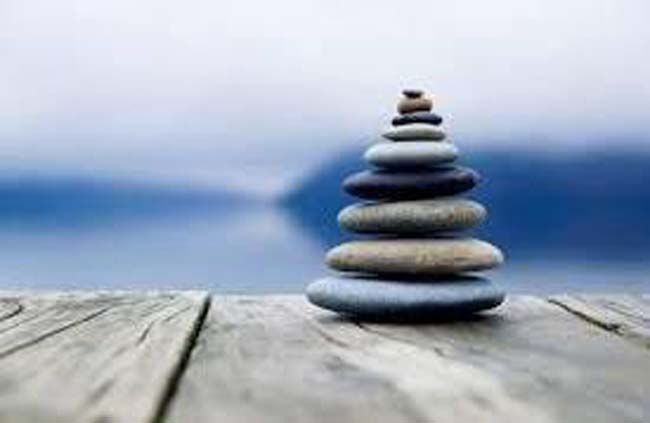
The Invisible Imbalance-The Modern Dilemma
This is the modern dilemma: living adjacent to one’s own life, executing it flawlessly yet rarely inhabiting it. You are present in form, absent in essence; You perform life, but do not inhabit it. The obvious quandary of this inadequate view, this flawed prism is where recalibration becomes necessary—not as an indulgence, but as a correction.
In mathematical terms, it is the moment we step back—not from effort, but from unconscious momentum. To question—not outcomes, but assumptions. To ask: What have we optimised away? To live fully is not to maximise a single parameter, but to balance many variables and shift focus from output to outcome.
The Principle of Five: A Framework for Wholeness
Across cultures, number five often symbolises wholeness and equilibrium: the five senses, the five elements, the five directions, the five fingers. This is not a coincidence. It is a pattern, an intuition of balance.
Five represents a unity in diversity, completeness through diversity — a system stable not because it is simple, but because it is balanced, in equilibrium. A life reduced to a single dimension—productivity, ambition, or even comfort—becomes inherently unstable and, therefore, clearly unsustainable over the long haul. Like an equation missing a variable, it may still produce results. Still, it will be incomplete because of a deep sense of void and disillusionment, questioning the value of world success. As a popular Hindi number by Sahir Ludhianvi, a great poet, goes, “ये दुनिया अगर मिल भी जाए तो क्या है”, Pyaasa, Film (1957). English translation: “Even if I were to gain this whole world, what would it really mean?”
The need for balance and wholesomeness in life is a central theme in Sanskrit literature, particularly in texts relating to Ayurveda and the Bhagavad Gita, which emphasise moderation (Mitahara) and holistic well-being (Svasthya). Balance, then, is not a static state; it is an active, ongoing calibration between competing forces: doing and being, speed and stillness, ambition and contentment, connection and solitude, control and surrender. A stable life does not maximise a single dimension but sustains tension across many such pairs.
There is a particular wisdom in slowness—not as a rejection of progress, but as its necessary counterweight. Slowness allows perception; it restores resolution to experience. Without it, life becomes blurred, like a dataset sampled too sparsely to reveal its underlying pattern. This is what happens when we pause—not to optimise, but simply to notice light resting quietly on a surface, the cadence of footsteps aligning with breath, the texture of silence between conversations, and the subtle presence of another person, fully felt. The neglect of any aspect, like multiple cogs in the wheel, distorts the system, making it lop-sided, uneven and skewed.

A “knife-edge equilibrium” [an equilibrium different from the classic Harrod (1939)-Domar (1946) economic growth model] is manifested in the fact that this equilibrium is difficult to attain and even more difficult to maintain. While neglect of any aspect distorts the system, overemphasis on any aspect destabilises the system. Balance is dynamic calibration—constant, conscious adjustment.
In a culture obsessed with acceleration, slowness appears almost subversive. But slowness is not regression; it is a resolution. It sharpens perception, restores texture, and allows experience to fully register. Without it, life becomes blurred—like data sampled too sparsely to reveal its overall thematic pattern. To slow down is to give attention, letting certain moments arrive in full, without the compulsion to turn them into productivity. These are not inefficiencies; they are the essence of life.
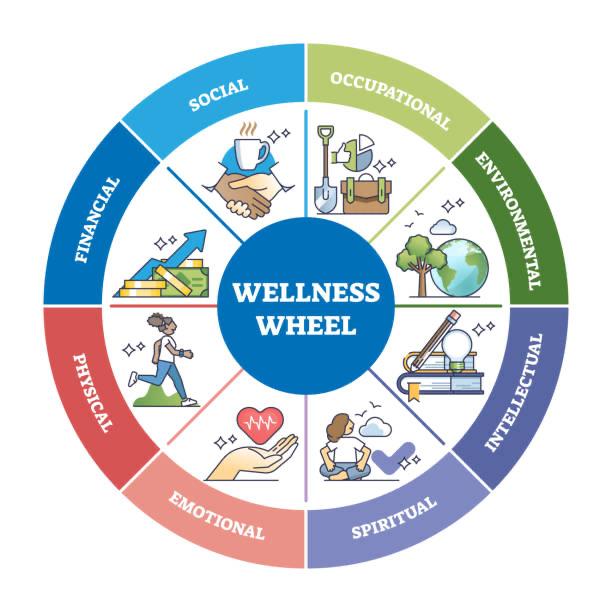
Cognisable Dilemmas
These cognisable dilemmas of life are not inefficiencies to be ironed out; they are the data points that expose the shallowness of life when ignored. Art, too, belongs to this dimension—gardening, poetry, fiction, film, music, painting, travel. These facets are often summarily dismissed as secondary, even expendable. But they are not diversions from life’s “real work.” They are the qualitative variables of life’s equation: music that alters mood, poetry that reframes thought, travel that disrupts perspective, and stillness that reveals insight. Remove them, and life continues to function, but it ceases to feel the wholesome and holistic nature of life – loses depth, texture, resonance, life with a capital L. A purely efficient life is often an empty one, making us yearn for a kaleidoscopic way of life and living – a life with all it’s imperfections, faults, and blemishes, warts and all.
Joie De Vivre
The French phrase joie de vivre (joy of life) aptly captures this orientation: life not as a problem to solve, but as a phenomenon to experience, not deferred, not optimised—simply lived. This insight echoes across time. For example, in Leisure, William Henry Davies (1911) poignantly asks: “What is this life if, full of care, We have no time to stand and stare?”
 This is not merely poetic; it is diagnostic. A system overloaded with urgency loses its ability to observe itself. Similarly, Thomas Gray in his poem famous Elegy Written in a Country Churchyard (1751) (which I studied as part of my graduate studies in English Literature well over four decades ago at the University of Lucknow), reminds us that all trajectories, irrespective of their steepness, converge towards the same endpoint. The “paths of glory” terminate identically. What differs is not the destination, but the texture of the journey.
As I have often held in my writings, speeches, and interviews, this discerning, introspective and reflective process leads to a quieter, more difficult realisation: a well‑lived, rounded life is defined not by its scale, but by its depth. As William Shakespeare wrote eloquently in his classic work Julius Caesar,
“His life was gentle, and the elements so mixed in him,
that Nature might stand up
And say to all the world,
This Was a Man!”
Viewed thereof, there is a fundamental misalignment in how we approach life: we treat it as a problem to solve, rather than a phenomenon to experience. But an imperilled life – life without a 360
degree view- is not waiting for resolution. It is unfolding in real time in a manner that differs across people, geographies and time periods.
The question is not how much we complete, but how deeply we engage. Because in the end, memory is selective: not the volume of work, but the intensity of presence; not the number of days, but the moments that felt alive; not the outcomes, but the experiences that transformed us.
Depth requires an uncanny ability to connect the dots, an ability to read between the lines to draw meaningful inferences. In other words, what is required- today more than ever – is attention to detail and a granular examination of the objective reality – persons, places, things, the works- without in any way being oblivious of the bigger picture. Viewed in this perspective, the task is not to abandon structure, but to humanise it- to introduce space into systems, to design days not only for output, but for awareness, to allow life to be both precise and expansive—both counted and felt – “To strive, to seek, to find, and not to yield” (Lord Alfred Tennyson, Ulysses, 1922).
 Recalibration: Small Shifts, Profound Effects
Some small recalibrations can alter the entire equation. This reordering, this change of focus, this sober reflection on the purpose of life and the way it ought to be lived in all its forms and manifestations requires protecting time that has no objective beyond presence, engaging all five senses deliberately, even if only fleetingly, and replacing an act of urgency with an act of attention. In other words, rebalancing life does not require a radical overhaul. It demands intentional shifts: protect time with no measurable output; engage your senses deliberately, even briefly; replace urgency with attention when possible; allow silence without the compulsion to fill it; break routine occasionally to restore sensitivity; welcome boredom, which is often the threshold of insight. These are not luxuries; they are much-needed corrections.
A Fuller Definition of Living
In this attempt to strike an equilibrium and to develop a sense of balance, proportion and perspective, let silence exist without the impulse to fill it— measure certain days not by productivity, but by richness of experience, revisit familiar routines with unfamiliar awareness, introduce an element of asymmetry—break patterns intentionally to restore sensitivity, and allow boredom; it is often the threshold of insight, an opening for out‑of‑the‑box way of looking at things and for an entirely new perspective.
This is important because life, in its truest form, is not a race, nor a checklist, nor even a problem; it is closer to an unfolding series of permutations and combinations, one that cannot be rushed without losing its meaning. And perhaps the most subtle truth is that we will not remember the volume of what we completed, we will remember the moments in which we were fully present, not the meetings themselves, but the instances within them when something real was felt, not the years that passed, but the fragments that were lived.
To live fully is not to abandon structure, but to humanise it. To design days that account not only for output, but for awareness. To allow life to be both precise and expansive, counted yet felt. Because ultimately, life is not a race to be won, a checklist to be complete, an equation to be solved. It is closer to an unfolding series of permutations—rich, unpredictable, and irreducible.
Conclusion: Life in Its Full Spectrum
The myriad complexities of life, the jockeying for power and pelf, and the incessant search for an onward and higher march of life do not demand perfection. The eternal and universal questions of life demand participation- not uniformity, but range; not optimisation, but balance; not control, but engagement. It asks to be experienced fully, unevenly, and across all its dimensions as, for example, brought out in the Shanti Parva (The Book of Peace), the Mahabharata (written text took its final shape between 400 BCE and 400 CE), which is a profound reflection on the nature of mindfulness and the passage of time. “दुःखभाङ् न भवत्येवं नित्यं सन्निहितस्मृतिः।” English translation: One whose memory/awareness is always present will remain free from sorrow.
In sum, a well‑lived life is defined not by its scale, but by its depth—by how deeply it is felt. This paradigm shift, this counter view, this fiery streak, passionate pursuit, needs to be lived for equilibrium and completeness in life, to see the difference in the form and substance of life, to create meaning and value in life – a life of different shades and multiple hues. Difficult, certainly. But entirely within reach, provided we do as the Rigveda (1.89.1) (1500–1200 BCE) stressed, “आ नो भद्राः क्रतवो यन्तु विश्वतः।” English translation: Let noble thoughts flow to us from all directions. This, to my mind, is the way to go.
I rest my case.
ABOUT THE AUTHOR
 Dr. Manoranjan Sharma is Chief Economist, Infomerics, India. With a brilliant academic record, he has over 250 publications and six books. His views have been cited in the Associated Press, New York; Dow Jones, New York; International Herald Tribune, New York; Wall Street Journal, New York.