
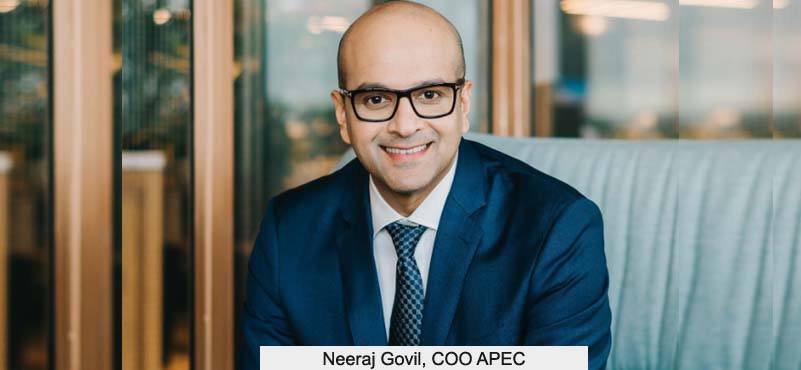
Riding on the Strength of the Indian Economy and Infrastructure Growth, Marriott Hotels have opened 200 hotels in the last 25 years, a clear sign of traveler preference as well as confidence among owners, who continue to invest again and again, only with Marriott. With another 150 hotels in the pipeline, says Govil, India is adding more and more destinations and experiences that help hospitality to grow!
In an exclusive hour-long conversation, Neeraj Govil, Marriott’s Chief Operations Officer (COO), Asia Pacific, excluding China, region, based in Singapore, with Navin Berry, Editor
Navin Berry: There is an intensity witnessed in the hospitality industry in India. Is it across industry, across countries? Because, you’re also having a global picture sitting in Singapore.
Neeraj Govil: Obviously, there are a few factors playing out. When you look at how we are looking at the market, Navin, the one thing we are seeing on the Indian hospitality landscape in general, It’s not just about growth anymore in India. It’s also about structural expansion. When you think about the evolution of India’s tourism life cycle, the main thing we’re seeing is that demand for the hotels is no longer episodic or rebound driven as it used to be. I think we’re now seeing a very sustained domestic surge. Tourism now is fueled by a sustained domestic movement in that sense, much like the expansion of the aviation sector and various networks there but most importantly also the travelling aspirations of the Indian traveler, which are much deeper now.
To put this into scale, the official data that we have, admittedly this is about a year old, so 2024 data, domestic tourist visits are at 2 .9 billion trips. We constantly focus on the international numbers. What I found was interesting was this domestic tourist stat, 2 .9 billion trips. That is extraordinary in the sense that very few global markets can match this, right? So, at Marriott, the challenge is not how do we grow, the challenge is about how do we grow really well and sustainably. Building from that, the priorities are very clear for us.
I think my priority one is to build the leadership and talent pipeline.
We need to ensure that infrastructure keeps pace with the demand. So, what I mean by that, is we need to have the right hotels in the right locations. Domestic boom is sweeping through the country. So, we need to keep the focus on our consistency as an operator. So how do we maintain service consistently at scale? I think that’s the big piece.
Navin Berry: So, what is Marriott doing as your part of the story in terms of growth, managing growth, managing more talent? What are you doing?
Neeraj Govil: I’ll come to that. The other priority is that we are hearing a lot from the traveler, is this clarity and choice between our brands, right? How do we keep our brands succinct, distinct?
Navin Berry: Well, that’s interesting.
Neeraj Govil: That’s another focus for us. So really, when you think of it, it’s talent, its infrastructure, it’s service consistency and quality, and creating this portfolio of brands that offers clarity and choice, as we think of luxury, premium, select, and now mid -scale, right? It’s not just about expanding the footprint anymore. It’s also about really helping to build a system that can sustain it over the long term. Think about brands and think about quality, trust, and long -term relevance. I think that’s a switch. 10 years ago, 15 years ago it was growth, growth, now it is a lot about sustainable growth in that sense.
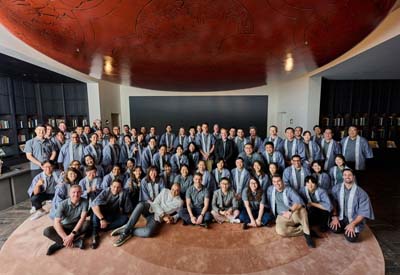
Our South Asia region is obviously doing very well. India is the biggest block in that South Asia region for us. When you look at our portfolio today, we’re operating about 33 ,000 rooms in the South Asia region. We have 18 brands. I’m sure you’ve heard we opened our 200th hotel in India in December. We also launched Series by Marriott.
Aim here is to give us a powerful stronghold in tier 2, tier 3 markets. How do we participate meaningfully in the high growth domestic travel corridors that are coming up now?
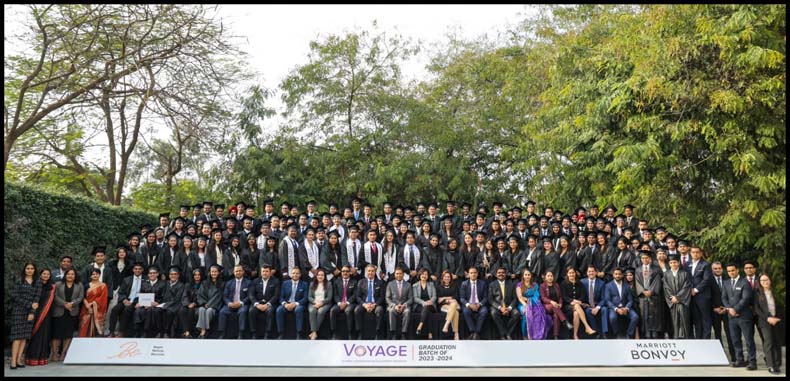
About the quality of talent and what are we going to do about talent, right? I believe it’s going to play out if talent will be the defining factor in terms of how successfully our industry evolves in India over the next 10 years or so. The approach will be long -term, which will have to be institution-led. What we are doing at our end is we are doubling down investments, structured training programs, we’re looking at leadership development.
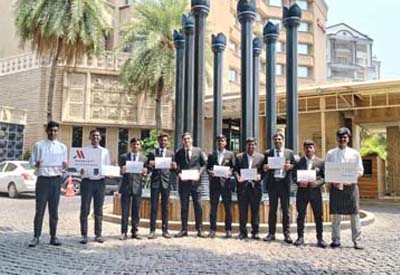
We are partnering on a pretty big -scale now on long -term partnerships with hospitality institutions across India. We are not talking one or two, we’re talking several across the country and I’ll list them out for you as well but what I want to do is we want to create mobility across the brands and geographies so that people see hospitality as a career and not a job. I remember when I joined the industry my desire to join hotels was like when you got to travel and Marriott was that amazing canvas for me where I could go from not just one hotel to another hotel but from one city to another, from one state to another, from one country to another and today, we have that ability. If there’s an individual that aspires to go work in Southeast Asia or the US or Europe or Middle East, we can provide that to that individual. So, we want them to see it as a career and not a job.

Talking to our associates, when you ask them, what motivates you to come to work every day and deliver what you do, it is this piece of, well, I own my job, I want to make it great for customers, and I have quality standards to work towards, and I have the tools to get there. So, it’s really about fostering a culture where our people can thrive. So, you can train them, you can teach them, but you definitely need to foster this culture where they can really come alive. So, a big part of this for us, Navin, is ensuring people are well taken care of, we invest in them, and really try to make our associates have the ability to have mentorship over longer term careers.
And I do believe that being a global chain gives us an advantage. A number of our people that have worked in India, that moved overseas, have now come back and do big roles in India. Right. And continue with that program, eventually integrate hospitality graduates into our hotels, through our talent strategy going forward. So, we’re doing a lot of tie-ups with a lot of hospitality colleges around India. We’ve done a tie -up with ISH for our leadership programs.
Navin Berry: These training programs are at the macro -institutional level of Marriott and not necessarily confined to an individual hotel.
Neeraj Govil: That is correct.
Navin Berry: And this would be across what kind of professions or what levels or grades of workers?

Neeraj Govil: So, we are doing this across the length and breadth of the portfolio. So, when you think about the technical aspect, there’s a lot of these technical programs that are focused on the line level associates who are engaging with customers every day.
So when you think of line level and supervisors – the people you meet in the hotel, your servers in the restaurants, your people cleaning your rooms, your chefs, so the front line and then for the management teams we have these leadership programs, the senior leaders obviously the tie-ups like the ones we have done with ISH where we are working with them, these programs where there is lot of leadership training involved in that.
Navin Berry: On big question that comes up often is that the hospitality industry is not paying adequately at the starting levels, at the entry levels and we are not able to retain talent because we are not giving them careers. But beyond Marriott what do you see, is that a problem for the industry in India?
Neeraj Govil: The industry is growing at such a frenetic pace. You’re going to have to think, how do I staff up my hotel? Everyone’s going to have that challenge. The growth is simply off the charts. I think we have to accept the reality that as these hotels are coming online, there are going to be challenges with staffing the hotels. And that’s where all of this work we’re doing around talent has to be augmented by other aspects. Our hotels have to be efficiently designed so that they can deliver higher productivity.
Hotels have to have the right technology installed, so it enables our associates to be more productive. So, it’s not just about that go find 500 people to staff the hotel. It’s about how do I find high quality people, train them, but also augmented with clever design, with clever practices, with the right technology. And the advantage I think again we have, as an international operator, is we can take best practices from more mature markets and bring it into India.
Navin Berry: But tell me, is that interplay happening as we speak, around the year, bringing best practices across through lecture series or exposures or things like that?

Neeraj Govil: Absolutely 110%. We are sending a lot of people out on what we call task force assignments. I’ll give you a recent example. I opened a JW Marriott in Tokyo in Oct and we brought in about 500 associates from across the region to support the opening. Majority of them were from Japan but we had about 180 other associates who came from 16 other countries. We had people from India there as well. We had eight individuals in India that went out to open.
Navin Berry: You mentioned a little while ago about product differentiation amongst your brands. As you have 18 brands now, sometime, is there any awareness program or how do you drill into the customer that what is JW what is your Series or the different brand differentiations or they happen on their own and the customer will find themselves.
Neeraj Govil: I don’t think we can leave it to the customers finding themselves. I think at the end of the day we have to have a very distinct identity for every brand. We have, what we call a brand architecture, where first of all, we carve out the brands by which segment they sit in. So, if I think about it, we have it as luxury, we have it as premium, we have it as Select and Mid -scale. So, each brand is sort of sitting in a particular category. Then we look at it – is it attracting a more classic customer or is it attracting a more lifestyle guest.
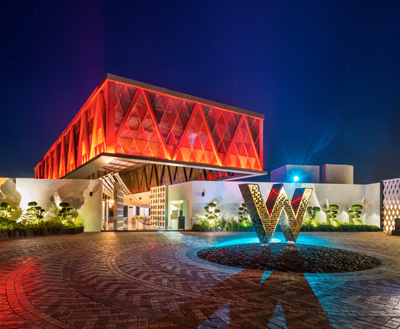
Navin Berry: So, for instance, what you have opened in Goa, the Renaissance, that’s more classic architecture, am I right?
Neeraj Govil: The Renaissance that we have opened in Goa is not really a classic architecture. Renaissance as a brand has evolved. Renaissance is meant to give you a sense of place and as you walk the hotel and you look and feel the hotel, you get a very distinct sense that you are in Goa. There are some very strong elements outside of that which is around an Italian influence that has been brought into that hotel.
And the hotel is a very lifestyle-oriented hotel which is where the brand plays.
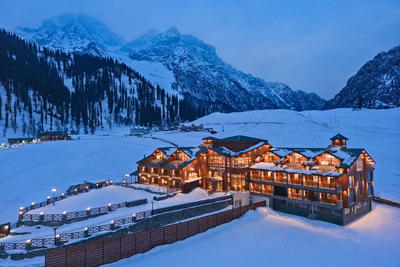
Navin Berry: So, how will a customer know what the Renaissance stands for and what is the JW Marriott in Vagator about? Is it for him to come experience the two and then know the difference or is there some kind of a program which Marriott has that you want to go to a fun brand then we have a Westin or you want to go to a more luxurious brand then you come to a JW, or they’re meant to understand on their own.
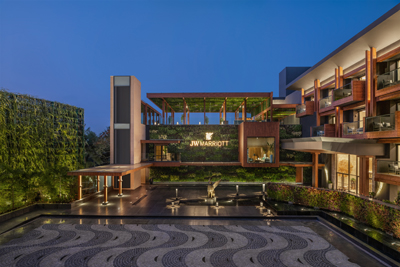
Neeraj Govil: So we don’t really put out anything specific to the customer educating them about the 25 brands. What we have is a very distinct experience. If you go and stay at a Westin in Gurgaon, for example, or you stay at a JW Marriott in Aerocity , or you stay at an Aloft in Aerocity , the offerings, the design elements, the general brand pull -through is going to be very, very different. Aloft is a very playful brand, and then a hundred meters up the road, you have the JW Marriott in Aerocity , which is obviously a luxury hotel. Clear brand guidelines and identity for every brand. All of these need to sit within the larger Marriott Bonvoy ecosystem.
Navin Berry: How do you see India’s resilience as an economy and domestic rides happening? And my second question related to it was, where is the space for inbound?
Neeraj Govil: So, I did touch on domestic travel today. 2 .9 billion domestic visits is a massive base. What is changing is the quality of demand as well. I am talking about the Indian domestic market. Travel is becoming more experience-led. People are looking to travel for celebrations a lot more than they did in the past. There is a lot more focus around wellness orientation, and of course, a lot of the travel now is aspiration -driven. So, these are the changes we’re seeing in the domestic travel space. Now, obviously, India as a country is seeing a rapidly expanding middle class. There is clearly an increase in discretionary and spending power.
There is improved connectivity. And the other thing I want to point out is there is a rapid rise of newer destinations. This is collectively kind of defining the travel pattern for the domestic traveler. We’ll continue to see this grow in 2026 and beyond for sure just because of the base that I talked about earlier. I think one of the most visible manifestations of this or what I just mentioned is the shift we are seeing in the guest composition at the hotels.
Navin Berry: Can we hear a little more on this? This guest composition bit?
Neeraj Govil: Let me explain that a little bit. Domestic travelers now account for the majority of hotel stays in India, majority without a doubt, which is a pretty big evolution from a decade ago, when international visitors made up most of the demand in our country. It’s come along very very quickly. As I said, domestic demand is also spanning a variety of needs and expectations that one needs to get from travel. These travel aspirations, higher expectations, our responsibility, I think as a hotel brand, is to evolve with that. We want to make sure we’re delivering top notch standards on that product and all that.
So, when you think about resilience, I think this is the opportunity for the brands to customize offerings based on what this new kind of domestic traveler needs. So, think of the short breaks. A lot of people now because they can work from home for a couple of days a week are taking longer weekends.
Navin Berry: Neeraj, a co -related question, how is your growth happening across your brands or across price points? I mean, are you more into luxury in terms of growth? Are you more in terms of what you may call mid -level or budget? I don’t see much of the budget happening except perhaps through Ferns or The Series.
Neeraj Govil: Contemplating that question, I think what I’d say is, Fern is a different market segment that we’re entering, Navin, to be fair. And it is a market segment that we were not playing in before. So, it is really a new venture on our part, in terms of getting into that particular segment, which we call mid-market. It’s a new segment of business that we are entering.
When it comes to our broader growth, to be very frank, our growth is pretty well distributed. First of all, geographically we are present across a lot of locations in India now. We go in and find an appetite for certain types of brands in particular locations only, when there’s demand for it, if you think about it. So, I think we’ve got a pretty well-balanced portfolio in terms of distribution. I think in our balance, to be honest, is quite deliberate, the luxury segment is going to continue to grow. But there’s only certain locations that can take a luxury hotel. So, when you think about it, I think the balance is carefully thought through. Really, when you think about the way we look at the world, we want to make sure we have the right brand in the right market at the right price point. That’s the only way to create a sustainable long -term product which will support both the traveler preferences as well as our owner expectations.
Navin Berry: Neeraj, just coming back to Aerocity again, you have got these two prime hotels coming up, which are fairly much talk of the town, the St. Regis and the Marquis. With that you will have a very major presence at Aerocity.
Neeraj Govil: You are from Delhi, I think you will agree when I tell you that Aerocity today, I think it’s the way we see it, it has created this intersection of aviation, premium business travel, great culinary offerings. Large format events are taking place there. There is retail going in there. There is office space going in there. So, it is emerging, already emerged and established as a premier district in that location. We have the JW and the Aloft. We have announced plans to add St. Regis and Marriott Marquis.
And I think collectively we believe that these four hotels create a good multi -brand ecosystem within that sub -precinct capable of serving luxury, premium and lifestyle travelers within the portfolio. Now Aerocity is really where international connectivity sort of plays out really well for us as well. We’re seeing frequent travelers, we’re seeing time -pressed travelers prefer to stay in Aerocity. And it’s almost like a hub for transit stays, conventions, and international arrivals. I think we are very well placed currently, plus the two additional hotels. But there is still room to grow in Aerocity if there is an opportunity to do it.
Navin Berry: This new airport in Delhi, the one at Noida and also, I am looking at Goa, the GMR MOPA airport. They also have a plan there for another Aerocity like development at MOPA. So, are you also taking positions there and does an airport work well for Marriott to have a hotel?
Neeraj Govil: Our position is very clear on this. We look at airport linked locations as long term demand drivers. Very simple. Because aviation led connectivity is where the focus is and this creates by default a sustained year -round demand for all of our business segments. It creates sustained year -round demand for transient customers for MICE, for short leisure breaks and business travel. In India when you think about it, with the aviation push, if you can link a hotel to a venue, I don’t think you’re going to lose, right?
If you think about Delhi, DIAL has publicly outlined plans to lift the Indira Gandhi International Airport annual passenger capacity, right? I think from 10 .5 crore to 12 .5 crore. They’re adding more aircraft stands. So, growth is going to translate into more traffic, which is going to help hotels. So, this hospitality aviation narrative has a meaning when it comes to India, because it changes the shape and the frequency of travel due to this integration. In Goa, for example, they’re talking about this airport-led development again there. We recently signed to develop, by the new airport, the Manohar International Airport, a 200 key hotel. This hotel is planned to be part of a broader mixed -use property. It will include retail, commercial and leisure community spaces as well.
Navin Berry: The price points at which we are selling India. It’s very common for fellow travelers and holiday makers to say let’s go to Thailand, for instance. Prices are cheaper, more competitive and we have a better travel and tourism experience. So, is there a possibility, that with all this development, because at this moment there is enough money which the Indian traveler is coughing up and they have a certain sense, of probably comfort going to an Indian destination. But frankly between Goa and a place like Phuket, the hospitality experience is quite dramatically different.
Neeraj Govil: It’s a fair question Navin and a good question. I don’t think it’s only about price versus price in the locations. It is more about the value, that is right for that price. I think we should talk less about the price of Goa versus the price of Thailand and compare the value in Goa versus the value in Thailand to exactly what you just said earlier on. For me, Indian travelers today are beginning to compare destinations on total experience. Like you said earlier, you just pointed that out.
That encompasses service consistency, ease of travel, family programming and basically to underline it all, the confidence comes from whether you get what you get. So, the response I would say to it, is not about discounting pricing, I hear a lot about it, oh it’s cheaper to go to Thailand than it is to go to Goa. I think if you drop the Goa prices, people are still probably going to be attracted to another destination because of the overall travel value that they’re getting, not just the price. And I think that is where the response should not be discounting, but we need to build value architecture. We need a better segmentation mix. We need better experience differentiation. We need very compelling loyalty led benefits, right?
That is where the win comes. We like to compare Thailand versus India. I look at the region and I say, Vietnam, Thailand today is a huge, huge, competition going on for the tourist dollar.
It’s really not about pricing, it’s about what is the value I’m getting. And if you think about it, we talk a lot about Goa, I think Goa to me, and I’m from Goa as you know, Navin, right, it’s still India’s strongest leisure destination by far, whatever you say, right.
And it’s under scrutiny right now and the scrutiny is really around sustainability, it’s around community sentiment and the long -term health of the destination.
Navin Berry: My last question, is the return on investment for your partners, when you’re building hotels in India. With all this growth happening, the sense I get is that Marriott has been returning better returns for every rupee invested by your partners compared to many other chains in the country?
Is that sense right, that your partners tend to be happier than with many other brands or with many other chains?
Neeraj Govil: It would not be right for me to comment about others. But let me say this. We opened our first hotel in India in Goa in 1999 which was the Goa Marriott Resort in Panjim. That was the first. And in 25 years, give or take 26 years, we’ve opened our 200th hotel in India.
The growth we’ve had could only have come, if we were delivering great results. That’s the way I’d like to put it. And I can also share another statistic with you. The majority of our signings are with our existing partners.
Navin Berry: So, these 200 hotels between them would have how many partners? I mean roughly speaking.
Neeraj Govil: I don’t have that exact number. But I can tell you that we have continued to grow with a large number of owners who moved from one hotel to multi -property owners. And I can tell you that we would not have had that response from our owner fraternity, if we were not delivering better returns.
So, our goal has always been to be partners that earn the respect of the ownership groups through delivery of credible results, maintaining high levels of trust and transparency with the owners and working collaboratively on what the needs are for these respective ownership groups. And that’s why we’ve continued to grow.
Navin Berry: And also perhaps now that you have so many brands Neeraj, am I right to also add that in your advice to a prospective owner when he comes to you, your understanding of the local market, the location, the neighborhood, the demand and then your advice on which brand to choose, that itself could be very critical, that in this place we should have a JW or we should have a Westin, keeping the geography or the lay of the land around.
Neeraj Govil: Yes. Also, with scale come other value additions as well. When you have more hotels in a city, you are able to synergize costs, you are able to get better procurement. And great market intelligence. Market Intelligence goes beyond this, that you have great source market intelligence because you are operating in those source markets. So, if you have a hotel in Gorakhpur, more understanding on how people in Gorakhpur and where they travel to.
So, I think as we continue to grow distribution, we just keep adding strength after strength in terms of our intelligence, in terms of our procurement value, in terms of our cost -slide effectiveness.
Then Bonvoy continues to be the driver. I can share with you today that in India, over 70 % of our customers in our hotels are Bonvoy.
Navin Berry: And what is the corresponding figure, say in any other market in Asia?
Neeraj Govil: So, the India average is about 75%. The APEC average is in the early 70s.
Navin Berry: And what would it be, say, in the US? Would it be much higher?
Neeraj Govil: I think the number in Asia is higher than in the US. America has a very strong loyalty base, remember that, because we have operated there for decades. The company is founded in the US. It’s almost 100 years. And that’s why many American travelers, when they come to Asia, choose to stay at our hotels.
Navin Berry: Now just one thing I am missing out on, Marriott as a rule does not invest. But there are some exceptions, I believe, globally, you have invested in a few properties.
Say, for instance, tomorrow, as we keep hearing that the Ashok Hotel may get privatized, or may find a private operator. The government keeps bringing that question up, every few years. Let it be privately driven. So, in that kind of a situation, would Marriott ever like to consider investing?
Neeraj Govil: So, I don’t think there is a hard rule that Marriott does not invest. It is primarily a management company but there are cases, enough and more cases around the world, where if there is an important asset, strategic long-term value to us, whether it is one of our brands or to one of our locations, we would certainly consider those, nothing is off the table when it comes to that.
Navin Berry: Anything you would like to add beyond what we have talked about?
Neeraj Govil: What I will say in closing is, we continue to be very bullish on India. I did an interview some time ago in the Mint where I did say that we would get to those 500 hotels, both open and signed, by 2030. We are on track to achieve those numbers. Today we have 200 operational hotels in India already.
Navin Berry: And the pipeline?
Neeraj Govil: I think the exact number line is about 150 and so we continue to see significant momentum.
ABOUT THE AUTHOR
 Navin Berry, Editor, CS Conversations, over five decades has edited publications like CityScan, India Debates and Travel Trends Today. He is the founder of SATTE, India’s first inbound tourism mart, biggest in Asia.
Blogs at: https://www.csconversations.in/nb-blogs