

Background
COP (Conference of the Parties) is the major climate conference that convenes every year, generically describing decision-making bodies that govern multilateral treaties or conventions. It is often associated with the world’s main annual climate summit, where all countries gather to address climate change.
Steering the acronym laden multilateral course, a brief glance back helps.
To begin with, India’s G2023 Presidency theme was Vasudhaiva Kutumbakam, promoting global harmony, evoking One Earth, One family, One Future, drawn from the Maha Upanishad, thus highlighting interconnectedness and sustainable living (LiFE), aligned with India’s traditions and, valuing all life interdependently, focussed on climate action, inclusive growth, and reforming multilateral institutions to combat global challenges. In this pantheon, Amritkaal flags off India’s 25-year journey to its centenary, secure in a prosperous, inclusive future.
Thematically, these became India’s ready proposition of five priorities unanimously endorsed by G2023, namely: Green tourism; Digitalization; Skills and MSMEs.
Destination management
 A notable focus shift in G2023 outcomes favoured a Master Plan approach where India foresaw partnering principal stakeholders, using long lists of key demand and supply side indicators to formulate a Work Plan which, with local community and trade participation, could optimise the value chain and strengthen fragile habitats unable to leverage visitor footprint due to climate change, inconsiderate ‘development’ and irreversible environmental damage.
In this context, two instances drawn from the tourism sector are overtourism and energy needs. Implied in this approach was a target shift, from merely numerical to yield-based returns, structured on carrying capacity, emission benchmarks, mitigation and allocated funds time-lined use.
But first, to set the framework… Tourism sector proposals in the current Union Budget laid the course for pre-startup baseline in Environment Impact Assessment for:
(i) Centrally Sponsored Schemes to develop top 50 tourist destinations partnering the States.
(ii) MUDRA loans for homestays, especially small properties, upscaling tourists’ superior experience.
(iii) Youth skill development, especially hospitality management, to augment employable skill pools.
(iv) Promotion of medical tourism by the Ministry in partnership with the private sector.
(v) Streamlining e-visa facilities and waivers, encouraging overseas tourist groups.
(vi) Promotion of Buddhist Tourism circuit and destinations, and development of spiritual corridors.
(vii) Immediate: Resume Buddhist Circuit Project by the Ministry, partnering WBG-IFC, Bihar and Uttar Pradesh.
Drawing product and market advantage from India’s wide-ranging World Heritage Sites and Ramsar Sites, an all-India site shortlist would result, inclusive of Cultural, Natural and Protected Area sites.
Similarly, benchmarks from the Ministry of Tourism’s National Strategy for Rural Homestays-towards Atmanirbhar Bharat-would lead to operational norms and checklists ensuring baseline experience for homestays, chai-shops, tented camps, yurts, monasteries, government/private guest houses… the primary clientele being budget visitors seeking an authentic local way-of-life, family-based participatory experience, acquiring local language capacity, searching for local lore (including sacred groves) through community elders; for market reach, word of mouth ranks high especially via social media.
As a tourism destination reaches its yield plateau, continued success may call for re-alignments in both product and market profiles, provided by DMOs. Work Plan amendments, also attributed to baseline parameters (climate, nascent partnerships, host communities, animal and plant species, altitude, forest types, drainage basins, topsoil, geomorphology etc) will invariably require local community’s prior approval via MoUs, keeping in view:
- All-season revenue and yield targets for all tourism segments to support Vision India@2047;
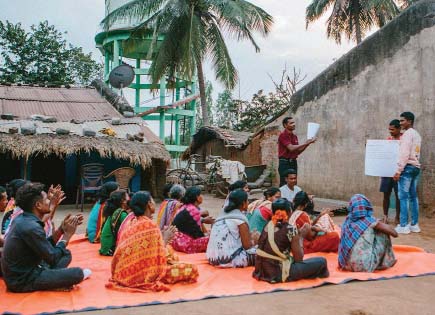
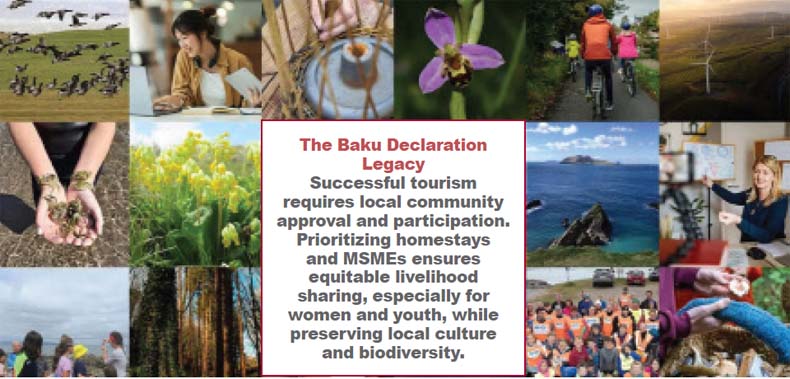
- Equitable local share in livelihoods for supply chain, especially women, youth & MSMEs;
- Local community and FAITH’s fulsome participation across Work Plans per site.
ENERGY is a critical parameter in the evolving global sustainable development landscape, the key nodes including:
 The Earth will in the near term face a new energy supply chain, characterised by continued geopolitical hazards, tempered somewhat by availability upswings in supply of multiple fuels and technologies, including oil, liquefied natural gas in 2025-29 plus clean energy technologies especially solar PVC and batteries, thus reducing energy price pressure, impacted albeit by geopolitical tension.
Greater electricity laden energy matrix will happen as the Earth’s electricity demand surges twice as much as overall energy demand in the last ten years, a third of this due to China and projected to upswing further due to national and international targets for net zero emissions.
Secure decarbonisation of power needs investment in grids and storage in quantum multiples of increase in clean electricity generation at an investment ratio restructured at 1:1.
However, clean energy transitions coupled with net zero goals are fraught with the rough and narrow including renewables and electric mobility growth, as also LNG demand, heatwaves and extreme weather, bolstering resilience steps, efficiency policies, AI, high financing costs, project risks and, above all, lack of access to energy.
Green Hydrogen… guiding light to de-carbonisation. The World Bank is financing its first green hydrogen project in Chile.
In the case of TOURISM, India’s apex policy statements regularly bracket Tourism with the five top national sustainable development thrust priorities. The tourism sector provides answers to several sustainable development issues. Rapid population increases in the developing world, including India, have pushed many rural communities towards livelihood diversification strategies for supplementing traditional farm-based income attempted also by out-migration or also on Himalayan-Karakoram tourism circuits by providing visitor services. Safeguards with committed finance are necessary.
Work Plan Implementation, Monitoring and Evaluation
1. This will be overseen by the Working Group with Master Plan partners, themselves trained in the generics of sustainable development, local operations, community participatory governance, basic English (development lingua franca worldwide), hygiene, sanitation and cleanliness.
1.1 Waste management: Obiter dicta: Waste is not waste till it is wasted.
1.2 Likewise, the ‘Garbage to Garden’ organic recycling process uses thermophilic bacteria and fully automated composting to convert wet organic waste to compost rich in different nutrients.
1.3 From AI to Big Data, organizations will appreciate the vital role of digital skills to stay competitive in this rapidly evolving sector.
1.4 Site management groups to provide regular work updates.
 COP30 with dedicated Thematic Days in Belém (Venue) the cue, the Brazilians structured their G20 pitch using their virtually infallible Amazon ‘Mysterious..Majestic..Mortal’ centrepoint, pulling out all the stops.
Not laggards, Brazil positioned Tourism centrestage at COP30 with dedicated Thematic Days in Belém (Venue) to focus on:
- Adventure tourism
- Coastal, maritime and inland water tourism
- Cultural tourism
- + several more
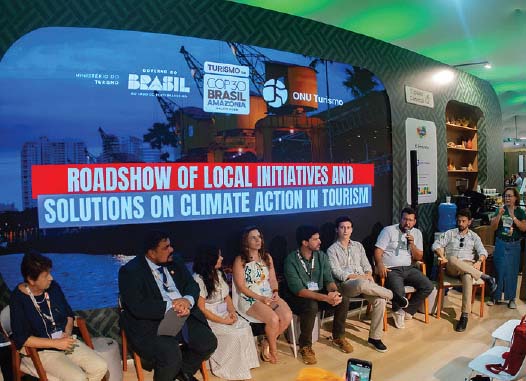
Tourism was earmarked for primary articulation in global climate discussions as the UN Climate Change Conference (COP30) in Belém, Brazil, over 19-20 November 2025 to Tourism Thematic Days under the theme “Tourism Climate Action: For a Low-Carbon, Climate-Resilient Future.” The initiative is led by Brazil’s Ministry of Tourism and UN Tourism, in cooperation with UNEP and international partners, and aims to accelerate climate action across the tourism sector.
- Discussion Topics
- Geographical descriptors
- Organisation Type
- Specific types of tourism
- Transition Pathway Strategic Areas
Business activities
At COP30, tourism took centre stage as one sector most capable of driving meaningful climate action and sustainable development. The Tourism Thematic Days highlighted how destinations, businesses and communities transform ambition into implementation — advancing low-emission operations, regenerating ecosystems, promoting sustainable food systems, and strengthening resilience in the face of climate challenges.
 Building on its historic inclusion in the COP29 Action Agenda, the event was a significant milestone for international cooperation in tourism and climate policy. Over two days, ministers, experts, international organisations, and private-sector representatives shared knowledge and practical approaches that link tourism’s recovery and growth with the Paris Agreement goals.
The discussions focussed on strengthening governance for tourism climate action, scaling up finance and investment, and supporting innovation in emissions reduction and adaptation measures. The initiative matched ongoing efforts under the Glasgow Declaration on Climate Action in Tourism and the emerging Global Partnership for Enhanced Climate Action in Tourism.
By highlighting solutions across the world, from sustainable transportation and accommodations to community-based regeneration projects, the Tourism Thematic Days showed tourism can powerfully drive low-carbon transformation and inclusive development.
COP30 in Belém convened 33 years after the Rio Summit that established the first international treaty to combat human-caused climate change, and a decade after the Paris Agreement seeking augmentation of global climate action.
Globally, growth slowdown due to geopolitical turbulence, climate change and viral contagion, markedly dented:
- destination image
- market perception
- consumers’ needs basket
- domestic livelihoods
- visitor<>local adjustment
Other core concerns were:
- Waste management
- Realistic operational norms/checklists specially for accommodation types such as homestays versus tented camps in view of recent extensive damage in Wayanad, Sikkim, Uttarakhand, Himachal Pradesh etc.
- Meanwhile, quoting the “Clock ticks on for tourism emissions” report of 2nd October 2013 said that far back as the UN’s Intergovernmental Panel on Climate Change, “As for the impact of Climate change, less than 30 years remain for tourism in its present avatar before temperatures rise to risky levels if we continue to burn fossil fuels at the present rate.” Greenhouse gas emissions caused by human activity such as burning fuels like coal and gas were responsible for the majority of the “unequivocal” global warming that occurred over the past 60 years, the UN’s Intergovernmental Panel on Climate Change estimated.
The UK’s Tyndall Centre for Climate Change Research, said the new findings were possible because of advances in understanding about the climate system.
“We had numbers in the previous [IPCC] report but they were based just on very simple analysis,” also emphasising “Knowledge has improved about the way the climate responds to increasing carbon dioxide emissions.”
Besides, “What do these findings mean for tourism? It’s simple – rising water levels will threaten beach resorts, increasing temperatures challenge skiing destinations, freak weather conditions will put a shadow on tourism generally.”
“What can be done?
“The report says to retain a 66 per cent chance of preventing temperatures rising more than two degrees from the late 1880s, the world can only emit a further 300 gigatons of carbon. Because about 10 or 11 gigatons of carbon are released each year, that suggests there is less than 30 years before the 800 gigatons limit is breached.
“So there will eventually be limits on greenhouse gas emissions. Most probably taxes of one sort or another on the burning of fossil fuels – in other words more expensive travel – particularly by air as airlines represent the majority of tourism-related emissions.”
Inclusion of “Climate Action in Tourism” in the UN Climate Change COP29 Action Agenda
This inclusion, for the first time, under the Presidency of Azerbaijan, was a landmark step for tourism, supported by UN Tourism and UNEP.
OBJECTIVES
On recovering from the COVID-19 onslaught, the tourism sector accepts greater responsibility for its “social and environmental impacts, looking at sustainability as an interlinked element to competitiveness and resilience. Driving away from a business-as-usual scenario which could lead to tourism-related GHG emissions to increase at least by 25% by 2030 while accelerating adaptation efforts would be fundamental. At present 53% of UNFCCC Parties’ Nationally Determined Contributions recognize tourism as a vulnerable sector to the impacts of climate change.”
The objectives laid out as part of COP29 Tourism Day were:
- Launch of the Baku Declaration on Enhanced Climate Action in Tourism, to enhance the integration of climate action in tourism policies.
- Sectoral engagement: Strengthening the Glasgow Declaration on Climate Action in Tourism as a voluntary commitment to support national climate goals, by increasing the number of national tourism administrations (and national tourism organizations) and tourism stakeholders making commitments to implement integrated climate mitigation and adaptation approaches.
- Become a signatory to the Glasgow Declaration.
- Science-based approach: Positioning the UN Statistical Framework for Measuring the Sustainability of Tourism (MST) as a tool to measure national tourism emissions, as it includes environmental data like greenhouse gas (GHG) emissions and energy use as part of its essential pillars.
- Institutionalization: Launch of a global coordination and partnership mechanism for enhanced climate action in tourism across the UN System and key stakeholders to ensure coherence, alignment and greater impact of initiatives.
Organise Thematic Days on Tourism
These are opportunities for the tourism sector to explain its critical role and advancements in addressing climate change, recognizing both its vulnerability to climate impacts and its potential to contribute to solutions, thus setting the stage for future collaboration, policy innovations and private sector engagement.
High-level Roundtables:
Raising the Climate Ambition of the Tourism Sector – from commitments to implementation (measurement and decarbonization)
In line with the measurement and decarbonization pathways proposed by the Glasgow Declaration on Climate Action in Tourism, this session will explore the importance and complexity of measurement and decarbonization strategies in tourism. As the global tourism sector strives to reduce its GHG emissions, key stakeholders will highlight the progress made in implementing effective decarbonization pathways. Academia, policymakers and private sector representatives will showcase methodologies and tools for measuring GHG emissions.
High Level Roundtable 2: Raising the Climate Ambition of the Tourism Sector – from commitments to implementation (regeneration/adaptation and finance)
In line with the regeneration and finance pathways proposed by the Glasgow Declaration on Climate Action in Tourism, this session will delve into the intersection of regeneration/adaptation efforts and innovative financing models. With a focus on how tourism can actively contribute to climate resilience and ecosystem regeneration, this event will highlight successful interventions from tourism stakeholders. Academia, policymakers and private sector representatives will center on the need for tourism to engage more deeply in sustainable food systems, biodiversity conservation, and nature-positive initiatives, as well as on the vital role of financing to scale up climate action.
Featured Presentation 1: From Tourism Measurement to Destination Management: How Destination Management Organizations Can Leverage Data to Foster Sustainable Tourism
Featured Presentation 2: Drivers of Tourism Emissions, Scientific Research on GHG emissions from Tourism Operations
High Level Roundtable 3: Enhanced Climate Action in Tourism: Innovative Solutions and Way Forward (organized in collaboration with COP29).
This CLOSING PANEL, organized in collaboration with COP29, will synthesize insights from earlier discussions, focusing on practical and innovative solutions that can accelerate the tourism sector’s climate action. Building on the policy alignment and commitments shared during the Ministerial Meeting and the strategic pathways explored in the High-Level Roundtables on measurement, decarbonization, regeneration, and finance, this session aims to forge a collective vision for the future of climate-resilient tourism. Panelists outline transformative actions to propel tourism’s climate ambition from commitments to impactful outcomes, discussing synergies across sectors and tools to enhance collaboration, scale finance, and deploy regenerative and adaptive practices at pace and scale. This panel will set the stage for a coordinated approach, fostering resilience and low-carbon tourism development worldwide.
Related action:
Tourism Makes History at COP29 as 50 Countries Back Climate Action Declaration for the Sector.
Artificial intelligence (AI) refers to the simulation of human intelligence in machines that are programmed to think and act like humans. This includes the ability to learn, reason, solve problems, and make decisions. AI encompasses a wide range of technologies, including machine learning, natural language processing, and computer vision, that enable computers to perform tasks that typically require human intelligence.
UN Tourism is at the forefront of integrating Artificial Intelligence (AI) to reshape the tourism industry—enhancing efficiency, personalization.
The challenge focuses on using AI to improve personalized services, streamline operations, and elevate customer engagement, delivering scalable solutions.
ABOUT THE AUTHOR

Sudhir Sahi is a Delhi-based UN Tourism and environment specialist. Formerly with Air India, he has been associated with Indian Mountaineering Foundation, authored research papers on environment and tourism.