
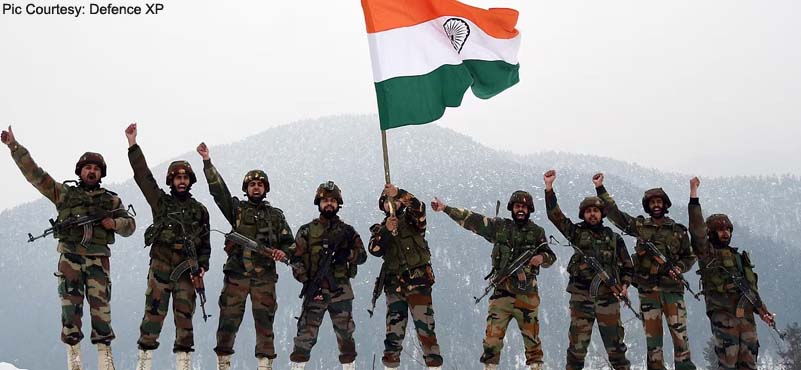
As the nation celebrates Indian Army Day 2026, it is equally a time to salute the soldiers and reflect on their aspirations too. A nation can aspire to justice, growth, and democratic strength only when it is secure. Security provides the space in which institutions function without fear, citizens pursue opportunity, and the state protects its interests. Without it, development remains fragile and democracy vulnerable. Economic progress, social justice, and democratic stability depend on the state’s ability to safeguard its sovereignty and internal cohesion. This reality explains the enduring relevance of the military. A nation-state prospers only when defence, diplomacy and development move in balance, supported by a force that is motivated, modern, prepared, and trusted.
India’s security environment has grown more complex. External pressure along the Line of Actual Control and Line of Control continues alongside proxy conflict and terrorism. Eastern Ladakh remains tense, the western front active, while internal and regional challenges add new layers of uncertainty. Across recent operations, from the surgical strikes to the Galwan standoff and Operation Sindoor, one lesson stands out. Technology enhances capability, but it is the soldier and the leader who decide outcomes. When systems strain or fail, human resolve, training, and leadership carry the mission through. The message – Man behind the machine is the biggest national asset.
Indian Army: The Pillar of Nation Building
The Indian Army’s strength lies in its ethos. Discipline, professionalism, sacrifice, and an unwavering allegiance to the Constitution define its character. Apolitical and secular, a spirit of Nation Above All, remains deeply embedded, whether in the icy isolation of Siachen or the heat of the desert. Service is rendered with awareness and willingness to face its risks, guided by the belief that the nation stands above self.
Beyond guarding borders, the Indian Army has been central to nation-building. It has been a strong custodian of constitutional values, responded in moments of disaster, and acted as the state’s ultimate bastion when all other systems faltered. From humanitarian assistance and evacuation missions abroad to peacekeeping under the United Nations, the Army has projected India’s credibility and responsibility on the global stage. In war and peace alike, the Army has remained a steady pillar of the Indian state.
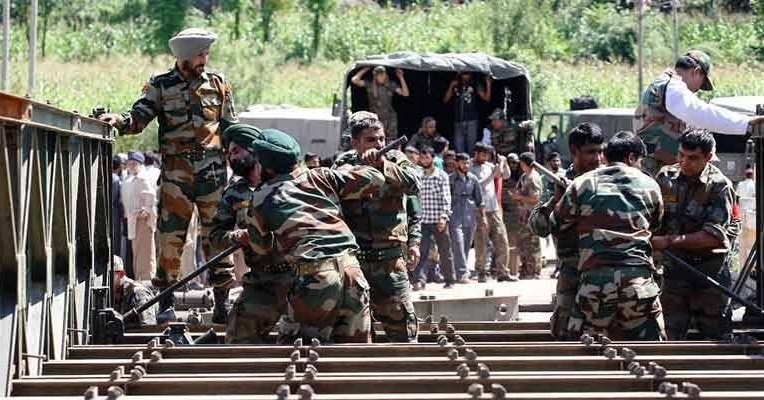
Nation-building, therefore, is not only about growth figures or political processes. It rests equally on the quiet assurance that the nation is protected by men and women who are ready to sacrifice their lives for the nation and its citizens. In that assurance lies the true strength of India and the responsibility of the nation towards its soldiers.
A Soldier’s Expectations from the Nation
As the Indian Army proudly celebrates its Army Day 2026, it’s also time for introspection by the nation-state. The need is to reflect upon the outlook of the nation to this most respected institution. We also need to guard against any erosion in its stature, by vested interests over the years.
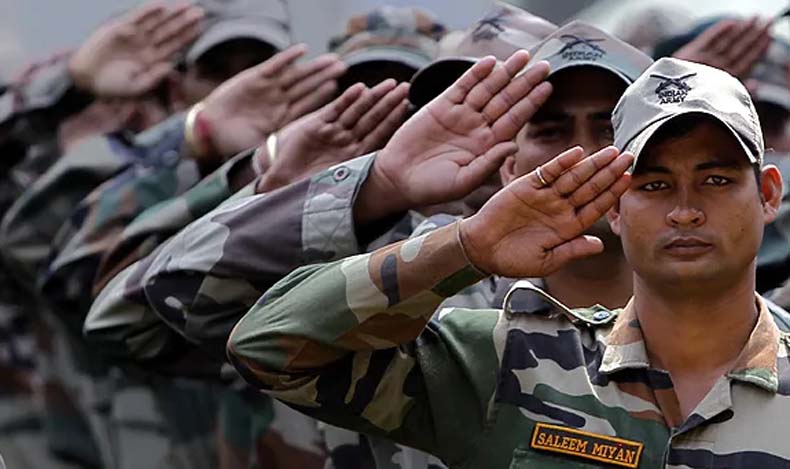
So, what could be a soldier’s expectations from the nation and those in power? These are basic aspects yet need a reminder, time and again.
1. Arm Him To Fight, Win And Live To Fight Yet Again
A soldier’s life must be valued by the nation. While the spirit to fight of a soldier is infinite, inadequate fiscal support and sluggish modernisation have failed to arm him adequately for the contemporary battle space. The need is to improve border infrastructure and empower him with niche technology tools of future wars to fight, win and return home safe.
2. Boots And Tracks on Ground
From the surgical strikes in 2016 and 2019 to the long, tense standoff in Galwan 2019 and Operation Sindoor in 2025, one pattern has been consistent. Technology and machines empower the force. The real force multiplier remains the man behind the machine. Human resolve, training, motivation and leadership were the battle-winning factors. When technology fails, it is the leadership and the soldier who secured the outcome. On Army Day 2026, these lessons are hard to ignore. The nation with the third-largest military cannot have a shortfall of 7.22% in JCOs/NCOs/ORs and 16.71% in the officer cadre of the Indian Army. Right-sizing must not get misinterpreted and become downsizing.
3. Financial Reforms and Defence Budgeting
India’s defence reform requires a stated National Security Strategy as a guiding beacon, periodic reviews, and sustained investment with effective defence spending rising towards 2.5 to 3 per cent of GDP and upscaled Defence R&D, supported by a separate non-lapsable modernisation fund focused on new schemes and future capabilities. Atmanirbhar Bharat must result in holistic indigenous content, technology mapping, protected IPR and handholding of defence startups.
Emergency procurement must constitute 33% of the modernisation budget, and the ceiling per procurement must be raised to Rs 500 crores. This is the only procurement that is time sensitive and a saviour. Above Rs. 500 crores must be the capital procurement.
4. Ensure His Status and Dignity in Society

The systemic erosion of status by successive pay commissions has adversely affected civil-military equivalence and the dignity of the uniformed fraternity. The need is to reflect and arrest policies which dilute and tarnish the image of defence services, resulting in a sense of victimhood. Non-Functional Upgrades with risk-adjusted allowances to the military, addressing anomalies in One Rank One Pension, to compassion in disability pension are only some of the factors which require attention. The Eighth Pay Commission must integrate not only leadership but aspirations of the services. The status of defence services vis-à-vis All India Services must be clearly defined and not left ambiguous to suppress emoluments and allowances.
5. Keep the Institution Apolitical and Curb Detrimental statements to its Brave Human Capital
Any attempts to politicise the uniform, its exploitation for political mileage and suggesting policies that adversely impact both the organisation and morale of human capital must be shunned; these can come from an ambitious few in motivated quarters and must be ruthlessly curbed. Politisation of the military and militarisation of the polity are dangerous for a democracy. Further, the CPO and NDRF must be empowered to prevent the military from becoming the convenient first responders to internal threats and disasters. The focus of the military must remain on its primary task of addressing external threats. Establishing command responsibility by way of one border, one force remains an unresolved issue.
6. Grounded Defence Transformation and HR Reforms
Reforms must be pragmatic, joint service integration-driven and based on felt needs of the organisation to obviate present shortcomings and required future capabilities. These need due foresight, resource allocation, and transition management and must be pilot tested for operational payoffs before being implemented. Much remains to be learnt from the hurried Agniveer scheme and the endless debate on Theatre Command.
7. Respect, Care and Wellbeing of Veterans and Veer Families of our Fallen Soldiers / Disabled Warriors
Possibly, this is the nation’s weakest point and tests the moral fibre of the nation’s duty and responsibility to its soldiers. There is a need for a better outreach model with greater compassion, respect, better employment opportunities, and assured lifetime connectivity to address all concerns expeditiously. The mantra should be to connect, show compassion, take care, and empower our veterans and the brave families of our fallen soldiers. Initiatives like the Post-service “Troops to Triumph” fund with a ₹100 crore seed capital for veteran startups in defence tech, require both a large heart and broad shoulders.
8. Empower the Citizens with a National Citizens Security Culture
Contemporary threats mandate that every citizen be empowered and sensitised on matters of national security and be an important player in the overall security matrix. This will ignite the true sense of nationalism once the citizen becomes a protector of a society under threat. It will also hopefully make the national apparatus more compassionate to the military.
Conclusion
As the nation’s trajectory rises, the Indian Army will continue to be foundational towards building a strong, secure and resurgent India. The Indian Army as an institution and its soldiers will never be found wanting by the nation and its citizens, irrespective of the adversities they may face. These are Army traditions that will never be touched, it is the very soul and spirit, unwavering in all its manifestations.
Its reciprocity by the nation and its citizens will further embolden the Army and empower them to fight; its show of compassion for their basic well-being is only a righteous calling, while the national leadership could match this through defence budgetary reforms, HR parity, Veer Parivar care and veteran empowerment. These are enabling thoughts on this year’s Army Day; together we stand, progress and ensure peace and prosperity.
ABOUT THE AUTHOR
 Lieutenant General A B Shivane, is the former Strike Corps Commander and Director General of Mechanised Forces. As a scholar warrior, he has authored over 200 publications on national security and matters defence, besides four books and is an internationally renowned keynote speaker. The General was a Consultant to the Ministry of Defence (Ordnance Factory Board) post-superannuation. He was the Distinguished Fellow and held COAS Chair of Excellence at the Centre for Land Warfare Studies 2021 2022. He is also the Senior Advisor Board Member to several organisations and Think Tanks.