“Nepal’s elections were not a routine democratic exercise-they were a generational revolt against a political order that had run out of legitimacy”
Prelude: The Collapse of Nepal’s Old Political Order
Nepal’s recent elections mark one of the most dramatic political upheavals in the country’s modern history. For decades, the Himalayan republic’s political landscape was dominated by a familiar trio — the Nepali Congress, the Communist Party of Nepal (Unified Marxist–Leninist) and the Communist Party of Nepal (Maoist Centre). These parties alternated between rivalry and opportunistic coalition-building, producing a system of governance that many Nepalis increasingly viewed as transactional, self-serving, and disconnected from the aspirations of a younger generation.
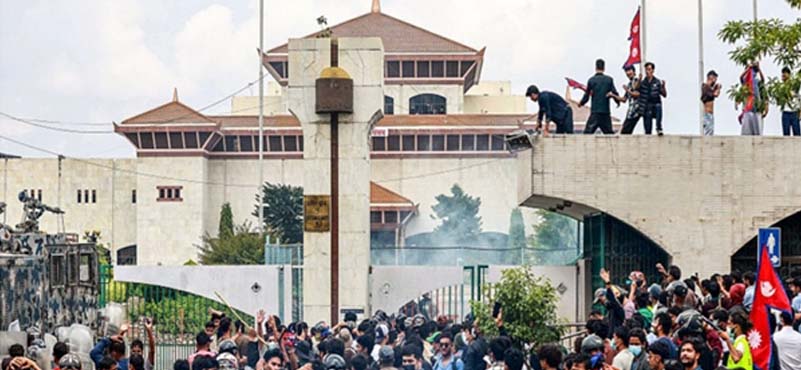
The latest electoral verdict has shattered this entrenched power structure. The most symbolic moment of the political earthquake was the defeat of former prime minister KP Sharma Oli, a towering figure of Nepali politics who had served four terms as prime minister. His defeat by nearly fifty thousand votes at the hands of Balen Shah, the rapper-turned-Mayor of Kathmandu who emerged as the face of Nepal’s youthful political insurgency, encapsulated the magnitude of this transformation.
Several other prominent leaders from the traditional political establishment also lost heavily. Only Pushpa Kamal Dahal, widely known as Prachanda, managed to retain his seat, though his party’s representation in parliament was drastically curtailed. The biggest beneficiary of the political churn was the relatively new Rastriya Swatantra Party (winning 125 out of 165 first past the post seats and 57 out of 110 proportional representation seats), founded in 2022 by television personality Rabi Lamichhane, which emerged as the driving force for the anti-establishment wave sweeping across the country.
This electoral verdict is not merely a change of government. It represents a generational revolt against a political order that many Nepalis had come to view as exhausted, corrupt, and incapable of delivering stability or prosperity.
A Youth-Led Political Revolt
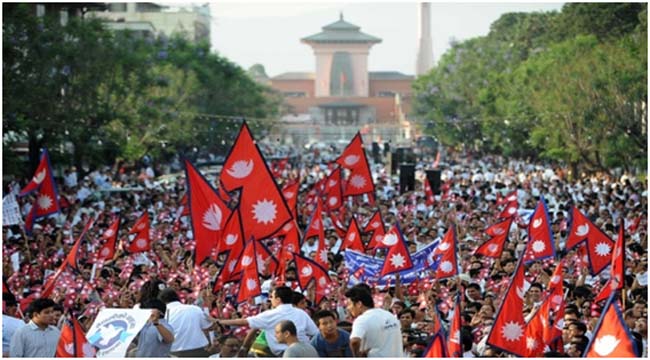
The roots of Nepal’s political upheaval lie in the deep frustrations of a young population(52% of voters were aged 18-40), that has grown increasingly impatient with governance failures. What began as a youth-led protest movement—initially triggered by opposition to social media restrictions—rapidly evolved into a wider expression of political discontent. Since 2008, the country was inflicted with fourteen governments, each dependent on fragile coalitions that often collapsed under the weight of internal rivalries and power hungry politics. The instability compounded deeper structural problems. Corruption scandals, bureaucratic inefficiency, rising inequality and the absence of meaningful economic opportunities created widespread disenchantment. Nepal’s economy increasingly relied on remittances (28.2% of GDP) from millions of migrant workers employed in the Gulf states, Malaysia and elsewhere. For many young Nepalis, migration rather than opportunity at home-has become the only viable path to economic survival. The electoral revolt therefore reflected not simply dissatisfaction with individual leaders but a broader rejection of the political system itself. Voters sought a new political culture rooted in accountability, transparency, and effective governance.
The youth led political churn across the subcontinent has produced contrasting outcomes. Developments in Bangladesh and Sri Lanka are instructive. In Bangladesh; the youth protests were instigated by Islamists and Jamaat elements opposed to the Hasina regime, ultimately resulting in the return of the Bangladesh Nationalist Party(BNP) after nearly two decades, while newer youth-driven National Citizens Party won only six seats. In Sri Lanka, the Janatha Vimukthi Peramuna(JVP), rose from the political fringes to assume power with a decisive mandate. Nepal, however stands apart. Here, the youth movement translated into a far more decisive and structural break from entrenched political dynasties.
Historical Cycles of Power: From Democracy to Monarchy to Republic
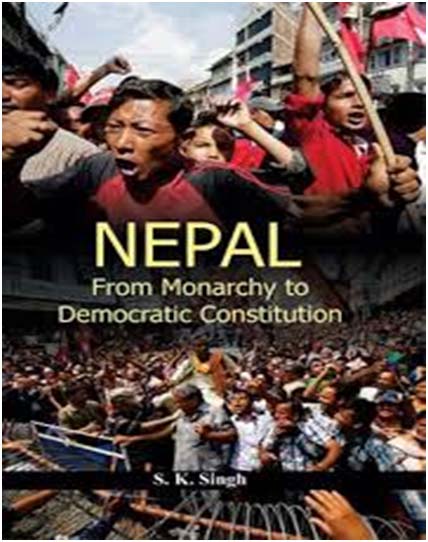
Nepal’s contemporary political turbulence cannot be understood without appreciating its long and often turbulent political evolution. Unlike most countries in South Asia, Nepal was never colonised. However, its internal political system oscillated repeatedly between authoritarian monarchy and democratic aspirations. The first democratic experiment began in 1951 after the fall of the Rana oligarchy. Yet democracy proved fragile. In 1960, King Mahendra dissolved parliament and established the party less Panchayat system, centralising power under the monarchy.
His successor, Birendra Bir Bikram Shah Dev, presided over a relatively stable period but faced growing democratic demands. The People’s Movement of 1990, widely known as Jan Andolan I, forced the monarchy to restore multiparty democracy. But stability remained elusive. In 1996, Maoist insurgents launched the Nepalese Civil War(1996-2006), a decade-long conflict that fundamentally reshaped Nepal’s political landscape. The monarchy’s legitimacy suffered a fatal blow during the Nepalese royal massacre of 2001, when much of the royal family was killed under circumstances that remain controversial. Mass protests culminating in Jan Andolan II in 2006 Democracy Movement; often referred as “Nepalese Magna Carta” led to the abolition of monarchy in 2008. Nepal formally became a Federal Democratic Republic ending 240 years of Shah Dynasty rule in 2008 and adopted a new constitution in 2015.
Yet the promise of stability remained elusive. Coalition governments continued to be fragile, alliances fluid and governance inconsistent. The perception that democracy had underperformed even triggered pro-monarchy protests in 2025 (“Raja aau Desh Bachao”) reportedly encouraged by former king Gyanendra Shah.
India–Nepal Relations: Civilisational Intimacy and Strategic Sensitivities
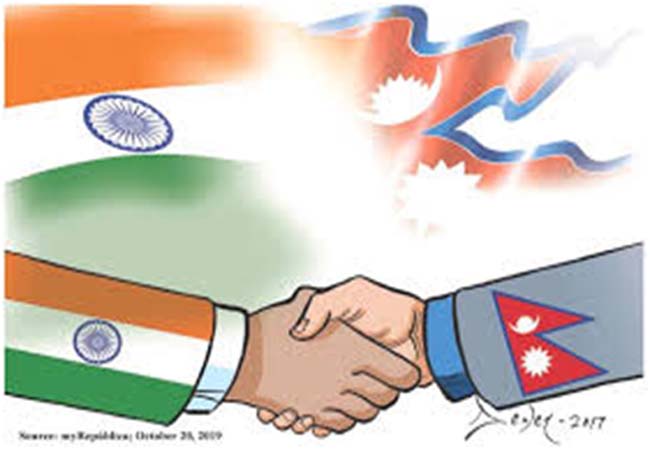
Relations between Nepal and India are unique in international diplomacy. Geography, culture, and history have created an intimacy that is rarely replicated elsewhere. The foundation of modern bilateral ties lies in the 1950 India–Nepal Treaty of Peace and Friendship, which institutionalised close economic and security cooperation. The treaty established an open border regime allowing citizens of both countries to live, work, and travel freely across the frontier. Cultural and familial links run deep, often described in popular discourse as a “Roti-Beti ka Rishta” — a relationship of shared bread and marriage. Millions of Nepali citizens live and work in India, while Indian businesses and pilgrims regularly travel to Nepal.
Nepal’s connection with the Indian Army is equally distinctive. Nepali citizens have long served in the Gorkha Regiments, symbolising shared martial traditions and trust. Currently around 34000 Nepali citizens serve in seven Gorkha Regiments while approximately 1,30,000 Indian Army Gorkha pensioners reside in Nepal. The chiefs of the two armies are appointed honorary generals in each other’s forces — a rare military tradition reflecting deep institutional bond. General Upendra Dwivedi was conferred the honorary rank of General of Nepali Army in November 2024.
High-level political engagement has reinforced these ties. Indian Prime Minister Narendra Modi has visited Nepal six times since 2014 strengthening cultural bonding, economic integration and strategic alignment.
Irritants and Strategic Divergences
Despite these deep-rooted linkages, relations between New Delhi and Kathmandu have periodically been strained. Many Nepalis perceive the 1950 treaty as unequal and have consistently called for its revision. Being claustrophobically surrounded on three sides by India has also fostered a sense of strategic unease reinforcing perception of a “big brother attitude”.
Historical developments have amplified these anxieties. The integration of Sikkim into India in 1975 raised concerns in Kathmandu about the vulnerability of smaller Himalayan states. It responded with calling the Himalayan region as a ‘Zone of Peace’. Relations deteriorated significantly during the 2015 undeclared economic blockade by India in response to politico-territorial status of the Madhesi and Terai communities in the new constitution. It was widely perceived in Nepal as an Indian attempt to pressure Kathmandu during the constitutional crisis.
More recently, the inauguration of Dharchula – Lipulekh Road by Defence Minister Rajnath Singh on 08 May 2020, triggered the most significant diplomatic crisis between India and Nepal in decades. Nepal objected to the road passing through territory it claims, encompassing Kalapani, Lipulekh, and Limpiyadhura. Nepal’s decision to publish a revised political map on 18 May 2020 and a constitutional amendment, legally incorporating these territories, further escalated tensions triggering sharp reactions from India, which dismissed the move as cartographic assertion, neither justified nor based on historical facts.
Other irritants include disputes over sharing of river flow and hydro-meteorological data about Kosi, Gandak and Mahakali Rivers originating from Tibetan plateau/ Nepal; reluctance to participate in certain regional initiatives including in BIMSTEC exercise in Pune and disagreements over India’s Agnipath Scheme affecting recruitment of Nepali citizens into the Indian Army. Equally significant is Nepal’s calibrated tilt towards China as a strategic balancing measure. This includes joining the Belt and Road Initiative (Railway connectivity between Tibet and Kathmandu despite geographical challenges) and Transit Transport Agreement for access to four sea ports; Tianjin, Shenzhen, Lianyungang and Zhanjiang over 3000 kms away ( while Indian ports of Kolkata/Haldia being 500-600 km away), has riled the Indian establishment.
China’s Strategic Outreach in Nepal
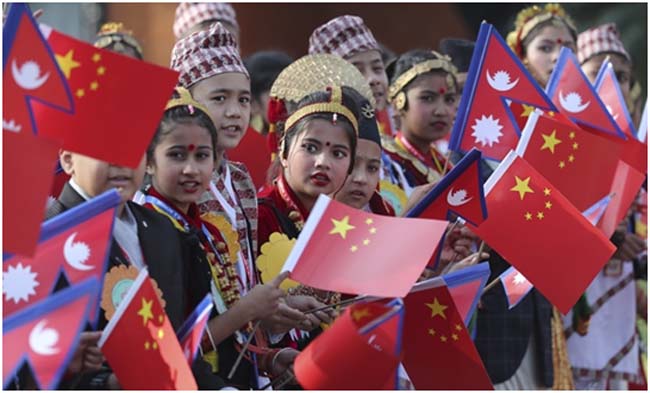
Over the past decade, China has steadily expanded its strategic footprint in Nepal, seeking to attenuate India’s traditional dominance in the Himalayan region. Nepal signed the China–Nepal Treaty of Peace and Friendship in 1960, laying the foundation for diplomatic engagement. Chinese involvement intensified after the launch of Belt and Road Initiative in 2013. China has since proposed a range of ambitious infrastructure projects, most notably the trans-Himalayan railway linking Shigatse in Tibet with Kathmandu. Although the project faces formidable engineering, environmental and financial challenges, its strategic implications are unmistakable.
Chinese diplomats Hou Yanqi and Chen Song were the pioneers of interventionist diplomacy mediating between KP Sharma Oli and Pushpa Kumar Dahal to prevent a split in Nepal Communist Party aimed at keeping the pro-India Nepali Congress out of contention and facilitate a merger of 10 smaller communist factions prior to the 2026 elections. These efforts reflect Beijing’s interest in maintaining a political environment favourable to its strategic and ideological objectives. China’s engagement has not been without controversy. Reports from Nepal’s Border Commission in 2022 confirmed instances of Chinese intrusions beyond border pillars in the Limi Lapcha area of Humla district. Allegations of intimidation of Nepali border personnel have also surfaced. Yet, these findings were not officially released due to Kathmandu’s reluctance to jeopardise economic engagement with Beijing.
The United States and Emerging Strategic Competition
The United States has expanded its engagement with Nepal in recent years, primarily through developmental initiatives. The Millennium Challenge Corporation (MCC) Nepal Compact, a $500 million investment initiative launched in 2017, focuses on upgrading electricity transmission infrastructure and enhancing connectivity. Although ratified by Nepal’s parliament in 2022, the agreement became politically controversial, with critics portraying it as part of Washington’s broader strategic effort to counter China’s growing influence in the Indo-Pacific region. The project was briefly paused in early 2025 amid a broader review of foreign assistance but was subsequently revived underscoring Nepal’s growing relevance in great power competition.
How India Must Respond
Nepal’s political transformation requires a recalibration of India’s approach. A stable, secure and prosperous Nepal is critical to India’s strategic calculus in the Himalayas. New Delhi must move towards a long term irreversible framework of engagement that integrates Nepal into its economic and security architecture through partnership rather than patronage. The Indian PM’s outreach to emerging leadership figures, including early engagement with Balen Shah, is a positive beginning. Key priorities include:-
- Revamp and upgrade the 1950 Treaty of Peace and Friendship synonymous with contemporary realities of equality, sovereignty and mutual benefit.
- Recalibrating diplomatic behaviour and shift the tone of engagement from paternalism to partnership, treating Nepal as an equal rather than a junior neighbour. Nepal’s perception of Indian bureaucrats dominating the discourse rather than Nepalese politicians must be corrected.
- Expand economic cooperation, particularly in hydropower projects such as the Arun III Hydroelectric Project and Upper Karnali Hydropower Project, while addressing Nepal’s concerns regarding trade imbalances.
- Strengthening regional connectivity, including revitalising the Bangladesh-Bhutan-India-Nepal(BBIN) framework to enhance trade, transit and integration.
- Facilitate greater investment and tourism from India, strengthening people-to-people linkages that have historically underpinned bilateral ties. Nepal must see a vested interest in its relations with India.
- Managing territorial disputes pragmatically, keeping them insulated from broader strategic engagement.
India must also recognise that influence in Nepal can no longer be taken for granted; it must be continuously reinforced through sensitivity, responsiveness and mutual respect.
Nepal’s Challenge: Delivering Governance
For Nepal’s new leadership, electoral success is only the beginning. The real challenge lies in converting political momentum into effective governance. Restoring public trust will require institutional reforms, judicial independence and credible anti-corruption measures. Economic priorities include job creation, tourism development and improvements in civil aviation safety.
At the strategic level, Nepal must carefully nurture the delicate balance in its relations with India and China. As Nepali statesmen often observe, the country is “a yam between two boulders,” caught between the strategic interests and influence of India and China. Managing this delicate geopolitical reality will demand diplomatic dexterity, political maturity and strategic clarity.
Conclusion: A Himalayan Inflection Point
Nepal’s recent elections represent a rare democratic correction — a moment when public frustration translated into a decisive political transformation. Whether this transformation produces lasting stability will depend on the ability of Nepal’s new political actors to deliver governance that previous governments failed to provide.
For India and other external powers, the message is clear. Nepal’s politics is no longer the preserve of entrenched elites. A politically conscious generation has arrived on the national stage and its expectations are far higher than those that shaped the politics of the past. In the fragile geopolitics of the Himalayas, that generational shift may prove as consequential as the election itself.
ABOUT THE AUTHOR
 Major General SC Mohanty, AVSM (Retd), was commissioned in June 1983. The officer commanded a Mechanised Infantry Battalion, a Mechanised Brigade and an Infantry Division (RAPID Strike) in the Western Sector. As a Brigade Major, he took active part in the Kargil Operations while located at Drass. As part of Military Operations Directorate, he headed the Information Warfare, Cyber and Electronic Warfare branches. Post retirement, he was the Security Advisor to Government of Arunachal Pradesh from July 2020 to May 2023.