Myra shares Insights in how the Indian Traveller is Planning their trips
Especially so in the home stay market, MMT has strengthened its portfolio with acquiring majority stake in leading regional tour operator, Flamingo Transworld, based out of Gujarat.
It is that typical segment that may not come on MMT packages directly. It builds upon their portfolio of the Holiday Packages Business.
Flamingo Transworld, one of India’s leading regional tour operators, comes into the MMT brands, subject to the fulfilment of certain closing conditions. Over the last 30 years of its operations, Flamingo has created a strong affinity in the regional markets of Gujarat, Maharashtra, Rajasthan and Madhya Pradesh with its group tour services. These tours are curated to make holidays a memorable experience and are particularly popular for having curated selection of Indian meals made by on-tour chefs or verified Indian vegetarian/Jain kitchens, in-house tour managers fluent in regional languages and extensive coverage of popular attractions and experiences for domestic and international tourists.
Flamingo’s popular international and domestic group travel packages, which are currently sold largely through 51 offices across Gujarat, Maharashtra, Rajasthan and Madhya Pradesh, will complement MakeMyTrip’s established Holiday Packages business and help the platform penetrate deeper into markets across India.
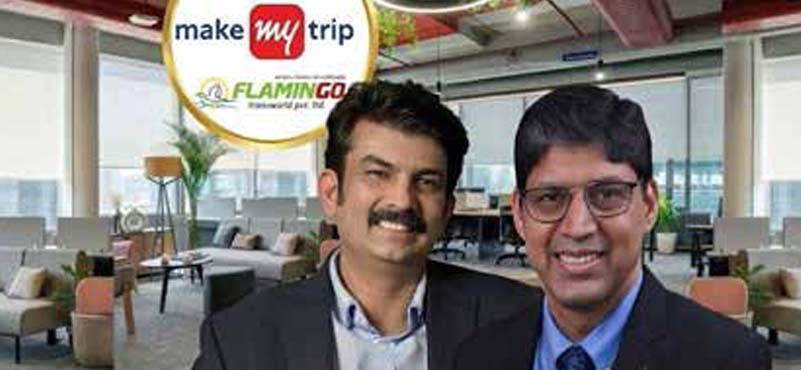
Commenting on the acquisition, Rajesh Magow, Co-Founder and Group CEO, MakeMyTrip, said, “Flamingo aligns closely with the growth strategy of our Holiday Packages business. It is a strong, growing business that has developed a unique moat in the group travel domain. We plan to leverage the complementary customer base, products and distribution focus between the two brands to widen holiday package options for our customers.”
 Mohit Kabra, Group Chief Operating Officer, MakeMyTrip, said, “We believe that our proposed acquisition of Flamingo creates a profitable growth opportunity to help MakeMyTrip drive a deeper presence in regional markets across India.”
Commenting on this, Sanjay Shah, Director and Co-Founder of Flamingo Transworld, said, “For over three decades, Flamingo has built something unique in Indian travel, genuine trust. From chef led tours to regional language guides, the brand has grown by going deeper. By combining Flamingo’s brand equity and operational depth with MakeMyTrip’s digital platform and national customer reach, we aim to build a truly pan-India tour company that brings Flamingo’s signature experience to millions of new customers.”
MakeMyTrip has taken a calibrated approach to inorganic growth, steadily strengthening its presence across key travel segments.
Recent strategic acquisitions, including QuestToTravel in corporate travel bookings, Simplotel in hotel technology, BookMyForex in travel forex, Savaari in intercity mobility and Happay in corporate spend management, have expanded its capabilities across leisure, corporate and ancillary travel. These moves have enhanced supply integration, cross-sell potential, and end-to-end control across the connected trip journey, reinforcing MakeMyTrip’s position as a full stack travel services platform.
MMT expects this proposed acquisition of Flamingo to further contribute to this growth.
Meanwhile, the Flamingo website is flashing the MMT takeover. It is a robust organization, with an annual revenue of Rs 400 crores, according to well informed sources. It is specialising in both domestic and outbound destinations.
Indians Are Beginning to Search for Travel in the Language They Speak
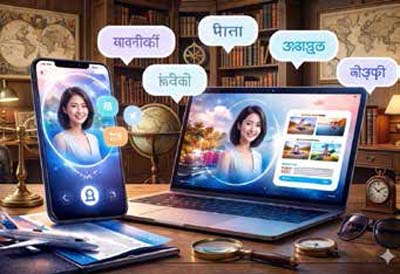
Data from 20 lakh voice conversations on Myra, MakeMyTrip’s Gen-AI Trip Planning Assistant, indicates that voice queries are beginning to reflect a richer, more contextual form of travel intent, with early trends showing significantly higher adoption across Indian languages and more conversational search behaviour compared to text, pointing to an emerging behavioural trend in how Indian travellers are beginning to interact via voice. While Myra’s user base is still growing and now delivers more than 50,000 conversations daily, the initial data suggests that voice is beginning to enable a more expressive, contextual, and linguistically inclusive form of travel discovery, one that is different from how users search via text.
 Even in early usage patterns, the contrast between how users type and speak their travel intent is visible. Majority of text searches are in the neighbourhood of 3-4 words, compressed and keyword-driven, such as “Goa hotels cheap” or “Delhi Mumbai flight.” Voice queries are beginning to look considerably different. Nearly 23% of voice queries exceed 11 words, compared to just 7% in text, as users tend to naturally articulate destination proximity, amenities, budget, group size, and dates within a single spoken interaction. For instance, “Show me affordable hotels in North Goa near the beach with a pool” or “2 adults and one kid, 3 nights from 14th January, budget under ₹15,000 per night.”
Across several query categories, early data points to voice being used noticeably higher than text. Date-specific queries show the most pronounced difference, at 3.3x higher on voice, with users naturally saying “26th December to 29th” or “next Friday to Sunday” rather than typing compressed date formats.
Informational queries, where users are looking for guidance or explanation around certain processes or services, are indexing 2.7x higher on voice, suggesting that users are beginning to turn to conversational assistance for questions beyond transactional search.
Location-specific queries account for 25.1% of all voice searches and index 1.5x higher on voice than text, with users naturally expressing proximity in phrases such as “near beach,” “walking distance from Golden Temple etc. Similar patterns are visible across languages.
One of the more telling early signals in the data is how voice is beginning to enable users to search in the language they naturally think and speak. While English dominates text searches, voice interactions are considerably more linguistically diverse with English representing far lower % of voice queries. The gap points to something simple: users who are most comfortable in their own language are gravitating towards voice. For example, for Malayalam, voice trumps text by 46 to 1; for Tamil this ratio is 36:1 and Telugu 32:1.
For users who found typing a barrier, the shift is less about technology and more about expression. Voice lets them describe exactly what they want, in their own words, without compression. Code-mixed users, who blend Hindi and English, are among the most expressive in early observations, averaging 10.5 words per query. A search like “Manali mein 3 nights ke liye hotel chahiye with mountain view and breakfast” captures nuance and preference in a single breath, something that text search has rarely accommodated.
“What we are beginning to see through Myra is encouraging. Voice is starting to give a new set of users, those who are most comfortable in their own language, a more natural way to search and plan travel. For someone in Kochi or Coimbatore who thinks in Malayalam or Tamil, being able to simply speak their requirements, rather than type them in English, changes the experience meaningfully. It is still early, but these initial signals point to voice having the potential to make travel planning more inclusive and accessible across India,” said, Rajesh Magow, Co-founder and Group CEO, MakeMyTrip.
Early data also points to premium and elite traveller segments using much longer sentences while using voice on Myra, often combining star category, amenities, group size, and budget into a single spoken request. For example: “5-star villa in North Goa with private pool, 6 bedrooms, for 8 adults under ₹50K per night.” While these highly layered, multi-constraint queries represent a smaller share of total searches, they offer an early indication of how voice may be better suited to capturing complex travel intent than keyword-based text search.
MakeMyTrip has been deeply invested in AI and machine learning for several years, embedding intelligence across the travel lifecycle. From inspiration and discovery to search, booking and post-sales support, AI is integrated at every stage. These proprietary models, built on large language architectures and rich travel-intent data, power Myra. The AI Trip planning Assistant now facilitates over 50,000 conversations daily across multiple languages, including Bengali, Hindi, Kannada, Malayalam, Marathi, Tamil, Telugu and English. More than 45% of queries on Myra are coming from Tier-2 and smaller cities.