The Purposes of Development
Indian Prime Minister Modi and his ruling Bharatiya Janata Party (BJP) declared some time back that Bharat (the Hindi name for India) would be a “viksit” (developed) country by 2047, its centenary year of Independence. To understand if this aspiration is more than nice sounding rhetoric, we need to unpackage what the purposes of development are and what “developed” actually means.
This article will begin by attempting to do both. There are many dimensions to a “viksit” aspiration which encompass the economic, social, political and cultural. This article will focus only on the economic and social dimensions of what India needs to prioritize if it seeks to at least partially achieve its “viksit” aspiration.
People are the real wealth of nations and the three main essential purposes of development, regardless of which stage of development a person or country is at are to create an enabling environment for people to enjoy long, healthy, creative lives, to acquire knowledge and to have access to the resources needed for a decent and dignified standard of living.
This may appear to be a simple truth. But for very long, and even at present, the Government of India and many other governments and even the World Bank and International Monetary Fund (IMF), the two Bretton Woods institutions, have been fixated on growing and using the aggregate Gross Domestic Product (GDP) metric and the creation of financial wealth through stock markets as the two overarching metrics for measuring a country and individual’s “development.”
Forgotten in such pursuits is that development is about ordinary people, especially the most socially, economically, politically and culturally marginalized. The preoccupation with aggregate economic growth and its per capita metric has served to push ordinary people to the periphery of development discussions.
In this context, this article argues that it is the concept and measurement of human development which comes closest to addressing a people first development paradigm. This can be simply defined as a process of enlarging the three essential purposes of development mentioned in the first paragraph of this article. Human development’s ultimate aim is not to create more wealth or achieve higher economic growth but to expand both the range of choices that every human being has as well as their capabilities to enlarge the choices open to them and enhance the outcomes of their choices.
Building the capabilities of people to make good choices is important for both current and future generations. For human development to be sustainable, today’s generation must enlarge its choices without reducing those of future generations. Moreover, by focusing on choices, the human development concept implies that people must participate in the processes that shape their lives. They must help design and implement decisions and monitor their outcomes.
Though important, economic growth is merely ones means to development—not the ultimate goal. Moreover, for human well-being, the quality of growth is more important than just its quantity. Economic growth can be jobless, rather than job creating; it can be ruthless rather than poverty reducing; it can be voiceless rather than participatory; rootless rather than culturally enshrined; and futureless rather than environmentally friendly. Growth that is jobless, ruthless, voiceless, rootless and futureless is not conducive to human development.
Within the human development paradigm and framework, higher income can make an important contribution but only if it improves people’s lives. Income growth is not an end in itself. Development must be focused on people, and economic growth must be equitable and inclusive if its benefits are to be felt in the lives of ordinary people’s lives, especially the most socially, economically, culturally and politically marginalized.
Gender equality is at the core of human development. A development process which bypasses women serves to marginalize or discriminate against half of humanity, thereby constraining women’s choices.
Twelve Major Areas on Which India Needs to Urgently Make Significant Progress if it is to Achieve its “Viksit” Aspiration
A high score and ranking on the annual United Nations Development Program (UNDP) global Human Development Index (HDI), and its accompanying Multi-Dimensional Poverty Index (MDPI) and Gender Development Index (GDI) is a pre-requisite for, but not a sufficient condition for any country being classified as “viksit.”
Currently, India ranks relatively low on the HDI. It is ranked 130 out of the UNs 193 Member States (MS) on the HDI in 2025, a marginal improvement from the previous year, nevertheless continuing to exhibit high and growing inequality and social biases. Its ranking had actually slid by two in previous years over the last decade, from 130 to 132, a rare feat. It also ranks very low on the GDI. In 2025 it is ranked 131 out of 148 countries for whom comparable data was available on this set of metrics in 2025. Since India has unilaterally modified the MDPI composite indicators to suit its own needs, it is effectively saying that it does not accept its global MDPI score and ranking which is also low.
To achieve rankings and scores which place it in the “high development” categories of all three globally accepted indices, India will need to significantly increase its scores in at least the four areas discussed below. However, if it is to become truly “viksit” by 2047, the centenary of its independence, it will urgently need to fix at least another eight areas also discussed below.
Areas in which India Needs to Make Considerable Progress to Achieve High Human Development and Gender Parity Rankings
High scores and rankings in the following four areas are the minimum necessary but insufficient conditions for India’s “Viksit” aspiration.
1. Basic Health
 India’s Union (central or federal) government’s health expenditure as a percentage of GDP was only 1.9% in Fiscal Year 2023-24 and approximately the same in Fiscal Year 2024-25. This was below even the very modest and inadequate 2% target which has been in place since 2018 and considerably below the equally unambitious 2025 2.5% of GDP goal indicated in the country’s 2017 National Health Policy. Total central government health expenditure in Fiscal Year 2023-24 was an equally uninspiring 1.85% of GDP and this was expected to only marginally rise to 1.9% of GDP in the 2024-25 fiscal year.
The minimum consensus among Indian health experts is that there is a need for increased government spending, improved infrastructure and enhanced innovation to build a robust healthcare system in India. They have also stressed the importance of addressing health threats, achieving universal health coverage and professionalizing public health institutes under autonomous health boards.
2. Basic Education
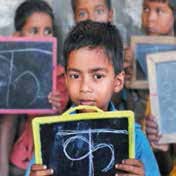 The HDI Education Index has two component indices: Mean Years of Schooling (MYS) and Expected Years of Schooling (EYS). MYS matters most because it measures the actual average educational attainment of adults (25+), reflecting completed education.
India’s latest MYS index was estimated in the global HDI at only around 6.57-6.7 years in 2022/23, the latest year for which data was available. This is significantly lower than both the world average of around 8.7 years and the developing country average of around 7.6 years.
India’s National Survey (NSS 79TH Round) estimated this to be higher (though still below the developing country average) at 7.5 years for ages 25+, with 6.4 (rural) vs. 9.9 (urban) and 8.6 (male) vs. 6.3 (female). While there has been an upward trend over the previous decade, progress has been uneven and the overall figure remains below the average for developing countries.
While EYS in India trends higher than MYS at around 12-13 years (almost double), it remains aspirational by definition. This desirable EYS has no chance of being realized unless India first attains universal access to education for children between the ages of 6 and 14 years guaranteed by its Right to Education Act (RTE), 2009 which came into force on 1 April 2010. While this guarantees free and compulsory education for this age group, there is still a long way to go, given India’s current reality.
To enable the achievement of its RTE aspiration, India needs to start by doubling its national public expenditure on education from the current 3% to 6% of GDP. While over 6% of GDP is currently spent on education in total, a notable trend over the past three decades has been that private expenditure on education has been growing much faster than public expenditure. This trend needs urgent reversal if the RTE Act’s goals are to be realized and India’s MYS is to significantly increase.
In this context, India’s 2024-25 Budget was not a budget for “viksit” status achievement since the public investment to GDP ratio remained 3.6%, the same as the previous year, and lower than in 2019. While the 2025-26 Union Budget saw a welcome increase to 4.6% of GDP and this is a trend in the right direction, it is still below the government’s own 2020 National Education Policy target of 6%.
What the budget is actually spent on will determine the quality and relevance of the expenditure and will matter as much, if not more, than its quantity.
3. Gender Parity
 India’s 2025 GDI rank of131 out of 148 countries in the 2025 Global Gender Gap Report, dropping two places from 2024, and below the global parity percentage of 68.8% is even more dismal. India’s score indicated major gaps in political empowerment (parliamentary representation, ministerial positions) in addition to the significant gaps for women compared to men in MYS and the low female labour force participation rate (LFPR), among other areas.
While Indian government data, now not regarded as reliable in a host of areas, indicates that the female LFPR had significantly increased from a very low 23.3% in 2017-18 to 41.7% in 2024, driven largely by rural women entering the labour force due to dire economic need, some reports suggest that recent figures actually hover around 33-34%, and that adverse social norms and lack of opportunities persist. Moreover, even if the government data is to be believed, a huge gap with males persists and much of the forced entry of rural women into the economic labour force due to dire economic necessity remains unpaid.
It is also noteworthy that India’s GDI rank was below most of its South Asian neighbours and significantly below Bangladesh which ranked a high 24 in 2025.
4. Per Capita Income
 India’s nominal per capita income in 2025, estimated at around US Dollars (USD) 2820 per annum classifies it as a lower-middle-income-country. Its per capita income is now significantly lower than both that of Vietnam whose 2025 estimates are projected to be between USD 4400-4800 and Sri Lanka whose 2025 nominal per capita income has been credibly estimated at USD 4500-4600. It is also roughly the same as its conflict-ridden neighbour Bangladesh. China, on the other hand, is an example of an upper-middle-income-country, with figures nearly five times higher than India according to a recent analysis in 2024.
Moreover, India’s relatively low per capita income figure hides huge income inequality, since the vast majority of Indians earn closer to USD 900 per annum or even lower. India’s figure has also grown relatively slowly over the last few years compared to countries like Vietnam and Bangladesh, raising the risk of it being stuck in a “lower middle-income trap.” The country’s 2025 figure is also significantly lower than the World Bank’s high-income threshold for Gross National Income (GNI) per capita (i.e. greater than USD 13,846 per annum) which India would need to attain at a minimum to be classified as “high income” by that institution (this is not the same as “viksit” though). It is also lower that the World Bank’s middle income GNI per capita threshold of around USD 4,465 which Sri Lanka has already attained and Vietnam will more than likely have attained in 2025, leading it to cross-over into the high-middle-income-bracket, a significant milestone for a country that had a 1990 annual per capita income figure of slightly less than USD 100 (in current USD at that time), around only 27% of India’s (around USD 370) that year.
Additional Areas for Urgent Improvement if India is to be Genuinely “Viksit” by 2047
5. Mainstreaming Democratic and Secular Values and Respect for Human Rights in the Public and Private Education System
 In addition to implementing the recommendations stated in the section on basic education above, the primary and secondary school curriculum needs to be overhauled in fundamental ways. Consistent with key sections of the Constitution of India, the primary but especially the secondary education system in India should explicitly prioritize the teaching of a comprehensive understanding of genuine secularism embedded in religious pluralism as part of its core curriculum. This should, from an early age, ingrain in all children, equal respect for all religions and those who follow no religious faith. This can be done in many ways but should include prioritizing and exposing secondary school students to the Constitution of India, the United Nations (UN) Charter and the 1948 Universal Declaration of Human Rights, both of which India has endorsed and signed. Even more importantly, they should be shown what this means in practical terms.
The education system from kindergarten should also place a premium on inculcating good moral values and integrity as well as a genuine commitment to equity and communal harmony. This should be regularly reinforced through practical demonstration in the classroom. Gender sensitivity and respect for all women and gender non-binary individuals should also constitute an integral part of the secondary school human rights education curriculum.
6. Education Geared to Formal Decent Jobs and Increased Employability
 It should come as no surprise that the 2021 India Skills report stated that nearly half of India’s graduates were unemployable. To even begin to address this, in addition to an appropriate overhaul of the secondary school system, Internships and Apprenticeships should be made a Right for Youth under the age of 25 years. While the necessary legislation to enable this, the Apprenticeship Act, has existed since 1961 and the first phase of a National Apprenticeship Scheme was launched in 2016, a 2022 ILO study concluded that while apprenticeships went up as a result, there were only a little over 0.5 million apprenticeships in a workforce of 580 million in India in 2022-23, a miniscule amount compared with Germany which had a 46 million workforce with at least 6 million apprenticeships during the same period.
The new apprenticeship scheme announced in the 2024 Union Budget can be considered a small step in the right direction, but even if fully implemented which it has not been yet, and is unlikely to be, given the very small budget allocation for it, its impact would be miniscule in relation to India’s challenges in this area.
As already signalled, for women, the key employment challenges are to significantly increase the female LFPR and ensure that they are paid equal wages to men doing the same work. Recent Union Budgets have had no structural reforms and very few plans to address these critical challenges.
7. Decent Jobs in Formal Manufacturing and Services
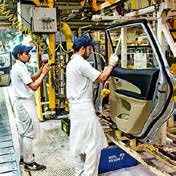 Credible research shows that India needs to create at least 115 million jobs between 2024-2030. Indeed, Dr Gita Gopalan, former First Deputy Managing Director of the IMF and now Professor of Economics at Harvard University, placed the higher end of her range at 148 million new jobs by 2030. Of this daunting overall number, the country will need to create a conservatively estimated minimum of 16.5 million jobs annually till 2030, up from 12.4 million in the last decade. At least 10.4 million of these annual jobs will need to be in the formal sector. In this context it is important to note that there have been an average of 1.5 million engineers consistently graduating every year as part of the total of 10-15 million Indian graduates annually.
How will such a large number of jobs be created so rapidly and consistently? There is no easy answer given the structural nature of India’s acute unemployment, underemployment, unemployability, informal unpaid work and ill-suited employment challenges (the 3 big ‘U’s and the 2 big ‘I’’s).
Clearly, the government will have to prioritize clear short, medium and long-term strategies, not rely on freebies to around 800 million people and Rs 10,000 dole-outs bribes to women before state elections as in Bihar recently to get their votes. Despite the seriousness of India’s unemployment crisis there is almost no discussion of these issues in the Lok Sabha (lower house of the Indian parliament).
History the world over has demonstrated that a country (with relatively few resource rich or small state exceptions) cannot generate sufficient decent jobs without a robust manufacturing sector, centred especially in its micro, small and medium enterprises (MSMEs). Large capitalized industry and physical infrastructure projects of the type that this government has largely supported over the last decade generate relatively little employment. MSME support in terms of access not only to credit but markets, technology adoption, skills development and support for regulatory compliance are among the many areas which the government will need to prioritize which it has not done so far, instead prioritizing so-called capital-intensive “national champions” such as the Adani and Ambani conglomerates.
8. Prioritizing Freebies Over Structural Reform
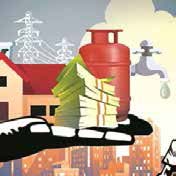 At least a billion Indians (over 70% of the country’s population of 1.4 billion) have no real savings or discretionary spending money. Of these, approximately 800 million Indian citizens (60% of the total population) are on dole-outs.
In addition, regardless of political party, promises of or the actual provision of freebies before elections (Rs 10,000 to women in Bihar handed out just before the recent state election in violation of India’s Model Code of Conduct for Elections) have become normalized in Indian politics as a “bribe” to get votes. This strategy was tested by the BJP led coalition in Maharashtra and Delhi before Bihar and was successful in getting huge women voter turnout and votes for the BJP-led coalition in each case.
9. Addressing India’s Existential Air Pollution Crisis
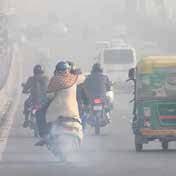 India now has the dubious reputation of being the country with the world’s worst air pollution. Hence this issue needs separate treatment from climate change and energy challenges even though they are all inextricably interlinked. 94 out of the world’s 100 most polluted cities are reportedly in India and a severely negative Air Quality Index (AQI) minimum reading of over 300 (sometimes over 450) has become the terrible norm in both Delhi, the capital city, and the National Capital Region (NCR) of which it is a part during the winter season.
Nothing of serious note has been done over the last decade when the crisis was first visible to address the structural causes of this crisis by either the current Union government or the Delhi government or those of adjoining states. What needs to be done is clear but neither the political will or resources have been in evidence, ostensibly because addressing air pollution, thus far, has not been viewed as a vote catcher. China’s example and the actions it took more than 15 years ago are often cited as noteworthy of emulation, even though it is now increasingly recognized that the causes of India’s pollution are more numerous and complex. Nevertheless, a lot can still be learnt from the Chinese experience but not much has been done to learn from it.
Suffice it to say that there is no possibility of a “viksit” India, or anything really positive for future generations of Indians, if this existential issue is not urgently addressed. Even if the appropriate well-known actions are taken immediately with a long-term perspective, it will take at least a decade to see significant tangible positive results as China’s example illustrated.
10. Significantly Addressing India’s Energy and Existential Climate Challenges
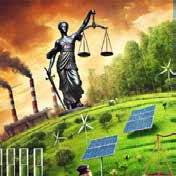 No country can be considered truly “viksit”, if its myraid climate challenges (not just air pollution) remain an existential threat to its future as they currently are for India. While the country has made impressive strides on solar and renewable energy, and together with the French, leads the International Solar Alliance, India is still heavily fossil-fuel import dependent and coal continues to be a dominant polluter.
India needs to urgently legislate and fully resource and implement a Climate Action Bill learning from both the European Union, the gold standard in this area, and China. Relevant aspects of the US Biden Administration’s misnamed 2022 Inflation Reduction Act can also be adapted from, especially in the clean energy area.
11. Agricultural Reform
 This set of complex issues are long-standing and the repeated large-scale farmers protests indicate that the types of reforms proposed by the current government are far from appropriate for the small farmer.
A lot has already been written on what type of appropriate reforms are needed in agriculture, so this article will not repeat this. Suffice it to say that it is a pity that unlike the economic success stories in East and Southeast Asia (eg. China, Republic of Korea, Japan, Taiwan) the core agrarian reforms needed were not implemented during India’s early decades of independence. At this stage, increasing farmer bargaining power through supporting small farmer led marketing cooperatives and government public investment in critical agricultural infrastructure (good farm to market roads, storage facilities), remain among the most crucial of the many other urgent reforms which are needed and have been written about by agricultural experts such as Dr Biswajit Dhar for at least the last three decades.
12. Income and Wealth Redistribution
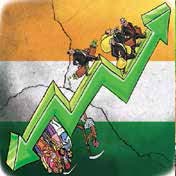 It has long been known that trickle-down economics does not work. Prioritizing the minting of billionaires and millionaires and hoping that some of their wealth will trickle down and be shared with the ‘hoi polloi’ is seriously misplaced strategy, if indeed there is any strategy.
The Government of India needs to seriously consider and act upon rather than dismiss both the findings and recommendations of the Thomas Piketty led report on income and wealth inequality (Income and Wealth Inequality in India 1922-2023: The Rise of the Billionaire Raj, World Inequality Lab, Working Paper No. 2024/09, March 18, 2024).
Against this background, the recent 2025 rationalization and reduction in the Goods and Services Tax (GST) was welcome even though it was long overdue because it is a regressive tax, punishing the poor and disadvantaged disproportionately to their earnings compared with the middle class and rich. However, giving income tax breaks to those in the middle class earning less than Rs 1 lakh (around USD 1100) per month in the 2025-26 Union Budget, or to corporations which the Union Government did in its annual budget some years ago, were both regressive steps.
India will, instead, need to take serious steps to include a far greater percentage of its working age population than the current paltry 6% in its progressive income tax net. Those who are guilty of tax evasion should be prosecuted heavily and seriously. There also needs to be a much more progressive approach to both short and long-term capital gains tax and the serious consideration of an inheritance tax for billionaires and millionaires. An agricultural tax on large land holdings should be instituted as well.
Conclusion
East and Southeast Asian countries which have done economically and socially well in the past half century have seen effective synchronization between their trade, industrial and social policies. Land reforms, together with enormous and effective state intervention in primary and tertiary education, public health and other redistributive policies have also underpinned increasing domestic demand and higher productivity, paving their way to “developed” country status (e.g. Republic of Korea, Singapore, Taiwan).
India has, starting in the 1950s, and spanning many decades since, missed multiple opportunities to prioritize many of these crucial policy interventions. Moreover, many of its structural unemployment, underemployment and unpaid informal work-related challenges were exacerbated greatly by three self-inflicted wounds since 2016—overnight demonetization, the somewhat hastily introduced design of the GST, (now more appropriately redesigned in 2025) made worse by its implementation difficulties, and the Government’s response to Covid-19, closing down the nation overnight during its first wave in March 2020.
Thousands of MSMEs went bankrupt as a direct result of these policies and their implementation. Already poor and vulnerable migrant workers were the most badly hit as a result of the forced mass exodus back to unpaid agricultural work as a direct consequence of these policies. Even at that time, but certainly in hindsight, these three major policies represented retrograde steps. Partly as a cumulative result, as already indicated, 800 million Indians (close to 60% of its 1.4 billion population) remain on handouts for at least the next 4 years till the next Lok Sabha election in 2029.
Sadly, as a result of all of the above, there are no quick fixes or miracle cures for India especially on structural issues which have been ignored, paid lip service to or left unaddressed, sometimes for decades, but even for those needlessly created after 2016. Indeed, unfortunately, many of the earlier lingering sores were exacerbated in the last decade as a result of the current dispensation’s failed demonetization, initially flawed GST, its support for crony corporate oligarchies and many of its other economic and social policies.
The steps suggested in this paper, if seriously heeded and implemented, can reverse India’s current trajectory and take it closer to becoming both an inclusive society and “viksit” during the 21st century, although this is now improbable by 2047. Achieving all or most of the UNs Sustainable Development Agenda and Goals by 2030, their target year, will be a desirable and good milestone on the way.
ABOUT THE AUTHOR
 Kamal Malhotra is currently Distinguished Visiting Professor at the NALSAR University of Law, Hyderabad, India. He was a Non-Resident Senior Fellow at the Boston University Global Development Policy Center between June 2022-May 2025. He has also Guest Lectured at the School of Interwoven Arts and Sciences (SIAS), Krea University, India. Prior to his retirement from the United Nations in September 2021, Mr. Malhotra had a rich career of over four decades as a management consultant, in senior positions in international NGOs, as co-founder of a think-tank, FOCUS on the Global South, and in the United Nations (UN) including as its Head in Malaysia, Turkiye and Vietnam (2008-21). He was UNDPs Senior Adviser on Inclusive Globalization, based in New York, USA, for most of the prior decade. Mr. Malhotra is widely published.