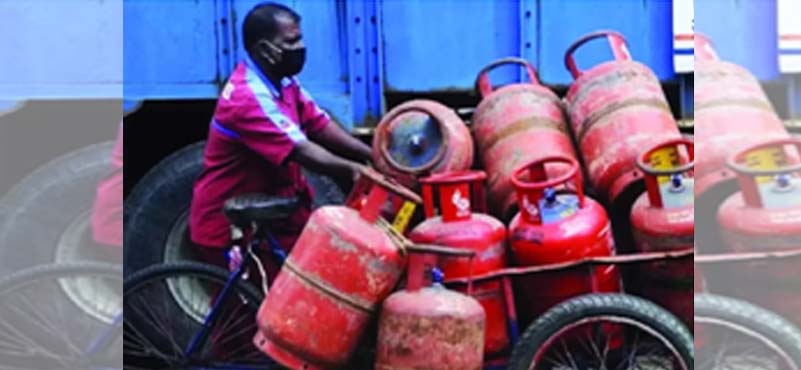
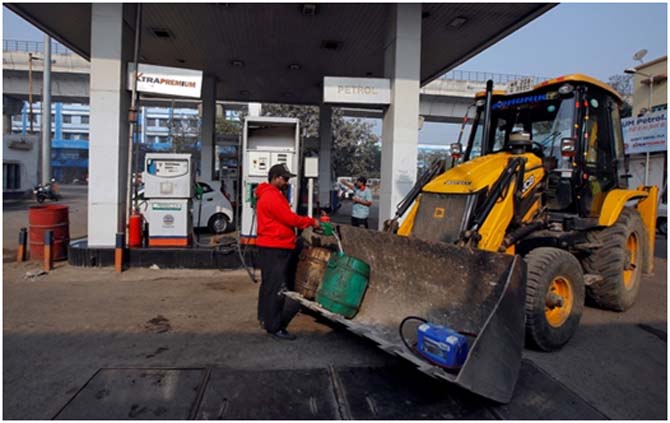
Amidst the unending geopolitical crisis in West Asia, shaped by self-righteous and contesting narratives, with acute disruptions of supply chains; not only of oil and gas shortages but also export of commodities into the region, biting into everyday commerce; reports have emerged in India of gas cylinders being hoarded in graveyards, of fuel being siphoned into jerricans and clandestinely stockpiled for later resale at extortionate prices. While diplomats negotiate passage through contested waters, diversifying imports, while domestic refineries work overtime to scale up output and while policymakers prioritise fuel for essential services, a section of our countrymen are busy monetising the misery of average businessman and the common household in an attempt to profit from scarcity.
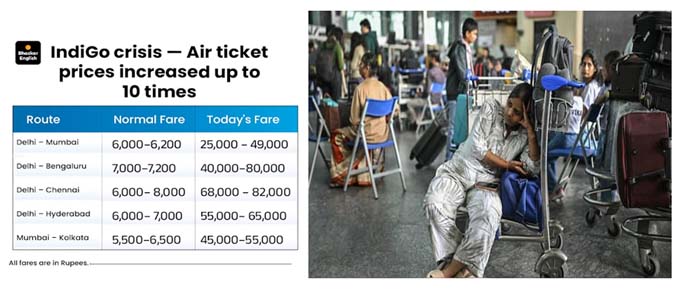
This is not an isolated aberration. Let’s recall the darkest months of the COVID-19 pandemic. As anxious and grieving families ran from one hospital to another and anguished relatives desperately pleaded for a single oxygen cylinder; those cylinders — lifesaving, irreplaceable — were being sold by unscrupulous intermediaries in the black market at ten times their regulated price. The cost of Remdesivir antiviral injection skyrocketed from a launched price of Rs 2800/- to Rs 75,000 to 80,000/-. When the Indigo crisis in Dec 2025, led to mass flight cancellations, surviving airlines, unshackled by competition and displaying flagrant opportunism, inflated airfares by staggering margins, trapping hapless and distressed passengers into a debilitating financial hardship. Take the case of a SpiceJet Flight from Kolkata to Mumbai costing Rs 90,000 (while the regular cost was Rs 6000-Rs 8000 ) and a Hyderabad to Bhopal flight costing a whopping Rs 1,30,000 (against a regular price of Rs 4000-6000). In each of these crises, the predator was not a foreign adversary — it was a fellow citizen, who may well face the same predicament at another crisis.
The question this forces upon us is profound and uncomfortable: Why does a section of us Indians habitually personalise benefits at the cost of our collective wellbeing? More crucially why such indifferent attitude is taken as business as usual or acceptable levels of dishonesty and why can’t the society as a whole prevent such apathetic indifference? Can a nation with such appalling and self-centred attitude aspire to become a developed, equitable and self-reliant civilisational power by 2047, unless we as citizens internalise the spirit of responsibility?
What Viksit Bharat Really Means
The vision of a Viksit Bharat ; a Developed India was formally articulated by the Prime Minister on Independence Day, 15 August 2022. It was embedded within the Panch Pran, the five resolves for the Amrit Kaal, the 25-year journey from 2022 to 2047, when India marks a century of independence. These included ‘Resolves for Building a Developed India’ (Vikshit Bharat), Taking Pride in India’s Heritage ( Apni Virasat par Garv), Strengthening Unity and Solidarity (Ekta and Ekjutta), Eradicating the Colonial Mindset(Ghulami ki Mansikta se Mukti; not mere symbolism) and — critically — Cultivating a Sense of Duty amongst Citizens (Kartavya).
The four demographic pillars upon which this transformation must rest are Youth(Yuva), the Poor(Garib), Women(Mahilayen), and Farmers(Annadata) — groups whose empowerment is inseparable from India’s leap into the league of developed nations. Policies directed at these groups are aimed to unleash India’s human potential and ensure that development is inclusive rather than elitist.
The core tenets of the vision are clear: economic transformation towards a $5 trillion economy and beyond; inclusive development embodied by Sabka Saath, Sabka Vikas, Sabka Vishwas and Sabka Prayas; good governance through digitisation, speed of delivery and minimum government with maximum governance; sustainable growth; national security and strategic autonomy; and a relentless focus on education, skilling, and innovation. Much of this agenda will be steered by government initiative, policy frameworks, legislation, and institutional reforms. But no government, however visionary, can drag a self-defeating citizenry to prosperity. The citizen’s role is not peripheral to Viksit Bharat ; it is foundationally central.
Economic Empowerment : Paying Our Fair Share
India’s tax base is, by any measure, abysmally and embarrassingly narrow. Only about 2.2 percent of the population pay income tax. About 63% of tax filers (47 million)report zero tax liability for compliance to elicit legitimacy. Agricultural income — irrespective of the scale of landholding or the quantum of earnings — remains outside the tax bracket under section 10(1) of Income Tax Act 1961; while at the same time, farm loans are regularly waived with vote bank considerations. Large sections of small traders, informal businesses and unorganised sectors operate almost entirely outside the formal revenue net. Yet these same citizens, not unreasonably, expect world-class public healthcare, infrastructure and education. The contradiction is glaring: we demand entitlements of a developed state while declining to partake in this endeavour.
Voluntary and honest tax compliance — not reluctant, enforced/litigated compliance, but proactive, transparent declaration of income — is the most direct economic duty a citizen owes to the republic. Digital payments is not merely a technological convenience; it is a civic act and measure against pilferages and laundering. Every UPI transaction, every digital invoice, every GST-compliant purchase adds to the documented economy and widens the base from which public goods are funded. As per some estimates, the size of shadow economy in India is as much as 13.6%. India cannot build the schools, hospitals, highways, and universities comparable to a developed nation on a tax base that covers less than three people in every hundred.
Civic Responsibility and The Rule of Law
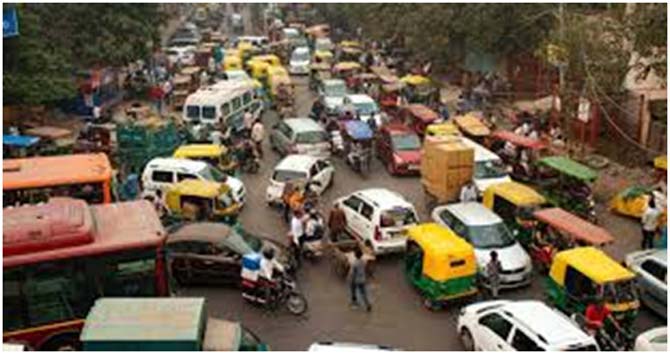
Another fundamental pillar of a developed society is the respect for the rule of law. In many parts of India, laws are frequently treated as negotiable. The famous adage “tell me the person and I will tell you the rule” or worse “rules are for someone else to follow”. Traffic violations in India are a fossilised indifference towards collective consequence. Incidentally, traffic gridlocks are caused as much due to nonadherence to road etiquettes as to growing number of vehicles. Consider the bizarre nationwide backlash and protest against stricter fines for traffic violations. A recent survey found that 79 percent of commuters in Telangana believed that most traffic violations were the result of intentional, deliberate and conscious rule-breaking — not accidental or ignorance. Despite the issuance of challans, over 75% of violators simply refuse to pay, confident that enforcement will eventually relent (and ironically it did; offering 90% discount in some states). This attitude extends well beyond traffic. Property registrations are undervalued to reduce stamp duty. Driving licences are obtained through agents who ensure the inconvenient driving tests are never actually performed. Across the board, citizens treat compliance not as a duty but as an obstacle to be circumvented ; ideally through a consultative bribe.
Another troubling and agonising social instinct is the ‘Bystander Effect’. When accidents occur, the default response of bystanders increasingly appears to be reaching for a phone to record footage for social media consumption rather than reaching forward to render aid and save lives. A developed India requires “good Samaritans” who prioritize human life over digital engagement. The “Swachh Bharat” campaign has failed to reach its full potential due to lack of public participation.
A citizen of Viksit Bharat must internalise a different civilizational ethos: the rule of law exists not to serve the state’s convenience but to protect every individual’s safety and dignity. Following traffic rules, refusing to bribe, caring for the weak, the infirm, children, the elderly, and the differently-abled are not optional acts of charity. They are the obligations of civilised society.
Environmental Protection: Conservation vs Development vs Patriotism
Citizens must accept that environmental responsibility is not an elite public interest litigation preoccupation assumed by vested interests or imposed by international NGOs. It is an existential necessity. Water tables across the subcontinent are falling; the power grids run predominantly on fossil fuels; plastic waste chokes rivers and coastlines. Conservation of water through rainwater harvesting, responsible irrigation and reduced domestic wastage; conservation of electricity through energy-efficient appliances and behavioural discipline; reduction of single-use plastics; segregation of waste at source — none of these require legislation to begin. They require a shift in the citizen’s self-conception, from passive and callous consumer to active participation in resource conservation. The Nation’s pursuit towards renewable energy, solar mission, its electric vehicle ambitions are undermined if citizens continue to treat resources as infinite.
Societal Harmony and Cohesiveness
India is unique in its diversity and secular character. All religions enjoy equal constitutional protection with around 22 official languages spoken.
No nation that fractures itself along caste, religious, regional, and linguistic fault lines can simultaneously achieves economic greatness and the status of a developed nation. The human resource potential is harnessed across every caste, every faith, every region and every linguistic community. Exclusion will result in impoverishment. The pursuit of Viksit Bharat demands social inclusiveness as a practical, not merely moral, imperative. Discrimination in caste, communal tensions, and religious prejudices disrupts and removes a potential contributor from the productive economy and embeds another layer of resentment into the social fabric. Ramanavami and Eid celebrations are occasions for bonhomie and collective participation rather than opportunities for disruption of processions by stone throwing. India’s diversity, properly channelled through the values of unity and national integration, is its greatest strategic asset.
Electoral Participation: Voting Beyond Freebie
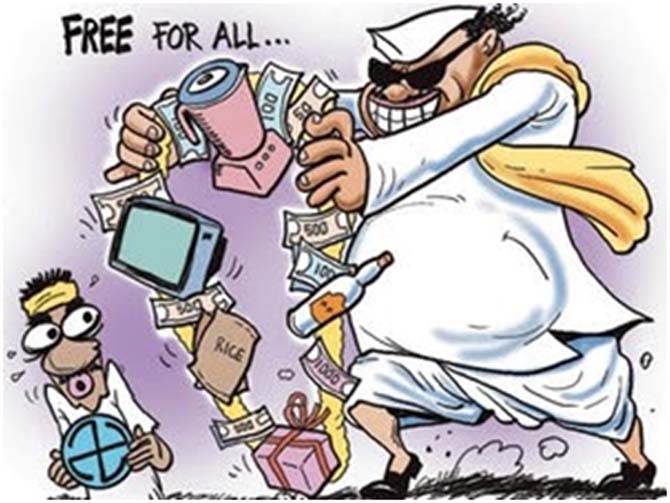
Indian Democratic system is one of its greatest strengths. A Viksit Bharat must be built around this architecture. Of late, electoral participation in India is increasingly distorted by the competitive and indiscriminate declaration of freebies without any consideration towards fiscal prudence. Free electricity, free water, cash transfers without productive purpose and without ascertaining the financial status of the beneficiary are economically ruinous. Democratic participation entails an understanding of economic reality and the disastrous consequences of fiscal unsustainability. Candidates / political parties must be questioned about quality of public services, accountability and structural mechanisms to ensure long term capacity building. A welfare state is not same as freebies state. Loan waivers do not address the underlying structural causes of agrarian distress.
Regionalism
While State identities are legitimate and worth preserving with pride, it cannot be at the cost of national integration and unity. Discrimination against migrants who sustain state economies, linguistic chauvinism and sabotage of national infrastructure projects not only undermine the union but also compromises on state’s prosperity. Economic integration between states and the Union must be treated as a strength and not as a threat. Vandalization of Vande Bharat Express trains in multiple states including West Bengal, Bihar and Andhra Pradesh are agonisingly distressing. Active participation of citizenry to prevent such deplorable acts is imperative.
Cultivating Moral Foundation and Ethical Mindset
We tend to define social status in peculiarly dysfunctional ways and a perceived sense of entitlement. The measure of a person’s importance is often depicted by the size and cost of vehicle they travel in, the number of security personnel accompanying them or the ability to jump queues that ordinary citizens must endure (I recall a traffic inspector being summoned to the Delhi High Court for stopping a High Court Judge at a traffic signal). Performance, integrity, and contribution to the common good rarely feature in these calculations.
Viksit Bharat requires a cultural and ethical renaissance as much as it requires economic reform. Fundamental traits of personal discipline, professional punctuality, respect for public property and the active rejection of VIP culture are not soft values. They are the ethical infrastructure without which institutions corrode, public spaces degrade, and civic trust collapses. The citizen who refuses to demand special treatment, who mentors a young person from a disadvantaged background and who speaks out against corruption in their immediate circle is the one who contributes to building Viksit Bharat as concretely as any government scheme.
The Bottomline
We conveniently overlook an inherent component of the Prime Minister’s vision for 2047. “Sabka Prayas”- everyone’s consciousness, collective effort and collective endeavour. The vision is explicit; that the Government alone cannot carry forward this transformation. It must be co-created. India in 2047 will be what India’s citizens, in the aggregate decide to achieve. The ethos of “Kartavya-Duty”, therefore becomes the edifice to the vision of Vikshit Bharat. Article 51A, Part IV-A of the Indian Constitution enunciates eleven obligations / fundamental duties (amended by 86th amendment in 2002), for us all to be cognisant of.
The journey to Vikshit Bharat therefore begins not in government offices or policy documents, but encapsulates everyday conduct of us; citizens; in honesty during transactions, compassion during crises, preservation of national assets, discipline on the roads, respect for diversity and pride in contributing to the nation’s progress. When 1.46 billion people move from a mindset of “me first” to “India first,” the vision of 2047 will not just be a target; it will be an inevitability. Let’s take a pledge!
“Mera Bharat Mahan”
ABOUT THE AUTHOR
 Major General SC Mohanty, AVSM (Retd), was commissioned in June 1983. The officer commanded a Mechanised Infantry Battalion, a Mechanised Brigade and an Infantry Division (RAPID Strike) in the Western Sector. As a Brigade Major, he took active part in the Kargil Operations while located at Drass. As part of Military Operations Directorate, he headed the Information Warfare, Cyber and Electronic Warfare branches. Post retirement, he was the Security Advisor to Government of Arunachal Pradesh from July 2020 to May 2023.