The Onset of Frustration
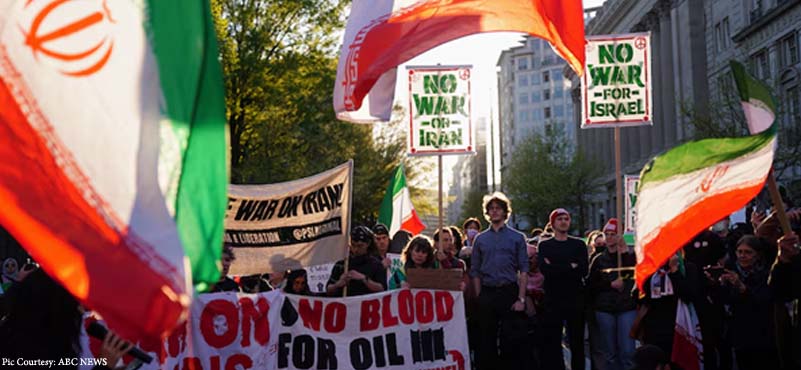
The kingdom of Trumpistan appears to be on shaky ground. On 01 April 2026, Trump vowed to bomb Iranian targets hard enough to send them “back to the Stone Ages, where they belong.” The messaging shift reflects a change in plans, after Iran’s resistance proved more formidable than expected and the regime change following the death of Ayatollah Khamenei, not taking place. In other words, the US is planning to reduce Iran to rubble which can also be a euphuism for a nuclear threat.
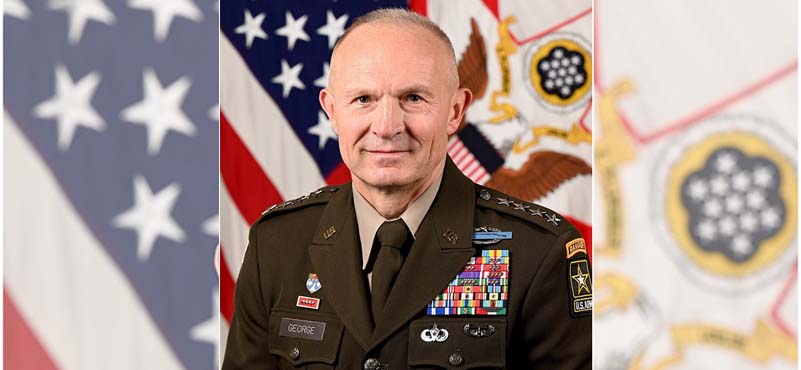
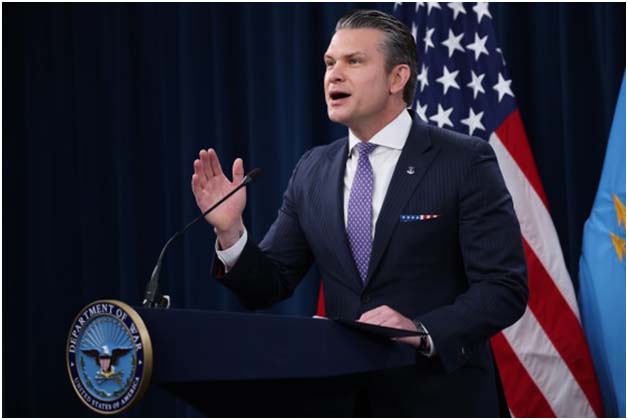
The very next day, on 02 April 2026, there was another development in the kingdom of Stars and Stripes, the sacking of the Army Chief General Randy George, by the Secretary of Defence, Pete Hegseth, with immediate effect, and that too in the middle of the war. General Christopher LaNeve, currently Army Vice Chief of Staff, was named to take over.
No doubt the US has been stunned by the Iranian response and its hierarchy are lashing out in a manner which betrays frustration.
The Purge of the Generals
Apart from General Randy George, another four-star General, David Hodne and Major General William Green, Jr, the top Army Chaplain, have been removed in what has been a purge by Hegseth of senior officers particularly those close to the Secretary of Army, Dan Driscoll.
Their removal marks the latest in a series of dismissals by the current administration, who have now ousted more than a dozen top brass figures as they reshape the military for the escalating showdown with Tehran.
President Trump has overseen a purge of top military officers, including the Chairman of the Joint Chiefs of Staff, General Charles “CQ” Brown, whom he fired without explanation in February 2025. Others include Admiral Lisa Franchetti who headed Naval Operations, General Tim Haugh who also oversaw the Pentagon’s Cyber Command, General James Slife, the Vice Chief of Staff of the Air Force, a Vice Admiral Shoshana Chatfield, assigned to NATO, and three top military lawyers. The Chief of Staff of the Air Force General David Allvin also announced his retirement without explanation just two years into a four-year term, while the head of US Southern Command retired a year into his tenure.
Last year, the Pentagon ordered at least a 20 percent cut in the number of active-duty four-star Generals and Admirals in the US military, as well as a 10 percent cut in the overall number of Generals and Flag Officers.
General Randy George, the 41st Army Chief of Staff since September 2023, a decorated veteran of the Gulf War as well as conflicts in Iraq and Afghanistan, was just over halfway through his slated tenure. In his current appointment he oversaw the training, organisation, and readiness of more than a million US soldiers worldwide. Prior to holding the top job, he was the Vice Chief of the Army and, before that, the Senior Military Adviser to then Defence Secretary, Lloyd Austin.
A West Point graduate and an infantry officer, General George was considered one of the military leaders with extensive field experience. During his leadership, his name was associated with efforts to modernize the US Army’s capabilities and integrate advanced technology into combat formations, aiming to enhance readiness in the face of changing global threats.
He had a distinguished record of combat missions, having actively participated in US military operations over many years. He also commanded elite units, including the 4th Infantry Division and the 101st Airborne Division, experiences that made the decision of his sudden dismissal send shock waves within the corridors of the US military establishment.
West Point on Instagram said “Through candid insight and experience, Army Chief of Staff Gen. Randy George challenged them to lead with integrity—even when it’s not easy.” “Thank you, Gen. George, for investing in the next generation of Army leaders.”
While Republican Representative Rich Mc Cormick said he would be very curious to know why he was fired. “I’ve never heard him say anything contrary to what the President’s trying to achieve,” calling George a “brilliant mind.”
“I thought he has done a really good job getting the Army ready for war. So, I would like to hear more because that is concerning to me.” While Austin Scott another Republican wrote on X that he was a “great General, principled leader, & a committed American.” “He is an asset to our country, always putting service before self.”
The Timing
The question that needs to be answered is why these men were fired while US forces are fighting overseas? The Defence Department has given no official reason for the dismissals of the latest victims of Hegseth’s vindictive struggles with the Army, which he felt treated him poorly. The service “spit me out” , is what he wrote referring to his bitter departure from the Army National Guard in his 2024 book ‘The War on Warriors: Behind the Betrayal of the Men Who Keep Us Free’.
General George’s exit comes at a critical moment in fact a day after, Trump’s warning that he would bomb Iran “back to the Stone Ages” if necessary and predicting the war could be wrapped up in weeks. The reason for the dismissal has not been revealed, but CBS quoted a source as saying Hegseth wanted someone who would implement his and Trump’s vision for the Army.
While there are analysts who feel that the dismissal of the Army Chief of Staff at this time may reflect the political leadership’s desire to re-formulate military strategy or a divergence in views regarding the management of the current conflict. Hence the President choosing the leaders he wants can be one explanation, but there are also concerns about the potential politicization of the traditionally neutral US military.
However, precedence does exist, bur precedence with reason and rationale. A famous case in the US was the dismissal of General McArthur by President Truman during the Korean War. But at that time the reasons were clear ’differences in their approach to the Korean War.’ More recently there was the dismissal of General Stanley Mc Chrystal, the Commander in Afghanistan by President Obama after he made critical comments about senior administration officials in the Rolling Stone magazine.
The issue of civilian control over military leadership in a democracy has been the subject of much debate and analysis which includes Samuel Huntington’s seminal book ‘Soldier and the State.’ In the book he writes about ‘subjective control’ and ‘objective control.’ The former results in political parties wanting the military to conform to their ideals. This weakens military professionalism. Whereas in objective control the autonomy and professionalism of the military is respected. This objective control model of civil-military relations has had profound effects on contemporary norms of military professionalism.
Huntington that objective control, premised on a clearly defined division of responsibility between the military and civilians, would create an apolitical ethos among officers. The military’s apolitical character then would ensure its deference to civilian authority and reinforce its professional character. The approach would also enable the military to cultivate expertise in the “management of violence” and guarantee its effectiveness in armed conflict. However, these norms are more complex than appreciated.
While the phrase “bomb them back to the stone ages” is widely associated with US Air Force General Curtis LeMay, in the context of US threats against North Vietnam in his 1965 book, ‘Mission with LeMay’ published soon after he retired. LeMay, known for designing and implementing the systematic strategic bombing campaign in the Pacific Theatre during World War II played a central role in the carpet bombing of Japanese cities in which lakhs of people were killed. He was the Chief of Air Staff during the early stages of the Vietnam War, when he advocated widespread bombing of key North Vietnamese industrial and military targets; President Johnson thought that this would draw the USSR and China into the war.
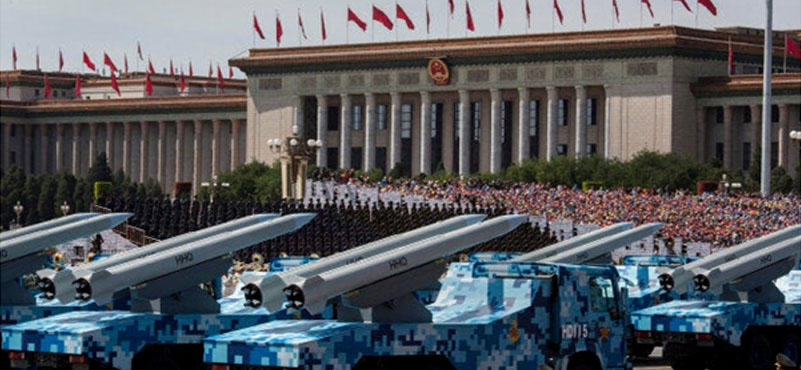
China has also lately witnessed the dismissal of key Armed Forces leadership while officially targeting corruption. But then President Xi is considered to be an autocratic ruler and China is no democracy, further the military owes allegiance to the party. Yet similarities are now visible in a country which stands for free speech and democratic ideals. Unfortunately, an elected democracy like the US can also be bereft of checks and balances.
Conclusion
The kneejerk, irrational, and egoistic sacking of the very top of the military hierarchy is not the way a sensible, responsible nation, treats its military. Such actions betray a sense of helplessness and frustration.
Hegseth, has expressed long-standing grievances with the army’s “woke” culture and has criticized the diversity, equity, and inclusion (DEI) initiatives adopted by the Biden administration, as has President Donald Trump.
While the Pentagon gave no reasons for the abrupt departure there are also reports that General George was considered close to the current Army Secretary, Dan Driscoll and their close working partnership possibly increased tensions between General George and Pete Hegseth. Hegseth reportedly viewed Driscoll as a rival, therefore, the close relationship between the two could have been seen as a threat to Hegseth’s authority.
Some reports also indicate that a primary source of friction was George’s refusal to block or drop the promotions of certain senior officers which included two Black officers and two women, despite sustained pressure from Hegseth. The 29 other officers on the list for promotion were white men, leading to questions whether the four officers were being singled out for their race or gender. Both General George and Driscoll refused, citing the officers’ long records of exemplary service. Hence, Hegseth sought a leader more closely aligned with his and President Trump’s “vision for the Army.”
It is also possible that General Randy George, was opposing certain military actions being planned in Iran. These could include boots on ground or excessive bombing of civilian areas, or even the use of the ultimate weapon. The truth may emerge at a later date.
General Randy George showed tremendous maturity in his final email to Pentagon brass, he wrote:
“Our soldiers are truly the best in the world – they deserve tough training and courageous leaders of character. I have no doubt you will all continue to lead with courage, character, and grit.”
Unfortunately, this dramatic step comes at a very sensitive time, as the world is witnessing a peak in military escalation directed against Iran, raising questions about the repercussions of this change at a critical moment in the conflict. While in the US, operational control wrests in the hands of the Theatre Commanders yet there is no doubt that this sacking will affect morale and impact the US Army. The consequences will be steep but ‘Nero just keeps fiddling while directing lambs to a slaughter.’
Militaries are large organisations structured for continuity which owe their allegiance to the constitution of a nation hence a change even at the top does not lead to erosion in its tasks and functioning. Yet there are causes of concern when a uniformed professional is removed from his post for reasons left unsaid.
The larger question remains, does placing political loyalty over professional competence jeopardise institutional stability, and how will it affect the future generations of American military leadership? Something is amiss, the action is questionable, and the timing is totally misplaced.
“Something is rotten in the state of Denmark”
Shakespeare ‘Hamlet (Act I Scene IV)’
ABOUT THE AUTHOR
 Maj Gen VK Singh, VSM was commissioned into The Scinde Horse in Dec 1983. The officer has commanded an Independent Recce Sqn in the desert sector, and has the distinction of being the first Armoured Corps Officer to command an Assam Rifles Battalion in Counter Insurgency Operations in Manipur and Nagaland, as well as the first General Cadre Officer to command a Strategic Forces Brigade. He then commanded 12 Infantry Division (RAPID) in Western Sector. The General is a fourth generation army officer.
 Major General Jagatbir Singh was commissioned into 18 Cavalry in December 1981. During his 38 years of service in the Army he has held various command, staff and instructional appointments and served in varied terrains in the country. He has served in a United Nations Peace Keeping Mission as a Military Observer in Iraq and Kuwait. He has been an instructor to Indian Military Academy and the Defence Services Staff College, Wellington. He is a prolific writer in defence & national security and adept at public speaking.