For thousands of years, human beings looked at the stars as distant lights. The space age changed that relationship. First came the ability to reach space, then to orbit Earth, and finally to ask a much more profound question: Can humans actually live and work in space? That question gave birth to the space station.
A space station is more than a large spacecraft. It is a habitat, laboratory, workshop, observatory and stepping-stone to deeper space. The evolution from the first human flights to today’s orbital laboratories—and tomorrow’s lunar stations—represents one of the most important transitions in human history.
From flying in space to living in space
The first human spaceflight by Yuri Gagarin in 1961 demonstrated that a human could survive an orbital journey. But a few hours in a spacecraft was very different from living in space. The Soviet Union began experimenting with this concept through the Salyut series of space stations. The United States followed with Skylab in 1973. These stations demonstrated that humans could remain in orbit for weeks and months, conduct experiments and maintain a spacecraft as a working environment.
 The real breakthrough came with Mir, the Soviet/Russian station. Built from multiple modules and occupied for more than a decade, Mir demonstrated something fundamental: a space station could be assembled, expanded, repaired and continuously inhabited. This experience eventually contributed to perhaps the greatest international engineering project in history—the International Space Station (ISS).
The ISS: when former rivals became partners
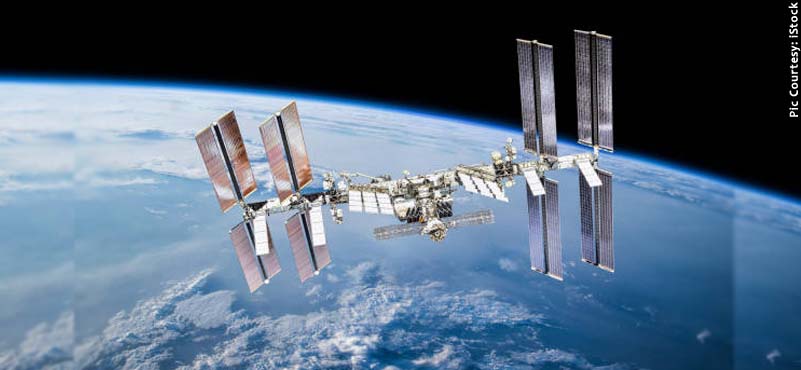
The ISS emerged from the convergence of American, Russian, European, Japanese and Canadian capabilities. Its first elements were launched in 1998 and it has been continuously inhabited since November 2000. NASA describes the ISS as a partnership involving the United States, Russia, Europe, Japan and Canada, with astronauts from many nations having visited the station.
The ISS is effectively a microgravity laboratory in orbit.
Scientists study human physiology, bone and muscle loss, radiation, microbiology, combustion, fluid behaviour, materials, plant growth, Earth observation and many other subjects. In 2025 alone, NASA says more than 750 experiments were supported aboard the station. Research has included medical treatments, manufacturing in microgravity and studies of the Sun and biological processes.
The importance of the ISS goes beyond science. It has demonstrated that countries with different political systems can operate a common spacecraft for decades. That experience is likely to become the template for future multinational habitats.
Russia: from Salyut and Mir to a new station
Russia’s contribution to human spaceflight is extraordinary. The Salyut stations pioneered long-duration orbital habitation, while Mir developed the concept of a modular space complex. Russia continues to operate the Russian segment of the ISS, while planning a Russian Orbital Station (ROS).
Current plans reported by Russia’s Energia envisage deployment of the first phase around 2028. The future Russian station is expected to provide an independent platform for scientific research, technology development and human spaceflight.
China and Tiangong: a second orbital ecosystem
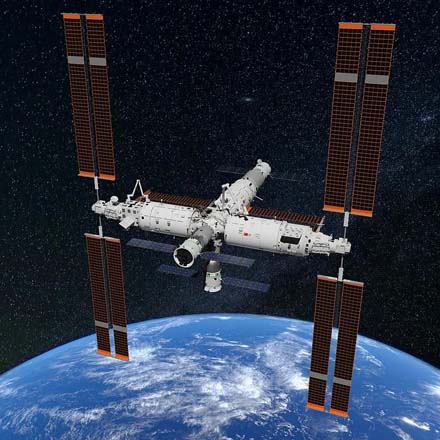
China has followed a different path. After developing the Tiangong experimental laboratories, China assembled the Tiangong Space Station, which became operational in the early 2020s. Tiangong is both a national space station and a scientific laboratory. Chinese sources report experiments covering space life sciences, human physiology, microgravity physics, materials, combustion and new space technologies. China has also conducted extensive space-breeding experiments involving crops and plants. And the geopolitical significance is becoming increasingly visible.
China Piggybacks Pakistan
On 25 November 2026, Pakistan’s Muhammad Zeeshan Ali became the first Pakistani astronaut to travel to Tiangong, launching aboard China’s Shenzhou-24 with two Chinese astronauts. He is participating as a payload specialist in experiments, including research involving photosynthetic cyanobacteria. The mission marks the first foreign astronaut to visit China’s Tiangong station and represents a significant new dimension in China-Pakistan space cooperation.
What does a space station actually do for an ordinary citizen?
The most important question is: Why should someone on Earth care? The answer is that space stations are becoming laboratories for solving terrestrial problems.
Microgravity allows scientists to study phenomena that are masked by gravity on Earth. Research can contribute to new medicines, advanced materials, better manufacturing processes, agriculture and biological research. Space stations also test technologies required for future missions—closed-loop life support, water recycling, robotics, radiation protection and autonomous systems.
Earth observation from the ISS has also contributed millions of photographs and datasets useful for studying climate, disasters, atmospheric conditions and environmental change.
Tomorrow’s space stations could therefore contribute to better medicines, new materials, precision manufacturing, agricultural technologies, disaster monitoring and new industries.
The space station is consequently not simply a place where astronauts live. It is a research-and-development platform for the space economy.
India’s next step: Gaganyaan to Bharatiya Antariksh Station
For India, this is not merely a symbolic event. It demonstrates how human spaceflight is increasingly becoming an instrument of international partnership, technology diplomacy and strategic influence.
India’s logical progression is now becoming clear starting with Gaganyaan to orbital rendezvous and docking leading to launching of Bharatiya Antariksh Station. This progression would lead India to participate lunar missions and deep-space habitation.
India’s Gaganyaan programme is developing the human-rated LVM3, crew module, environmental control and life-support systems, crew escape systems, astronaut training and associated ground infrastructure. The first crewed Gaganyaan mission is currently targeted for 2027.
The next major milestone is the Bharatiya Antariksh Station (BAS).
India plans a five-module station, with the first module, BAS-01, targeted for launch by 2028 and the complete station by 2035. The planned research includes life sciences, pharmaceuticals, materials science and manufacturing technologies. Critical capabilities include rendezvous and docking, robotics, in-orbit refuelling, crew habitation and microgravity experiment facilities.
This is strategically important. India should not view BAS merely as a prestige project. It should be designed as an orbital industrial and scientific platform. Indian universities, pharmaceutical companies, materials companies, semiconductor researchers, agricultural scientists, start-ups and private space companies should all become users of BAS.
The next frontier: a station around the Moon
The next great leap is from low-Earth orbit to lunar orbit. NASA’s Gateway is designed to become humanity’s first space station around the Moon. It will support scientific research, lunar surface missions and eventually technologies required for human missions to Mars. NASA is developing Gateway with international partners including ESA, Japan, Canada and the UAE.
Gateway is fundamentally different from the ISS. It is not intended to be a permanently occupied giant station like the ISS. It is a deep-space staging base—a place where astronauts can live, conduct research, transfer between spacecraft, prepare for lunar surface missions and test technologies for Mars.
The Artemis Accords provide a framework of principles for peaceful and sustainable civil exploration of the Moon, Mars, asteroids and other destinations. They emphasise interoperability, emergency assistance, registration, release of scientific data and responsible use of space resources.
This is the beginning of a new architecture: Earth orbit → lunar orbit → lunar surface → Mars orbit and eventually Mars surface.
Way ahead for India
India should participate in this emerging architecture without becoming dependent on any one bloc. The country should develop BAS as a national capability with international interfaces. Indian docking standards, communications, robotics, life-support systems and scientific racks should be designed for interoperability.
India should also seek opportunities to contribute experiments, robotics, communications and scientific payloads to lunar infrastructure. Its Chandrayaan programme, Gaganyaan, BAS and future lunar-landing ambitions should therefore be viewed not as separate projects but as elements of a single human-spaceflight and deep-space strategy.
There is also an enormous opportunity for Indian industry. The future station will need sensors, electronics, robotics, batteries, life-support equipment, radiation protection, artificial intelligence, software, communications, materials, food systems and autonomous maintenance.
From space station to space civilisation
The ultimate significance of the space station is therefore not the structure itself. The ISS taught humanity how to live together in orbit. Tiangong demonstrates that multiple national orbital ecosystems can exist.
BAS will give India the ability to live and conduct research independently in space. Gateway will take humanity from Earth orbit into deep space. And future stations may eventually orbit the Moon, Mars and perhaps other worlds, becoming nodes in a transportation and habitation network across the Solar System.
The space station is therefore the first house in humanity’s journey beyond Earth. For the ordinary citizen, its promise is not simply that an astronaut will float above the Earth. Its real promise is that medicines, materials, technologies, industries and knowledge developed hundreds or thousands of kilometres—or eventually millions of kilometres—from Earth may return to improve life here. The final frontier may be space, but the first beneficiaries of living in space could be the people who never leave Earth.
ABOUT THE AUTHOR
 Lt Gen PJS Pannu, is a former Deputy Chief IDS. He is the founder of Space Club of India. Chief Mentor of Department of Space Studies at MERI and Senion Advisor to Space Industries Association (SIA). He is an author of a book Taramandal Sangram – Space Constellations at War.