

Lionel Messi’s seemingly relaxed style on the pitch conceals a razor-sharp strategic mind. During the 2022 World Cup, broadcast tracking data showed that Messi walked about 47 % of the distance he covered, the highest share among outfield players at the tournament. In top-level club matches, detailed movement analysis has shown him walking or moving at low intensity for as much as three-quarters of total playing time. This may seem inactive, but appearances are deceptive. Messi is not disengaged; he is observing the opposition with eagle eyes. He studies the opposition’s players, reads their movement, identifies spaces, assesses vulnerabilities, and conserves his energy. When the right moment arrives, he suddenly accelerates with remarkable agility and precision. The player who appeared almost disengaged moments earlier can instantly become the most dangerous figure on the field. This is no sign of indifference or idleness—it’s a calculated approach grounded in observation, energy conservation, and precise timing (https://worldcupjournal.com/lionel-messi-walking-strategy-world-cup-evolution/; https://sports.yahoo.com/articles/revealed-percentage-game-time-lionel-171144987.html)
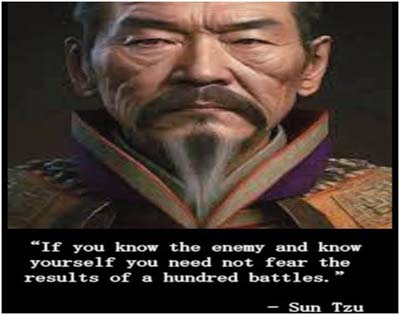
Messi’s practice is a modern, televised illustration of an ancient strategic principle. Sun Tzu, in his classic work The Art of War, written centuries ago (roughly 5th century BCE), cautioned that “if you know the enemy and know yourself, you need not fear the result of a hundred battles.” In contrast, ignorance of either side of that equation invites defeat. The connection is not accidental. Messi “walks” to know the enemy and to know himself: reading defensive lines, tracking patterns, gauging his own energy and the rhythm of the match before choosing the moment to strike (https://en.wikiquote.org/wiki/Lionel_Messi; https://www.martiperarnau.com/player-analysis-lionel-messi/).
Oscar Wilde’s famous observation, “Be yourself; everyone else is already taken,” is a timeless celebration of authenticity and individuality. It reminds us that imitating others or conforming blindly to societal expectations is ultimately futile, because every individual possesses a unique blend of talents, thoughts and qualities. The message resonates especially strongly in today’s world, where social media, peer pressure and the culture of comparison often encourage people to imitate rather than express themselves.
Lionel Messi exemplifies this principle perfectly. He does not try to play like anyone else; he plays like Messi. His distinctive style, extraordinary vision and seemingly effortless movement are uniquely his own. By remaining true to himself, Messi makes a difference—a perceptible and transformative difference—not only to his own performance but also to the performance and fortunes of his team.
 Hasten Slowly
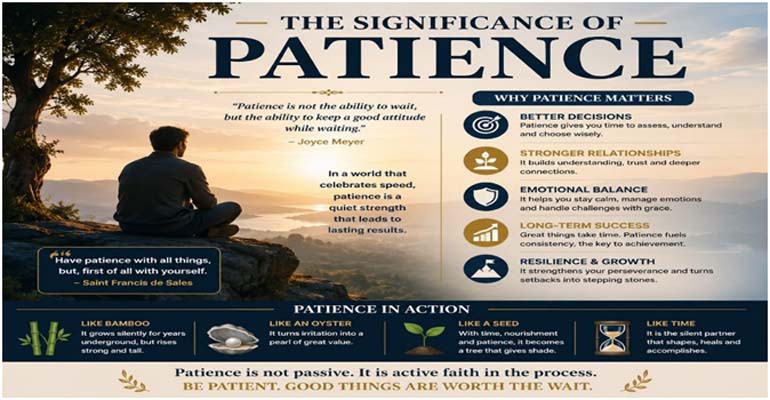
“Hasten slowly”—more commonly expressed as “make haste slowly”—captures one of life’s most enduring paradoxes: the fastest route to a worthwhile goal is often not reckless speed, but disciplined progress. The idea is embodied in the famous Latin maxim festina lente, meaning “make haste slowly.” The phrase is a reminder that urgency and caution are not necessarily opposites. One can move with purpose without acting impulsively; one can be decisive without being reckless. Hurrying through important tasks may create errors, and those errors often impose delays far greater than the time supposedly saved by rushing. In that sense, slowing down at the right moment can actually be the quickest way forward. This school of thought has a long history in Hindi and Urdu poetry. For example, Kabir wrote,
“धीरे–धीरे रे मना, धीरे सब कुछ होय।
माली सींचे सौ घड़ा, ऋतु आए फल होय॥“
Translation: Everything happens in its own time. Even if a gardener waters a hundred pots, fruit comes only when the season arrives.
Similarly, Mirza Ghalib wrote powerfully,
“आशिक़ी सब्र–तलब और तमन्ना बेताब
दिल का क्या रंग करूँ, ख़ून–ए–जिगर होते तक”
Translation: Love calls for patience, while longing burns with impatience;
What can I do with my heart until its very blood is drained by desire?
The principle is traditionally associated with the Roman Emperor Augustus and was later popularised by scholars such as Desiderius Erasmus. Its enduring appeal lies in its universal wisdom: progress should be purposeful, but not precipitate. Whether one is building a business, preparing for an examination, learning a new skill or pursuing a long-term ambition, mastering the fundamentals is often the most efficient path to lasting success.
This has powerful applications across diverse fields. A military commander must understand the capabilities of his own forces, the intentions of the adversary and the terrain of the battlefield before committing to action. A sportsperson must recognise personal strengths, weaknesses and limitations while simultaneously reading the opponent and anticipating the next move. A corporate leader must understand the organisation’s capabilities, competitors, customers, technologies and the rapidly changing business environment. Policymakers, similarly, must assess not only their own objectives but also the incentives, constraints and likely responses of other stakeholders.
The principle holds across warfare, corporate strategy, financial markets, sport and public policy. Effective action begins with observation, self-awareness, reconnaissance and preparation. Speed can be a formidable advantage, but without adequate information and sound judgment, it can just as easily lead to costly mistakes. Patience, by contrast, should never be confused with passivity. It is the disciplined ability to gather information, evaluate alternatives and wait until the conditions are sufficiently favourable for decisive action. In an age increasingly obsessed with instant results, festina lente offers a valuable counterpoint: do not confuse haste with progress. Move swiftly when the moment demands it but first take the time to understand the terrain, assess the risks and be clear about where you are going.
Walking Before the Sprint: Evidence from the Field
Football analytics increasingly recognise that elite attackers often trade constant motion for selective, high-impact interventions. Tracking data for Messi show he covers roughly 8.2 kilometres per 90 minutes and averages only a small number of sprints, much lower than earlier in his career, yet his chance creation and decisive contributions remain superlative. In several Champions League and Clásico matches, analysts have documented that he spends around 75–83 % of his time walking or jogging slowly, using that time to scan and anticipate. Messi averages only 2.7 sprints per game, a significant drop from the 5.3 sprints he recorded at the 2022 Qatar World Cup (https://www.chosun.com/english/sports-en/2026/07/14/IJ56HCO73ZGNXDSSP6EHCHN5OY/).
This “walking” is not passivity but purposeful observation. It lets Messi save both physical and mental energy for the moments that matter, while he keeps reading the match—tracking where opponents stand, picking up on their tendencies, and spotting when their focus slips. By tuning out distractions and holding back until the right gap appears, he times his burst perfectly, turning what looks like an unremarkable stroll into a sudden, often devastating strike.
Sun Tzu’s maxim is visible in this template. Knowing oneself in this context means understanding one’s physical constraints, comparative advantages, and decision-making strengths. Knowing the enemy means reading their structure, weaknesses, and likely responses. The crucial bridge between the two is patience—the willingness to delay action until the informational edge is adequate.

Action Bias and the Costs of Impatience
Success is often associated with speed, urgency and relentless action. Yet spy fiction, military history and even popular thrillers repeatedly reveal a counterintuitive truth: patience can be more powerful than speed. The most successful protagonists do not invariably rush into action. They observe, gather intelligence, test assumptions, study the terrain, wait for the right moment and then act with decisiveness. In a world increasingly obsessed with instant results, the ability to wait can itself become a strategic advantage.
The lesson has important implications for financial markets and public policy alike. Investors swayed by rumours, market euphoria or the fear of missing out may occasionally strike spectacular gains, but impulsive decisions often prove costly over time. Policymakers, too, can create unintended problems when they feel compelled to respond immediately to every short-term disturbance. An intervention designed to address one issue may generate larger distortions elsewhere. Sound decision-making, therefore, requires more than speed: it demands reliable information, proper context, rigorous due diligence and a careful assessment of both the immediate consequences and the second- and third-order effects of any action.
Behavioural economics and financial research provide compelling evidence of the dangers of what psychologists call “action bias”—the instinctive preference to act rather than pause, observe, and deliberate —with devastating consequences. In their landmark study, Trading Is Hazardous to Your Wealth: The Common Stock Investment Performance of Individual Investors (2000), Brad Barber and Terrance Odean examined the trading records of approximately 66,000 U.S. households over six years. Their findings were striking: the most active traders significantly underperformed the broader market and their less active counterparts, with average underperformance of approximately 6.5 percentage points annually relative to a simple buy-and-hold strategy. Compulsive “movement”—frequent buying and selling—destroyed value through a combination of overconfidence, transaction costs and poor timing.
Recent evidence from India’s capital markets reinforces the same behavioural pattern, albeit in a different and more dramatic form. An analysis cited by the Securities and Exchange Board of India (SEBI) found that, between FY22 and FY24, more than one crore individual traders participated in equity derivatives, with approximately 93 % incurring net losses averaging around ₹2 lakh per person: high leverage, rapid turnover and the illusion of control combined to produce significant individual wealth erosion. The message is clear: in markets marked by uncertainty, noise and transaction costs, constant activity can erode returns rather than enhance them.
Long-term investment research points in the same direction. Asset managers and long-horizon investment institutions consistently emphasise the importance of aligning portfolios with genuine financial goals and investment horizons rather than reacting to short-term market noise. A disciplined, long-term approach can improve decision-making, risk management and tax efficiency while reducing the destructive effects of emotional trading. Although equities can remain highly volatile over short periods, the probability of achieving more predictable outcomes generally improves as the investment horizon lengthens (“Unlocking Tax Efficiency: The Importance of Strategic Asset Allocation and Asset Location”, Goldman Sachs, 2025; Tax-Efficient Wealth Management, Northern Trust, January 2015; “Benefits (and Pitfalls) of Long-Term Investing”, Dr Geoff Warren, Centre for International Finance and Regulation (CIFR), Working Paper No. 040/2014 / Project No. T003, October 2014).
In my papers on Economics, Finance and Management, I have repeatedly held, including in a widely acclaimed two-volume book entitled Global Financial Meltdown (published by Atlantic Publishers and Distributors (P) Ltd., New Delhi in 2012) for about three decades, that the larger principle extends well beyond investing. Action does not necessarily mean progress, just as constant movement does not necessarily create momentum. In complex situations, the urge to do something immediately can sometimes be more damaging than the consequences of waiting. A wiser approach may be to pause, gather more information, question our own assumptions and allow events to reveal their direction before committing resources. Strategic patience is not indecision or hesitation; it is the self-discipline to resist the urge to act until the facts are clearer, and the decision is better informed. The true test of judgment, therefore, is not merely knowing when to act, but also knowing when not to act. Late P.V. Narasimha Rao, India’s former Prime Minister, famously maintained that not taking a decision is also a decision. In markets, policymaking and life itself, the ability to resist impatience can preserve capital, prevent avoidable mistakes and create the space for better decisions. Often, the most valuable action is the one deliberately postponed until the facts are clearer, the risks better understood and the moment genuinely right.
Patience, Time Preference, and Policy Design
Economists operationalise patience through the concept of time preference: the rate at which individuals are willing to trade off consumption today for higher consumption tomorrow. Survey-based research that elicits choices between smaller-sooner and larger-later rewards shows that more patient individuals—those willing to wait for higher future payoffs—display systematically different economic behaviours, from savings patterns to educational investments. While any single measure is noisy, combining several measures of time preference yields robust predictors of important economic decisions (“Time preferences and consumer behaviour”. Christopher J. Ruhm, Patrick McAlvanah, Charles Courtemanche, Garth Heutel, David Bradford, 15 Oct 2014).
The same logic of resilience, not quick fixes, applies to institutions. Central banks, for instance, must continuously balance pressure for expeditious relief against the long-term objective of price and financial stability. Recent speeches from Federal Reserve officials explicitly emphasise the role of “uncertainty and patience” in monetary policymaking, highlighting that, after large shocks such as the pandemic, moving too swiftly based on incomplete data can be as damaging as moving too slowly. A patient stance allows policymakers to gather more information about how past rate moves are feeding through to inflation and activity, thereby reducing the risk of policy reversals or overshooting (“Reflections on Uncertainty and Patience in Monetary Policymaking”, Remarks at the Sloan School of Management at the Massachusetts Institute of Technology Susan M. Collins President & Chief Executive Officer Federal Reserve Bank of Boston May 8, 2024).
In the Indian context, the interplay between patience and reform is evident in the gradualist path followed during the 1990s and 2000s. Instead of opting for shock therapy, India pursued calibrated liberalisation alongside the progressive strengthening of institutions, particularly in banking regulation and fiscal management. This measured approach helped sustain economic growth and enhance macroeconomic resilience, even though political economy constraints often made reforms slower and more uneven than desirable. The broader lesson is that when reforms are systemically consequential and difficult to reverse, pilot programmes, phased implementation and robust feedback mechanisms can provide valuable information, enable timely course correction and significantly enhance the likelihood of durable success.
Random Walk Theory
Random Walk Theory posits that movements in asset prices are essentially random and that past price trends or patterns cannot reliably predict future movements. Closely associated with the Efficient Market Hypothesis (EMH), the theory argues that all available information is rapidly incorporated into market prices, making it extremely difficult, even for professional investors, to consistently outperform the market. Its central pillars are unpredictability, scepticism about the predictive power of historical price patterns and the belief in broadly efficient markets. If prices already reflect available information, then painstaking analysis of past movements offers little systematic advantage. The theory therefore provides a strong intellectual foundation for passive investing over active management.
Burton Malkiel, in his classic book, A Random Walk Down Wall Street (W. W. Norton & Company, Inc., 1973), famously argued that investors are often better served by buying and holding diversified, broad-market index funds or exchange-traded funds (ETFs), rather than attempting to identify individual winners or time the market. The cookie crumbles – and how! Since even professional fund managers frequently struggle to beat market benchmarks consistently, particularly after accounting for fees and transaction costs, the ordinary investor may be better off embracing simplicity, diversification and low-cost investing. Simplicity has its own rewards.
Knowing Self and Enemy in Policy and Business
Transposing Sun Tzu’s dictum into contemporary economic and corporate strategy yields a two-by-two matrix.
- Know yourself, know the enemy: Institutions that understand their own capacities, constraints, and political economy, while also mapping external competitors, markets, and adversaries, are best placed to adopt a Messi-like approach: walk, watch, and then move swiftly at decisive moments. In trade negotiations, for example, countries that realistically gauge domestic adjustment capacity and external bargaining positions can design phased, enforceable agreements rather than headline-driven but fragile deals.
- Know yourself, not the enemy: Organisations that introspect but ignore competitive dynamics often fall into complacency or mispricing of risk. Domestic industrial policy that promotes “national champions” without rigorous assessment of global supply chains and technological trajectories fits this quadrant; it risks over-investment in sectors where comparative advantage is imagined rather than real.
- Know the enemy, not yourself: Constant benchmarking without inward clarity produces reactive strategies, frequent pivots, and fragile coalitions. Corporations that obsess over rival moves, yet underestimate their own execution constraints, can over-expand through mergers and acquisitions that later prove unmanageable.
- Know neither: This is the realm of hurried populist policymaking and speculative bubbles, where decisions are driven more by narratives and emotion than by evidence, data or a realistic assessment of institutional capacity. It is here that the risk of systemic error is greatest. Patience, however, should not be confused with delay or indecision. It is the deliberate investment of time and resources required to move from the lower quadrants towards the upper-left: from uncertainty and ignorance towards informed judgment, strategic clarity and better decisions.
Operationalising Strategic Patience
The case for patience is persuasive, but its real value lies in how effectively it is put into practice. Translating the metaphor of “walking” into institutional behaviour, whether within a central bank, a corporate boardroom or a trading desk, requires more than good intentions. It calls for a deliberate redesign of three closely connected pillars: data architecture, incentive structures and communication discipline.
First, invest in diagnostic clarity, not predictive hubris. The single greatest enemy of strategic patience is ambiguity. When policymakers or executives cannot distinguish between transient noise and structural shifts, the pressure to “do something” becomes irresistible. The remedy is not better forecasting—forecasts are invariably wrong at turning points—but richer, higher-frequency diagnostic systems. Real-time indicators of credit dispersion, supply chain stress, and household balance sheet health allow institutions to monitor the terrain continuously, much like Messi scanning the defensive line. The goal is not to predict the exact moment of attack, but to recognise the preconditions for it. Institutions that skimp on data infrastructure in peacetime invariably overreact in crises; those that invest in it can afford to wait.
Second, decision-making systems should recognise that waiting can sometimes be valuable. In finance, the option to wait for more information has a clear economic value. Yet governments and businesses often judge decisions mainly by their immediate results, rather than by the information available when those decisions were taken. A better approach is to consider two questions: How difficult will the decision be to reverse? and how much more information might become available by waiting? Decisions that can easily be reversed, such as pilot projects, limited tariff changes or experimental product launches, can be taken relatively quickly. But decisions involving large, irreversible commitments, such as major changes in monetary policy, large mergers and acquisitions or fundamental fiscal reforms, should be preceded by careful reviews, stress tests and clearly defined opportunities to pause and reassess. The discipline to say “not yet” must be structurally encoded, not left to individual temperament (“How Should Monetary Policymakers Cope with Uncertainty?”, Federal Reserve Bank of Boston, Cathy E. Minehan, January 6, 2006; “Monetary Policy, Uncertainty, and Communications”, Research Department Working Papers, Vaishali Garga, Edward P. Herbst, Alisdair McKay, Giovanni Nicolò, and Matthias O. Paustian, Federal Reserve Bank of Boston, 2025– 25–11)..
Third, and most critically, align incentives with long-horizon outcomes. This is where the political economy bites hardest. Electoral cycles, quarterly earnings reports, and media scrutiny relentlessly reward visible action and punish quiet preparation. A central banker who holds rates steady through a volatile quarter is rarely celebrated; a Finance Minister who resists populist giveaways faces immediate political costs. The asymmetry is stark: the benefits of patience accrue slowly and diffusely, while the costs of impatience are often borne invisibly. To counter this, evaluation metrics must shift towards multi-year trajectories tracking five-year productivity growth, cumulative total shareholder returns, or medium-term inflation volatility rather than snapshots. Independent monitoring bodies, parliamentary oversight with delayed reporting requirements, and board-level compensation tied to long-term risk-adjusted performance can help insulate decision-makers from the tyranny of the immediate.
Fourth, treat communication as a strategic asset, not a public relations afterthought. Patience, if unexplained, is easily misread as paralysis. When markets or voters interpret a pause as indecision, the very credibility that patience requires begins to erode. The solution is to narrate the strategy actively: to frame waiting as a deliberate, data-driven posture, complete with explicit conditional triggers that would prompt action. Forward guidance in monetary policy offers a template. When the Federal Reserve or the RBI communicates that it will hold rates until specific labour market or inflation thresholds are met, it transforms patience from a perceived weakness into a transparent, defensible framework. The same principle applies to corporate strategy—investors will tolerate a “walking” phase if management clearly articulates what they are watching for and what would constitute a signal to sprint. But “the best laid plans of mice and men often go astray” (Robert Burns, To a Mouse, 1785 poem).
Ultimately, the real challenge is cultural. Institutions that equate constant activity with progress risk confusing motion with achievement. By contrast, institutions that possess the intellectual courage to wait, supported by robust data, well-designed incentives and clear communication, are better positioned to act with precision when the decisive moment arrives. As Messi’s most telling interventions demonstrate, the objective is not to reject speed, but to ensure that decisive action is the product of careful observation, sound judgment and timing—not a reflexive response to the discomfort of inaction.
Conclusion: The Art of Strategic Patience
Moving fast without a clear aim is just frantic motion, and waiting without getting ready is simply passivity. Real mastery comes from careful observation, deep understanding, and acting with precision when the right moment comes. The goal, therefore, is not to remain in perpetual motion, but to remain strategically prepared. At times, the most productive course of action is to pause—to observe, listen, learn and prepare. Individuals and institutions that understand their own strengths and weaknesses, read their surroundings accurately and study the competitive landscape with patience are often best placed to recognise and seize the decisive moment.
In life, as in sport and war, success does not always belong to the one who moves first. More often, it belongs to the one who observes most carefully, understands the situation most clearly, waits with discipline and acts when the moment is right. The same principle applies to public policy and practical decision-making. Individuals, institutions and policymakers must remain focused on long-term objectives and resist the pressure to act simply for the appearance of decisiveness. Decisions grounded in careful deliberation, rigorous analysis and due diligence are far more likely to produce durable outcomes than those driven by haste, impulse or the need to demonstrate immediate action. A willingness to wait is not a sign of weakness or indecision. Properly understood, it is a form of strength—the conscious choice to prepare thoroughly, assess carefully and act with purpose. In an uncertain world, the decisive advantage often belongs not to the fastest mover, but to the one who has observed most carefully and prepared most effectively.
In an era that fetishises speed—24×7 news cycles, high-frequency trading, social-media politics—the capacity to pause, observe, and then act decisively is scarce. Messi’s 47 % “walking” statistic is a metaphor for strategic restraint grounded in acute observation. Research from the Pew Research Center, Harvard Business Review, and MIT Sloan Management Review shows that Sun Tzu’s centuries-old insight remains disturbingly relevant: without deep self-knowledge and a realistic grasp of the adversary or environment, activity is often mere motion, not progress. For economies, firms, and policymakers, the challenge is to embed this discipline institutionally: to design systems that can afford to be patient when patience yields information and reduces regret, yet are capable of rapid action when delay would be catastrophic. The art of modern strategy—on the pitch, in markets, and in policy—lies in knowing when to walk and when, finally, to run – a cognisable dilemma, demanding but not undoable.
ABOUT THE AUTHOR
 Dr. Manoranjan Sharma is Chief Economist, Infomerics, India. With a brilliant academic record, he has over 250 publications and six books. His views have been cited in the Associated Press, New York; Dow Jones, New York; International Herald Tribune, New York; Wall Street Journal, New York.