
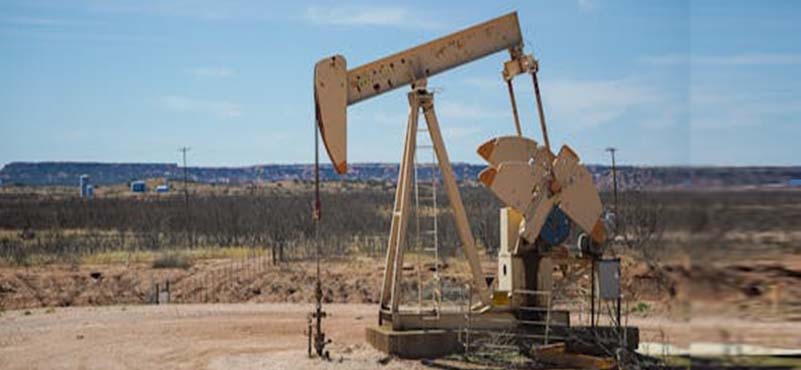
Oil is never just about fuel; it is the ultimate economic wildcard. For a country like India, which imports a whopping 85% to 90% of its crude oil, global energy markets are a constant source of stress. When geopolitics flares up, India’s inflation, currency, and household budgets immediately feel the burn.
Take the recent fuel price hikes this May. Petrol and diesel prices climbed by ₹3 per litre on May 15, followed by another 90-paise bump on May 19, 2026. These aren’t just random policy tweaks. They are the direct result of a brewing storm in global supply chains, particularly around the Strait of Hormuz, a tiny bottleneck through which three-fifths of India’s oil travels.
With Brent crude stubbornly exceeding $100 a barrel, India’s domestic Oil Marketing Companies (OMCs) can no longer absorb the losses. They’ve been taking a hit for months, losing roughly ₹10 per litre on petrol and ₹13 on diesel. Eventually, the financial strain of the fiscally unsustainable measure must be transmitted onwards to the consumer.
The broader concern is not merely the current rise in prices but the likelihood of further increases if geopolitical instability intensifies. The consequences, as demonstrated by me over the years, extend beyond fuel. Unless tensions in West Asia ease dramatically, further increases in fuel prices seem imminent. As a popular American expression goes, “it could get worse before it gets any better”. Oil price shocks permeate transportation, manufacturing, agriculture, logistics, inflation, investment flows, fiscal balances, and household consumption patterns. In effect, rising crude prices function as a tax on economic growth.
The Immediate Trigger: Geopolitics and the Strait of Hormuz
It’s all about geopolitics. The Strait of Hormuz — a narrow maritime chokepoint between Iran and Oman — carries roughly one-fifth of the world’s oil trade and three-fifths of India’s oil. Any military escalation involving Iran, the United States, Israel, or Gulf states creates immediate fears of supply disruptions. Oil markets react not only to actual disruptions but also to anticipated risks.
Markets are fundamentally psychological systems. Fear alone can raise crude prices sharply because traders’ price in future uncertainty. Even rumours of naval confrontations or sanctions intensification can trigger speculative spikes.
India is especially exposed because a substantial share of its crude imports originates from West Asia. Unlike energy-exporting nations, India cannot meaningfully shield itself from external shocks.
The current situation also reflects a broader fragmentation of the global order. Intensifying great-power competition, regional conflicts, sanctions regimes, and supply-chain weaponisation are creating a structurally more volatile world economy. In such an environment, oil price shocks may become more frequent rather than exceptional.
W.B. Yeats’ haunting observation in The Second Coming (1919) — “The best lack all conviction, while the worst are full of passionate intensity” — increasingly captures the tenor of contemporary geopolitics. Financial markets, particularly energy markets, are highly sensitive to this atmosphere of uncertainty.
Why Fuel Price Hikes Were Economically Inevitable
The recent fuel-price hikes should not be viewed as sudden or unexpected. Rather, they represent the delayed onward transmission of global crude realities into domestic pricing. The government’s apparent strategy has been to avoid a large, politically explosive increase and instead implement staggered, calibrated hikes. This gradualist approach seeks to minimise public backlash while steadily transferring the burden to consumers. This approach mirrors fuel-pricing responses adopted by several governments globally during periods of commodity stress.
Nevertheless, the room for continued absorption is shrinking rapidly. If Brent crude remains above $100 for an extended period, either consumers pay more, or fiscal stress deepens substantially.
The Ripple Effect: From Fuel Stations to Kitchens
I have repeatedly demonstrated the criticality of fuel prices in India’s development odyssey. Fuel prices significantly impact the inflation chain because energy costs permeate virtually all sectors of the economy. When fuel prices surge, it triggers a domino effect across the entire economy. It doesn’t stop at the petrol pump.
Transportation and Logistics
India’s supply chain remains heavily dependent on road transport. Diesel powers trucks, buses, tractors, and logistics fleets. Consequently, higher diesel prices immediately increase freight costs.
This has cascading consequences, with agricultural produce becoming more expensive to transport, manufacturing input costs rising, e-commerce logistics becoming costlier, public transport fares increasing, and airline ticket prices rising due to higher aviation turbine fuel costs.
Food Inflation
Food inflation is especially politically sensitive because it disproportionately affects lower-income households. Higher fuel prices raise irrigation costs, transportation expenses, cold-storage operating costs, and fertiliser distribution expenses. The result is broad-based inflation in vegetables, grains, milk, edible oils, and essential commodities.
India has experienced this dynamic repeatedly. Historically, sustained oil-price increases have often translated into elevated food inflation with a lag of several months.

Core Inflation and Household Budgets
Beyond food and transport, higher fuel prices affect core inflation by raising operational costs across industries. Households face multiple simultaneous pressures from higher commuting costs, more expensive groceries, increased utility bills, costlier services, and higher EMIs if interest rates rise. This erodes discretionary spending power and weakens consumption demand. For middle-class and salaried households already grappling with stagnant real wage growth, persistent fuel inflation can significantly reduce living standards. Things don’t look so good, do they?
Monetary Policy and the RBI’s Dilemma
In my writings on the monetary policy for well over three decades, published in The Hindu Business Line, The Indian Banker, Financial Express, Telangana Today, etc., I have consistently demonstrated that inflation creates a difficult balancing act for the Reserve Bank of India (RBI) in its pursuit of adroitly navigating the growth-inflation trade-off. If inflation exceeds the target stipulated by the Monetary Policy Committee (MPC) persistently, the RBI may be compelled to maintain elevated interest rates for longer periods or even tighten monetary policy further.
Higher interest rates produce several economic effects. Borrowing becomes more expensive, housing demand weakens, corporate investment slackens, automobile financing becomes costlier, and consumer durable demand softens. In essence, oil-price inflation can indirectly suppress economic growth by forcing tighter financial conditions.
This presents a classic policy dilemma: if rates remain low, inflation risks intensify; if rates rise aggressively, growth slows. India’s current growth model relies heavily on domestic consumption. Therefore, any sustained compression of purchasing power could moderate GDP growth at a delicate economic moment.
Fiscal Stress and the Limits of Consumer Protection
The Indian government has historically used excise duty adjustments to cushion consumers during oil shocks. Reducing fuel taxes can temporarily soften retail prices. However, this approach carries major fiscal implications.
Fuel taxes constitute a significant revenue source for both the central and state governments. These revenues fund welfare programmes, infrastructure spending, capital expenditure, subsidies, and rural development schemes.
Persistent tax cuts weaken fiscal capacity precisely when governments need resources to support growth.
India’s fiscal deficit concerns, therefore, become aggravated during prolonged oil shocks. A widening fiscal deficit creates additional risks of higher government borrowing, rising bond yields, crowding out of private investment, credit-rating concerns, and pressure on the rupee. Thus, shielding consumers indefinitely is neither economically nor fiscally sustainable. The present strategy is essentially a temporary buffer — not a long-term solution.
Current Account Deficit and the Rupee Problem
Crude oil is India’s largest import item. Consequently, rising oil prices significantly worsen the Current Account Deficit (CAD). When India imports more expensive crude, more dollars leave the country, import bills rise sharply, and external balances deteriorate.
A widening CAD often weakens the rupee because demand for dollars increases. A weaker rupee then creates a vicious cycle: oil imports become even more expensive, imported inflation intensifies, foreign investor sentiment weakens, and external financing pressures rise.
Historically, episodes of sharp oil-price increases have frequently coincided with rupee depreciation. The problem is exacerbated by gold imports.

The Triple Whammy: Oil, Gold, and the Rupee
India’s government has increasingly encouraged citizens to conserve fuel and reduce excessive gold purchases. While such appeals may appear symbolic, they reflect genuine macroeconomic concerns.
India is one of the world’s largest consumers of gold. Unlike productive capital imports, gold generates limited economic output after purchase. Yet massive quantities are imported annually using foreign exchange.
Thus, the twin vulnerabilities of oil and gold exert enormous pressure on India’s external balances and cause a fundamental disequilibrium in India’s balance of payments.
Why Gold Imports Matter?
Gold buying drains foreign exchange reserves, worsens the CAD, increases pressure on the rupee, and reduces capital available for productive investment.
During periods of uncertainty, households often increase gold purchases as a hedge against inflation and currency instability. Ironically, this behaviour can further weaken macroeconomic stability. The government’s messaging around “economic citizenship” therefore has a rational basis. Millions of individual consumption decisions aggregate into national economic outcomes. Conserving fuel and moderating speculative gold purchases become forms of collective macroeconomic discipline.
Oil Prices and Foreign Institutional Investors (FIIs)
Oil-price volatility also affects capital markets. Foreign Institutional Investors (FIIs) closely monitor several interconnected variables. These variables relate to inflation trends, fiscal deficits, current account stability, currency strength, interest-rate trajectories, and geopolitical risks. Persistent oil shocks negatively impact all these indicators.
When Will FIIs Return?
FIIs will decisively return to India only when three conditions align: attractive relative valuations, stable global macro conditions, and confidence in India’s earnings cycle. Indian equities typically trade at a premium due to stronger growth prospects and political stability, but rising U.S. bond yields and a stronger dollar divert FII capital to developed markets. Thus, softer U.S. rates and improved global liquidity are key to renewed inflows.
Resilient GDP growth, expanding manufacturing and digital infrastructure, and policy continuity augur well. Capital-expenditure-linked sectors, banking, defence, and consumption continue to interest long-term institutions. Still, FIIs are sensitive to short-term risks such as high valuations – a case of “froth” and “irrational exuberance”, oil-price swings, and geopolitical shocks. Geopolitical tensions cause concern given India’s heavy oil import reliance; sustained conflict could raise inflation, widen the CAD, and strain the rupee—deterrents for FIIs. A crystal ball gazing suggests that without a dramatic escalation plus persistently high U.S. rates, prolonged net selling beyond a year is unlikely; India’s structural growth case endures.
Sectoral Impact: Winners and Losers
An oil shock doesn’t hit every industry the same way:
Sectors Under Fire
1. Automobiles
Higher fuel prices reduce consumer demand for SUVs, diesel vehicles, and commercial vehicles. Consumers may postpone purchases due to rising operating costs.
2. Aviation & Logistics
Fuel is their biggest expense; margins shrink instantly.
3. Cement and Manufacturing
Energy-intensive industries face rising production costs, affecting profitability.
4. FMCG and Retail
Reduced household purchasing power weakens discretionary consumption.
Potential Beneficiaries
1. Renewable Energy
Higher fossil-fuel prices improve the economic attractiveness of solar energy, wind energy, electric vehicles, green hydrogen, and battery storage technologies.
2. Railways and Public Transport
Consumers may increasingly shift toward cost-efficient public transportation.
3. Domestic Defence and Energy Security Industries
Geopolitical instability often accelerates strategic investments.
The Strategic Imperative: Renewable Energy Transition
Repeated oil shocks have exposed a fundamental strategic reality: excessive dependence on imported energy translates into economic vulnerability. For India, strategic petroleum reserves serve as an essential buffer against temporary supply disruptions and price spikes. However, such reserves are limited in scope and duration. They can stabilise markets in the short term but cannot shield the economy from prolonged global energy crises, as demonstrated by the struggles of even advanced economies during sustained oil-price volatility. Therefore, petroleum reserves should be regarded as crisis-management tools rather than a permanent safeguard for energy security.
Accordingly, accelerating the transition to renewable energy has become a strategic necessity rather than merely an environmental aspiration. Expanding renewable energy can reduce dependence on imported crude oil, strengthen energy security, improve the current account balance, lower carbon emissions, and provide greater price stability. India has already achieved notable progress, particularly in solar energy capacity, while the push towards electric mobility has gained urgency amid recurring oil shocks.
Nevertheless, the transition remains fraught with structural and financial challenges. Large-scale investments are required for grid modernisation, battery storage systems, rare-earth mineral supply chains, and technological innovation.
Policy consistency to attract sustained domestic and foreign investment is important.
India’s long-term economic resilience ultimately depends on reducing structural reliance on imported fossil fuels through renewable energy expansion, diversified supply chains, stronger public transport, improved energy efficiency, and international cooperation. Yet, despite these ambitions, India’s economy remains significantly exposed to fluctuations in global crude oil markets in the near term.
The Challenge and the Response
India’s current fuel-price situation reflects a convergence of global instability and domestic structural vulnerability. The recent hikes in petrol and diesel prices are unlikely to be the last if geopolitical tensions persist and crude prices remain elevated. Their impact transcends transportation costs. Rising oil prices influence inflation, household consumption, fiscal balances, investment flows, currency stability, and economic growth itself.
The challenge confronting policymakers is extraordinarily delicate. Shielding consumers indefinitely is fiscally unsustainable, yet aggressive pass-through risks inflationary and political consequences.
Meanwhile, ordinary citizens face a difficult environment characterised by rising living costs, stagnant wage growth, and growing economic uncertainty.
The broader lesson is sobering in a fragmented and volatile world; economic stability increasingly depends on strategic resilience. Oil shocks are no longer isolated events but recurring reminders of how interconnected geopolitics and everyday economic life have become.
While India’s strategic petroleum reserves offer a decent 60-day safety net, they are a temporary buffer, not a cure. Every rise in crude prices now reverberates through kitchens, transport networks, corporate balance sheets, government finances, and financial markets. The ripple effects are national in scale and deeply personal in consequence. The only effective way is to fast-track our transition to renewable energy, build a robust EV infrastructure, and diversify the power sources.
In a world of shifting geopolitics and perceived national interests, moving away from imported fossil fuels isn’t just an environmental goal anymore; it is a macroeconomic necessity for India’s survival.
ABOUT THE AUTHOR
 Dr. Manoranjan Sharma is Chief Economist, Infomerics, India. With a brilliant academic record, he has over 250 publications and six books. His views have been cited in the Associated Press, New York; Dow Jones, New York; International Herald Tribune, New York; Wall Street Journal, New York.