
India occupies a central but complex position in the global and regional tourism architecture. In an era where tourism is shaped by geopolitics, sustainability, and digital transformation, India stands at crossroads. Globally, tourism has recovered; regionally, Asia has risen and is rising; sub-regionally, South Asia lags; and within this landscape, India remains under-leveraged internationally despite immense strengths and potential.
India’s unique domestic tourism strength, cultural richness, and demographic dividends position it to scale its international tourism game. If it leverages strategic marketing, infrastructure upgrades, safety enhancements, and regional cooperation, India can solidify its place as a compelling global tourism destination – transforming its domestic vigour into sustained international appeal.
However, despite having world-class attractions, India’s international tourism footprint remains modest compared to competing international and regional destinations. India receives less than 1% of global international tourist arrivals, despite accounting for nearly 18% of the world’s population. In contrast, Thailand attracts nearly three times more international tourists with a fraction of India’s cultural and geographical diversity. This gap highlights not a lack of attractions, but systemic inefficiencies in conversion of potential into arrivals.
- In 2023, India attracted around 9.5 million foreign tourists, low relative to France (~100 million) and regional leaders like Thailand (~28 million).
- Structural issues like high pollution, perceived safety concerns, costs, weak global marketing, and underfunded promotion dampen India’s competitiveness.
Additionally, specific conflict zones, such as Kashmir, show how security vacillations can dramatically suppress tourism demand.
India’s Position: Domestic Giant, Global Underperformer
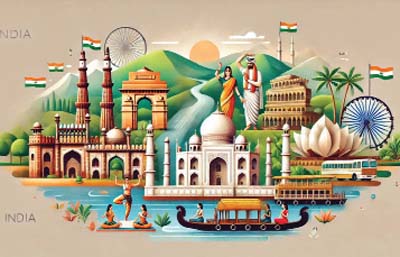 India presents a unique case in global tourism.
India’s Strengths
- One of the largest domestic tourism markets in the world, with over 2.5 billion domestic tourist visits annually
- 43 UNESCO World Heritage Sites
- Exceptional cultural, religious, ecological, and linguistic diversity
- Growing digital and infrastructure capabilities
Domestic tourism acts as a shock absorber, sustaining the sector during global downturns and supporting livelihoods in smaller towns and rural areas. States like Uttar Pradesh, Maharashtra, Tamil Nadu, Rajasthan, and Kerala receive massive internal tourist flows, enabling year-round economic activity.
India’s Weaknesses
Despite these strengths, India attracts only about 9–10 million foreign tourists annually, far below peers such as Thailand or even smaller destinations like Malaysia. Key challenges include:
- Perception issues related to safety, hygiene, pollution, and crowding
- Fragmented tourism governance between Centre and States
- Limited global marketing and branding
Infrastructure and service-quality gaps in many destinations - Sensitivity to regional geopolitical disruptions, particularly in border areas
In the face of challenges and opportunities, the growth of Indian tourism is constrained by a series of policy and strategy deficiencies.
India’s Tourism Trajectory: Expanded Policy Measures, Challenges, and Opportunities
 1. Structural Challenges Facing Indian Tourism
Despite India’s immense tourism assets, several structural bottlenecks continue to limit its global competitiveness.
a) Low International Market Share
India receives less than 1% of global international tourist arrivals, despite accounting for nearly 18% of the world’s population. In contrast, Thailand attracts nearly
three times more international tourists with a fraction of India’s cultural and geographical diversity. This gap highlights not a lack of attractions, but systemic inefficiencies in conversion of potential into arrivals.
b) Perception and Soft-Power Deficit. Global perception remains a critical challenge. Issues related to:
- safety (especially for women),
- air pollution in major cities,
- overcrowding at heritage sites, and
- uneven hygiene standards continue to affect India’s brand image. In tourism economics, perception often matters more than reality, and negative narratives tend to travel faster than positive ones.
c) Fragmented Governance. Tourism is a state subject, while branding, visas, aviation, and foreign promotion fall under the Union Government. The lack of seamless coordination results in:
- inconsistent destination standards,
- uneven tourist experiences,
- duplication of efforts, and
- weak last-mile delivery.
d) Geopolitical Sensitivities
In South Asia, tourism is uniquely vulnerable to geopolitics: political upheavals in Bangladesh, Nepal and Sri Lanka have an indirect impact on tourist flows to India.
2. India’s Core Opportunities: Leveraging Domestic Strength
India’s greatest tourism advantage lies not overseas, but within its domestic market.
a) Domestic Tourism as an Economic Shock Absorber
India recorded over 2.5 billion domestic tourist visits annually in recent years, making it one of the largest domestic tourism markets in the world. This provides:
- revenue stability during global crises,
- a testing ground for new destinations,
- scale for hospitality investment, and
- employment in non-metro regions.
Policy implication: Domestic tourism can act as a nursery for global-ready destinations.
b) Cultural and Experiential Depth India offers what few countries can:
- ancient civilizations,
- living traditions,
- religious pluralism,
- biodiversity hotspots,
- culinary diversity.
Globally, tourism demand is shifting from “sightseeing” to experiential, spiritual, wellness, and slow tourism—segments where India has a natural comparative advantage.
c) Demographic and Digital Advantage
India’s young, tech-savvy population enables:
- digital bookings,
- app-based tourist services,
- AI-driven translation and guides,
- virtual marketing of destinations.
This positions India well to leapfrog traditional tourism models.
3. Suggested Policy Measures for India
a) Strategic Repositioning of India’s Tourism Brand
Challenge: India is often marketed through a narrow lens (heritage monuments, yoga, spirituality).
Policy Measures:
- Shift from a monolithic “Incredible India” narrative to micro-branding:
- “Himalayan Wellness Corridor”
- “Buddhist Heritage Circuit”
- “Indian Ocean Eco-Tourism”
- “Tribal and Indigenous India”
- Use data-driven segmentation for target markets:
- Europe: culture, sustainability, slow-paced travel, particularly for silver segments
- GCC: medical, wellness, luxury
- Southeast Asia: religious and short-haul travel
Opportunity: This aligns with global trends toward personalized and purpose-driven travel.
b) Infrastructure and Destination Readiness. Challenge: Infrastructure quality varies sharply across different regions in the country.
Policy Measures:
- Prioritize Tier-2 and Tier-3 destinations rather than saturating metros.
- Create Tourism Infrastructure Investment Zones (TIIZs) with:
- single-window clearances,
tax incentives, - PPP-based hospitality development.
- Mandate universal digital payments, clean sanitation, and multilingual signage at all major tourist hubs.
Opportunity: Infrastructure investment has high multiplier effects on local employment, MSMEs, and regional development.
c) Visa, Mobility, and Connectivity Reforms
Challenge: Visa complexity and poor last-mile connectivity deter tourists.
Policy Measures:
- Expand visa-on-arrival and long-term tourist visas for high-value markets.
- Introduce thematic visas (spiritual, medical, academic tourism).
- Strengthen air and rail connectivity between:
pilgrimage circuits, - heritage clusters,
- eco-tourism zones.
Opportunity: Reduced friction can significantly increase length of stay and tourist spending.
d) Safety, Trust, and Quality Assurance. Challenge: Safety perception undermines destination appeal.
Policy Measures:
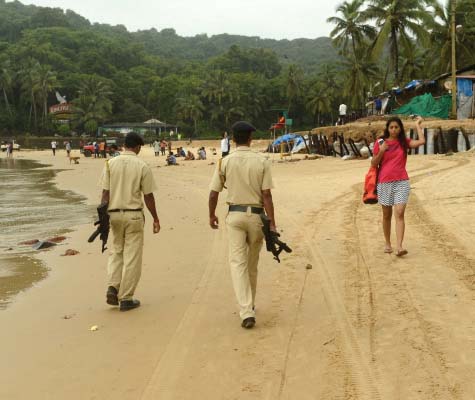
- Establish Tourist Police Units with multilingual support in all major destinations.
- Introduce mandatory quality certification for hotels, homestays, and tour operators.
- Launch a National Tourist Assistance Platform (app-based, 24/7).
Opportunity: Trust and safety significantly increase repeat visitation and word-of-mouth promotion.
e) Sustainable and Responsible Tourism: Challenge: Over-tourism and environmental degradation threaten long-term viability.
Policy Measures:
- Implement carrying-capacity norms at fragile destinations.
- Incentivize eco-friendly accommodation and renewable energy usage.
- Promote community-owned tourism models in tribal and rural areas.
- Opportunity: Sustainability is no longer optional – it is a global market differentiator.
f) Regional Cooperation in South Asia
Challenge: South Asia lacks integrated tourism frameworks.
Policy Measures:
- Lead a South Asian Tourism Accord focused on:
common visa corridors, - shared heritage routes,
- crisis-response coordination.
- Promote India as the hub for regional tourism circuits.
Opportunity: Regional tourism integration can reduce geopolitical friction and enhance people-to-people ties.
In the global tourism ecosystem, Asia is emerging as the growth engine, South Asia as an underperforming but high-potential sub-region, and India as its most pivotal actor. India’s challenge is not lack of assets, but policy coherence, perception management, and execution capacity.
If India aligns its tourism policy with:
- domestic market strength,
- imaginative marketing policies and strategies
- sustainability imperatives,
- digital innovation, and
- regional leadership,
then it can evolve from a tourism potential economy into a tourism powerhouse, contributing not just to GDP, but to employment, cultural diplomacy, and soft power in an increasingly interconnected yet geopolitically fragile world.
Can India Go Further by Holding on to Domestic Strength?
Yes—and domestic tourism is the foundation, not a substitute, for global success.
- India’s domestic tourism:
- builds infrastructure at scale,
- sustains businesses year-round,
- professionalizes services, and
- establishes globally competitive destinations organically.
Countries like China and the US followed similar trajectories – strong domestic tourism first, global dominance later.
How Domestic Tourism Can Propel India Internationally
 Domestic tourism is not merely a fall back—it is India’s most strategic asset.
1. Destination Incubation: Domestic tourists:
- test new destinations,
- create steady year-round demand,
- justify infrastructure investment.
Destinations like Varanasi, Ayodhya, Rishikesh, and Udaipur matured domestically before gaining international recognition.
2. Infrastructure at Scale: High domestic footfall forces:
airport expansion,
- better roads and rail,
- digital ticketing,
- sanitation and accommodation upgrades.
Once built, these assets automatically raise international readiness.
3. Service Professionalization: Domestic demand:
- sustains hotels, guides, transport providers,
- creates skilled tourism labour,
- supports MSMEs and local entrepreneurship.
Quality ecosystems cannot survive on foreign tourists alone—India’s domestic market ensures continuity.
4. Crisis Resilience: During global shocks (pandemics, wars, recessions), domestic tourism:
- stabilizes revenue,
- protects jobs,
- prevents sectoral collapse.
This resilience is why China and the US dominate global tourism—they built scale at home first.
5. Cultural Confidence and Soft Power: Domestic tourism strengthens:
- heritage conservation,
- pride in local culture,
- internal cultural cohesion.
A confident tourism identity at home reflects authenticity.
ABOUT THE AUTHOR
 Dr. Harsh Varma is Former Director, United Nations World Tourism Organization (UNWTO). Based in Madrid, he is consulted by NTOs globally; has formerly been a director, Ministry of Tourism, GOI.