
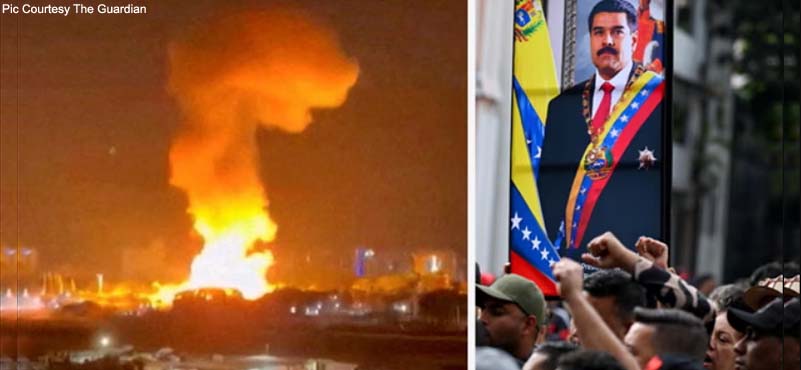
The events in Venezuela go beyond intervention or regime change. It represents something more fundamental: the reassertion of imperial authority under contemporary strategic language. When a major power claims the right to detain a sitting head of state, supervise political succession, and administer a sovereign country’s strategic assets without multilateral it crosses a threshold. It signals a return to colonial logic, stripped of flags and formal annexation, but intact in substance.
This is not about the moral standing of Nicolás Maduro’s government. Venezuela’s political decay, economic mismanagement, and authoritarian drift are well documented. The strategic question is whether the method employed to address these failures marks a structural shift in international behaviour. History shows that treating sovereignty as conditional fractures the international order.
Colonialism Without Colonies
Classical colonialism involved territorial occupation, resident administrators, and explicit hierarchy. Modern power projection dispenses with these burdens. Control today is exercised through financial leverage, sanctions regimes, legal instruments, and selective military force. Political outcomes are shaped and resources secured without formal annexation or permanent occupation. Compliance is enforced while responsibility for governance is deliberately avoided.
Seen through this lens, Venezuela fits a familiar pattern. Years of economic strangulation preceded political engineering. International recognition was extended to alternative leadership without a domestic mandate. Diplomatic isolation was applied to progressively hollow out state capacity. When internal collapse did not materialise, coercive force entered the equation.
Colonialism, in its contemporary form, no longer seeks subjects. It seeks outcomes.
Regime Change as a Strategic Habit
The United States has long defended regime change as an exceptional tool, employed reluctantly and only under extreme circumstances. Yet history indicates otherwise. Iran in 1953, Chile in 1973, Iraq in 2003, Libya in 2011, Afghanistan across multiple phases, reinforce the belief that external power can redirect a nation’s internal political course.
The stated justifications varied with time and circumstance. Anti-communism during the Cold War gave way to non-proliferation, humanitarian intervention, and counterterrorism. The follow-on events showed greater instability that outlasted the regime change. The consistent miscalculation was not an intelligence failure but strategic overconfidence. External actors repeatedly assumed that political legitimacy could be engineered faster than social order.
The Myth of American Decline
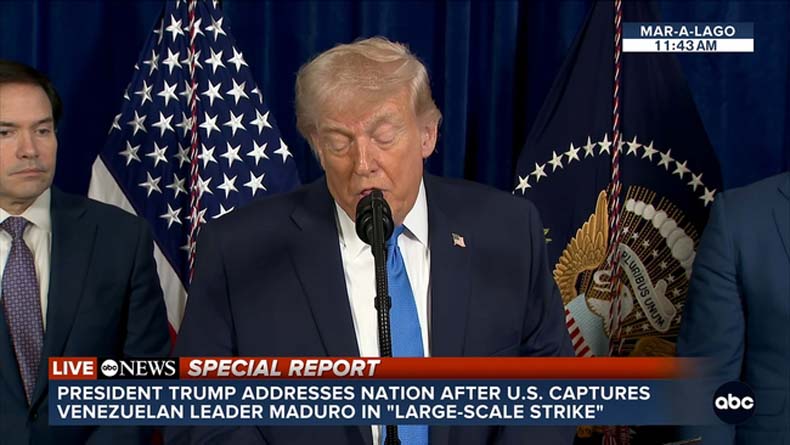
This episode cuts through the popular narrative that American power is ebbing beyond recovery. Despite internal faultlines and the diffusion of economic power, the United States retains an unmatched ability to convert resolve into reality. Its military projection, economic power of the dollar, legal jurisdiction, alliances, and narrative dominance fuse into one seamless machine. The capacity to act decisively at a distance, manage escalation, and absorb diplomatic costs remains largely undiminished. Venezuela does not reflect a power in retreat, but one willing to employ the full spectrum of its tools. The error lies not in recognising the emergence of other centres of power, but in mistaking diffusion for displacement.
The UN and the Collapse of Constraint
The most damaging casualty of unilateral intervention is not the targeted state but the multilateral system meant to restrain power. The United Nations was designed precisely to prevent great powers from acting as judge, jury, and executor. When those powers bypass the system, they do more than violate procedure. They delegitimise restraint itself.
Iraq eroded trust in intelligence-based justifications. Libya hollowed out the credibility of humanitarian mandates. Venezuela risks normalising the idea that a state’s internal legitimacy is subject to external certification.
Once such a norm takes root, it does not remain confined to a single actor. Others will invoke it in turn, justifying action through precedent rather than principle. Constraint rarely collapses suddenly; it erodes through repeated bypass.
Energy, Economics, and Strategic Significance
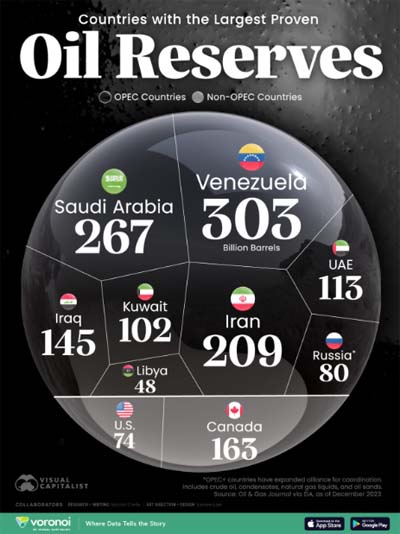 Venezuela’s significance rests as much on location as on resources. It controls the largest verified oil reserves in the world and stretches along the Caribbean littoral, adjacent to sea routes that funnel commerce through the Panama Canal into the United States. Few energy producers sit closer to America’s maritime and economic lifelines.
Prolonged sanctions narrowed Caracas’s external options and drove it toward partners prepared to operate beyond Western financial systems. Energy and mining arrangements with China, alongside Russia and Iran, emerged from this constraint. For Beijing, Venezuela offered more than supply diversification. It provided strategic presence in a region long regarded in Washington as a zone of privileged interest.
Recent US national security assessments leave little doubt about how such developments are viewed. While Venezuela itself is not explicitly cited, repeated warnings about China’s deepening engagement with politically aligned governments in the Western Hemisphere signal a clear red line. The concern is not ideology, but the steady erosion of American strategic primacy in its near abroad.
India’s Strategic Exposure
India approaches this moment with layered vulnerability. Venezuelan heavy crude once formed a significant part of India’s refining mix. Sanctions already forced costly recalibration. This adds volatility to India’s energy environment, particularly as sanctions on Russia and Iran narrow alternative supply options.
For India, the concern runs deeper than immediate alignment choices. A state that has historically resisted external political direction has a direct interest in defending sovereignty as a non-negotiable foundation of order. Strategic autonomy rests on the reliability of rules, not on the discretion of power. External manipulation of internal stability, therefore, remains a real challenge, including for India.
Sanctions pressure over Iran, secondary constraints linked to Russia, and conditionalities attached to technology access have all underscored how quickly economic tools can become political instruments. A precedent that legitimises the external administration of sovereign states weakens India’s negotiating position across multiple domains.
India cannot afford ideological alignment, nor can it remain silent. Its response must be deliberate. Support for multilateral processes, diversification of energy sources, expansion of strategic reserves, and strengthening of alternative forums such as BRICS and the G20 are not symbolic acts. They are risk mitigation measures in an increasingly coercive system.
Is This the Return of Colonialism?
The answer depends on how colonialism is defined. If it is understood as a territorial conquest, the answer is no. If it is understood as the denial of sovereign choice through superior power, the answer is uncomfortably close to yes.
Modern colonialism does not require governors or flags. It operates through sanctions that reshape economies, narratives that pre-empt legitimacy, and interventions framed as administrative necessity. Its success is measured not in territory held but in compliance achieved.
Venezuela illustrates this evolution starkly. The rhetoric is reform. The mechanism is coercion. The outcome is control without consent. What has changed is the method, not the intent.
The World at a Dangerous Crossroads
The United States is not restoring democracy in Venezuela; it is asserting global leverage over energy, alliances, and sovereign choice. It aims to influence energy routes, secure strategic access, and reorder regional alliances to Washington’s advantage. Iran could be next, or a crisis could develop around the Strait of Hormuz. This would likely accelerate counter-balancing behaviour, hardening the anti-US coalition of nations.
Venezuela, far from a parochial Latin American affair, emerges as a strategic archetype. It is a testament that calibrated economic duress, political orchestration, and kinetic means can refashion sovereign entities. This dangerous move could have severe repercussions over the next few days in a world already in chaos.
ABOUT THE AUTHOR
 Lieutenant General A B Shivane, is the former Strike Corps Commander and Director General of Mechanised Forces. As a scholar warrior, he has authored over 200 publications on national security and matters defence, besides four books and is an internationally renowned keynote speaker. The General was a Consultant to the Ministry of Defence (Ordnance Factory Board) post-superannuation. He was the Distinguished Fellow and held COAS Chair of Excellence at the Centre for Land Warfare Studies 2021 2022. He is also the Senior Advisor Board Member to several organisations and Think Tanks.