For the past half-century, the global energy market spoke in a single financial language: the U.S. dollar. Few international arrangements shaped economic power so quietly yet so profoundly.
The foundations of that system were laid in the turmoil of the 1973 oil crisis, when Arab producers restricted supplies during the Arab–Israeli war and energy prices surged across the industrial world. Out of that upheaval emerged a financial structure that would underpin the modern international economy. Oil would be priced largely in dollars, and the immense revenues generated from those sales would flow back into Western financial markets.
This arrangement became known as the petrodollar system. It rarely appeared in mainstream discussions, yet it influenced globalisation processes. All nations needing oil initially relied on dollars. Energy exporters accumulated large dollar reserves and invested them in U.S. financial markets, especially U.S. Treasury bonds. The cycle strengthened each year. By the end of the twentieth century, the dollar had become not only a national currency but also the medium of international trade.
The structure today faces pressures that nobody could have imagined before. Even the conflicts and turmoil now observed in the Middle East have been viewed through traditional geopolitical lenses: the region’s politics, security issues, and the age-old game of dominance in a geopolitically important part of the world. But underlying the ongoing transformation is a financial change. A system that links the world’s most important commodity to the American currency is beginning to show signs of strain.
The petrodollar order did not happen by chance. When the United States abandoned the dollar’s gold convertibility and the Bretton Woods System effectively collapsed, Washington needed another mechanism to sustain the international role of its currency. The oil markets of the Persian Gulf provided that anchor.
For decades, this arrangement appeared almost immutable. The dollar anchored the world’s most important commodity, and the resulting financial cycle reinforced American influence across global markets. Yet systems built on convenience and habit can appear permanent right until the moment when structural shifts begin to erode their foundations.
The system’s durability remains clear today. According to data from the International Monetary Fund, approximately 58 per cent of global foreign exchange reserves are held in dollars. Most international commodities are priced in that currency, and the largest capital markets are situated in the United States. These structural strengths are unlikely to fade anytime soon.
However, several factors are slowly transforming the world in which the petrodollar system survives.
The first change is in the energy market. The American shale revolution has made the country the world’s largest producer and exporter of oil, shifting it from its previous role as an importer. This change has altered the strategic partnership between Washington and the Gulf monarchies. The United States is no longer the sole and primary customer protected by a security umbrella that safeguards energy flows. Instead, it has started competing in some markets.
Another pressure emerged from the financial system after the global financial crisis. The 2008 crisis prompted central banks in the United States and Europe to increase liquidity on an unprecedented scale. While these policies stabilised vulnerable economies, they also raised doubts among major reserve holders about whether the long-term sustainability of such purchasing power of stored currencies can be maintained. Diversification becomes an essential strategy for energy exporters, whose sovereign wealth funds are worth hundreds of billions of dollars.
The third transformation is the globalising nature of energy needs worldwide. The fastest growth in oil consumption now occurs in Asia. China has become the world’s largest importer of crude oil, while India is close behind. As trade patterns shift eastward, financial relations are expected to follow suit.
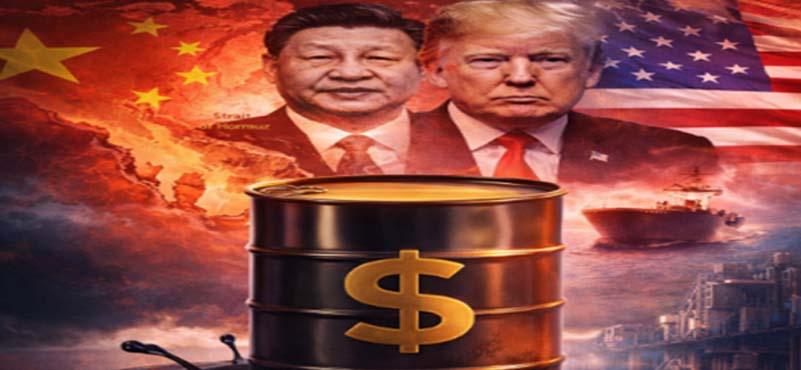
The current upheaval in the Middle East has begun to show how alternative financial solutions can work in practice. Recent tensions around the Strait of Hormuz have revealed how these financial shifts can operate in practice. Some oil shipments moving from Iran toward Asian markets now rely on financial and insurance arrangements that operate outside the traditional Western banking system. In several cases, transactions are settled through China’s Cross-Border Interbank Payment System rather than the conventional dollar-based clearing networks. In absolute terms, these volumes remain modest compared to the scale of global energy trade. The dollar continues to dominate the international monetary system, and American financial markets remain unmatched in size and liquidity. However, the symbolism of these transactions should not be underestimated. Oil moving through one of the world’s most critical maritime chokepoints without interacting with the dollar-based system signifies a break from patterns that have governed the global economy for decades.
The petrodollar system was built to prevent such fragmentation. Its strength relied on network effects. Once most energy transactions were in dollars, everyone was encouraged to stay within that system. Importers needed dollars for oil purchases. Exporters reinvested their earnings in dollar assets because those markets offered stability and scale.
What is emerging today is not collapse but the gradual appearance of alternatives at its edges. New digital financial innovations, the rise of novel payment systems, and the strategic goals of major powers are expanding the space for transactions outside the traditional system.
These trends could have significant implications for international politics if they persist. American geopolitical influence has traditionally been supported by financial power. The dominance of the dollar has enabled Washington to influence global financial behaviour and enforce sanctions with wide-reaching impact. A world where energy transactions involve multiple currencies would increasingly diminish some of that leverage.
None of this suggests an immediate end to the dollar’s dominance. Monetary systems change gradually, and the United States’ advantage built over decades remains strong. What might develop instead is a more diverse financial landscape in which multiple systems coexist rather than a single system that completely dominates.
Beneath these economic shifts lies a quieter geopolitical change. The original petrodollar order rested on a strategic understanding between the United States and Saudi Arabia: American security for the Gulf in exchange for a stable, dollar-based oil trade. Today, that balance is evolving. China has become the largest buyer of Gulf energy, and the oil trade is steadily moving toward Asian markets. As energy flows shift eastward, the financial arrangements surrounding them may gradually begin to shift as well.
For India, these developments have clear strategic implications. The country’s growth relies on dependable energy supplies from the Gulf and stable financial channels that finance those imports.
The first lesson is Indian strategic flexibility. Energy security in the coming decades will therefore involve more than securing supply contracts; it will also require the ability to operate across multiple financial channels if global energy markets begin to diversify their currency arrangements.
The second lesson, maritime geography, remains equally important. The sea routes linking the Persian Gulf and the Indian Ocean will remain among the most essential economic pathways today. Protecting these routes and sustaining a credible naval presence in the region will remain a vital element of Indian strategic planning.
Lesson three is about balanced diplomacy. India maintains good relations with the United States, the Gulf monarchies, Iran, and major Asian economies that are reshaping global trade. It will require consistency and pragmatic statecraft to sustain this delicate balance while adapting to changing economic conditions.
History rarely occurs in clear-cut moments. Global systems evolve slowly through the buildup of technological innovation, economic shifts, and geopolitical competition on established arrangements. The petrodollar order has lasted many years, and its dominance over the energy financial structure remains unquestioned, but the future now appears somewhat less certain.
The turmoil in the Middle East being observed has cast that reality in a very peculiar light. Behind the turbulence of geopolitics, a quieter shift in the foundations of global finance is unfolding. Although the transformation may be gradual, its trend remains undeniable.
For decades, the dollar served as the operating language of the global energy trade. That role will not disappear quickly. The assumption that oil must always move through a single monetary system no longer appears as certain as it once did. A more plural financial landscape may now be slowly emerging.
ABOUT THE AUTHOR
 Lieutenant General A B Shivane, is the former Strike Corps Commander and Director General of Mechanised Forces. As a scholar warrior, he has authored over 200 publications on national security and matters defence, besides four books and is an internationally renowned keynote speaker. The General was a Consultant to the Ministry of Defence (Ordnance Factory Board) post-superannuation. He was the Distinguished Fellow and held COAS Chair of Excellence at the Centre for Land Warfare Studies 2021 2022. He is also the Senior Advisor Board Member to several organisations and Think Tanks.