Is this the Beginning of the Third World War, or yet another Blip on the Global Radar of Unrest?
In this free-wheeling discussion, an exchange of ideas, one view is that the world war has already begun. The overall perspective is that this could be another long-protracted war, with repercussions that could go any of the dozen ways. Participating in this discussion are Lt General Parminder Pannu, Lt General Ashok Shivane, authors and geo-politics analysts Iqbal Malhotra and Prasenjit Basu. Moderating the discussion is Navin Berry, Editor.
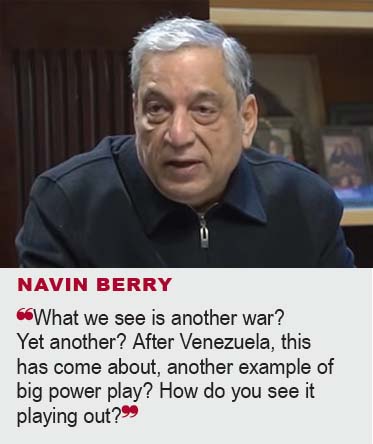 Navin Berry: What we see is another war? Yet another? After Venezuela, this has come about, another example of big power play? How do you see it playing out?
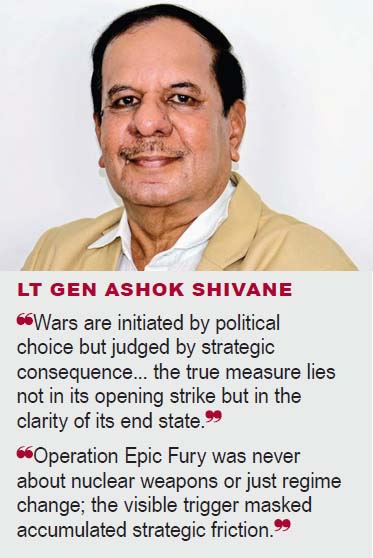
General Shivane: Wars are initiated by political choice but judged by strategic consequence. The true measure of any campaign lies not in its opening strike but in the clarity of its end state and the discipline of its termination. Iraq and Afghanistan demonstrated that removing a regime is operationally feasible; constructing stability is far more complex. Operation Epic Fury must therefore be analysed by the regional and global order it intends to shape, not the force it physically applies.
Traditionally, war termination has consistently proven more complex than war initiation, and hurried, embarrassing exits have often reshaped regions for decades.
The change of regime is easier than installing one that provides stability and toes the line of the installer. Nuclear justification often provides the visible rationale for actions driven by deeper geopolitical calculations. Contemporary history offers repeated illustrations of this pattern.
Op Epic Fury was never about nuclear weapons or just regime change. The visible trigger masked accumulated strategic friction. Proxy expansion, maritime vulnerability and energy leverage had gradually altered the regional balance. Iran’s network of proxies across Lebanon, Iraq, Syria, Palestine and Yemen evolved into a strategic force that challenged Israel’s security and threatened control over critical sea lanes that carry a fifth of the world’s oil supplies. Iran sits atop some of the world’s largest oil and gas reserves, with vast untapped potential that could reshape global energy flows. It also directly feeds China’s massive energy needs, even as sanctions kept that leverage under wraps for decades, and Venezuela’s oil supply was choked.
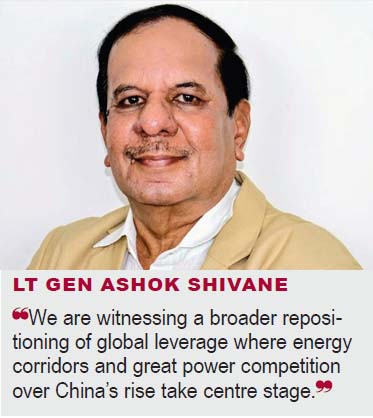
For the United States, safeguarding maritime dominance, preserving the dollar-anchored energy system, and preventing China from consolidating alternative supply networks remain core strategic interests. What we’re witnessing is not a narrow confrontation with Tehran, but a broader repositioning of global leverage where energy corridors, alliance structures and great power competition over China’s rise take centre stage. This is a strategic competition to leverage influence in a contested world order and arrest the relative erosion of American primacy. Regional theatres increasingly function as instruments within systemic rivalry, where local pressure points serve wider strategic positioning.
It’s aspirations because what is powering China’s growth is energy. And you see Venezuela, you see Russian sanctions, you see Iranian sanctions, and now you see Epic. So, if you connect the dots, I think I would agree with Iqbal that the center of gravity in this lies in anti -China. And this strategic shift touches upon energy security as a means to address China.
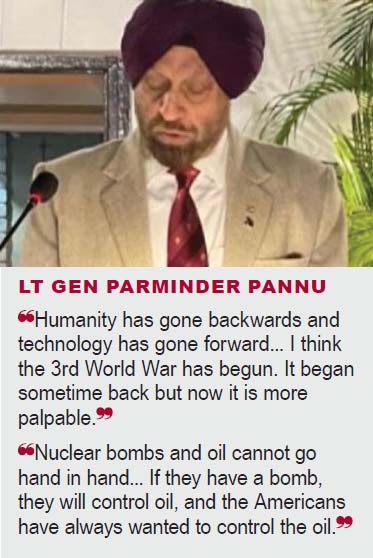 Navin Berry: Allow me to introduce Prasenjit, economist, author, political commentator, specialist on geopolitical matters and my fellow colleague from college. Prasenjit, the question here is what are the issues that you think have led to this latest escalation in the Middle East? It’s a rapid-fire format.
Prasenjit: Well, I think it begins with 7th October 2023. Hamas then attacked Israel because at that stage Saudi Arabia was about to recognize Israel and if Saudi Arabia recognized Israel and re -established diplomatic ties or established diplomatic ties with Israel that would be more or less game over for Hamas. And Hamas lashed out. Hamas of course was a proxy for Iran.
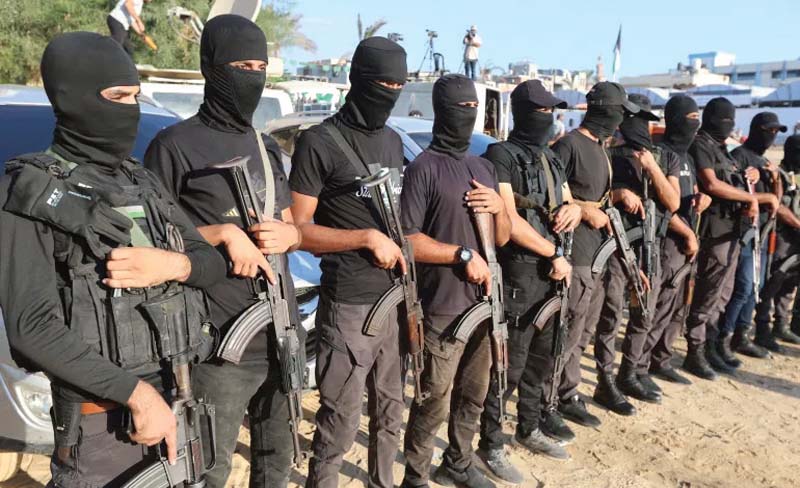
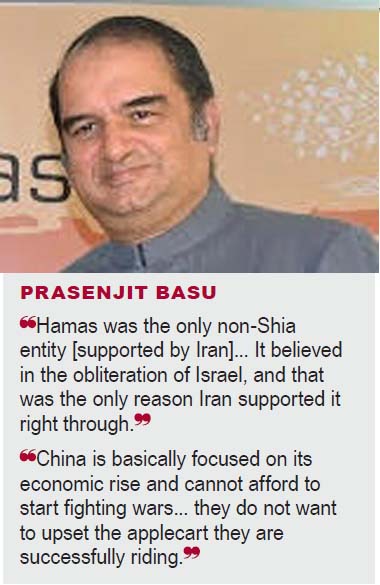
Now, if you look at Iran’s operations in West Asia, most of its so-called proxies, Hezbollah, the Syrian regime, were all Shia entities, but the exception was Hamas because Hamas does not recognize the existence of Israel. It therefore believes in the obliteration of Israel as a state and that was the only reason why Iran supported Hamas right through, financially, and made it possible for Hamas to remain in existence when most of the Arab world had withdrawn support to Hamas. Hamas was the only non-Shia entity. Even the Houthis are basically controlling the part of Yemen; they began from the part of Yemen that is Shia.
The difference is that Hamas was Sunni but supported by Iran. It started in 2023, it’s been 2 yrs and four or five months. Israel has retaliated and essentially with US support succeeded with dismantling Iran’s Shia empire pretty much across West Asia, with the exception of Iraq. Iraq is not really a player at the moment. Syria’s Assad regime has ceased to exist; Hezbollah has more or less been obliterated and Hamas is on the point of obliteration as well. Really what was left was the Fountainhead which is the Islamic Republic of Iran and now this Fountainhead I feel is facing something very close to obliteration as well. They had killed about 40 ,000 peaceful demonstrators over the last month and a half. I think I agree with some of the Chinese aspects of geopolitics but that I feel is somewhat secondary. It is the reason for the US to participate perhaps but primarily this whole thing began with Hamas and Hamas being a proxy for the Islamic Republic of Iran. It is coming very close to obliteration, the fact that Ayatollah Ali Khamenei has been killed, some of the leading intelligence people have been killed, some of the leading scientists have been killed. What is very interesting is that Pezeshkian, the President, has not been touched. He is largely Kurdish and partly Armenian; he is a rather unique character. He belongs to the part of Iran that is non- Persian and of course he has been a supporter of some of the reformist elements in Iran. He is potentially someone who will outlast the regime.
 Iqbal Malhotra: There was an Anglo -Soviet invasion of Iran in 1941. I think we should not forget that that was the beginning of Iran’s alienation from the West. And the Anglo -Soviet invasion was on the so-called Anglo side, it was led by two names that are familiar to us – Archibald Wavell and William Slim. And the entire so-called British invasion force was Indian soldiers who were used to invade Iran in 1941, oust Reza Shah and replaced him with Muhammad Reza Shah, his son, who from that time, was a lackey of the West. The Pahlavi dynasty and its legitimacy in the eyes of Iranians is a little questionable. Reza Shah was a great modernizer; he made it illegal to wear a hijab outside our house. He had gone even further than Ataturk in trying to sort of non -Islamicise Iran. Now, Iran has gone to the extreme.
Navin Berry: General Pannu, your take on this, please.
General Pannu: I think a lot good has already been said, and I agree with all of it, because a lot is seen and a lot is unseen. In 2009, the Israelis had declared that they would attack Iran because they were almost nearing completion of making a bomb and the background of course is known to Iqbal where AQ Khan was instrumental in carrying some designs and some amount of material came from wherever.
So at some point, the entire episode started with Iran wanting to possess a nuclear bomb. In 2009, Iran was to be attacked by Israel through an aerial bomb. That is when the Obama regime stepped in, they wanted to have a deal with Iran not to go nuclear. The deal was like soft pedaling by the Americans but the Israelis had to ultimately resort to Stuxnet in 2010, a cyber operation, and they destroyed the program. Also, they started systematically assassinating some Generals and assassinating some very key players who were trying to develop this program.
 Second point I want to make is, the nuclear bomb and oil cannot go hand in hand, because you become a superpower and you can’t be dealt with here and after. Any country which is having oil such as Saudi Arabia or in the Middle East can’t have a bomb. Because if they have a bomb, they will control oil and the Americans have always wanted to control the oil.
Also, dictatorship and possession of oil also cannot go hand in hand.
And that is how in Arab Spring and beyond, the Americans from one side started attempting to change a regime, but on the other side, the Saddam Husseins and then trying to enter Syria, which of course, the Russians prevented them from entering, wanting to do this kind of a regime change, where oil and the radical element and the total control by one dictator was not to be allowed. So, as a result, what happened now, what Prasenjit was saying, 7th October, 23, clearly showed that it was not Hamas which was attacking. I think it was, to derail, to an extent the Abraham Accords. The Abraham Accords would have completely changed the landscape of the future in the Middle East. So, as a result, the Chinese would have suffered a lot. The quarters which were against the Americans or the Americans who wanted to control certain elements or decimate certain elements would have actually been put to a corner.
So, therefore, I think 7th October rightly said it was a proxy attack behind which there are some proxy players including Iran. And of course, China, Russia, and many other silent players were certainly being spoken about. So, as a result, what then Iqbal started talking about was that ultimately it was to decimate China. And the legs and the hands of the Chinese economy are obviously linked to how, from where they get the energy from. The Venezuela source, Iran and the entire Persian Gulf was supposed to be very handy for China to do a trade of the kind which would put America completely out of play. So, over a period of time, the Iran story which has unfolded has actually, I think Prasenjit was trying to clarify that, but I am still not very clear about what is Shia, Sunni, connect or disconnect.
At some places they connect and some places they disconnect, which gets very intriguing. And I think it also is a marriage of convenience. And the marriage of convenience is used by the leaders how they want to leverage. Sometimes there is one big Islam and sometimes there is an Islam of a very different kind. The concern for us is Pakistan. Now, Pakistan has got a deal of mutual defence with Saudi Arabia.
On the other side, a lot of people keep talking about how Pakistan is not helping Iran. Sometimes they are helping Iran and sometimes they are not helpful because of the Balochistan factor. They want to have a good border in a neighborhood and sometimes it doesn’t work like that, because of the Shia -Sunni problem. The Chinese have also spread its tentacles through the One Belt, One Road initiative in Pakistan. From the Indian standpoint the most important factor is that the separate corridor might lend itself to be used by the Americans as a military corridor, that is where India should be concerned. And cutting the Chinese tentacles in Venezuela, in Iran and now in Pakistan might become the second ploy of the Americans to start getting into it.
 I’m not very sure whether the regime change is happening or not happening or it has already happened or not happened because the leader has gone. Iran is being run by a committee. Earlier it was one person giving orders to the Republican Guard. The Republican Guard holds the key to the nuclear program. It holds the key to all the Houthis and all Hezbollah. Now it is being run by a committee. I think the top of Iran is getting weaker, ultimately whether the regime change happens or not; or how many people in Iran are against the current regime or the regime that was? It is not even understood. I think it is a very important situation to watch now. Is the Pahlavi prince now prepared and being tutored by the American institutions?
Navin Berry: Allow me General Pannu to start my second question with you, in continuation of what you just expressed. How do you expect this war to unfold and who will decide who has won by achieving what? And interrelated with it is that is it going to be a long one or it is a short and sour one – what is your forecast?
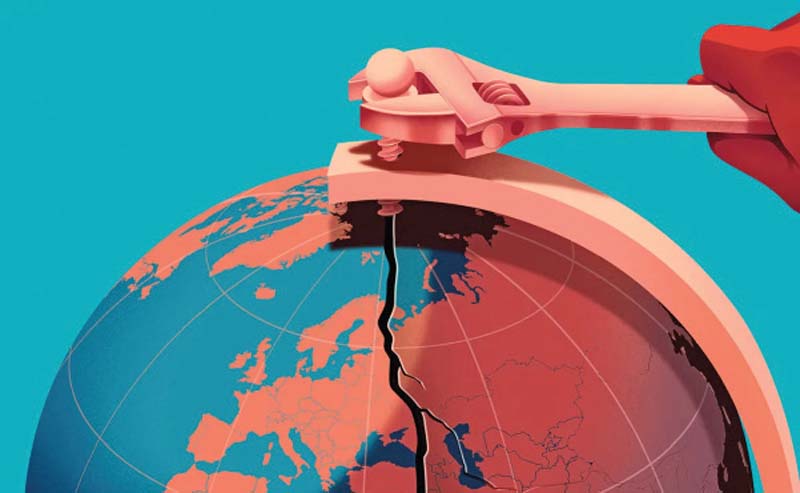
General Pannu: These days such readings has become very difficult because over the years, and General Shivane would agree, technology and the kind of equipment that forces started possessing, we always used to call it short, swift, intense wars. Now what has happened is that technology has stepped in. As technology has developed, I think human relationships have suffered. If technology is meant to bring humanity together, actually it has gone just the other way. Humanity has gone backwards and technology has gone forward. So, the entire technology is now being used by the human being to settle the disputes which are arising of human behaviour. And I think the world war which we keep talking about how it was fought, the second world war may not be the exact thing, but I think through the trade, terrorism, territorial battle and economic battles, I think the 3rd world war has begun. It began sometime back but now it is more palpable and we have to brace ourselves for a longer drawn-out affair. This is the beginning.
Navin Berry: Iqbal, would you like to quickly add on? Is this a beginning? Is this a dreadful beginning of some bad times to come?
Iqbal Malhotra: I’d like to introduce three things into this discussion. The first is that today I saw a brief video clip of President Trump saying that he wants to get hold of the Bagram base because it’s a very important base. The Bagram base is based in Afghanistan. I’ve been there twice, about 25 years ago and I know that it’s a very vital base, and Trump was the man who started the process to hand Bagram back to the Afghans.
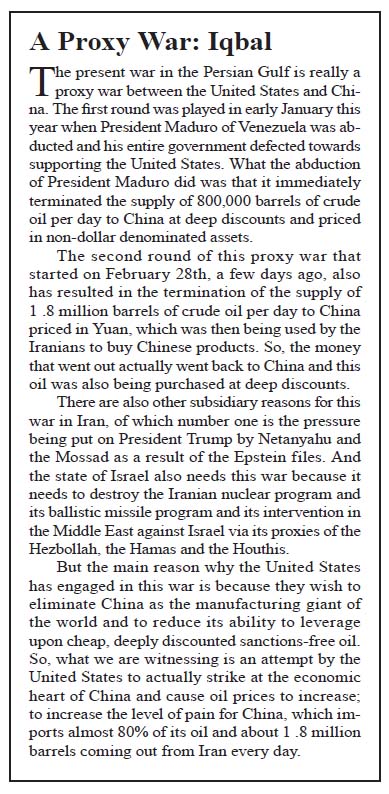
 Now, interestingly, if Trump wants Bagram and Trump wants Bagram to position himself, to position the United States in Central Asia against the Chinese, because he keeps on saying that Bagram is one hour away from the Chinese nuclear testing facilities. The question is – who is behind the recent clashes between the Taliban and the Pakistani government? Is it because there is a difference in the sharing of the revenues of the Opium and the Crystal Meth between the ISI and the Taliban or is there a bigger game afoot? And is this a new front opening so that we come to General Pannu’s analysis of the CPEC being taken over by the Americans because if the Balochistan liberation army and the Taliban start infiltrating into Balochistan, will the CPEC be at risk and will the Americans get hold at some point in time of Gwadar Port and then evict the Chinese completely from the Persian Gulf? That’s point number one.
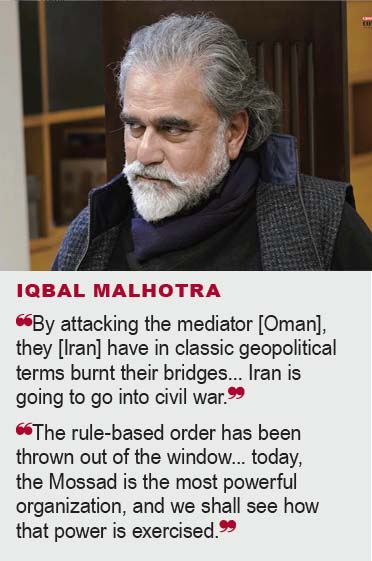
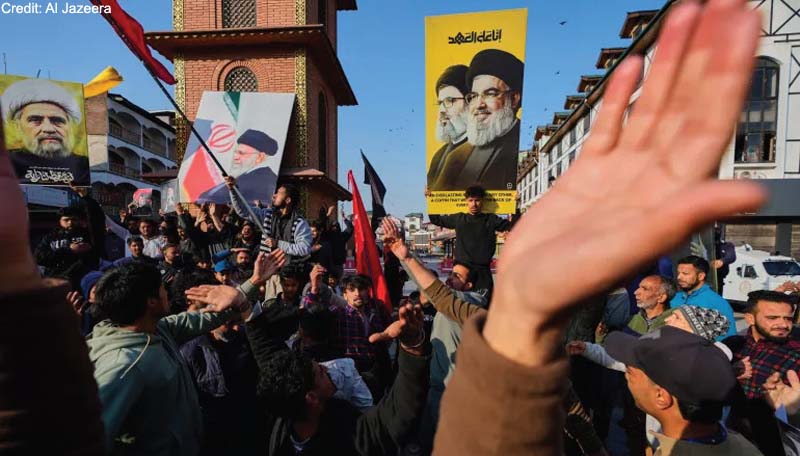
Second point is that this afternoon the Iranians have exhibited that they are in a total state of chaos because they’ve attacked ports in Oman, I mean, the port of Duqm in Oman. Now Oman has been a negotiator, it has negotiated the release of Iranian prisoners, swap between American prisoners in the past. Oman has been trying to negotiate a peace between the Americans, the Israelis, and the Iranians. Now by attacking the mediator they have in classic geopolitical terms burnt their bridges.
So, following the corollary from this is the fact that my view is that Iran is not going to be a nesting ground or a settlement ground for the Reza Pahlavi. I think that Iran is going to go into civil war; there are going to be warlords, because the 3 ,000 motorboats armed with RPGs at the disposal of the IRGC control the passage through the Strait of Hormuz. The Strait of Hormuz has shut down. They have VHF, Channel 16 that tells shipping across the board that you cannot go through the Strait of Hormuz.
Tomorrow morning when the oil markets open, we shall see whether crude oil is at $80, $90 or $100 a barrel. How many days is this going to go on? How long is the Strait of Hormuz going to be shut so that oil doesn’t come to the rest of the world? 20 % of the world’s oil goes through the Strait of Hormuz.
Navin Berry: So, you are saying Iqbal that this is going to be a long run affair?
 Iqbal Malhotra: It is the start of the third world war which started I think with the war in Ukraine, Venezuela – these are different theaters. I agree with General Pannu that this is going to be a long -drawn -out war. The civil war in Iran is going to percolate down into Pakistan as well. It will percolate into Afghanistan. It will percolate into Pakistan. It will percolate into Iraq. And the joker in the pack is the Hezbollah, because if the Hezbollah are unleashed, and I was talking to General Pannu about this two days ago. He said that Hezbollah, if they infiltrate the northern borders of Israel, then the Americans will have to bring boots on the ground. So, it’s a very dynamic chessboard. You don’t know which variable is going to dominate at which point of time and then trigger off further cascading effects.
Navin Berry: Prasenjit, your take on what Iqbal and General Pannu have said.
Prasenjit: I disagree somewhat. I don’t think that Hezbollah is in much of a condition to become a significant player. I think Hezbollah is almost entirely neutered. The reason why Hezbollah was effective was because they had Syria as a fallback. Now that Syria is no longer in the Iran camp, they really have no fall-back option, they have to operate from Beirut and within Lebanon. The simple fact is that the Shia’s are just 28% of the population. They used to be even less – they were about 20%. They are very isolated now and there is very little sympathy for Hezbollah.
I don’t see it as a long-protracted war. Of course, if you want to look at it as an episode in the third world war perhaps there’s something to it but the simple reason why it isn’t third world war is simply this – China is basically focused on its economic rise and cannot afford to start fighting wars, otherwise they would have invaded Taiwan a while back. They are not going to invade Taiwan for the simple reason that Chinese are deeply embedded into the world economy. They are currently prospering within the world economy and they do not want to upset the applecart that they are very successfully riding at the moment. I do not think that China will participate in a hot war. China has over capacity in every industry. I don’t think we even realize that trucks, semiconductors, steel, cement have massive over capacity.
Navin Berry: General Shivane, a quick one on this please.
 General Shivane: Whether you call it the third world war beginning or the world at war is something when you look at the global world map, you see 76% of it being mapped by conflict, war, or some sort of an insurgency. So, there is turmoil all over. So that’s the 21st century way of calling it the Third World War.
Now the point is, the question whether this will be a long -run conflict, or will it stop. This will, to my way of thinking, is going to be something similar to Iraq. It’s going to be cold strikes which have taken place, and then would lead to a long-drawn insurgency. And therefore, if you look, and talk about the notion of victory, there’s nothing known as yes and no.
It is about who prevails. Are you able to alter the behavior of Iran in terms of its non -state actors, in terms of its quest for controlling the energy, in its quest for teaming up with Russia, China, to subdue the rise of the US, or to subdue US, not the rise, but to subdue it? So, I think, to my mind, the proxy is going to go up. The proxy war is going to go up. I’m not too sure whether the energy security will be steadier. I think there will be more disruption globally, which will be felt with the instability in Iran, Hormuz Strait, Russia, Venezuela.
So, I think this is not going to lead to a deterrence. Deterrence is credibility, capability and communication. And when you look at this, I think there is going to be a civil war and the shadows of proxy war are only going to increase.
Navin Berry: Where does India fit into this? Prasenjit?
Prasenjit: I think we are among the few countries that are talking to both Iran and Israel. So, it’s possible for us to play peacemaker. India’s main interest in this is to ensure that oil prices don’t skyrocket too much. To the extent that we can dial down the degree of conflict, it’ll be in our interest to try and do that.
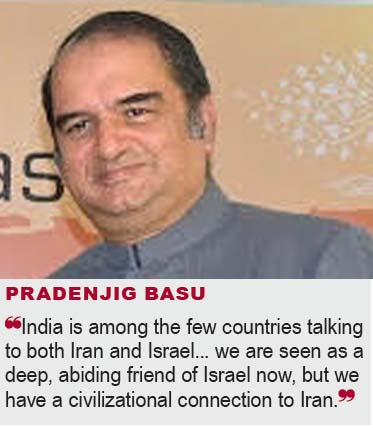 The fact that PM Modi has just come back from Israel; I think it was a very symbolic and important step. It was very well known that Iran was about to be attacked and yet he went. I think it was a courageous and symbolically important decision. So, we are seen as a deep, abiding friend of Israel now. Iran and us have strategic convergence with regard to how to deal with Pakistan.
You know, the Chabahar port, I mean, that, I think, outlasts this particular regime. You know, there’s a civilizational connection between India and Iran going back 3,000 years. So, we need to harness that and try to play peacemaker if we can.
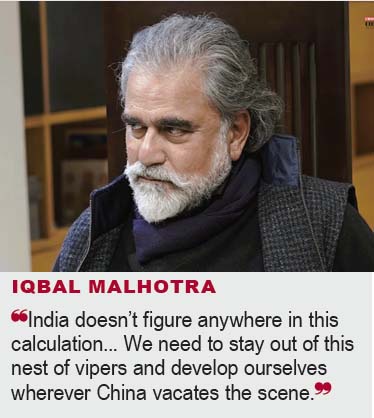
Iqbal Malhotra: India doesn’t figure anywhere in this whole calculation, right? The Chabahar port was handed over by Iran to the Chinese in 2025, March, when they had a naval exercise with the Iranians and the Russians and the Pakistani observers were present over there. So, let’s forget about Chabahar.
Iran is going to degenerate into civil war by India openly aligning with Israel and demonstrating that one day before the war, has sent a very poor signal to the Iranians. I don’t think there’s any love lost. This man, Mr. Abbas Araghchi, the foreign minister, has called Prime Minister Modi’s visit to Israel as regrettable. It tells you what the ancient regime in Iran is thinking. We don’t know who all are going to survive, what is going to be the command structure, but I will bet my last dollar that civil war is breaking out.
The attacks by the Americans and Israelis are in the day, and at night, the anti-Islamic and anti-Hijab forces are dominating the street. Those anti -Islamic forces will gain ascendancy because the people of Iran do not want to live in a repressive regime of the mullahs. Let’s be very clear this whole battle for democracy is also going on in Iran. As far as India is concerned, India is no longer a neutral player. India is aligned with the Israelis and the Americans.
 We have chosen sides in this war. We need American technology. We need Israeli technology and Israeli help. So, we cannot play the role of an interlocutor. And look what the Iranians did to the interlocutors of the Omanis in the Middle East. They bombed Duqm. So where is this chaos in Iran – no one is going to speak for them collectively. This civil war is as bad as Iraq, probably even much worse.
Navin Berry: Okay, thanks Iqbal. General Pannu, quick answer and then General Shivani.
General Pannu: I’m glad Iqbal said that India does not figure in. But you know, I’ll just cover what Prasenjit said, something that Syria is not going to back Hezbollah. You see, the fact is that these are not stable states in any case. These states are unstable. The Russians may have passed on to the Israeli -American domination but they can’t control it. They can’t absolutely control it.
It is rubble and therefore there will be discord in these states and therefore it can go into any direction. Only stable states also sometimes you can’t predict. Iraq-like situation of course there is a possibility. But what will happen if the Persian Gulf is going to be completely in a state of lockdown? You see, the point is that how much Saudi Arabia, how much all the countries, the Gulf countries, including Iraq are dependent on the Persian Gulf, huge number of economies are dependent on Persian Gulf.
So therefore, there will be a large understanding not to allow the Persian Gulf to remain in this kind of a turmoil for very long. So therefore, a couple of things that we need to even understand is what is going to be the future of mullahs? You see, mullahs are a power in themselves. So therefore, they will have one layer of understanding. What is the role of leaders? You see, leaders are also going to go into elections.
They’ve got to win elections in domestic constituencies. What are the roles of militaries? And most important is, what are the roles of business houses who are dealing with the business of war? There are traders who will also decide, military equipment traders, the traders of politics, there are people who are making money.
Navin Berry: So, what is your lesson for India – for us sitting here?
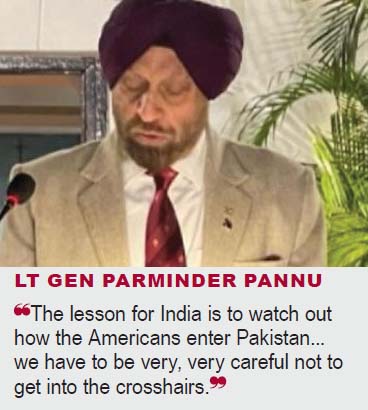
General Pannu: I think the lesson for India is to watch out how the Americans enter Pakistan and how Pakistan would take advantage of US support, they might even start opening up against India asking for more equipment and assurance. Not to do anything because Americans would want to go back into Afghanistan, as Iqbal was talking about, once their back is secure, the Pakistan army will have to earn their own future by trying to bring relevance to the people by saying that we will avenge India. And secondly, the LEMOA Agreement between India and America, could be used by the Americans to land up in India and ask for bases. The Pakistan – CPEC, as I call it now, it is not economic, it is a military corridor. The CPEC corridor becomes a military corridor even for the Americans.
They may not be able to survive there because the Chinese will play monkey with them.
Navin Berry: Would you say unwittingly we may get drawn into it sooner or later?
General Pannu: Yes, yes. And I think we have to be very, very careful to deal with the situation. Because if you remember, F35 landed here. Where did that F35 come from? It came and landed up in Pune. So, it basically came because it had left the aircraft carrier and it could not land back there. The freedom of navigation exercised by the Americans, Indians would not know how to react to it.
Iqbal Malhotra: The power struggle in Iran has already started. Ayatollah Alireza Arafi has been appointed as the new supreme leader of Iran and there are 2 other people in the fray. One is the President, who is a moderate, Masoud Pezeshkian. And there is Chief Justice Mohseni Ejai, who is a hardline regime loyalist. Now, this Ayatollah Ali Reza Arafi, he lacks close ties to the security establishment. The point is that this is what’s going to happen in Iran. If you look at what happened in the Soviet Union, where different Generals became warlords and those heading public sector enterprises became oligarchs.
This is what’s going to happen in Iran because it’s likely to happen. And if you have muscle and you have the temptation of extracting a toll from shipping, you’re getting your daily ‘hafta’, you’re letting shipping pass through. I think the Chinese are going to find it very, very difficult to deal with the disaggregated power structure in Iran as it is crumbling day by day.
Navin Berry: Where does it all place us in India?
Iqbal Malhotra: I already said that you’re nowhere in the game. And thankfully so. We need to stay out of this nest of vipers. Why should we put our hand into a nest of vipers and get bitten? We don’t need to do that. We need to develop ourselves; we need to step in wherever China vacates the scene and step in actively, economically.
Navin Berry: What happens to the world order?
Iqbal Malhotra: The world order is evolving right now and China is at a disadvantage. It’s on the backfoot. There have been many military purges in China in the last 3 months and a number of their military leaders have been hanged or shot by Xi Jinping, so we have to wait and see what implications hold for China as to what’s happening in Iran. It’s too early to bring a crystal ball and say definitely, there are no definitive answers at this point of time. It’s an open chessboard.
Navin Berry: Iqbal, it’s increasingly apparent in the last couple of months, nothing succeeds better than hard power. So, this is an exercise first in Venezuela, Gaza and now in Iran. There is no rule-based order; there is no morality. Where does it leave us?
Iqbal Malhotra: All those concepts were thrown out of the window when you have a leader of the Western world who has figured a 100 thousand times in Epstein files. Then what are you talking about morality and all these ideals? These are not there. And the rule-based order has been thrown away. President Trump has his sights on Greenland; he is fighting with his own NATO allies for territory because it’s so valuable. And he is himself a victim of PM Netanyahu. I mean if you look at it that way, who calls the shots today? Netanyahu. And who is Netanyahu’s boss, the Mossad.
I would say by that, the Mossad is the most powerful organization today. It has leveraged itself to such a position of power. We shall now see how that power is exercised. I mean we are a nation of 1 .4 billion people. We are courting a nation of 7 -8 million people. So now we are not at power with Israel, we are one of Israel supporters. We need them more. They need us but we need them more.
I think we need to step back from this conflict, save our resources and energy and develop our nation. That’s what we need to do.
Navin Berry: Anything to add to what he said? We should conserve our energy, conserve our resources, our wisdom to ourselves and be neutral. Of course, Iqbal says we are not any more neutral. What is your take?
General Pannu: I think, sometimes our leaders just make statements for looking nice without fully understanding the consequences of what is being said because they want to look muscular within their own people.
So how we communicate with the world collectively is extremely important. There are 1000 channels, formal, informal channels which are active with 6 debaters sitting on each channel and constantly talking about it. Imagine 6000 people constantly giving out their own analysis. So, we have a lot of media ‘akharas’ which are also going to be impacting how India is thinking.
A lot of people will react to these ‘Akhadas’ and start making policy matters to make themselves look relevant and good, which ultimately will make India look very confused and whatever gets said or unsaid will get done or undone very differently. I think that is one big lesson that we need to learn.
Navin Berry: So, let me ask you a counter question to that. How do we differentiate between our domestic compulsions and our international interests? How do we bifurcate?
General Pannu: I should not be saying it. It looks bad. Pakistanis control the narratives very well. There is 1 agency ISPR that controls the narrative. In India you cannot control the narrative but you can generally build a narrative for others to follow. For this, it is not the best time to get into the crosshairs. So rather than individual people sitting on high tables and low tables making independent statements I think one has to be very clear about it and we need to speak with one voice which is a sane voice and maybe silence is better than any voice.
But externally I think the Trump administration is going in one direction and the American people are going in one direction because it is possible also that they don’t want America to get into war. If the Americans are going to get embroiled in this more, the domestic constituency of America may not permit the Trump administration. So he might get more radical within and become very emboldened with some victories of regime change and start striking lesser strong countries like Greenland. That will also put regions like Europe under a lot of pain.
Navin Berry: What is a chance of a civil war in Pakistan?
Iqbal Malhotra: I have something I want to add here. Who is today in-charge in the White House. Who is presiding over the Situation Room in the White House. Vice President JD Vance is running the show in Washington DC. President Trump has retreated to Mar-a -Lago. The Defense Secretary and I think the Treasury Secretary came to Mar -a -Lago to meet with him. But the conduct of the war is being run by JD Vance.
If this war backfires, and if the Americans have to put boots on the ground, you can bet that Trump will lose the midterms in November and he may then be retired and JD Vance will take over the reins. JD Vance is in the same position that Dick Cheney was with Goerge Bush junior. That is where the power shift is. So you have to figure out what JD Vance is going to do because I don’t think Trump with these Epstein files and with all his noise is able to think clearly.
In fact, the MAGA people have told him that, if he comes into the White House, his wife, who is Hindu, will be bringing her idols along? So, either you divorce her or you convert her to Christianity. This is the level of debate that is on in America.
Triggers Over Time: Ashok Shivane
The triggers were gradual but cumulative. Over time, Iran constructed a layered deterrence shield through allied non-state actors. This distributed posture enabled calibrated pressure without direct attribution. Disruptions in the Red Sea, persistent rocket arcs in the north and militia consolidation in Iraq were not isolated developments; they formed an interlocking pressure system. Individually containable, collectively destabilising. The October 7 Hamas assault was the tipping point. This network created depth and flexibility. It allowed Tehran to apply pressure with added deniability while retaining narrative leverage in response to direct retaliation.
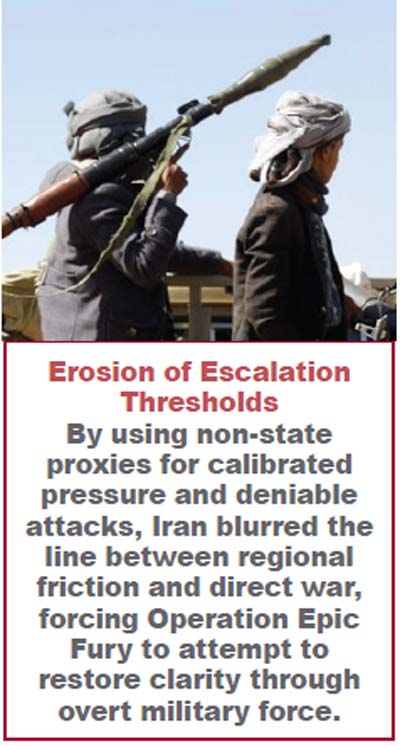 Maritime routes became vulnerable to harassment. Missile and drone capabilities grew more sophisticated. Escalation thresholds blurred. Energy introduced a second layer of complexity. Iran’s reserves are among the largest in the world, though their full exploitation has been constrained but not neutralised by sanctions. In an era where energy security defines geopolitical weight, those reserves assume structural significance. For major importers seeking diversified supply, Iran represents both a hedge and leverage. The convergence of sanctions, energy flows, and great power competition transformed a regional security issue into a systemic variable.
Operation Epic Fury is best understood as strategic signalling rather than episodic retaliation. It signals that incremental pressure has limits. It attempts to restore clarity where ambiguity had become routine. At the tactical level, military metrics are visible and immediate. Facilities are struck. Logistics disrupted. Command chains tested.
Yet no serious strategist confuses tactical success with victory. Strategic success depends on whether behaviour changes and whether the environment becomes more favourable over time.
The first intended shift is psychological. Epic Fury appears designed to reintroduce uncertainty into that calculation. It redefines escalation thresholds and clarifies the costs attached to crossing them. The aim is not permanent suppression but recalibrated caution.
The second intended shift concerns network cohesion. Iran’s regional posture has relied on distributed non-state actors capable of coordinated pressure. Disrupting that connective tissue reduces synchronisation. It complicates planning. Even limited disruption of coordination reshapes escalation dynamics and complicates synchronised pressure. The value lies not in elimination but in dilution and hesitancy.
The third intended shift touches energy security. Energy corridors linking the Gulf to global markets remain a lifeline. Disruption leads to economic volatility and political impact. By demonstrating readiness to secure those arteries, the operation seeks to reduce perceived vulnerability. Stability in shipping lanes translates into stability in alliances. Energy security is increasingly central to global powerplay and influence.
The most consequential variable is the evolving contest between established and rising powers. Strategic influence now flows through trade architecture, financial systems and energy security. Control over maritime routes and hydrocarbon access underwrites economic momentum. Within this broader configuration, actions that stabilise or disrupt energy corridors carry implications far beyond their immediate theatre. Operation Epic Fury must therefore be read within the context of systemic competition between the USA and China, where regional stability intersects with global power transition.
Three alternative trajectories remain plausible. First, controlled coercion succeeds, restoring deterrence without structural escalation. Second, retaliation cycles intensify through proxies, widening instability while avoiding direct war. Third, internal consolidation within Iran produces a more securitised leadership posture, increasing regional assertiveness despite tactical setbacks. The durability of Epic Fury will depend not on battlefield metrics but on which of these pathways begins to dominate.