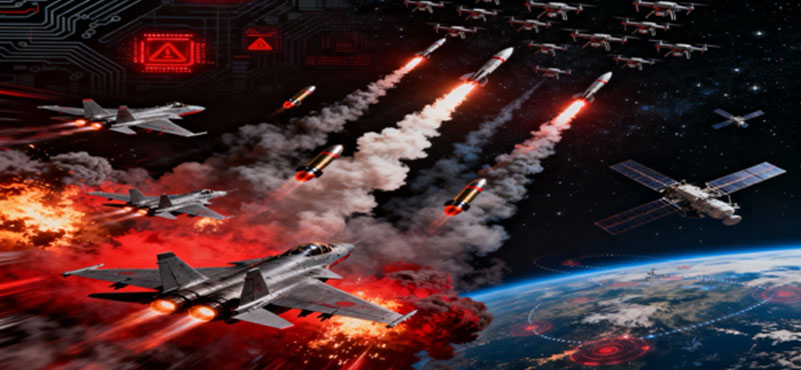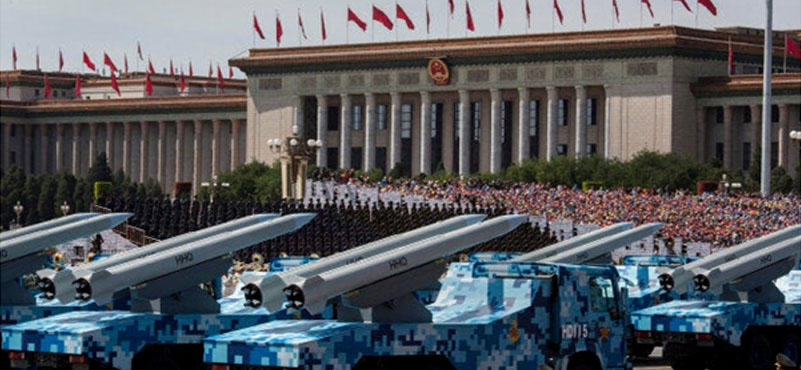
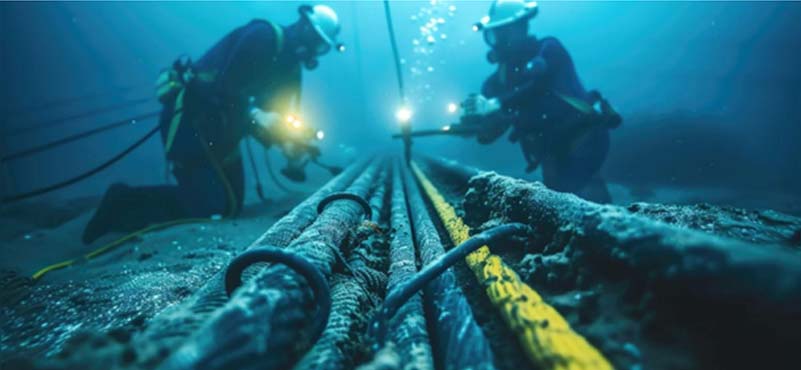
While wars continue to be fought visibly on land, air, and increasingly in cyberspace, a quieter but potentially more disruptive dimension of conflict is emerging beneath the oceans.
The Day the World Goes Silent
It will not begin with spectacle.
There will be no missiles, no troop movements, no dramatic escalation visible on screens. Instead, the first signs will be systemic and disquieting. Financial transactions will stall across continents. Stock exchanges will freeze. Aircraft navigation systems will degrade. Governments will struggle to maintain secure communications.
Within hours, the realisation will emerge: the crisis is not cyber, nor conventional.
It lies beneath the ocean.
The modern global order—digitally integrated, economically synchronised, and strategically interdependent—rests on a largely invisible physical backbone: over 1.4 million kilometres of submarine cables carrying more than 95–99 percent of global data traffic. These cables underpin not only the internet, but financial systems, military communications, and the everyday functioning of states.
What appears to be a virtual world is, in reality, anchored in fragile physical infrastructure laid across the seabed. This dependence creates a critical strategic condition: the most advanced systems of modern civilisation rely on the least visible—and least protected—layer of infrastructure.
The “cloud” is not in the sky—it lies on the ocean floor.
Hidden Architecture of Globalisation
The seabed hosts a dense and expanding infrastructure ecosystem that functions as the operating architecture of globalisation.
This system is not singular, but layered—integrating data, energy, power, water, and emerging resource networks.
- Fibre-optic Cables. At its core lies the digital nervous system: submarine fibre-optic cables. These cables enable real-time financial flows, cloud computing, and military command structures. Their dominance over satellite systems is structural, not incidental—offering far greater capacity and lower latency. Yet they are physically slender, geographically exposed, and concentrated along predictable maritime routes.
- Oil and Gas Pipelines. Parallel to this runs a network of subsea oil and gas pipelines that sustain industrial economies and anchor national energy security. Their fixed geography and strategic importance make them high-value targets in any conflict scenario.
- Subsea Electricity Grid. A third layer is the rapidly expanding subsea electricity grid. These cables connect national power systems, enable offshore renewable energy, and support cross-border electricity trade. As the global energy transition accelerates, this network will become increasingly central to economic resilience.
- Subsea Freshwater Pipelines. Beyond these well-recognised systems lies a less visible but equally critical layer. Coastal desalination plants depend on seawater intake and brine discharge pipelines. In water-scarce regions, these systems are not supplementary—they are foundational. Freshwater subsea pipelines, though less common, sustain entire populations where alternatives are absent.
Emerging infrastructure adds further complexity. Carbon capture and storage networks transport CO₂ to subsea reservoirs, while deep-sea mining systems are expected to underpin future supply chains for rare earths and critical minerals.
The seabed is no longer a passive transit space—it is a layered domain of strategic infrastructure.
Scale of Dependence and Systemic Fragility
The significance of this architecture lies not only in its scale, but in the depth of dependence it creates.
Nearly all global data flows through subsea cables. Energy systems rely on offshore and transnational pipelines. Water security in many regions depends on desalination infrastructure. These systems are tightly interconnected.
This creates cascading vulnerability. A cable disruption slows financial systems and communications. Energy disruptions halt industrial production. Water infrastructure failures trigger immediate societal stress.
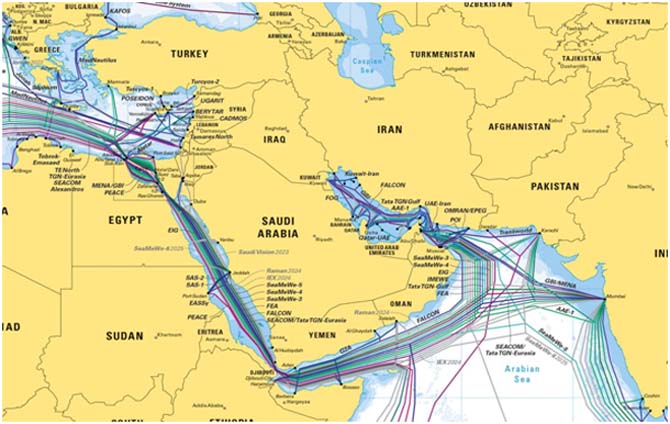
Infrastructure also converges geographically. Critical systems pass through narrow chokepoints such as the Red Sea, the Mediterranean, and the Strait of Malacca. These corridors combine high infrastructure density with limited redundancy, making them strategic pressure points.
Despite the appearance of global connectivity, resilience is uneven. Cable routes are concentrated, repair capacity is limited, and restoration timelines can extend from days to weeks. The system is efficient—but not robust.
Globalisation has optimised for efficiency, not resilience—and the seabed is where this imbalance is most visible.
Anatomy of Vulnerability
The vulnerability of subsea infrastructure is structural.
- Scale without surveillance. Vast stretches of seabed remain unmonitored, with no integrated global system for real-time detection. Monitoring is fragmented and uneven.
- Physical exposure. Cables are thin and lightly protected. Pipelines, though stronger, remain vulnerable to targeted disruption. Water systems are often located in shallow, accessible zones.
- Repair constraint. Restoration requires specialised vessels and complex operations. In contested environments, delays can be prolonged, extending the impact of disruption.
- Attribution. Determining whether damage is accidental or deliberate is inherently difficult. Even when vessels are identified, intent remains ambiguous.
The seabed combines high-impact vulnerability with low attribution—making it uniquely suited for covert disruption.
From Accidents to Sabotage: Emerging Patterns
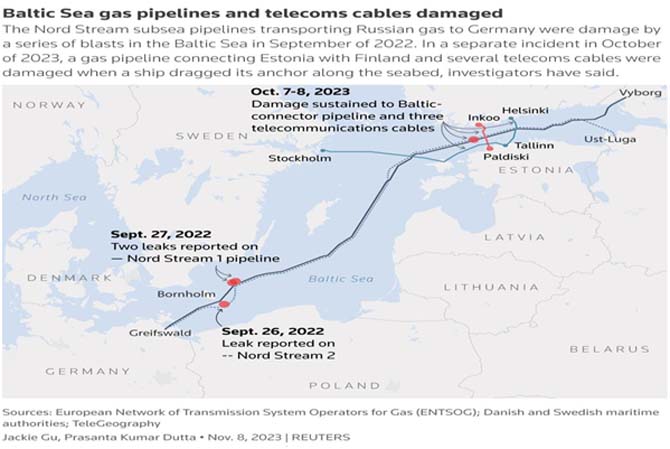
Historically, most subsea disruptions were accidental. Anchors, fishing activity, and environmental factors accounted for the majority of incidents. That reality is changing.
The Nord Stream pipeline sabotage demonstrated that subsea infrastructure can be deliberately targeted with precision while preserving ambiguity. It established a precedent for strategic disruption without overt escalation.
Recent incidents in the Red Sea have affected multiple cable systems linking Europe, the Middle East, and Asia. Occurring in a conflict-adjacent zone, these disruptions highlight the vulnerability of chokepoints where infrastructure is densely concentrated.
In the Baltic Sea, repeated damage to cables and pipelines suggests a pattern of probing—testing vulnerabilities and response thresholds. Similarly, incidents in the Indo-Pacific indicate the use of incremental disruption to exert pressure without triggering escalation.
Disruption is no longer random—it is increasingly strategic.
Seabed Warfare and Hybrid Conflict
The targeting of subsea infrastructure aligns with the broader evolution of hybrid warfare.
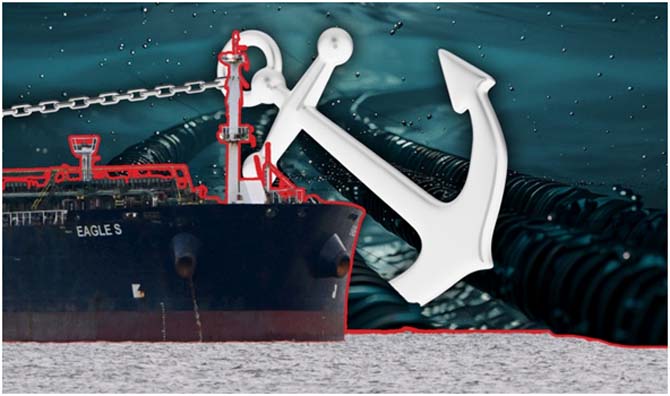
Seabed operations are covert, deniable, and disruptive. They operate below the threshold of war, yet can produce significant economic and strategic effects. Attribution challenges weaken traditional deterrence, enabling actors to act without clear consequences. This domain also blurs the line between civilian and military targets. Subsea infrastructure is privately owned but strategically indispensable, embedding the battle-space within civilian systems.
The most concerning development is the potential for coordinated disruption across domains. A combined attack on cables, pipelines, and water systems could produce cascading effects—communication breakdown, energy shortages, and humanitarian stress. Water infrastructure is particularly vulnerable. Located in shallow waters and lightly protected, it offers immediate impact. In desalination-dependent regions, disruption can translate rapidly into crisis.
Seabed warfare transforms interdependence into strategic vulnerability.
Legal Vacuum and Governance Failure
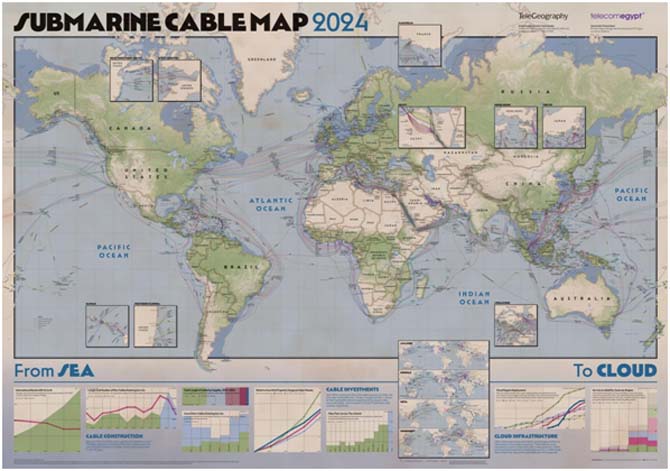
The legal framework governing subsea infrastructure is anchored in the United Nations Convention on the Law of the Sea. While it guarantees freedoms and provides limited protections, it is not designed for contemporary threats.
UNCLOS assumes cooperation, not contestation. It addresses accidental damage, not deliberate sabotage. Enforcement mechanisms are weak, and jurisdictional complexity complicates response.
Governance is fragmented among states, private operators, and bodies such as the International Cable Protection Committee. There is no unified framework for protection or response. Most critically, there is no deterrence architecture. No clear red lines exist. No established norms govern response to sub-threshold attacks.
Critical global infrastructure is governed by peacetime law in an era of persistent grey-zone conflict.
India’s Strategic Exposure
India’s rise as a digital and economic power is deeply dependent on subsea infrastructure.
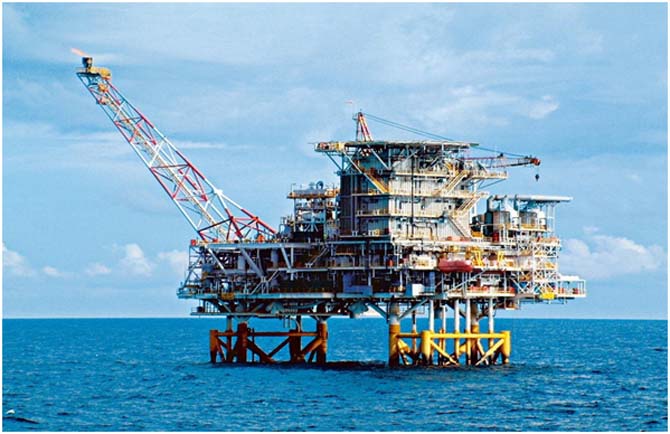
Digital connectivity is concentrated at a limited number of landing stations, particularly around Mumbai and Chennai. This creates a structural vulnerability where a few nodes sustain a vast national network.
Energy and water systems add further exposure. Offshore oil and gas infrastructure and expanding desalination capacity are critical yet lightly protected. Disruption in these sectors would have immediate economic and societal consequences.
Security responsibilities are distributed across multiple agencies, including the Navy and Coast Guard. However, a unified seabed security doctrine remains absent. Geographically, India sits at the centre of the Indian Ocean—a major global infrastructure corridor. At the same time, increasing activity by external actors, including China, adds a layer of strategic complexity.
India’s rise is increasingly tied to its ability to secure the seabed.
Way Forward: Doctrine and Deterrence
The evolving threat landscape demands a shift from passive protection to active strategic design.
- Seabed Domain Awareness must be developed through integrated surveillance and monitoring systems.
- Infrastructure resilience must be strengthened through diversification and redundancy.
- Subsea systems must be formally recognised as critical national infrastructure, bringing them into the core of security planning.
- Military doctrine must expand to include seabed protection, supported by specialised capabilities and technologies.
At the international level, India can play a leading role in shaping norms and building cooperative frameworks for subsea security. This points toward a new strategic approach:
Deterrence Through Seabed Security
Final Conclusion
The seabed has emerged as the unseen foundation of modern power.
It carries the world’s data, energy, water, and future resource networks—yet remains under-protected and under-governed. The defining paradox of the modern era is clear:
The more connected the world becomes, the more vulnerable it grows.
In this evolving landscape, conflict may not be declared—it may be experienced as disruption. Power may not be displayed—it may be exercised silently.
The nations that will shape the future will not merely command the surface—they will secure the depths.
ABOUT THE AUTHOR

Lt Gen Rajeev Chaudhry (Retd) is a social observer and writes on contemporary national and international issues, strategic implications of infrastructure development towards national power, geo-moral dimension of international relations and leadership nuances in changing social construct.