The Red Fort blast of 10 November and the unravelling of the Faridabad module mark a defining moment in India’s contemporary fight against terrorism. The bomb struck at the symbolic heart of the nation – the Red Fort – the entire plot of terror had been building up quietly, almost invisibly, in an ordinary urban neighbourhood. Together, they reveal how the nature of terrorism has changed—more subtle, decentralised, educated, more networked, and far more difficult to detect.
Terror springs from a convoluted ideology and seeks to create fear in the minds of people. The symbolism of the Red Fort–India’s seat of memory, power and identity–makes the attack a psychological assault as much as a physical one. And the discovery of 2,900 kilograms of ammonium nitrate–one of the largest illegal stockpiles in recent years–along with bomb making accessories, shows the mammoth scale of preparations by the group. The Faridabad module blossomed silently over almost two years, driven by radicalisation inside spaces once considered entirely safe: colleges, coaching centres, hospitals, and urban flats.
If terrorism in the 1990s and 2000s was about camps, borders and infiltrations, the new reality is chillingly different. The modern terror module is homegrown, hybrid, quietly networked and digitally assisted, sitting next to you in a classroom or a hospital ward. It does not even need borders. This digital world is borderless.
The Red Fort attack is a wake-up call about the new face of internal security, and about the many vulnerabilities–social, institutional and political–that India has to focus upon.
Internal Security in a Changed Landscape
For decades, India’s internal security narrative has been constructed around predictable theatres: Kashmir, the Northeast, Pakistan-based groups, and the Maoist hinterland. But the Red Fort and Faridabad episodes reveal that the threat is now distributed across states.
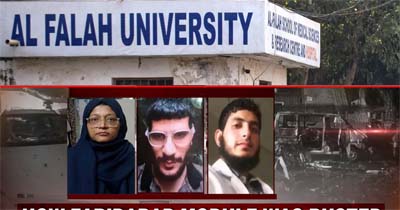 This is not classical militancy but radicalisation combined with technology. The Faridabad group operated for two years without a single local report. There were comings and goings, late-night meetings, strangers visiting at odd hours–yet no alarm was raised. This indifference is as worrying as the radicalisation itself. Some were aloof and some silent out of fear or complicity.
It tells us that the first line of defence–citizens and community networks–has weakened. Neighbours no longer observe; students no longer speak up; institutions no longer mentor; teachers no longer warn. Community policing also had gaps. None of the state intelligence agencies or the Intelligence Bureau got a whiff of the sinister plot building up in the safe confines of a university. But Policing cannot fill this vacuum alone. The society has to bolster law enforcement agencies initiatives against the spread of terror.
Another unsettling revelation is the involvement of trained professionals–especially doctors. This is not new in global terrorism. Al-Qaeda and ISIS drew heavily from engineers, pharmacists, medical interns, and IT experts. The 9/11 attackers trained in German flight schools; several ISIS commanders were trained doctors and software engineers. Kerala’s ISIS recruits, too, included professionals with promising careers.
When a doctor– tasked with preserving life–embraces extremist ideology, the danger is magnified. Doctors have access to controlled chemicals, laboratory equipment, and a level of societal trust that makes their radicalisation particularly menacing. In the ricin plot and the Faridabad module alike, the involvement of medical professionals shows the moral inversion that radicalisation can produce.
The significance of these incidents lies not just in the explosives or the plan, but in the profile and social environment of the recruits. Terror is no longer a phenomenon of the marginalised or the misguided. It is now creeping into India’s most educated spaces
Disturbing Facts We Cannot Ignore
Some of the details emerging from the investigations are deeply troubling–and instructive.
- The first is the magnitude. Moving 2,900 kilograms of explosive material requires transportation channels, storage facilities, loaders, funds, logistics, and safehouses. It also requires collective silence—from those who observed suspicious behaviour but said nothing.
- The complete social invisibility of the Faridabad unit. Students in the same college reportedly sensed unusual behaviour. Residents in the neighbourhood later recalled patterns that seemed abnormal. Yet no one reported these observations. This signals collapse of community vigilance. Societies that do not speak, observe, and report become unwitting enablers of terror. India once had strong community policing instincts–local beat constables, mohalla networks, resident associations. Much of that has eroded.
- The neglect of human intelligence. In an age of digital surveillance, traditional informant networks have atrophied. But radicalisation remains a human process. To detect it, we need humans–teachers, hostel wardens, parents, neighbours, beat officers–who pick up early signs. This two-year gestation period of the module is not simply a policing failure. It reflects the weakening of the early detection systems–institutional, social and technological.
Professional Radical: A Dangerous Global Pattern
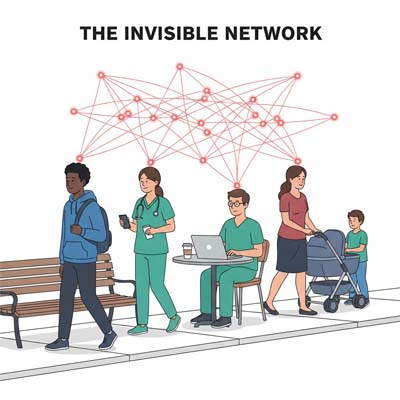 Radicalisation is no longer the domain of the poor, the uneducated or those uncared for. It is also ensnaring those with technical knowledge and professional success.
Why do doctors, engineers or software professionals turn to violent ideologies? Because professional education does not teach emotional resilience or community responsibility. On the contrary, many such individuals feel a false sense of moral clarity–the belief that they understand injustice better than others and are therefore justified in “correcting” it.
This is why Osama bin Laden–an educated engineer from a wealthy family–found such resonance among professionals. The 9/11 plotters, too, were not rural impoverished youth but highly trained individuals operating inside Western systems.
ISIS’s appeal to the educated youth from Kerala, the UK, Germany or Australia demonstrates that radicalisation today is aspirational, not merely rebellious. It offers a narrative of purpose, identity, belonging, and a sense of cosmic justice that education alone cannot fill. One Kerala professor stated that the lure of ISIS on internet came from not violence against enemies but accepting a higher and more purified form of Islamic existence.
Institutional and Policing Lapses
It is important to assess the lapses not as acts of incompetence, but as symptoms of structural limitations.
- The first lapse is poor human intelligence. Beat policing in India is overburdened, understaffed and often diverted to VIP duties or administrative work. This reduces their capacity for sustained local engagement.
- Inter-state coordination remains patchy. Terror modules today operate across state boundaries as if no boundaries exist. But police jurisdictions still function in silos. Real-time coordination is the exception, not the norm.
- Institutional oversight of colleges, coaching centres, and hostels is minimal. These are ideal spaces for ideological indoctrination because they offer anonymity, peer networks and absence of adult supervision. There is no structured mechanism for periodic audits, workshops, or preventive counselling.
- Intelligence agencies often rely heavily on digital intercepts. But the real signals of radicalisation are psychological, behavioural and social–far more visible to peers and teachers than to algorithms.
- There is an issue of complacency. The absence of major terror attacks for several years creates an illusion of safety. But silence is not safety; silence is simply the absence of detection.
Completing the Investigation and Building a Sustainable Counter-Terror Programme
The immediate task is to complete the investigation with clarity, coordination and prosecutorial rigour. Terror investigations often collapse because evidence is poorly collected, chain-of-custody is weak, or FSL reports are delayed.
The police must now:
- Track the financial channels that funded the modules
- Map the digital communication patterns
- Identify mentors, handlers and ideological nodes
- Tie together the Delhi, Haryana and J&K links
- Ensure flawless forensic documentation
- Build a prosecutable case that survives judicial scrutiny
 Recent court judgments have criticised weak investigations and inadequate evidence in terror cases. This cannot be repeated. The success of this investigation will determine whether the next module grows or is deterred.
Parallel to investigation, India must strengthen its deradicalisation architecture. Deradicalisation is not a police programme; it is a societal ecosystem. It must involve schools, colleges, civil society organisations, counselling centres, religious leaders, and local influencers.
No young person becomes radical overnight. There are signs–withdrawal, obsession with purity narratives, online secrecy, identity crisis–that can be detected early by the family, community or teachers. But they need awareness and confidence to act.
Kashmir: The Nerve Centre That Needs Trust, Not Slogans
The Red Fort module’s links to Kashmir are unsurprising. Kashmir remains the nerve centre of ideological recruitment even if operational activity fluctuates.
However, Kashmir’s security cannot be managed solely through force or surveillance. It requires political ownership. An elected Chief Minister must have the authority to coordinate security, engage with communities, and take responsibility for the consequences.
The debate on Article 370 often oversimplifies the problem. Neither its existence nor its removal is sufficient to create or destroy terrorism. Terrorism feeds on alienation, not constitutional clauses. A sustained political process, responsible administrative leadership, and community engagement are essential to stabilise the Valley. Security architecture is in good shape already.
Metros and the New Urban Vulnerability
India’s metropolitan cities must now redefine their internal security dynamics. The threat is not only from bombs or guns but from panic, misinformation, and crowd reactions.
Urban spaces such as malls, multiplexes, markets, hotels, institutions and public transport systems need structured preparedness.
Private security guards–India’s vast but poorly trained security backbone–must be trained in suspicious behaviour detection, emergency response and communication protocols. Every mall, campus and corporate park must undergo periodic joint exercises with the police, including mock evacuations and response drills.
Urban policing, meanwhile, must shift from a reactive to a preventive model–data-driven patrolling, behavioural analysis, regular briefings for establishments, and active engagement with resident associations and youth groups.
Metros are visible, symbolic and densely populated. A single incident can cripple public morale. Preparedness, therefore, is not optional. It is central to urban life.
New Challenges: Cyber-Misinformation, Deepfakes and Hate Mobilisation
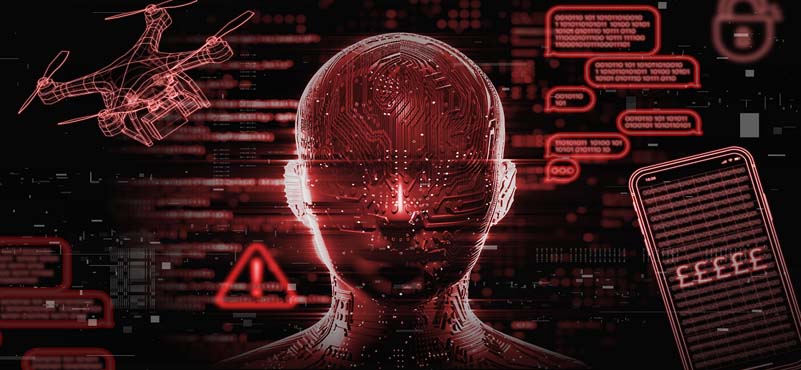
Modern terror modules do not only rely solely on explosives. They rely on information warfare. Encrypted platforms allow radicalisers to reach individuals who would never attend a physical meeting. Deepfakes can spark communal fear within minutes. Hate calls can mobilise crowds faster than any field commander. Rumours can cause stampedes or riots more effectively than bombs.
India needs integrated cyber cells, behavioural experts, rapid reporting mechanisms and continuous digital patrolling. Cyber radicalisation is the new frontier of internal security, and it is here to stay.
Building Public Confidence Without Noise or Sloganeering
Terrorism’s true power lies not in explosives but in fear. It seeks to create a sense of helplessness and erode trust in institutions. The best antidote to fear is not rhetoric but quiet, steady, professional action.
Governments and police forces must communicate with honesty, respond swiftly to public concerns, and avoid sensationalism. Counter-terrorism is a long road that requires patience, resilience and mature leadership.
India’s capacity has grown tremendously over the years. The systems exist. The experience exists. What is needed now is clarity, cooperation, and a recommitment to community partnership.
The Red Fort and Faridabad episodes are not simply warnings. They are reminders that the new grammar of terror is evolving–and so must our collective response.
ABOUT THE AUTHOR
 Yashovardhan Azad is a former IPS Officer who has served as Central Information Commissioner, Secretary Security GOI and Special Director Intelligence Bureau.