The US Supreme Court judgement on tariffs: What comes next?
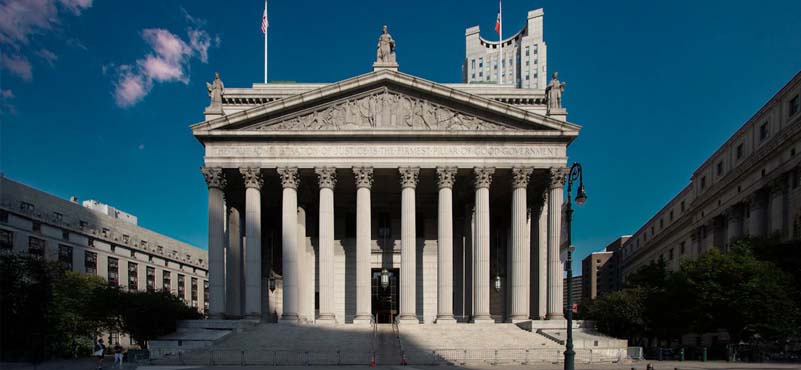
In a landmark ruling yesterday, the US Supreme Court has struck down the sweeping tariffs that President Trump had been imposing across the world. Essentially, the court upheld the argument that the International Emergency Economic Powers Act (IEEPA) did not grant the requisite powers to the President for imposing such tariffs.
For long, the Trump legal team had contended that this law allowed the President to ‘regulate imports’ during an economic emergency. As per them, the 1.2 trillion $ deficit was such an emergency. Further, they had argued that tariffs were a legal and justifiable means of regulating imports.
The court has disagreed with a 6-3 majority vote. Understandably, Trump has cried foul at this big dampener. It does undermine his authority and calculations on the global stage to a fair extent.
To counter the judgement impact, he has immediately signed off an all-round global tariff increase by 10%. A further increase to 15% is also being contemplated. This has been done by invoking Section 122 of the Trade Act of 1974. The act allows the President to impose tariffs of up to 15% to address a ‘large and serious balance-of-payments deficit’.
This desperate proviso can be applied for a maximum of 150 days, post which, it will require congressional approval for extension. With this development, trade as a strategic and political tool/ weapon is expected to remain, but maybe not with the same sharp edge that it was threatening to be earlier.
Before we become ecstatic about these developments, a quick look at the implications of this ruling would be in place.
Most obvious is that the order sets aside the various tariffs that had been imposed under the ambit of the IEEPA. These tantamount to an estimated 60% of the total tariffs. This however does not mean that the President cannot explore other instruments under the law to reimpose tariffs.
Such alternatives do exist in US statutory law although they do not come anywhere close to the blatant authority that the present incumbent assumed under the IEEPA. Exercising them will take time and effort and maybe another round of litigation.
What is not clear from the order is that whether any refunds would be made to the US companies who have paid escalated rates of tariffs in the interim period? Given the quantum of trading, even if these claims are held tenable, refunds could be a very long and messy exercise.
It is important to note that with the increased rate of tariffs, most US trading partners were forced to reduce their selling prices. This was a natural outcome of increased tariffs because the ‘hit’ for the benefit of the govt, had to be mutually absorbed by both, the buyers (US companies) and the sellers (External companies).
So, even if any refunds come through, they will benefit only the US companies. Losses incurred by external companies by virtue of lowering prices to remain competitive, would be conveniently ignored.
Although unquantified, the US as a country, would thus benefit from low cost-price trade, probably to the tune of billions. This corollary was planned or unplanned, is anybody’s guess.
The other point which remains ambiguous is the status of all the trade deals signed under the coercive IEEPA enabled tariffs. Trade by its very nature is competitive and relative. For instance, India agreed to 18% tariffs, keeping in view the figures being imposed on its competitors.
When the agreed tariffs change for the rest of the environment, the original commitments do not remain valid. This holds true for other associated trade-offs also, like restrictions on Russian oil, reciprocal tariffs or quantum of promised trade.
With the amendment to the baseline conditions, these deals are bound to be challenged and if required, re-negotiated. After all, no one would like to be shortchanged by changing dynamics.

The stock markets are an excellent measure of global sentiment. It is significant to note that with this judgement, they have not gone ga-ga or unduly bullish. They have been conservative in a wait and watch mood. One wonders why? Is this not a moment to celebrate that the drama over the last few months has come to an end? Perhaps, not quite true.
Markets, industries and supply chains thrive on political and economic stability as that brings down the risk. With a lowered risk, industries and companies can plan in advance and make prudent financial decisions with greater certainty. They can reduce risk margins and put that money to better use.
In fact, the turbulent events in the recent past have had quite an effect to the contrary. This instability has apparently arisen or rather been created on multiple politico-military fronts.
Parallelly, the tempestuous, ever-changing trade and tariff policies have created a ripple effect. The combined adverse impact on businesses has been there for the entire interdependent world to experience.
Leave alone growth, an economy as large as the US, needs trillions in funding to barely sustain itself. The intent, therefore, irrespective of whichever party is in power or whoever the President is, would be to take advantage of such volatility in terms of arms sales, energy consolidation and unequal benefits in trade equations.
All that has altered is that earlier, this approach was not overt like it is now. This behavioural and transactional change has been fast and unexpected.

There may have been short-term economic gains with the seemingly rash and often intimidatory tactics that we have witnessed. The extent of these derived benefits however remains contentious and a subject of constant political debate.
The biggest intangible loss is undeniably that ‘Brand America’ has taken a worldwide beating with these antics. The credibility and trust associated with being a stable, reliable and stabilizing superpower has eroded faster than a shifting sand dune. Restoration will take some doing and ironically, a great deal of undoing.
It is assessed that the US Supreme Court judgement will forcefully initiate a multi-domain recalibration globally. In the larger frame, it will however remain a small hiccup in a desperate endeavour to reclaim fading glory.
The unspoken crisis is almost existential. The harsh reality is that those in the driver’s seat will always find newer ways to push through their desperate agendas by circumventing or navigating through the complex constitutional structure of the US.
Candace Laing, the CEO of the Canadian Chamber of Commerce has captured it perfectly when he says, “….the decision is a legal ruling but not a reset of US trade policy.”
One tends to agree that this much-awaited speed breaker is not earth-shattering, by any stretch of imagination. All it does, is to add more grey to the existing haze. The price of taking the bacon home is probably not going to reduce one wee bit.
Meanwhile, deep in his bones, a pragmatic optimist is searching for reasons to rejoice.
Doing business as usual,
Horax (Casper)
ABOUT THE AUTHOR
 Air Vice Marshal Rajeev Hora is a Qualified Flying Instructor and an Experimental Test Pilot with over 3800 flying hours on multiple types of aircraft. His last appointment was as AOC HQ MAO at Mumbai. Previously held appointments are AOC Adv HQ WAC (Jaipur), Comdt Aircraft and Systems Testing Establishment (ASTE), Deputy Comdt AFA, AOC AFS Bidar and Deputy Technical Manager (Air) in the Acquisition Wing of MoD. He has earlier commanded a Jaguar squadron and was also the Team Leader of the IAF’s Hawk Aircraft Project Team in the UK.