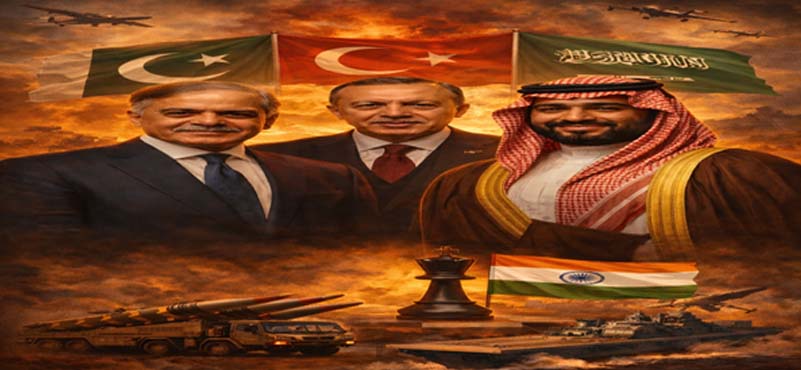
The prospect of a Turkey, Pakistan, and Saudi defence pact, anchored on the principle that an attack on one will be treated as an attack on all, marks a serious inflexion point in India’s external security environment. If it crystallises into a formal understanding, this arrangement will not remain a distant geopolitical abstraction. It will sit directly on India’s western flank and in its extended maritime neighbourhood, compressing crisis response timelines and potentially emboldening Pakistan’s traditional risk-taking behaviour.
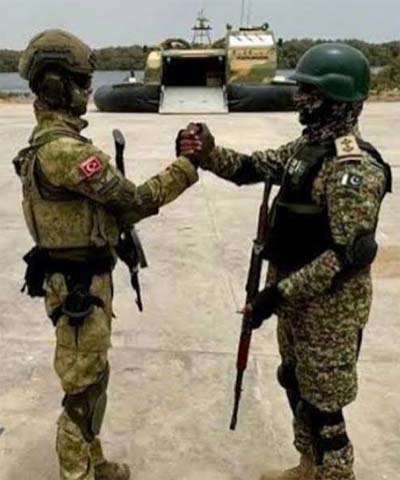
The three countries involved bring different strengths and different motivations to the table. Pakistan is the pivot with nuclear status. It gains political cover, military technology and financial backing that it cannot generate internally. Turkey contributes to battle-tested military technology, especially unmanned aerial systems, as well as an identity as a major player in the Muslim world. Saudi Arabia brings financial muscle, energy leverage and a history of military collaboration with Pakistan.
Collectively, this convergence is intentional although not accidental. Pakistan seeks external pillars to buttress a fragile internal and economic base. Saudi Arabia wants reliable Sunni partners in a turbulent region, and it has long seen Pakistan as a useful asset, both for manpower and for nuclear shadow. Turkey, under its current political leadership, has moved towards a more assertive Muslim identity in foreign policy and has deliberately reached out to partners where it can project influence, sell defence products and gain leverage against both its Western critics and regional rivals.
If these trends are codified into a formal treaty with a collective defence clause, the implications for India multiply. The basic security equation on the western front is no longer a bilateral India-Pakistan problem. It becomes a multi-state arrangement where Pakistani risk-taking is backed by outside money, outside technology and the political weight of at least two significant regional powers.
Viewed from New Delhi, this trilateral pattern raises at least four strategic concerns that cannot be ignored.
The first is the prospect of a qualitatively different military envelope around Pakistan. Turkish systems, if supplied in significant numbers and backed by training and maintenance, can make Pakistani forces more agile, more networked and more capable of sustained, deniable harassment along the Line of Control and the western border. Combined with Saudi funding, this reduces the constraint that Pakistan’s weak economy has traditionally imposed on its military modernisation.
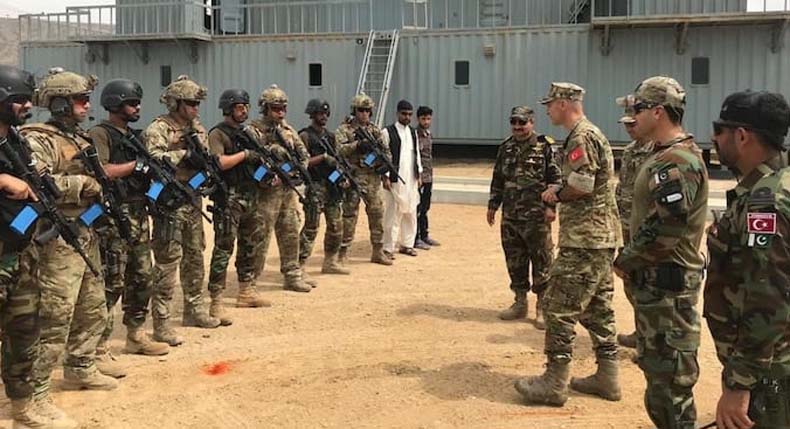
Second, the presence of a political obligation on Saudi Arabia and Turkey to support Pakistan in the event of a conflict could alter escalation dynamics. A formal pact could alter the incentive structure underpinning crisis behaviour. Even if Ankara and Riyadh do not intend to fight on Pakistan’s behalf, their political commitment and their economic leverage will shape how India and the wider international community interpret and respond to a crisis.
The third concern lies in the maritime and energy domains. Saudi Arabia remains one of India’s major suppliers of crude oil. Pakistan, by virtue of geography, sits on the Arabian Sea approaches that carry much of this trade. Even a limited Turkish naval presence or coordination can complicate maritime signalling and surveillance patterns in a crisis. In a tense situation, the combination of Saudi control over energy flows, Pakistani proximity to sea lanes and Turkish maritime ambitions could create subtle but real pressures on India’s decision-making.
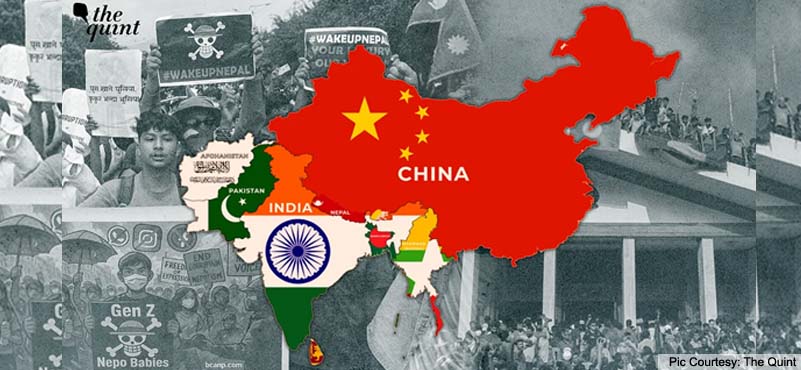
The fourth concern is the overlap between this emerging axis and China’s established presence in Pakistan and the Arabian Sea. Chinese investments in the China-Pakistan Economic Corridor, Chinese involvement in Gwadar and China’s growing naval profile in the Indian Ocean already complicate India’s security environment. A Turkey, Pakistan, Saudi Arabia understanding that leans on Chinese infrastructure and dovetails with Chinese economic corridors would further tighten the web of alignments on India’s periphery.
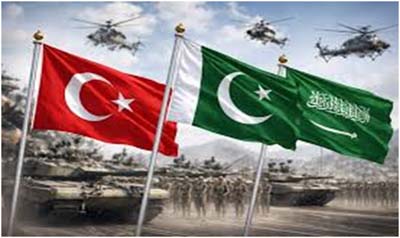
Any serious Indian response must begin with a prognosis of how this axis could evolve over the next decade. Three scenarios are plausible.
In the first scenario, the pact solidifies into a robust security mechanism. Regular trilateral exercises, integrated planning for contingencies and coordinated arms transfers become the norm. Pakistan gains confidence that in any confrontation with India, it will at least enjoy strong financial and political backing, even if direct military participation by Turkey and Saudi Arabia is limited.
In the second scenario, the pact exists on paper but remains shallow. Divergent interests, leadership changes and economic constraints limit its operational meaning. It becomes a signalling device and a framework for defence trade rather than a tightly integrated military alliance.
In the third scenario, internal frictions among the three states, or external pressure from other partners, dilute the pact over time. Pakistan does not receive the level of support it expects. Turkey and Saudi Arabia find themselves pulled in other directions. The arrangement remains more rhetorical than real.
India cannot base its strategy on the most optimistic scenario. It must be assumed that the pact will at least deepen the existing level of military and financial support to Pakistan, even if it does not become a perfect Islamic counterpart of NATO. This assumption leads directly to the question of what India should do.
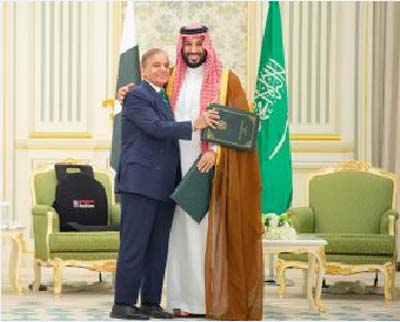
The first line of effort must be to strengthen its military deterrence and future-ready capabilities. Deterrence must be based on denial and domination rather than defence and reaction. Deterrence today is about protecting the nervous system of C5ISR. Power grids, communications, satellites and spectrum dominance matter as much as tanks and aircraft. This reality demands a shift in operational thinking. Multidomain operations must be integrated even before the outset. Intelligence shaping, cyber action, electronic paralysis and kinetic strikes will occur as a single event, not in neat phases. Emphasis must continue to be on stand-off precision strike capabilities and an Indian Rocket Force. There is a need to strengthen the counter-UAS and an integrated layered air defence shield. The objective should be to reach a stage where additional Turkish hardware in Pakistani hands does not fundamentally alter the local balance, because Indian forces can detect, track and neutralise it at an acceptable cost. All these must finally aim at an indigenous inventory. Investment in R&D and an Atmanirbhar defence ecosystem can no longer be a slogan, but must be a reality.
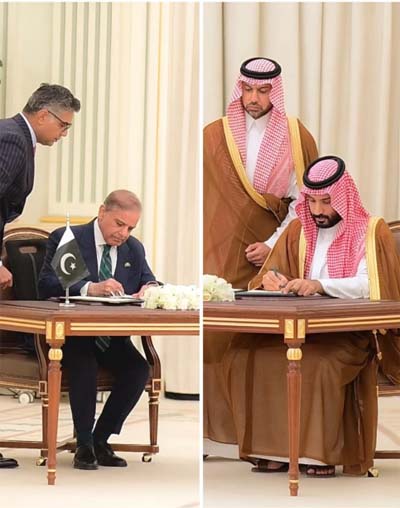
The second line of effort must focus on the maritime domain and energy security. India must diversify its crude import basket and strengthen its strategic reserves. On the maritime side, strengthening the surveillance and interdiction capabilities in the Arabian Sea and around the island territories will enhance India’s capacity to monitor and, if required, influence activity linked to the pact, whether in the form of military logistics or signalling deployments.
The third line of effort lies in diplomacy. India must sensitise Gulf states like the United Arab Emirates, Qatar and Oman and regional players who value partnerships with India and oppose military blocs. Iran also forms part of this equation, particularly through connectivity projects that bypass Pakistan. A more balanced set of relationships in West Asia reduces the scope for any one grouping to present itself as the sole arbiter of security in the region. India must also convey to Pakistan and its allies that any Pakistani military adventurism or proxy war will be dealt with an Iron hand and any external participation will be viewed with utmost seriousness. It also means a steadier approach to partnerships in the Indo-Pacific and Eurasia, to shape an environment that is less favourable to opaque, security-heavy arrangements.
The fourth line of effort is structural and long-term. India needs to accelerate the formulation of its National Security Strategy, overcome hurdles of integrated theatre commands, refine its doctrines and invest consistently in future warfare capabilities. It also means resilient energy security, which is based on diversified imports and strengthening its own energy strategic reserves. It requires India to accelerate its own journey towards a position where no external alignment can easily constrain its strategic choices.
India should resist the temptation to cast the Turkey, Pakistan, and Saudi convergence in purely ideological or anti-India terms. States that appear aligned today can find themselves at cross purposes in a few years. There are known divergences between Ankara and Riyadh, and between both and Islamabad, on regional issues and on their respective leadership roles. Indian diplomacy can, over time, work with those frictions. The immediate task, however, is to prepare for an axis that behaves in a more coordinated fashion, at least where India and Pakistan are concerned.
The emerging pact does not mean that India is encircled, nor does it imply that conflict is inevitable. It does mean that old assumptions about Pakistan’s isolation and its limited external support need to be revisited. A Turkey, Pakistan, Saudi defence understanding that treats an attack on one as an attack on all is a new variable in the equation. China and the newfound bonhomie with the USA towards Pakistan are also variables. Bangladesh is the new chameleon that may join hands with this triad. India cannot ignore it. By strengthening its own capabilities, widening its network of partnerships and maintaining strategic composure, India can ensure that no such axis can dictate terms in South Asia and its national security.
ABOUT THE AUTHOR
 Lieutenant General A B Shivane, is the former Strike Corps Commander and Director General of Mechanised Forces. As a scholar warrior, he has authored over 200 publications on national security and matters defence, besides four books and is an internationally renowned keynote speaker. The General was a Consultant to the Ministry of Defence (Ordnance Factory Board) post-superannuation. He was the Distinguished Fellow and held COAS Chair of Excellence at the Centre for Land Warfare Studies 2021 2022. He is also the Senior Advisor Board Member to several organisations and Think Tanks.