This article introduces geo-moral power as a fourth dimension of influence alongside military, economic, and diplomatic capabilities. It argues that in an era of transactional statecraft and institutional erosion, geo-moral credibility stabilises global order by shaping expectations, legitimising restraint, and enabling bridge-building across blocs.
Doctrine of Transactional Coercion
Trumpism is best understood not as an episodic deviation but as a coherent doctrine that challenges the normative foundations of the post-1945 global order. Scholars increasingly note that the crisis confronting global politics is not solely one of power transition, but of norm erosion—where leadership becomes decoupled from restraint and responsibility. Trumpism accelerates this erosion by redefining American power as leverage rather than stewardship.
Unlike traditional US grand strategy, which blended material power with alliance management and institutional legitimacy, Trumpism privileges transaction over trust and coercion over consent. Alliances are framed as financial liabilities, institutions as constraints, and diplomacy as deal-making. This shift replaces predictability with volatility, weakening deterrence and confidence alike. Trumpism’s defining feature is the personalisation of statecraft. Decision-making becomes leader-centric, improvisational, and detached from institutional expertise. While this projects decisiveness, it erodes continuity and injects uncertainty into global relations. This rupture has renewed attention on non-material dimensions of influence—particularly geo-moral credibility as a stabilising force in periods of systemic disorder.
Punitive Tariffs and Economic Nationalism
Trumpism’s most visible expression lies in its embrace of punitive tariffs as tools of state power. Trade deficits are framed as exploitation, and tariffs as expressions of sovereignty. This logic collapses the distinction between economic policy and national security, legitimising extraordinary measures even against allies.
Such practices erode the credibility of rules-based trade. Unilateral tariffs, often justified on security grounds, weaken dispute-settlement mechanisms and encourage retaliation. Empirical evidence shows higher consumer costs, reduced investment, and fragmented supply chains rather than sustainable re-shoring. Domestically, promised gains have been limited. Automation, skills mismatches, and higher input costs blunt manufacturing revival, while inflationary pressures rise. Internationally, tariff nationalism accelerates trade fragmentation and disadvantages developing economies dependent on open markets.
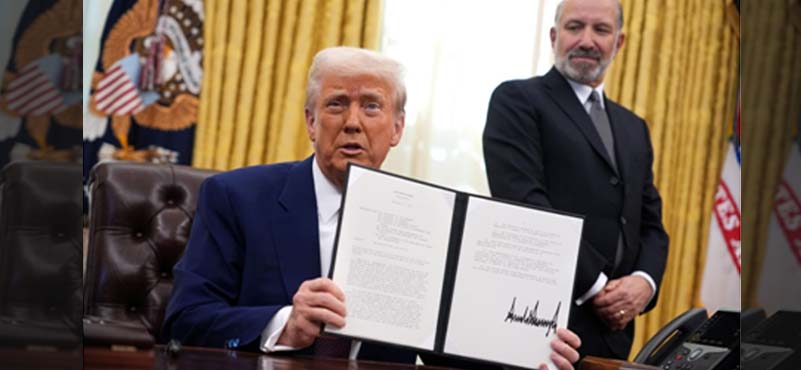
Davos: Trumpism on the Global StageTrump’s address at the World Economic Forum in Davos offered a distilled articulation of Trumpism’s economic and strategic worldview. Presented before an audience emblematic of managed globalisation, the speech framed tariffs as instruments of national renewal, celebrated economic sovereignty over regulatory coordination, and cast international cooperation as a series of transactional bargains rather than rule-bound commitments. Multilateral institutions were tolerated insofar as they served immediate national advantage, but dismissed when they constrained unilateral action. The deeper significance of the speech lay not in its rhetoric, but in its normalisation of disruption: global markets were embraced, but global rules were treated as optional. In doing so, Trumpism recast interdependence from a shared stabiliser into a negotiable liability, reinforcing uncertainty rather than confidence in the global economic order.
Coercive Geopolitics and Strategic Regression
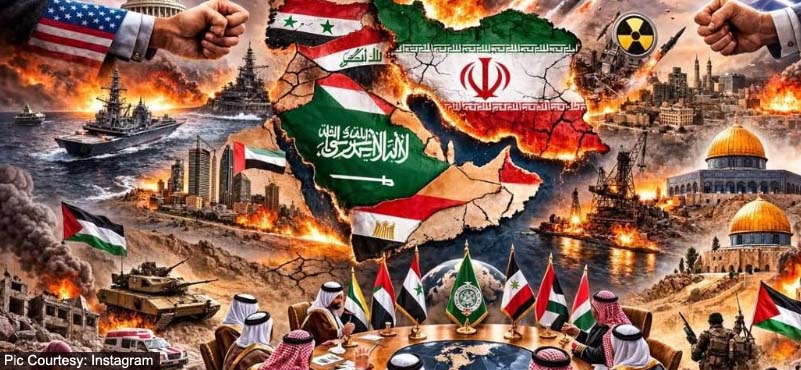
Trumpism also normalises coercive geopolitics. Rhetoric surrounding territorial acquisition, regime change, and conditional sovereignty weakens long-standing taboos embedded in the UN Charter. Even when symbolic, such discourse lowers normative thresholds for revisionism. Pressure on alliance commitments further destabilises deterrence. Treating collective defence as transactional undermines reassurance and invites strategic hedging. In a nuclear-armed, interconnected world, reviving 19th-century power politics multiplies systemic risk rather than restoring order.
Board of Peace
The proposed Board of Peace reflects Trumpism’s impatience with institutional constraints. While framed as efficient, selective governance conflates speed with legitimacy. Parallel structures hollow out existing institutions rather than reforming them. Peace divorced from process becomes transactional, reinforcing double standards and contested authority. Historically, exclusionary security arrangements fracture once interests diverge. In a multipolar world, legitimacy—not coercion—remains the foundation of durable peace.
Strategic Self-Harm: Consequences for the United States
By privileging leverage over legitimacy, Trumpism undermines America’s intangible assets: trust, credibility, and agenda-setting power. Surveys show declining confidence in US leadership during periods of unpredictability. Weaponised finance and sanctions encourage de-dollarisation efforts, gradually eroding structural advantages. Civil-military norms also face stress as security commitments are politicised. Power preserved without purpose thus yields diminished influence.
Fragmentation, Fear, and the Rise of Middle Powers
Global order is not stabilising into multipolar balance but fragmenting under anxiety. States turn to minilateralism and strategic hedging, diversifying partnerships rather than committing loyalties. Defence spending rises driven by uncertainty rather than ambition. This flux creates space for middle powers to shape norms and agendas. Their influence derives from credibility and coalition-building rather than domination. Yet without stabilising anchors, fragmentation risks hardening into conflict.
India’s Strategic Dilemma
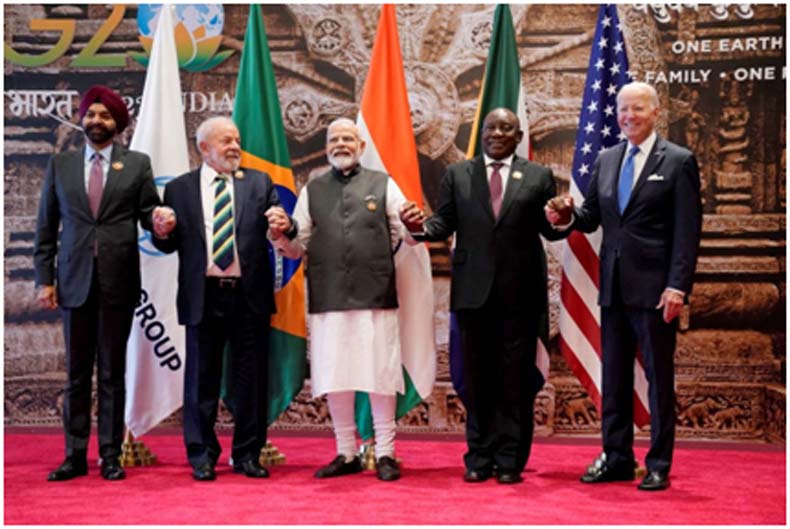
India confronts unique constraints: continental threats, development priorities, and deep global integration. Strategic autonomy thus functions as risk management rather than ideology. India’s diplomatic pluralism—maintaining ties across blocs—provides credibility in a fractured system. Participation in diverse forums enables agenda-shaping without formal alignment. The challenge lies in engaging power without internalising transactional logic.
India as a Geo-Moral Anchor
Geo-moral power operates as a fourth dimension of influence, complementing material capabilities by shaping expectations and legitimising restraint. India’s emphasis on sovereignty, dialogue, and development aligns with this role. This is not moral arbitration. It demands consistency, restraint, and principled action without passivity. Overreach or selectivity would erode credibility. India’s strength lies in bridging divides rather than constructing rival poles.
From Anchor to Actor: Restoring Equilibrium
India can contribute by acting as a trade and technology bridge, institutionalising digital public infrastructure as a global public good, revitalising development-centric multilateralism, and engaging in security cooperation without militarisation. Reforming institutions from within counters parallel governance proposals.
Conclusion: Power Without Purpose, Stability With Meaning
The era of Trumpism underscores a central paradox of contemporary geopolitics: power exercised without purpose accelerates disorder rather than restoring control. Tariffs wielded as weapons fracture interdependence; coercive diplomacy weakens alliances it claims to strengthen; and transactional notions of peace erode the legitimacy on which durable order depends. The result is not strategic clarity, but systemic anxiety—visible in institutional bypassing, strategic hedging, and the normalisation of coercion. This is not merely a crisis of policy, but of leadership. As the post-war synthesis of power, restraint, and legitimacy fractures, order becomes increasingly contingent rather than stable. Yet disruption also reallocates responsibility. In an unanchored system, influence will flow less from dominance than from credibility.
India’s relevance lies here—not as a hegemonic challenger, but as a stabilising actor capable of anchoring conduct without imposing control. In a world drifting toward transactional peace, order cannot be bargained into existence; it must be sustained through purpose, restraint, and principled persistence.
ABOUT THE AUTHOR
 LLt Gen Rajeev Chaudhry, a former DGBR, is a writer and social observer. He also pursues his passion for the creative arts in his free time.