
“If there is a Go – No Go situation, it is obviously a No Go. The stakes are too damn high!”
Loss of life in every form is tragic. However, an air crash makes sensational news, especially if a dignitary happens to be amongst the deceased.
In the recent Baramati crash, five people, including the aircrew and Dy Chief Minister of Maharashtra, Mr Pawar unfortunately lost their lives. In this case, even before the preliminary findings came out, conspiracy theories about sabotage started doing the rounds. Undoubtedly, most of them were politically motivated.
The DGCA is the Indian regulator which is responsible for laying down policy for ensuring safety of operations. Ever since the accident, they had been under intense media scrutiny for their role in the entire episode. Apart from calls for a prompt enquiry, the question being asked was, “Could tighter regulatory control have helped in avoiding this mishap?”
Accordingly, the DGCA has now come up with updated regulations for VVIP and VIP flying after a great deal of deliberation. Most of the content in the new orders does not appear to be much different than the earlier orders, except a stronger reiteration of the captain’s authority.
Incidentally, there have been several air crashes in India involving state owned aircraft and charter flights with dignitaries on board. Election season is when such flying picks up momentum.
The politicians want to cover maximum territory in minimum time and that is perfectly understandable. Fixed wing and rotary wing aircraft are hired to take them across their constituencies.
Many a times, the aircraft land on unlicensed strips and makeshift helipads which are not equipped with modern navigational aids and ATC facilities. Operations at these places are more challenging than routine airline flying. They do require specific orders to be put in place for addressing safety concerns.
To be fair to the DGCA, regulations for such operations have not been lacking. The weather minima for pilots and other infrastructure criteria for utilizing these landing grounds have been in place for a long time. These have been fine-tuned over the years from lessons learnt from past incidents/ accidents.
The captain of the aircraft has also been legally responsible for the safety of the aircraft since times immemorial. There is never a requirement for a captain to violate and veer away from the framework of the laid down regulations.
So where lies the problem? It evidently lies in violation of these orders. It is the causation of this non-adherence which needs to be effectively addressed for any real change in the long run. Let us study this a bit more.
Sometimes, when weather conditions are marginal, the dignitary does not quite understand or refuses to accept the compulsions of the aircrew. A general belief is that since the aircraft has been chartered, we have full right over its utilization. The intangible factor that is often overlooked is the pressure imposed by the dignitary.
The reality is that the passengers have no clue about flight safety and weather hazards. They take safety for granted, believing that it is the pilot’s duty to manage any such contingencies. They do not understand that refusing to fly under certain limiting conditions is a wise decision in everyone’s best interests. For them, expediency tends to be paramount.
The dignitary and his staff thus often make seemingly unreasonable requests. In a sub-conscious way, the captain sometimes feels compelled to take chances which he might not have taken in normal course of flying.

Some captains have total clarity about flight safety considerations and remain firm with their decisions. However, there may be a few who might get intimidated by the fear of offending the dignitary as that could impact their employment.This aspect is seniority and personality linked as well.
Even if the captain reaches out to his company, the company officials may also play along as they don’t want to risk immediate and future business. The company response could be, “Hey, I know it is your call, but you try to do your best. Let us not forget that it the CM’s rally and there are a 100 thousand people waiting out there.”
This much is sufficient to induce that little element of doubt where none should exist.
Even in the absence of a specific request, some aircrew get overawed by just the presence of the dignitary. I would like to term this as perceived pressure. Such imaginary manifestation of compulsions leads to loss of objectivity and erroneous decisions during critical situations. And when all the unsafety holes align, catastrophe is a natural outcome.
The root cause of such flawed perceptions is the pervasive VIP culture in our country. Personally speaking, I am vehemently against the usage of this phrase itself. I would consider my own self and my family members as the most important people for me in the world. Rest everyone, could of course be contextually important, but nonetheless remain secondary.
The VIP culture has a colonial hangover to it, and we live it every day. This adds another variable in the scheme of things. Declining a request to an authority figure does not come easy to us. However, in aviation, there should be no room whatsoever for such mindsets.
By laying down enhanced safety requirements for an individual based on his appointment and security gradings like Z+ etc, we are feeding the very VIP culture that we want to eliminate.
Security and Safety are two entirely different entities. The underlying assumption of their equivalence is misplaced. While security instructions could differ depending on threat perceptions, safety regulations for operating an aircraft should exactly be the same. They should be based on the ground infrastructure, aircraft & crew capabilities and weather minima alone.
Irrespective of whoever is on board, the regulations linked to safety should not vary. It is this variance which leads the pilot to believe that he is doing something special and his performance is being closely assessed. It is a troubling thought that the pilot needs to be insulated from.
‘When to fly and when to stay on secure mother earth?’ – this is probably the most common decision dilemma faced by pilots all over the world, especially when operating in a non-standard environment and the weather conditions are limiting.
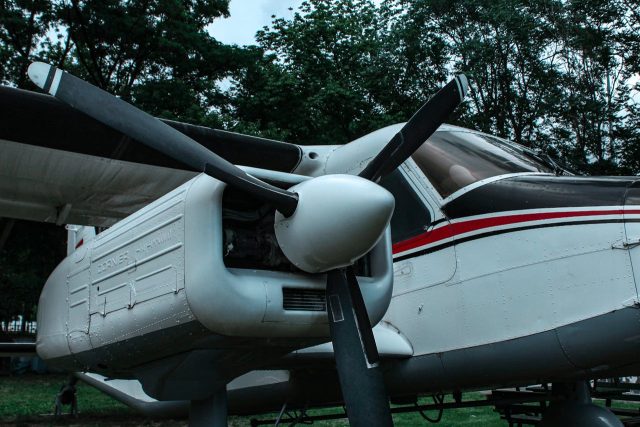
The influencing factors are innumerable: pressure by the company, ego, reputation, homititis (the urge to reach home early), competition, cost cutting in fuel expenses and engine hours, misplaced machismo and customer expectancy to name a few.
One or more of these human factors can lead the pilot to take unacceptable risks and flout rules. So, he chooses to tread where others fear to. Yeah! He pulled it off 100 times. Great deal- you happened to be aboard the 101st time when he didn’t.
On the contrary, the wise owls tend to err on the positive side. The clear-cut maxim being – If there is a Go – No Go situation, it is obviously No Go. The stakes are too damn high!
Matured pilots ride on two proverbial engines viz luck and capability. Even if the former runs out, they should be able to recover the aircraft with the latter. Taking prudent but unpopular decisions, certainly forms a part of such capability. They could also do with some external help from the regulators in this respect.
Thus, some suggestions to move in a safer direction would be:
- DGCA safety orders should be linked to the infrastructure and the environment and not to the status of the dignitary. After all, all lives are equally precious.
- Indoctrination capsules should be conducted by DGCA at regular intervals to emphasise these human aspects to aircrew and company officials.
- Job security for aircrew should be enhanced by introducing company-paid, income-protection insurance.
- Close monitoring of FDR and CVR data needs to be undertaken for charter/ state owned flying, as is being done for airline flying.
- Strict penalties need to be enforced for any violations even if no incident/ accident was reported.
Punctuality is a big virtue, while safety is a bigger one. Getting this simple message across is often quite an exercise.
Safely yours,
Horax (Casper)
ABOUT THE AUTHOR
 Air Vice Marshal Rajeev Hora is a Qualified Flying Instructor and an Experimental Test Pilot with over 3800 flying hours on multiple types of aircraft. His last appointment was as AOC HQ MAO at Mumbai. Previously held appointments are AOC Adv HQ WAC (Jaipur), Comdt Aircraft and Systems Testing Establishment (ASTE), Deputy Comdt AFA, AOC AFS Bidar and Deputy Technical Manager (Air) in the Acquisition Wing of MoD. He has earlier commanded a Jaguar squadron and was also the Team Leader of the IAF’s Hawk Aircraft Project Team in the UK.