

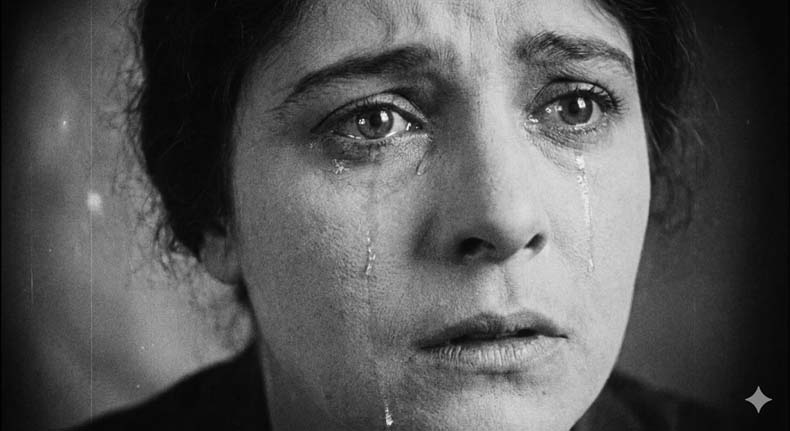
“The silent movie is an emotional cinema: it’s sensory; the fact that you don’t go through a text brings you back to a basic way of telling a story predicated on the feelings you have created.” – Michel Hazanavicius
Considered in a proper historical and comparative perspective, emotions such as love, brotherhood, sisterhood, compassion, sacrifice, courage, and mutual trust are universal and timeless. They constitute the core of human experience and transcend barriers of language, literacy, and geography, unifying the world in a manner few media can truly exemplify: “vasudhaiva kutumbkam” (the world is a community), a concept we have held in India for thousands of years.
Unlike spoken or written language, emotions do not require translation; they remain unchanged and immutable throughout the ages. Through facial expressions, gestures, movement, symbolic actions, and shared cultural experiences, emotions communicate directly with the human heart without any need for an external medium or intermediation between individuals and groups.
It is not always realised, much less felt, “An advantage of silent films is that there is no language barrier. This comes as an opportunity in disguise because making such films is challengingly fun to convey a message through situations instead of verbal discourse,” as Manasi Deodhar, maker of Chafa, correctly averred. It can, therefore, justifiably be maintained that silent cinema, by relying entirely on these time-tested visual and emotional cues, proved that storytelling could exist beyond words and still be powerful, meaningful, and widely understood.
Changing Perspectives, Shifting Paradigms: The Indian Experience
“The realm of Indian cinema’s silent era, though devoid of spoken dialogue, was far from quiet in its impact and innovation. Emerging in the early 20th century, these visual narratives laid the crucial foundation for the sprawling and vibrant film industry we know today as Bollywood”. The Times of India.
In India, the odyssey of its vibrant and diverse film industry began with silent movies in the early 20th century. At that time, the country was characterised by immense linguistic diversity, widespread illiteracy, and limited access to formal education. With hundreds of languages and dialects spoken across regions, it was nearly impossible for any spoken medium to reach the entire population effectively. Silent cinema emerged as an instrument of mass communication, capable of uniting people across social, regional, and linguistic boundaries.
Early Indian silent films relied heavily on visual storytelling techniques such as expressive acting, dramatic gestures, innovative camera work, symbolic imagery, and strong narrative structures. Intertitles were minimal and often unnecessary, as the story unfolded primarily through action and emotion. This visual language allowed filmmakers to communicate complex ideas, moral values, and emotional depth to audiences regardless of their background. As a result, cinema became one of the first truly national forms of entertainment in India.
Pioneers such as Dadasaheb Phalke, widely regarded as the father of Indian cinema, played a crucial role in shaping silent films as culturally resonant narratives. Drawing inspiration from Indian mythology, epics, folklore, and historical tales, Phalke created films that were instantly recognisable and relatable. Dadasaheb Phalke, who showed stories (like India’s first: Raja Harishchandra), and modern filmmakers who value silent narratives for universal impact, saying it’s about “showing, not telling” emotions, overcoming language barriers for powerful messages on social issues like child marriage
Stories based on the Ramayana, Mahabharata, and legendary heroes portrayed themes of duty (dharma), devotion, sacrifice, justice, and family loyalty. These themes were deeply embedded in Indian society, allowing audiences to emotionally connect with the characters and situations without the need for dialogue. For films tackling tough subjects (like child marriage), creators aimed “to say a lot by not saying anything. Therefore, the silent narrative,” notes a filmmaker discussing the film Karb, emphasising feeling over dialogue.
Seen in this overarching context, it is manifestly clear that silent films played an important role in preserving and popularising cultural traditions at a time when colonial influence was strong and indigenous forms of expression were under threat. By visualising Indian stories, values, and identities on screen, silent cinema contributed to the formation of a shared cultural consciousness and a growing sense of national identity.
Silent Cinema as a Tool for Social Reflection- Not Suspended in Time
“When you see a silent movie, you understand everything that’s going on from the images because the images are so strong.” Monica Bellucci
The Latin expression res ipsa loquitur (the thing speaks for itself), which is a doctrine in common law and Roman-Dutch law jurisdictions, suggests that one of the basic reasons for the spread of silent cinema in India was that it went way beyond entertainment, and also served as a medium for social reflection and reform. Let us, therefore, attempt to connect the dots to draw meaningful inferences. Many films addressed social issues such as class inequality, moral responsibility, gender roles, and the conflict between tradition and change. Through visual symbolism and narrative contrast, filmmakers encouraged audiences to reflect on social injustices and ethical dilemmas. Since these messages were conveyed visually, they were accessible even to those who could not read or write.
Silent cinema also shaped the craft of acting in India. Actors were trained to express subtle emotions, joy, sorrow, fear, devotion, and conflict through body language and facial expressions rather than spoken dialogue. This emphasis on visual performance created a distinct acting style marked by clarity, intensity, and emotional expressiveness. Many of these techniques influenced later generations of actors and continue to be visible in Indian cinema today, particularly in moments of heightened drama or emotional silence. Similarly, early filmmakers experimented with visual composition, lighting, costume, and set design to enhance storytelling. These innovations laid the technical and artistic foundation for the Indian film industry, proving that strong visuals could carry meaning as effectively as words.
Silent Movies at A Tipping Point- Where Do We Go from Here?
The discussion clearly brings out that the role of silent movies in India deserves recognition and appreciation. They were not merely a preliminary stage before sound cinema but a powerful art form. Silent films laid the foundation of the Indian film industry and demonstrated cinema’s potential as a universal language capable of uniting diverse audiences. By speaking directly to the heart rather than relying on spoken dialogue, silent cinema fostered empathy, emotional unity, and shared understanding among people from different regions and cultures. Even in the age of sound, digital effects, and advanced technology, the legacy of silent films remains relevant. It reminds us that the essence of storytelling does not lie in language—whether English, Hindi, Russian, German, Japanese, or any other—but in shared human emotions and visual expression. Silent cinema continues to be a testament to the power of images to move, inspire, and connect humanity. This is by no means insignificant, is it?
These and other aspects must be considered for a comprehensive assessment and perspective in a dynamic world of incessant change, churn, and transformation. But in this fast-paced world, we must not be oblivious to the quintessential truth that the more things change, the more they remain the same (“q:plus ça change, plus c’est la même chose”), which is an aphorism by French critic Jean-Baptiste Alphonse Karr.
We have argued earlier, “The winds of change sweeping through Indian cinema are redefining its creative and commercial DNA. What was once a star-centric, Hindi-dominated industry has become a vibrant, multilingual ecosystem, driven by authenticity, experimentation, and audience empowerment. India’s cinematic growth semantics today is not merely one of recovery, but of reinvention — a transition from hierarchy to diversity, from formula to freshness, and from spectacle to substance. The coming years will consolidate this plural renaissance, positioning Indian cinema as not just a national industry but a global creative force — confident, connected, and endlessly adaptive” (CS Conversations, October 2025). It’s in this broader macro context that the role of silent cinema in India needs to be revisited at this defining moment of history.
ABOUT THE AUTHOR
 Dr. Manoranjan Sharma, Chief Economist, Infomerics Ratings is a globally acclaimed scholar. With a brilliant academic record, he has over 350 publications and six books. His views have been published in Associated Press, New York; Dow Jones, New York; International Herald Tribune, New York; Wall Street Journal, New York.