
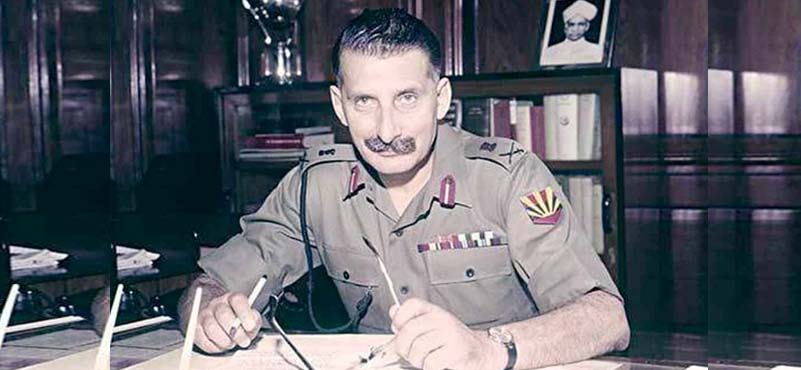
The Measure of a Soldier
On 03 April 2026, India marks the 111th birth anniversary of Sam Hormusji Framji Jamshedji Manekshaw—a soldier whose legend rests not merely on victory, but on judgment. In an era where speed is often mistaken for decisiveness and aggression for courage, Sam Bahadur stands apart as a commander who knew when to fight—and more importantly, when not to.
His leadership was not forged in comfort but in chaos: from the bullet-swept jungles of Burma to the tense war rooms of 1971. He embodied a rare blend—battlefield courage, moral clarity, intellectual honesty, and a wit that could disarm both generals and politicians alike.
Field Marshal: The Man and His Times
Sam Manekshaw, nicknamed Sam Bahadur by his Gurkha troops, was a decorated warrior whose four-decade career spanned five wars and the transition from British India to Independent India. He joined the first intake of the Indian Military Academy in 1932, was commissioned in 1934, and saw action in the Burma Campaign of World War II. There, as a young Captain, Manekshaw led a counter-attack at the Battle of Sittang Bridge (Feb 1942) against Japanese forces. He was hit by machine-gun fire (nine wounds to the body), but survived. This gallantry earned him the Military Cross, pinned on him by his commander with the remark “A dead person cannot be awarded a Military Cross”.
After independence, Manekshaw helped plan the 1947 J&K campaign while posted to Military Operations Directorate and led troops in the 1962 clashes with China as Corps Commander of Gajraj Corps and as Army Commander in 1965 war with Pakistan. In 1969 he became Chief of the Army Staff (COAS) of India. As COAS, his leadership in the December 1971 war decisively routed Pakistan and led to Bangladesh’s liberation. This unprecedented 13-day victory saw 93,000 Pakistani troops surrender. He insisted the Pakistani POWs be treated with dignity (honouring the Geneva Conventions). In 1973 he was promoted to Field Marshal (India’s first).
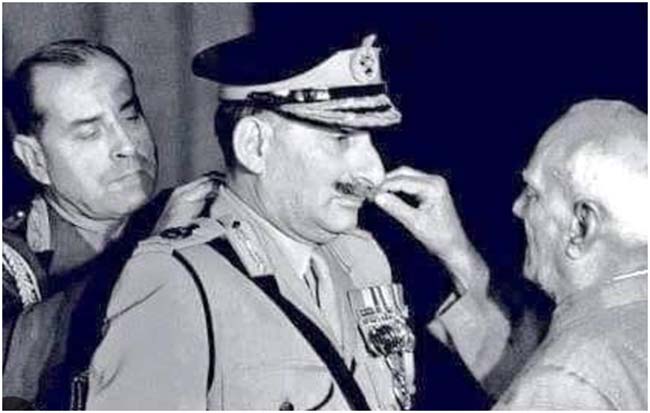
The Making of “Sam Bahadur”
Throughout his career, Manekshaw combined sharp wit and unyielding courage. He inspired officers and soldiers alike. On his 111th Birth Anniversary, an attempt has been made to choose 11 of his finest leadership qualities, each illustrated with an anecdote or quote from his service, which will continue to inspire future military leaders during their years of soldiering.
1. Courage and Physical Bravery . Manekshaw’s personal bravery under fire was legendary. The Sittang Bridge episode in 1942 showed his grit: despite being gravely wounded, he kept fighting. His calm humour under threat also shone through (as at Sittang, replying with a joke). In the 1962 Sino-Indian War, after repeated setbacks, he took command of forces in NEFA (Arunachal) and rallied his men. He issued the famous order to halt retreats: “Gentlemen, there shall be no more withdrawals.” Leading from the front, he then directed an attack that recaptured lost ground. This audacious stand not only turned the tide on that front but also gave his troops renewed confidence.
Lesson: A leader’s courage in face of danger inspires troops to face fear and fight on.
2. Strategic Vision and Planning. Manekshaw was a master strategist who planned for victory. He always insisted that wars be launched at the right moment with full preparation. In April 1971, India’s leadership pressed him to intervene immediately in East Pakistan. Manekshaw analysed the situation: upcoming monsoons would swamp the battlefield, Chinese forces could attack in the North, and harvest season was approaching (roads and trains would be scarce). He delayed the offensive and told Prime Minister Indira Gandhi: “I will require every railway wagon, I will require every train… if there is a famine, don’t blame me.” When Indira pressed him, he famously said he would offer his resignation rather than fight under unready conditions. Only after securing full resources (and waiting for the winter rains to subside) did he launch the December war, which India won decisively in 13 days.
Lesson: Leaders must craft a clear strategic vision for victory. Careful timing and thorough planning lay the groundwork for success.
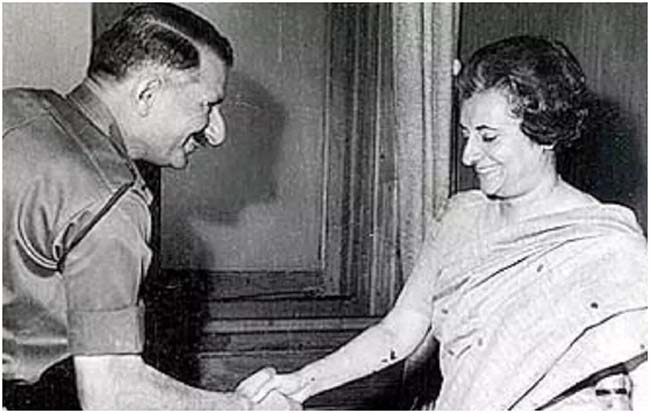
3. Decisiveness and Moral Courage. Manekshaw made bold, swift decisions when crises loomed. During the 1962 crisis when he halted withdrawals and ordered a counterattack, he demonstrated that calculated, decisive action under pressure can alter outcomes. During 1971 crisis, his famous “100% defeat” exchange with Indira illustrates this decisiveness. In his November 1998 lecture, he recalled: “If you want me to do this… I guarantee you 100% defeat.” He displayed high degree of moral courage and told her plainly that rushing into war in April 1971 would be disastrous. He even offered to resign if overruled. This fearless honesty forced a delay until India was fully ready. In every conflict, from World War II to 1971, Manekshaw never hesitated to issue clear orders and stick to them, even under duress or political pressure.
Lesson: Decisiveness (with conscience) can save lives and tip the balance toward success. In crises, leaders must choose a course swiftly through high degree of moral courage—even at personal risk.
4. Morale Building and Care for Troops. Manekshaw excelled at keeping spirits high. His very presence emboldened soldiers. On the Sittang Bridge, he personally led the charge, and survivors rallied around him. In 1962, his order to “hold the line” ended a retreating panic and transformed the mood of the troops. During the 1971 war, he made point of trusting his commanders and allowing them initiative. He famously wired encouragement and even quipped with fellow officers to ease tension. A senior officer recalled Manekshaw beginning a threatened retreat with “No Sir, there shall be no more withdrawals,” restoring resolve. Even after victory, he insisted on humane treatment of POWs, telling his men: “We must treat them with respect as men,” reinforcing dignity in victory.
Lesson: Leaders boost morale by standing firm, trusting their subordinates, and showing personal concern. Joking at tense moments and sharing hardships tightens unit cohesion.
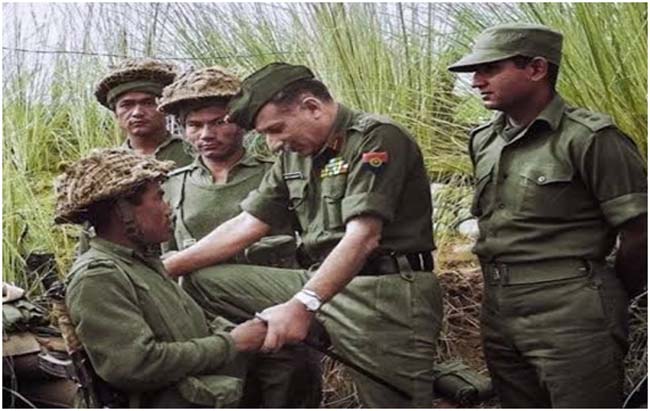
5. Uncanny Sense of Humour. Manekshaw had a razor-sharp wit that he used to inspire and diffuse stress. He often crackled with one-liners. He was hit by machine-gun fire (nine wounds to the body) during Battle of Sittang Bridge, but survived. When the battlefield surgeon asked about his wounds, he quipped: “A bloody mule kicked me.” At one press conference, when asked if he respected politicians’ knowledge of weapons, he joked about not knowing “a mortar from a motor” or “a guerrilla from a gorilla”. He was famously known for his refusal to address Prime Minister Indira Gandhi as Madam, unlike others in her cabinet. When asked about the reason, he reportedly told her, “I hope you know that the term ‘Madam’ is traditionally reserved for ladies in-charge of ‘houses of ill fame’.” Such blunt humour showed his authenticity and broke down barriers. On the battlefield and at staff meetings alike, his light-hearted banter kept men focused and confident.
Lesson: A well-timed joke can relieve tension and humanize a leader. Humour builds rapport with troops and maintains high spirits even in adversity.
6. Integrity and Fairness. Manekshaw’s integrity won him universal respect. He believed in punishing and rewarding purely on merit, never giving or taking undue favours. When a royal commission suggested he should get civilian perks as a Field Marshal (special car, residence, etc.), he quietly waived them, living on a general’s pension. “The man had pride in himself,” recalled an Army insider. He never begged for rank or privileges and treated everyone equally. During the 1971 war, he personally ensured that the Indian Army followed the Geneva Convention with POWs – even while celebrating victory, he insisted on humanity. He refused to be corrupted by politics or communal bias. As The Wire notes, Manekshaw’s “fearless professionalism” and “resistance to political pressure” set him apart.
Lesson: Ethical consistency and fairness strengthen a leader’s moral authority. When soldiers trust that orders and honours are impartial, discipline and unity improve.
7. Strategic Vision and Jointmanship. Beyond timing, Manekshaw’s grand vision shaped the entire war effort. He advocated for integrated use of all services long before it was common. In 1971, he treated the conflict as a joint campaign: he personally coordinated army advances in the East with simultaneous operations on the Western front, and he oversaw intensive training of Mukti Bahini guerrillas in East Pakistan. “He was the first Indian COAS to stress genuine jointmanship,” noted a retrospective. His synchronization meant that India fought Pakistan on two fronts effectively, and Indian Air Force & Navy operations supported the Army’s plans. He also foresaw and thwarted diplomatic pitfalls: he reminded Indira Gandhi that initiating conflict too early could invite Chinese intervention. By insisting on fighting to win, he ensured the war ended with total victory and the creation of Bangladesh.
Lesson: Big-picture vision – including anticipating obstacles and working across services – is essential. Leaders must think beyond the immediate fight to the wider strategy and political context.
8. Mentorship and Delegation. Manekshaw was humble enough to serve always as a teacher to younger officers. As COAS, he cultivated talent by listening to subordinates’ ideas and delegating major tasks. For example, he entrusted Operation Cactus Lilly (Meghna Heli Bridge, 1971 war) to Lt Gen Sagat Singh; Sagat’s success was a reflection of Manekshaw’s trust in capable junior. During 1971, he allowed capable commanders like Lt Gen Jagjit Singh Aurora to plan and execute operations in the East, stepping in only to ensure resources. He frequently visited officers’ messes and formation HQs to mentor officers, always approachable despite his rank. By training thousands of cadets earlier in his career and later opening channels of communication, he acted as a role model.
Lesson: By mentoring subordinates and granting them real responsibility, leaders build a stronger, adaptable command. Empowered officers feel valued and perform better.
9. Adaptability and Learning. Manekshaw adapted to vastly different roles over his career. In WW-II, he even turned an administrative task into a success story: as a Major in 1945 he managed 60,000 Japanese POWs after WW-II, doing so “with no cases of indiscipline”. After independence, he moved to planning (he helped secure J&K’s accession) and later to staff roles (as Director of Military Operations). In each role he quickly grasped new challenges. Notably, after being side-lined post-1962 (political blame), he took over the Eastern Command and by 1967 inspired his corps to win the Nathu La clashes against China. His adaptability showed in 1971 when he shifted an army built for counter-insurgency to fight a conventional war in the East, while also managing diplomacy at home.
Lesson: Great leaders constantly learn and flex to new situations. They apply past lessons to future challenges and are quick to update plans when conditions change.
10. Clear Communication. Manekshaw’s orders were always direct and unambiguous. He spoke plainly—even to the Prime Minister. When Indira Gandhi asked him to start a war “immediately,” he replied with biblical wit (“Let there be war, and there will be war”) before launching into his assessment. In the field, his slogans like “No more withdrawals” were clear rallying cries. He was one of the few senior officers who addressed the Prime Minister by her correct title. When Indira used “Madam,” he corrected her with his famous line about brothels—a lesson that he insisted on formal protocol and frankness. His communication style – earthy, straightforward, with a touch of humour – ensured everyone understood his intent.
Lesson: Clear, direct orders (and even fearless frankness with superiors) eliminate confusion. A leader should speak plainly and use words to motivate and clarify purpose.
11. Humility and Self-Discipline. Despite his high rank and fame, Manekshaw remained modest. He never forgot the troops who served under him and was never carried away by success. After retirement he famously lived quietly in Coonoor with minimal staff. He once told a reporter that as Field Marshal he “expected nothing more than a title; I didn’t go and howl for cars or houses”. Even in victory he gave credit to his generals and soldiers. His insistence on fair treatment of enemy POWs reflected a humble respect for all soldiers. Manekshaw also drove his own jeep as COAS and opposed unnecessary pomp. This humility endeared him to juniors and ensured he never demanded loyalty through fear, but earned it through respect.
Lesson: True leaders stay grounded. Humility – treating others with respect, sharing credit, and living simply – keeps a leader connected to the rank and file.
A Standard Beyond Time
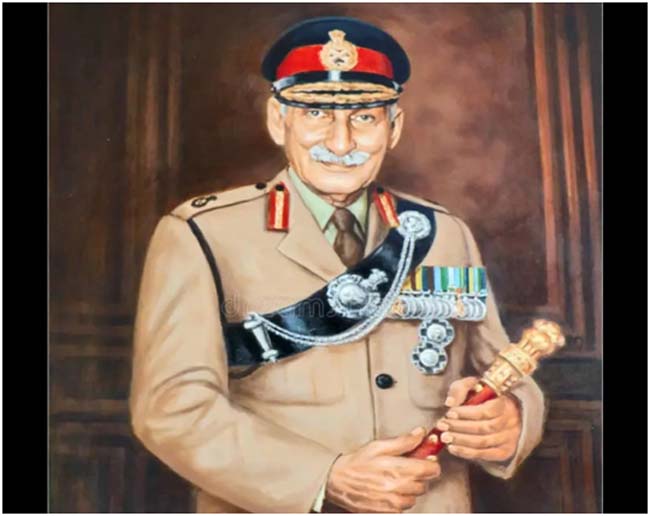
Field Marshal Sam Manekshaw’s 111th birth anniversary reminds us that military leadership combines skill, character, and personal example. His 11 qualities—courage, decisiveness, vision, integrity, humour, communication, adaptability, mentorship, resilience under pressure, morale-building, and humility—are as relevant to today’s officers as they were to the Army of 1971. Young officers can study these traits and his exact words (like “Gentlemen… no more withdrawals” and “100% defeat”) to guide themselves in crisis. In sum, “Sam Bahadur” showed that strength of character and sharp intellect, combined with care for troops, win wars and inspire generations.
Long after medals fade and battles are forgotten, character remains. And that, above all, was the essence of Sam Bahadur.
(Author’s Note: This article is written in an inspirational and concise tone not only for military officers but anyone in position of leadership in governance, business, and public life. The aim is to present Field Marshal Manekshaw’s life not just as history but as a manual of leadership)
ABOUT THE AUTHOR
Lt Gen Rajeev Chaudhry (Retd) is a social observer and writes on contemporary national and international issues, strategic implications of infrastructure development towards national power, geo-moral dimension of international relations and leadership nuances in changing social construct.