

It’s No Easy Task, but begin we must, perhaps start small, but confidently, as Delhi is the Window to Modern day India. It must claim its rightful place as one of the Big Global Cities in the world.
A CS conversation, under the auspices of India Habitat Centre. Moderated by Navin Berry, editor, featuring:
- Arjun Sharma brings a legacy of travel and tourism to the table. From the illustrious Sharma family, his late father, Mr. Inder Sharma, who was so instrumental in shaping the early years of Indian tourism. Arjun took his lead, was a tour operator, set up LPTI, branched off on his own as a young entrepreneur, and scored big. Today, apart from his experience as a tour operator, he runs the most popular shopping mall in Delhi, Select City Walk.
- Rajeev Talwar has spent some 30-40 years in tourism over his various avatars. As the administrator of Lakshadweep, as MD of Delhi Tourism and later as CEO of DLF, President PHD Chamber, apart from his stint as ADG in Ministry of Tourism.
- Ashwini Lohani, a unique person in his own rights. Former Chairman, Railway Board; CMD Air India; Director in the Ministry of Tourism; three times MD of Madhya Pradesh Tourism. So that is the kind of experience that he brings with him. Presently, he is heading a very important museum in the city, the Prime Ministers’ Museum and Library.
- M. P. Bezbaruah, the only secretary in the Ministry of Tourism, who worked out his full tenure of five years. He has close exposure to the Northeast, presently as Secretary General, Hotel Association of India, he remains in touch with all the major hotel chains in the country.
- Suman Billa, DG Tourism, Government of India, has worked in UNWTO, earlier in the Ministry of Tourism, in Kerala as Secretary Tourism, he brings a big wealth of expertise in the ground reality of our present times.
Navin Berry
Delhi, I would imagine, is certainly a microcosm to the country, because I don’t know if any other city in India has an Andhra Bhavan, a Kerala Bhavan, a Madhya Pradesh Bhavan, each serving their own cuisines. In the private sector, too, there is a huge cuisine segment, whether you want Goan, Kashmiri, or Kerala. You have state emporiums; all the handicrafts of the country are available here. And not to forget the people in the city, because people have migrated from all over the country over the years. So, there’s a Kashmiri colony, there’s a Bengali colony, bringing their own unique culture and traditions. Delhi is truly a window to both India and Bharat.
Suman, what is your take on this varied product, of the city. There is the old Delhi, the few thousand years of history, the British period, and now today, the new, the Lutyens zone being redeveloped as a Central Vista project. What do you make of this product? And what you, in the Ministry of Tourism, with a double-engine government in place between the centre and the city, what can we expect for Delhi to be marketed for inbound tourism?

Suman Billa
I think broadly, Delhi has three things. The seven cities which are built over time. It has a very rich historical legacy. It probably has the highest number of UNESCO World Heritage Sites which are very close to each other. And if you just drive through Delhi, you see all these beautiful structures which are there, which hark back to the legacy that Delhi had. The second Delhi that we see is Lutyens Delhi. But we also have a Delhi which is very modern and which is very vibrant and contemporary.
I think Delhi in many ways is many worlds which are rolled into one. But probably one thing that Delhi lacks is a cohesive narrative, I don’t see any unified cohesive story. I think building that narrative is very vital to position Delhi. And your second question, how to position it? I think Delhi is home to almost a half of the arrivals in India by air. So, it is essentially the gateway city of India.
And I think if you are able to lengthen the tourists to stay longer than they do, that it deserves more than a transit status, it has natural potential to do that. The idea is just that we need to create this narrative, of course, around it, improve all the tourist touch points. But I think it is also important to build a narrative and create a marketing strategy around it.
Navin Berry
 Coming to you as a tour operator, your positioning is unique. In the good old days, as Suman said, it was Delhi, Agra, Jaipur, and Delhi has never been sold as Delhi. What do you think? And, where do you see the potential today in terms of marketing of Delhi or positioning of Delhi as a destination by itself?
Arjun Sharma
I completely agree with what Suman said that we miss the narrative of Delhi as a city. If you look at global cities like Paris, Barcelona, London, they have a narrative where you can still go for seven days – whether it be London, or Paris, and you have still enough to do. Unfortunately, Delhi gets overshadowed by its neighboring areas of Rajasthan. So, when people come on their long-haul flights, they want to try and do more. At a certain level, the tourist is spoilt for choices. Delhi seems to get left behind.
For example, we have a lovely Red Fort in Delhi, we have a Red Fort in Agra, and we have an Amer Fort in Jaipur. In a way, yes, they have traditional things, but the Agra and the Delhi fort are very similar genres of architecture. The tour guides say, look, let’s just do one of them. And invariably, because you have more time in Agra, you end up doing the Agra Fort, because also great parts of the Delhi Fort were not open till very recently. It was when this beautiful light and sound show was created. In a way, I think Delhi must have a narrative.
It has all the necessary ingredients to be a very, very successful destination, where there is more than just transit traffic. Today, Delhi has vibrancy of the old, the colonial, and the modern. But I think at some point in time, we also have to realize that today, there is a little bit of a counter pushback from two operators who are saying that, listen, with the air pollution, with what is happening, maybe we will skip Delhi and go to South India or we’ll use Mumbai as a gateway. That is now more and more being heard and spoken about.
So, for example, people that have to go to Goa, would earlier go typically to Delhi, Agra, Jaipur, and then go to Goa for a week. Now they’re saying, can we combine Kerala with Goa? The problem we have had is over the years, India has always been a destination where tourists are very nervous, and now when they hear about the pollution, but then pollution is not just a Delhi problem.
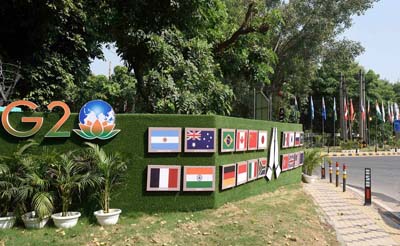 I love Delhi. It’s my home. I was born here. What disappoints me is that we could create a world-class G20 event in Delhi with all those beautiful footpaths, plants; it just seems like such a distant mirage. I wonder, do we need a G20 every year to bring out the best of Delhi?
Navin Berry
Rajeev, Delhi doesn’t have a narrative strong enough like London, Paris, New York. What is your understanding of it?
Rajeev Talwar
I think it’s your words and your examples which will give us the story line. London, Paris, New York, see those economies, see those economies and how they attract people over there and it’s carried on since World War II. That’s what we see. I think we were, all of us used to say how many foreign arrivals and how many foreign tourists come to India. We didn’t even have airports to welcome them.
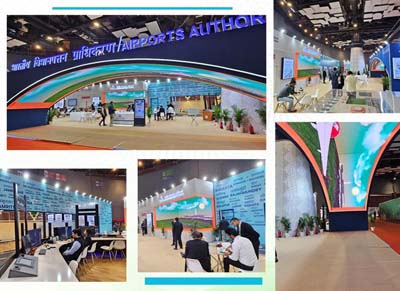 I think you made a point in your podcast that these two airports of Mumbai and Delhi will change the scene as far as arrivals, so far as world class airports are concerned. But similarly, thanks to the pandemic and later on, the response by our people, domestic tourism has picked up hugely. We did a book called ‘52 Weekend Getaways from Delhi’ during my time as MD of Delhi Tourism; that book went on to inspire 52 weekend getaways from Mumbai, Chennai, Bangalore and Kolkata. People were waiting for opportunities to explore. Domestic tourism, it has now become a big reality today. The fact is that Delhi’s got all what Arjun said, it’s got everything going, whether it’s retail, shopping, whatever.
The fact is that we are not able to make a narrative, without paying attention to three or four factors. The first thing is safety. Whether you go to Chennai, whether you go to Kerala, whether you go to Goa, whether you go to Mumbai, the aspect of safety is different when it comes to Delhi, although I don’t know why. The Delhi Police do such a fine job, there are more than 180 restaurants in Connaught Place area alone. You never hear of eve teasing, you never hear of harassment, you never hear of any kind of law-and-order incident. So, the police can control it.
The second thing is, I think we have no mid-level chain at all. Either you have 5 stars or you have guest houses here. There’s no Fortune, there’s no Sarovar, there’s no middle-end.
Lastly, in our city, last mile connectivity in transport is abysmal.
Ashwani Lohani
Delhi has never been seen as a tourist destination as such. It has always been seen as a Gateway to other cities. But for somebody living outside Delhi, for him to come to Delhi as a tourist, that generally does not happen. You have to position this as a tourist destination because it’s got everything. Cuisine, it’s got shopping, it’s got heritage, extremely rich heritage. But how many of us who are Delhiites have even seen Delhi?
Rajeev Talwar
 You have the maximum number of heritage sites in Delhi, there is not one single heritage hotel next to it, in any place. The narrative is not being created because we are not inviting people to come to the city as tourists. They are coming for every other reason – for education, for medical care, but not as tourists.
Navin Berry
Mr. Bezbaruah, from your understanding, what is missing? If I may ask a more pinpointed question, is there any agency which has ever built or tried to attempt to build this narrative? Or things have just happened to take pass that the lure of Agra, Jaipur is there, so people use Delhi as a gateway. Has anybody made an attempt to arrest the tourists, to spend more time in Delhi and to sell Delhi as a destination.
Ashwani Lohani
I can share that we in Madhya Pradesh, introduced Disney World buses. Even if there were no tourists, we used to run them. Then they became popular. There is no system of guides, tourist guidance system. Tourist places have to be clean. Dust and dirt are a major problem. Pollution is a very big problem. How do we solve it? Pollution is a very big problem. Congestion on roads, the less we talk about, the better. Unless we solve these basic things, we will not move forward.
Navin Berry
Sure, but still an overriding narrative must be there to begin somewhere. Every other city in the world has some issue or the other, I would imagine. And our pollution is only for two months, so to say. But is there any agency or somebody involved in building the Delhi story? That is my question.
MP Bezbaruah
No, I don’t think so. And my feeling is that what we need to do about Delhi is to create a destination out of Delhi. I’m hoping that this goes to the government, either the government of India or Delhi, in some form, your opinion, whatever we discuss here. A very large proportion of incoming visitors into India come through Delhi.
Delhi is the first impression of a tourist. You say, welcome and come back. That welcome is not there. It is absolutely not there in terms of overwhelming traffic, it is not there in cleanliness, in pollution. So, I think what should be done is the Government of India, as a whole, not just the Ministry of Tourism, should declare that Delhi would be made a world class destination, and that this destination would be a showpiece of India’s culture, history, everything.
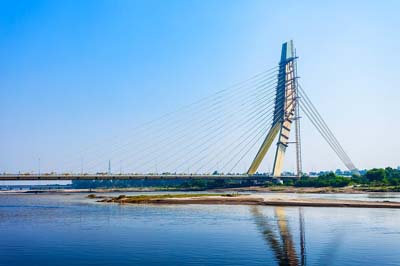 In management, there is a saying that you don’t get a second chance to make a first impression. The second point I would like to say is that the government is talking about 50 iconic destinations. If Delhi has to be a destination, the Prime Minister must include Delhi in them. Make the world around Yamuna the center of Delhi’s attractiveness. It could be the iconic destination around which you can build Delhi.
The third point is that Delhi does not have storytelling at all. We have one or two sound and light shows. We need orientation centres where you walk in, understand the story around the monument, walk out to a souvenir shop. There must be restaurants, create an experience around each of them. These are sorely missing in Delhi, and the people don’t like, really, the hassles of going to the market. Some of them love it, but others don’t.
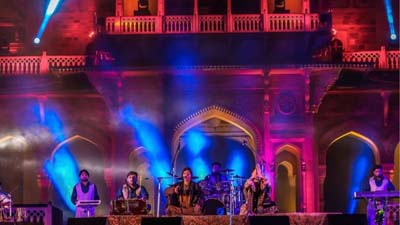
I think we have not packaged the culture of Delhi very well. The Delhi government has announced that it will be an entertainment hub. Very welcome news. I would like to, if you all can say, please define entertainment precisely. Because not many of us think that entertainment will be only nightlife. Delhi’s entertainment will be our culture diversity. Incidentally, we have no regular festivals to talk about.
Navin Berry
Suman, how do you react to Mr. Bezbaruah’s suggestion about making Delhi one of the iconic destinations? Maybe, looking at some of those big touch points which belong to Delhi, one thing that comes to my mind obviously, is Connaught Place. And it’s not the best of locations to go to. In spite of various efforts, it begs a whole lot of issues, if you were to make it worth the while for global tourists to appreciate it. But the larger issue really, about making Delhi the iconic destination, how do you react to that?
Suman Billa
I think broadly at two levels. One is all the infrastructure, you know, safety concerns. These are all not going to go away. The destination never changes itself for tourists. It is the other way round.

But I think one way to sort of envision Delhi’s tourism potential is today, it is absolute sightseeing. I think what we are missing out on is creating experiences around them. Because, for example, Delhi has probably one of the best culinary traditions in the world. How do we build experiences around them? Delhi has some of the best museums, the National Museum and others. What should we create around them?
How do we leverage that potential better? Delhi is probably the best example of MICE. So that is a big advantage that we have. So, I think the idea is really to work around the dust and the pollution, not to forget it, but how to over-ride it. The base layer is essentially around sightseeing. So, I think my sense is that we will have to start looking at how to build experiences, how to create those.
The second lowest hanging fruit for Delhi is that if we just assume that one-third or 40 % of people coming to India are transiting through Delhi. If you have transit visas and you allow them an overnight stay, day excursions, et cetera, that will straightaway widen the number of tourists that you could have in Delhi with a very little effort. Of course, needless to say that, we need to work on many fronts across all categories of tourists, all together. How do we use technology as an enabler? And I think that is probably where the Delhi government and the government of India could work together and find solutions, from a reverse engineering kind of view. You know, what do we have today, what do we need to achieve, and do whatever it takes to make it happen.
Navin Berry

The tourism product of Delhi for foreign tourism must also go beyond monuments. We talk about entertainment, Mr. Bezbaruah said it needs to be defined. If we narrow it down to a simple thing, like something to do in the evening, it doesn’t mean there’s a cabaret, but something to do in the evening, something lively, some music, good food, buzz around. So, there’s no shortage of this, there is so much of cuisine in the city, so much of nightlife as such, already exists. You have quality malls, some with a choice of some 50 restaurants over different floor levels, there are numerous city hubs alive around the city. We have so much already. Are we marketing them?
Arjun Sharma
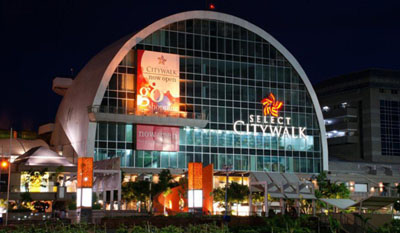
We have about 75 outlets at Select City Walk.
Navin Berry
So, there we are. So, Arjun, some of this foreign tourism, and this is what we are looking at in this discussion, has some of that migrated to shopping areas, malls, do you see more of them? Are they getting included like a tour guide with 30 tourists, bringing them to Select City Walk?

Arjun Sharma
No, I don’t see them. Basically, yes, there is a modern Delhi which is thriving, but it is thriving on the back of the local population and domestic tourism. It’s very aspirational for people in the national capital region and beyond from small towns to visit Delhi. There’s nothing wrong with that, because I think we should also talk about domestic tourism. It’s a very important part of at least India’s present-day narrative. I like what Suman said about the fact that MICE, our infrastructure of MICE, we could certainly be one of the greatest destinations for MICE. But then it gets linked to what Rajeev said. You hold one MICE event in Bharat Mandapam and the rates of hotels in Delhi surge! So, what we also need are hotel beds of multiple size, genre, you know.

You have to talk to people like the DDAs of the world. Bharat Mandapam still doesn’t have its own hotel. It probably needs a small Aerocity around it, of 5-6 hotels of different categories. What is the existing infrastructure? Many factors have to be pulled into it. Let’s say you do what Dubai does, a shopping festival. We have the best shopping malls in the country. They are all in Delhi of different genres from something like a Delhi Haat, to a DLF Emporio to a SelectCity Walk. There is something at every price point. We should make this a peg to start with, open for domestic and foreign tourists. We should not distinguish colour in passports. At the end of the day, it’s about churning the economy.
Navin Berry
Suman, any intervention that you see from the Central ministry? There are literally no new hotels in the pipeline in Central Delhi. There’s some remote thing happening in Greater Noida or somewhere. I think the only new hotel announced recently is the Nehru Place one, for which Lemon Tree has won the bid. But the paucity of hotels, 3 -star, 4 -star, 5 -star. Any intervention you think that can be possible? And now particularly with two airports in Delhi. So, what are we going to do with those two airports? I mean our capacity is literally, not doubled just now, but in the process of 5 to 10 years, we have doubled the capacity to bring in people. So that requires matching or syncing of the infrastructure between airline capacity, hotels, whatever else it requires to do this.
Suman Billa
 I think hotel supply remains a national problem. Because if we map the supply today and we compare it against the demand that we have, we need to have three times more hotel rooms, both in the branded and the unbranded category. And the problem is that the way that our lending process, the capital structure is loaded against investments going into hotels. So those are things I think need systemic turnaround and we need to work on them. But I think from a Delhi point of view my sense is that to work within the area around Bharat Mandapam, because it’s already, you know, how does it happen? It’s essentially that the Ministry of Urban Development will have to make land reservations and say that this is going to be for the purpose of the hotel as part of the planning process. Now, most of this is already saturated. So, my sense is YashooBhoomi in Dwarka is probably a better opportunity.
Navin Berry
What about a little study, as Rajeev said, on feasibility of heritage properties close to heritage sites? Even small hotels with 30 to 40 rooms each?
Rajeev Talwar
Stop thinking of guest houses, make a 100-room hotel and why should they need any permission, why should they go to the local municipality, why should they go to the DDA; after all, you need hotels, you need places to stay and everyone, who makes a hotel has a given benchmark. About 56 approvals are needed. Now why do you need those, everyone will have an architect who is well qualified. They will meet all the needs of a tourist and a local tourist. It need not be a foreign tourist. The government of Delhi has taken a step. Probably restaurants will not require any licensing now. If they go in for a GST, half of them don’t go in for a GST.
Navin Berry
Out of all your assignments, Madhya Pradesh must be a crowning one. I mean, for all the efforts that you put into making Madhya Pradesh a tourism destination. You had numerous products in Madhya Pradesh, from wildlife to religion. From your experience, what do you think could be done to market Delhi, to position Delhi as a destination?
Ashwini Lohani
We basically looked at basic things. I am a big fan of signages. We plastered the entire state with signages. We started running these tourist buses. We spurred domestic tourism to a very large extent within the state. Basics are required even in a place like Delhi. What I am talking about is, I can’t see the presence of Delhi Tourism anywhere. I don’t see their buses; I don’t see their packages.
Why can’t we launch packages? Where did the hop -on, hop -off buses go? Rather than making grandiose plans, let us make small plans and execute them. That is what is required.
Navin Berry
Somewhere, I don’t feel very good saying this but over the years I’ve been watching Delhi Tourism, being a resident of Delhi also. But I think that effort in terms of an agency putting effort to promote Delhi, that is missing. And I’m also going to say that recently, I read some newspaper reports, there was going to be a big event before the Bihar elections, where Delhi Tourism was going to unveil its new logo and a new tagline like Kerala God’s Own Country. A new strategy for tourism was going to unfold. But unfortunately, again, according to media reports, that event was postponed because the cabinet, most of the ministers were in Bihar campaigning. So, since they were all not there, it has been postponed. But we need some quick action, particularly with two airports opening, with so much happening, there is no narrative around Delhi, so somebody has to put Delhi together, which has not happened.
Ashwini Lohani
We have to start talking of Delhi as a destination. The tourism industry should start talking of Delhi as a destination, not as a transit point.
Navin Berry
I just have an observation. If you see all of Delhi, all the Indian big cities, in fact, take Delhi, Bombay, Calcutta, Chennai, Bangalore, there is no big thrust in terms of reaching out to any tourists. It’s the state of Maharashtra or West Bengal or Karnataka. But selling cities has not been undertaken yet. And I’m intrigued by the fact that in Europe, they have an agency where 19 cities of Europe have put together a marketing alliance among them. Something like that should happen here as well. The pressure is of domestic numbers, whether they are tourists or visitors, is so vast in these big cities, that foreign tourism will get lost, will get marginalized. Do not forget, there is also the central government’s plan to promote tourism in a very big way. You have a 100 million target by 2047. I think the big cities should be the big catchments.
Suman, what do you say? Because you are in this position today to create a new policy framework, create new initiatives.
Suman Billa
I think the issue is also structural. In India, our city governments cannot be compared to the city governments in most of the cities around the world. And they are mostly focused on providing civic communities rather than to sort of look at the upper end of it, on how to increase more revenues to come into this. So possibly one way to work around this, is to allow the cities to create a marketing fund, where tourism falls within this.
Our system is not matured to that level, even when some states have, cities not yet. There are still states, lagging behind, with less than 5 crores of annual budget. But I think cities should consider starting with a promotional budget. The framework that we are currently working on, at MoT, is to push cities to have their convention promotion bureaus, from a MICE point of view. We are reworking the entire reward system where we say that every city should have its own MICE promotion bureau and we will extend support to them. So that will probably be the first step.
Navin Berry
It’s a pity that you, Arjun, being Sita, LPTI and all of it, you’re saying you’re not attracting foreign tourists to SelectCity Walk. Though you are doing some of the best tourism events in this mall already. A number of foreign destinations are using your mall to promote their tourism products because you mall provides a huge catchment area.
Arjun Sharma
Saudi Arabia just did a 3-day event with us where they showcased their whole tourism product. They had special sessions for the B2B trade. And they also had a public interaction. And they had numerous touch points. They had monitors. We have hosted similar events for Thailand, Vietnam, and we would love to work with state governments.
It’s a huge catchment area. These are great touch points for attraction. But, you know, sadly, again, our products in the shopping malls are more catering towards the Indian customer. I guess when you have foreign tourists, we tend to go more to the Emporio type locations, we tend to go more to Delhi Haat, which is fine, because obviously you want to showcase your product, and those are doing very well for them.
And of course, we first need to get the whole ecosystem right. That’s the critical thing. Even at times, places like Delhi Haat, are not easily navigated. It’s now again become more domestic oriented than foreign oriented. I think one should not worry so much about domestic or foreign tourism. It’s about the tourism economy.
What we all need for foreign tourists is the Incredible India campaign back. All our cities will do well, they will attract all kinds of tourism, whether it’s MICE, whether it’s leisure, whether it is group travel. Sadly, we are missing that lift for inbound, in fact, it is some heavy lifting that is required, which cannot be done by the industry. It will have to be the government. And the government has to carry that burden, because there is no private sector player who can go and put out a 200, 300, 500-million dollar campaign. And that’s what is needed today.
Ashwini Lohani
It also has to be matched with things happening on the ground.
Rajeev Talwar
I think, in the beginning of this millennium, did take off with some attempt to bring cities together. ASEAN plus China and India, it’s half the world’s population. If you recall, there was a confluence of cities. There were a dozen cities which were in partnership. I mean, we were all, I mean, whether it was Hanoi, Kuala Lumpur, Bangkok, Jakarta, whether it was Delhi. If you recall, all the chief ministers were involved and the mayors were involved.
So regional tourism was being promoted, which is also foreign tourism, but much easier. Then, what we can aim for is to get tourists from the other side of the world, which is the Americas and Western Europe.
Navin Berry
The unfortunate or fortunate part is that traditionally, our tourism has been built around America and Europe. That exists still, even though the paying capacity of regional tourists has increased considerably.
Arjun Sharma
Asia is booming! Look at the economy of China and the opportunity. Now we just need more flights and visas. And let me also tell you today, the way the economies of Europe and America are going right now, America is in a hyper-inflation mode, they’re hiding their numbers. Europe is a sick man. The transfer of wealth is happening more in the East. It is Asia that is moving.
Navin Berry
So, what will it take us to get them all to Delhi?
Ashwini Lohani
More flights. Plain and simple, more flights. More international flights. Because if you look at the load factor of the airlines today, the load factor is over 90. Now we have a new airport also.
Arjun Sharma
My worry is where are the rooms? We are not matching the rooms.
Rajeev Talwar
We need accommodation in every segment.
Arjun Sharma
So, for every 100 customers that will land, the general foreign tourist is going to be 3, 4, 5, 10, some number, depending how you look at the number, how you massage that number, it’s there. But traditionally speaking, it is there. We are going to sit on a time bomb of outbound tourism, actually becoming the biggest drain of foreign exchange in this country, if we don’t bring inbound tourism to equal par or level par. It will be, maybe equal to what petroleum is, equal to what gold is going to be at that level. And there is no way we can stop it because these 1200 planes that are being ordered now, every airline in the world, look at Saudi Arabia ordering more planes. Which are the markets they are looking at? They are looking at India. Everyone is looking at the Indian outbound market. We have to realize that this is going to be the biggest drain of foreign exchange in this country’s way forward.
Rajeev Talwar
You know your IPOs. Our finance minister gave a speech recently and said the retail market in India has flourished in the recent past. But what is happening? Many of the owners and promoters are cashing out. And what happens with that? Many of them, among the richest in the world, move out and settle abroad. It is not just Indians but even more so, look at British citizens moving to Dubai, moving to tax havens. And so is money.
Navin Berry
Coming back to Delhi, putting together the substance of our conversation, we are saying Delhi has a narrative, it is not being put together. It’s not being put out, perhaps for absence of any agency or any dynamism in that area. There is a bit of a vacuum. When we start doing that, we then need marketing. There is also the absence of infrastructure in terms of hotels that is missing. We need more hotels, and in every price segment, especially 3-star. What else? We need the composite tourism product to be put together as a story around the city. Arjun?
Arjun Sharma
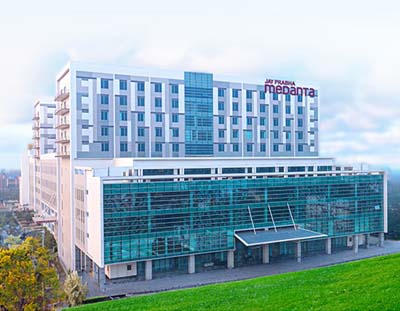
We need many touch points. It’s not just one thing. You can’t just only have a campaign and a narrative, it has to be backed with a product, it has to be backed with creative marketing, it has to be backed by the industry and the government working together, in unison, whether it’s for MICE travel or medical tourism. Look at the hospital network in the NCR region.
Rajeev Talwar
Where have all the guides gone? They have become medical agents. Navin, your favourite word today evening was ‘narrative’. I think what he said, what Arjun said, there are many touch points. Whether it’s safety, whether it’s multiple hotel chains, whether it’s cleanliness, whether it is transport. Everyone can’t afford to take a Mercedes car and go around the city. No, we have the world class metro network, but how many of us are using it for tourism?
Ashwini Lohani
We can’t solve all the problems together, but we have to make a shift towards talking of Delhi as a tourist destination. Medical tourism is fine but that is for a particular reason. People should start perceiving Delhi as a place which offers a lot of places for the tourists to visit. The image perception of Delhi has to change.
MP Bezbaruah
I agree with that. Creation has to be good, doing all things is not easy, as Ashwini was saying, let us do some small things. Delhi has got everything any city needs to becoming a tourist city of choice. We have been talking about dirty toilets for the last 30 odd years, we can’t provide toilets even in a place like Delhi, so where is that potential and promise we are talking about? So, as you were coming to the agency bit, whatever you call it, somebody has to take on this responsibility.
Arjun Sharma
I think there is a bit of vision happening in a city like Mumbai. You see the coastal road development, you see the new metro links. There is a lot more happening there. I don’t want to make comparisons. The Jio World Centre. Look at the world class events they are doing, whether it’s Indian or international. So, it is the private sector that is leading.
Ashwini Lohani
It’s a cleaner city.
Arjun Sharma
And traffic, yes, there is more congestion but it moves. It is possible. It is not that it is impossible. It is absolutely possible and we think it really happened there. Look at Hyderabad as a city. If you go to Hyderabad, the Ring Road development, it is fabulous.
Navin Berry
Suman, you talked about MICE. There is an ICPB. which is involved in the marketing of India. Now, our focus today at this discussion was Delhi. And Delhi has the biggest MICE facility in the country. Who’s marketing Delhi as a MICE destination? Because when you promote MICE, you promote a city and not a country? So, any thoughts on that? Can we take ICBB or anyone else to push for Delhi. Sometime back, when Aerocity get formed, some of its hotels took the task of promoting smaller conferences among them. I don’t know if this effort is still there?
Suman Billa
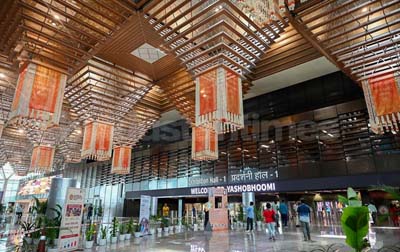
I think all across the world, cities are promoted by themselves. And I think Delhi is probably the lowest hanging fruit here. ICPB is a national body. I think its membership is narrow. So probably, that’s not probably the right way to do this. But I think what we have in Delhi are the two big convention centres – Yasho Bhoomi and Bharat Mandapam. I think these guys need to anchor it. They must sort of come together as champions. And I think they need to bring in with them all the hotels, and create the entire ecosystem around them. Because the idea is not just to bring everybody together and to make a brochure and say that this is what we offer. The idea is also about pricing. There are countries like Colombia who do it very cleverly where they reduce the cost for the organizer, and then they re-appropriate the revenues amongst themselves. So, these are all things that you need to work upon, and these are all things which can also come through collaboration. Like spotting a lean season, and saying how do we sort of pitch the destination as venue by coming together?
But I doubt if ICPB can be that organization to do it, because firstly, it has a narrow membership base. But I think for Delhi something similar to the Hyderabad Convention Bureau could be an answer. I agree also we need to start small. Both impressions are true. If the destination is not ready, you are not likely to attract many tourists. But the opposite of that is, if tourists start coming, there is more pressure on the government and the establishment to deliver.
So, my sense is that for Delhi we have probably the potential, we need to leverage it, first by building that narrative, starting small even, perhaps, bring an alliance of the hospitality industry who must take the lead in saying let us promote Delhi as a destination. I think the structure of the campaign on what needs to be done and the soft elements of the campaign on what goes into the creatives, etcetera, should essentially be funded by and championed by the private sector and I think the government can always support it with that required funding to take this to the generating markets. What the governments often lack most is ideas; it is not the budget.
Navin Berry
Thank you. We have some excellent suggestions this evening, we hope to take them across to the powers that be.