
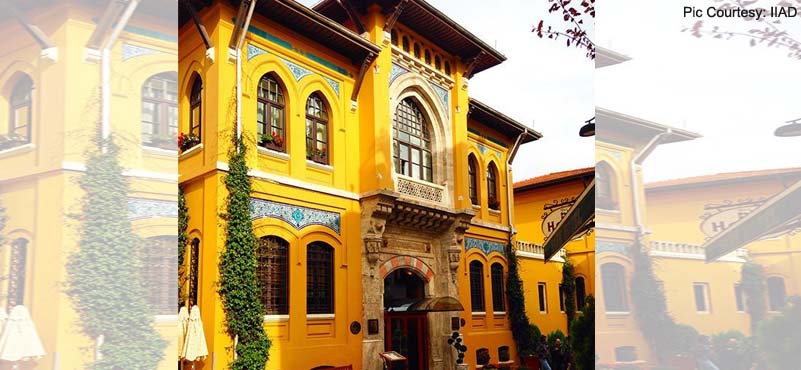
Indian heritage assets that are being revived, re-adapted, re positioned for contemporary usage, need a viable and sustainable model, so that more such arrangements are encouraged.
There is this not so new but a growing enchantment for re-purposing heritage sites and treasures. To adapt them for more contemporary uses, like for heritage resorts, modern day havelis, and the type. Often, neglected forts and heritage sites find a saviour, in restoring them and managing them, on a decent sustainable basis. The private partner puts in the money, his resources to engaging with historians, keeping the spirit of old and the period in which these were built. Overall, this has become the popular PPP model, which they say is a public-private partnership. It is meant to be a ‘partnership, where the two parties, namely the government agency as the public party, joins hands with the private party, invariably, a restorer, a historian, investor and businessman.
We have had various such arrangements in place over the last many decades. The overall feedback is that even as of date, the contours of this partnership remain confused, or diffused. What each party will bring to the table remains uncertain. Simply put, as per the broad understanding in such matters, whatever is government controlled must be handled by the government. The private party will invest, ensure that the spirit of the monument, its period, its legend, not remain intact but should get accentuated for a modern-day audience. It is in the interests of the investor to do his best, as he is meant to earn out of this and get a fair return on his investment. It is understood that the government agency carries out its due diligence – that the onboarding investor has not only the funds but also the expertise and professionalism to bring about the required restoration.
Over time, there are instances that after a much-hyped signing of such agreements, in many cases, too many new problem areas come to the surface. Apart from the tourism department, or the state cultural department has signed off and handed over a project to the investor, other agencies come forward to flag off encroachments on their territories. It could be the forest department as many of these projects are in the remote areas; there could be a road issue, as within the property, there might be an important road connectivity to the neighbouring village. There are also issues with central agencies like the ASI, as in the case of many monuments, within a given cluster, there could be different custodians, between the state and the centre. In many remote cases, bringing electricity could be a hurdle and the resultant cost could be huge for the investor to spend. To recount more would be tedious, suffice it to say these keep cropping up, some before the project is opened, some after, as law and order can become an issue, parking is another.
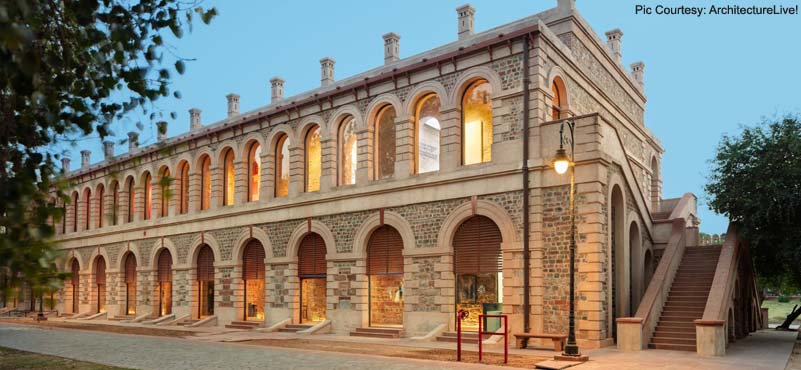 “Adopt a Heritage” scheme where the Dalmia Bharat Group adopted it for 5 years (starting 2018) to provide tourist amenities like restrooms, water, signage, and night viewing under their CSR, without touching the core monument’s conservation
In most cases, neither of the two parties are fully aware of what may crop us. It is largely untested territory, so surprises can be many, except that none should be a surprise – expect anything and everything. The biggest reality which becomes the challenge – there is a defunct asset lying in pathetic condition, a relic of a bygone era given up as lost. It gets revived, brings ‘alien’ forces into play, giving new impetus to local currents, not all of them understood at first glance – the local community has not been initiated into how this development will give birth to a new economic force. Local agencies begin to ask questions – basically, who’s territory is being usurped? Can they dig in, is there a new opportunity, so close at hand? Palms are opened, checking where will the grease come from. These are small time locals, honestly, do not blame them either. But they become an impediment, often too difficult for a private party to solve on its own.
So, where is the problem? That once the agency has been awarded the contract, the PPP model gives way to what has been endowed with its true meaning – ‘private party problem’. Government agencies have not factored the numerous hurdles that will come from other government agencies. So, they leave the investor high and dry, well almost. If they are seen as finding solutions, often they are questioned, ‘what is in it for them’? Such situations catch them off guard, leaving the PPP model in question.
Yes, there is a solution. It should be made amply clear that hand-holding through every conceivable permission will be that of the government, or the asset controlling agency. There are some very obvious issues that have been identified over time; these need to be documented and presented as a template for every such PPP project. Such a template could become an important central government document, which then gets shared with states across the country. It serves as the holy book, where the role of the individual matters less, as they are only performing as per a central template.
Over the years, a few agencies have acquired expertise in such management contracts with various central and state agencies. These professionals should be roped in to provide inputs for the template. It is not foreign contracts, copied and pasted, but those that apply to Indian conditions, on the ground. We are not just unique in our heritage, even managing them will require a unique understanding. It is not the domain of the Big Four, for instance. They may not have a ‘real’ clue.
Perhaps a few hundred such assets are crying to successfully execute PPP arrangements that can revive them and re-ignite the minds of the youth, to understand and appreciate the wealth of our heritage. A nation that is proud of where it belongs, builds its foundations based on its own past, can that nation stand up more confidently and face the world with a robust determination.
ABOUT THE AUTHOR
 Navin Berry, Editor, CS Conversations, over five decades has edited publications like CityScan, India Debates and Travel Trends Today. He is the founder of SATTE, India’s first inbound tourism mart, biggest in Asia.
Blogs at: https://www.csconversations.in/nb-blogs