
What Went Wrong, and Where is the Road Ahead?
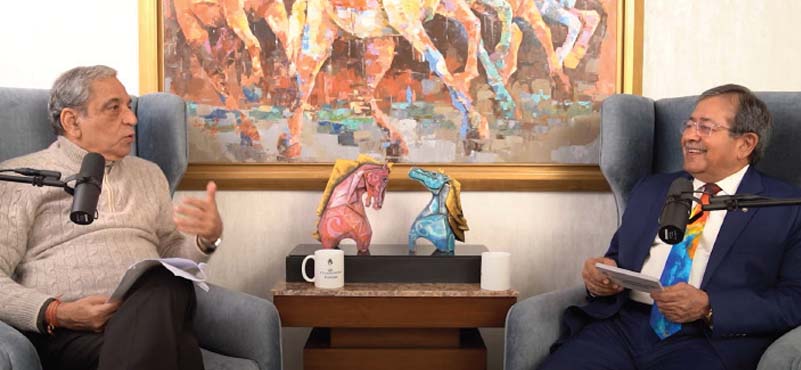
In a podcast, conducted by Hemant Bhasin, A True Rotarian Broadcast, a conversation with Navin Berry, editor, Destination India, who has spent over five decades commenting upon the travel and tourism industry in India. Aviation is one important vertical in India’s growth story, going ahead, as air transport needs to be viewed just as holistically as road and rail. Air transport is just like the others, only quicker, giving access over difficult terrain, just as much as providing ease in business. There is nothing elite about it, perhaps only a little extra glamour.
Hemant Bhasin: Today’s episode focuses on what went wrong in India’s civil aviation sector that affected lakhs of passengers and raised important questions about preparedness, regulation and growth. These questions are framed to encourage expert insight and public interest discussions without being acquisitory or personal. Now, for the benefit of our viewers, could you briefly explain what FDTL rules are meant to ensure?
Navin Berry: Aviation is a very complex subject. And being in tourism or being an avid reader or a student of how our aviation industry has grown in the last 30 -40 years is still my perspective from the outside. I am not an aviation person per se.
If you’re talking about the disruption itself per se, from what we gather, there was going to be a revision in flight duty timings and regulations for the pilots. Now, this was introduced with a deadline once. The deadline was put in abeyance, postponed, to be implemented on the request, I presume, of IndiGo. It happened a second time. Again, it was requested that it may be put into abeyance.
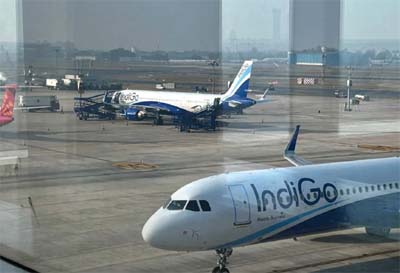 The third time, lo and behold, too many things were happening at that time. There was a new winter schedule announced by the airline, which meant that it was ready to fly more aircrafts and fly more routes in the air. But when it got implemented, everything just snapped. Now, there is nothing out in public domain. And I am not privy to any inside information. But very obviously, the flight duty timing regulation, the FDTL, when it was being implemented, it snapped. And the airline explanation is that something happened, something misfired. They couldn’t put the rosters together or whatever. And they just had to cancel flights.
Hemant Bhasin: I think being an expert in tourism to understand the reasons and also to suggest to the people who matter that what should have been done. I think that is the core issue of our topic today.
Navin Berry: So let me just take you back a few decades. In the journey of Indian aviation. Till even now, somewhere, though the perception may have changed dramatically in recent times, let’s say last 10 -15 years, but aviation was always considered elitist. It was meant for the more affluent. So, it tended to be looked down upon as opposed to going by bus or by train. We haven’t still come out of that mindset. Now, the proof of the pudding is in the eating, so, here the question here is, taxation.
You want to milk the industry and see whatever you can extract out of it because you think it’s still elitist. I’ve been repeatedly saying for many years over deaf years, a lot of departments or activities of the government of India in the various ministries, they have changed their nomenclature in keeping with the market forces, perceptions. It is high time that civil aviation, as a fancy subject, should be stripped of its luxury and elitist connotations. It actually simply put air transport. Just like road transport, rail transport, there is air transport. There is nothing elite about it.
And air transport is a quicker form of transport. Nothing much more, nothing less. It’s also that transport which takes you to the hills, across the hills and dales of the country. It makes you go from Kashmir to Kanyakumari in three and a half hours. How long would it take you to take a train? It’s the convenience of doing business, the ease in travel.
So, air transport is now critical. Now, the government recognizes that. Because if you see the various programs, the Udaan program recognizes that air connectivity is critical to economic growth. So, that is fundamental.
Now, the rules of the game, and since you asked me what is the road ahead, I think stripping the industry of elitism, of luxury, and bringing it down to a level of simple air transport.
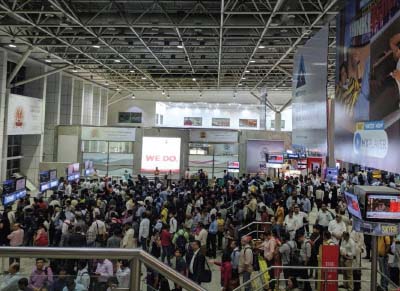
 Ironically, this meltdown at IndiGo, the recent one, where everything just fell apart, nobody knew what was happening, is a big vantage point when we need to see what has happened behind us in terms of air transport industry growth and where is the future likely to be. There is no looking back. Just remember, forget IndiGo, forget any airline. Air transport is critical to Indian growth story. You cannot stall air transport.
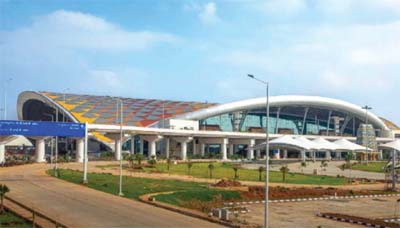
Now, as you all know, a second airport being inaugurated anytime next month by the Prime Minister. The second airport in Delhi and the second airport in Mumbai already inaugurated last month by him. There is Guwahati International Airport just inaugurated by him a few days ago. So, airport growth is phenomenal across the country.
Adani group has pledged to buy another 11 airports in the next installment of privatization or whatever. They are already running Ahmedabad, Lucknow and so many others. So, there is huge money being invested in airport infrastructure. Over the years, we have had a spurt in airport development. At another time, we have had a spurt in airline development. I have a feeling that we have tended to look at each of these segments in isolation.
 ‘Airport wale aaye, unne ne kuch bola. Airline wale aaye, unne ne kuch bola’. We need an ecosystem. So, over a period of time, my suspicion is that each of these verticals within the air transport industry, they have been looked upon and grown in themselves. You need an ecosystem where each vertical not survives, but sustains and thrives. It’s a no brainer. Any industry in which people are going to invest must provide a return. There are stakeholders. There are people who bought shares. These are publicly traded companies. The airlines have a responsibility to the investor.
Hemant Bhasin: What you are saying is basically that all the stakeholders or the ecosystems have to collaborate together to exist together and to grow together.
Navin Berry: Thrive. Because only when they will thrive, will they put in more money into it. And airlines will add more aircrafts. Airport operator will say, let me extend its terminals, extend its runways. So, all that growth will happen only on the back of good money being earned by the system. I have a simple point.
If you don’t look after the pilots, if you do not care after the pilots, who will fly the aircraft. If the aircraft is not sustainable to fly, where will be the aircrafts that those pilots can fly? And if neither of those two are sustainable, then what happens to the airports that you’re building? So, we need all of these components to work in sync. Everybody is… Complementary to each other. So, the pilot safety is important. But then so is profitability of the system. Sustainability of the system.
Hemant Bhasin: Now, starting again with FDTL regulations and things like that, there was enough time available as you mentioned. But the implementation about this was slightly faulty or there was something was not right. Could a phased or a consultative approach have reduced or could have reduced the passenger inconvenience.
Navin Berry: My overall rider. I am not privy. I’ll repeat again to anything as inside information or of the aviation industry. Nobody is actually speaking to say this is exactly what happened. So, my answer is basically a surmise. I hope it’s not terribly off the mark, but it could be, I have no idea.
But what I suspect is, and I think this could be a crunch, that I did some search on the internet, the FDTL rules that we were being introduced, what are the rules, similar rules prevailing in the US, other countries, in Europe. And I came to some answers, which I frankly haven’t tested them out with anybody. But I think somewhere those FDTL rules that they were trying to put into place may have brought about five to eight percent (some say 10 to 12%) fall in productivity of IndiGo.
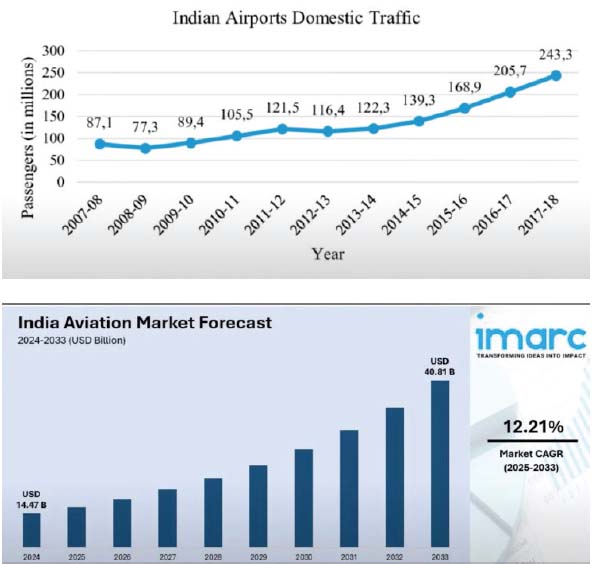 Which in itself would mean a major impact on IndiGo’s growth because these rules are very important. They ensure safety of the pilot. Therefore, the passenger, and therefore of the air transport system. So, they’re very critical. But I’m not sure because when I read, Google searched a lot of it, that they were more in tune with legacy carriers, long haul traffic, but the Indian market as it has evolved over the last 10 -15 years is terribly a low-cost model and it’s a high frequency model.
Now, air pilot fatigue depends also on how many short flights you take. It also depends on how many, say you’re flying for six hours, but in those six hours you took three ups and three downs and you went into three airports on a hopping service. And on the other hand, you had a six -hour flight, you cruise from point A to point B. The fatigue is obviously more in the short haul.
Now, India is also a heavy fatigue market. There is congestion at the airports. There are weather conditions happening, fog, a lot of critical elements. So, we need, obviously, a lot of pilot care. But I think, somewhere, the FDTL rules also need to factor in the fact that fatigue is not a common factor of 6 hours for instance. It will be different on different days.
 So, I think some of that calibration needs to be deliberated further. What are the rules in America? And what are the rules in India? And some of it which is happening here is, and I will tell you this, that Sector Weighted Fatigue Accounting, that needs to be introduced somewhere.
Night duty, now again for different airlines from what I’ve gathered, IndiGo was heavily dependent on night flying, or what we call the window of night flying, 12 to 6, which other airlines are flying less. Now, if you see the system at the moment, Indigo with 65 % market share, Air India, on the other hand, has about I think 25 or something. Now, Air India between Air India is Air India Express and Air India which is a legacy carrier. So, the impact of a lot of it would be mostly felt on IndiGo which is a low-cost model and high frequency driven routes. I think these routes were impacting them more than they were impacting the others.
Now, one thing that weighs upon my mind and I think we need to understand again as a common man. Ever since we privatized air transport. And I am using air transport by choice. As against aviation. You remember the good old days, there used to be two flights of Indian airlines. One in the morning, one in the evening. Delhi -Mumbai. So, it was very simple.
Now, from there, where have you reached? Every minute there is a take -off to Bombay. I mean, I think there are some 80-90 flights between the two cities. Two cities, that’s right. We call these city pairs.
Now, Delhi -Mumbai city pair is one of the heaviest city pairs in Asia. So, that much we have accomplished. And what have we gone over this period? One after the other, airlines have gone down. Indian Airlines, by choice, we removed it out of our system. It was ailing at that time in any case. Ailing because of whatever reasons you want to put on the picture. You had Jet Airways. You had Kingfisher. You had Air Sahara. You had Air Deccan.
Go Air. Now, if you see the pattern of all of them, they were all passionate flyers or people who had a passion for air transport or aviation. They had some connect with the aviation world from before, but none of them had a deep pocket. Now, if I remember the story of IndiGo, it also started small. It grew over the last 20 years, thanks to a very efficient, strictly regimented and controlled and implementation, shall I call it discipline, with no wavering. It created a model of its own. It ordered aircrafts. When the aircraft was being delivered, it sold that aircraft. So, it made a cushion of profit. Then it leased that aircraft from a leasing company.
And then it was paying lease on that aircraft. So, it was creating a buffer for himself through that little money that they would make by ordering aircrafts and selling them at the point of delivery. I also suspect that over a period of time, to keep the efficiencies going, to keep the sustainability going, they were testing themselves too tight.
And so, one of the reasons why FDTL implementation could have snapped is that the system was already too tense. So, when you touched it, it just snapped. So, you are using, I don’t know the technical word, but a certain number of pilots for a certain number of routes in a manner that you are getting the maximum efficiency out of them and deployment on routes to maximize your earnings.
Hemant Bhasin: And some people were also probably saying that communication gap between the regulator and the airlines operators could have also resulted in this particular disruption.
Navin Berry: I stand corrected when I was talking about the ecosystem. One very important part of that wheel, is the regulator. Now, we have regulators in telecom. We have regulators otherwise in other industries where they are needed. In the banking system. In foreign investment sector, I mean everywhere.
Now, in the air transport industry, we have the DGCA. From all accounts, I’m sure DGCA has been acquitting itself to the best of its ability. I don’t think I would like to fault the DGCA in itself. But given the growth of the industry, DGCA at the moment is said to be employing half of its sanctioned staff. So, they are that short staffed. DGCA at the moment is always being run by an IAS officer. We have a very fine person today, Mr. Kidwai at the DGCA. His background is of Indian Forest Service. I am sure the IAS and all the service people have been trained to adapt themselves to an industry or a vertical, whichever they’ve been assigned. But a lot of these industries over a period of time are becoming extraordinarily technical and require a lot of skills and a lot of exposure to the industry before you become critical as being the big executor.
So, in this roadmap that we are looking at, independence of the regulator is also very important. It can’t be just a government department. The touchstone of a regulator is the Federal Aviation Authority in America. It is supposed to hold its head high. penalize aircrafts, penalize airlines, penalize whatever you want. It has to uphold the system and the safety.
It can’t be just a government department. It has to be aviation authority of India, headed by somebody, again we’ll have a problem getting a foreigner. Because these are very intricate, complex jobs. There is a question mark at times we keep raising upon the CEO of IndiGo or the CEO of Air India being foreigners. The CEO of the Noida airport is a foreigner. So, these require clearances from the government separately.
But the question here is, who will head it is not the question. But you do need is a fully empowered, fully staffed federal authority, which has all the wherewithal, which is required. So, for that ecosystem, which I was talking about earlier, the FAA of India, the DGCA also needs to be fully skilled and fully empowered and fully independent. That’s another important thing.
Hemant Bhasin: Now, Indigo today commands a very large market share. How did this level of dominance evolve over a period of time?
Navin Berry: I think no magic to it. To my mind, it’s a very simple equation. You have an airline which has pursued very doggedly, one aircraft type. Till a year ago or so, they were employing only one aircraft type, which meant least maintenance cost because I have only one type of aircraft. It’s to the credit of the IndiGo ownership. They only wanted to run an efficient, enviable airline. There was no other, no hocus pocus. In the good old days, we started these airlines. So, there was one airline that was doing fashion shows up in the air.
Started doing fashion shows. Thriving on liquor being served. Alcohol was then stopped. I think IndiGo’s success story, focused, dedicated, fully committed to their growth model and lean, very lean and thriving on it. It’s only recently that they have moved out of one single aircraft type.
In the meanwhile, what was happening? Airlines were falling off. Now, if you want to say that they were making them fall off, I think that’s absurd. You must answer one question. From public domain again, when the government was trying to hive off Air India, till four years ago, they were not finding buyers. according to whatever one knows from public domain. Air India was prevailed upon by the government, ‘ki bhai tum isko le lo aur chalao’ (please take it this and run it). And Air India at that time, Ratan Tata, with his passion, he was the pilot and JRD’s legacy of Air India. So, I think it was more an emotive issue for them, that let’s take it back. They weren’t seeing money in it. It brings me back to the original question which you asked, the ecosystem. There isn’t money in running an air transport. Why is there no money in running an air transport? I think this needs analysis because only if airlines, if entrepreneurs, industrialists, businessmen see money, then only will they invest in this business.
If you see the legacy again of since the days that we privatized and we had the first influx of East -West and Damania and whoever else. There is not a single corporate player of any known measure who has entered this industry, except for the Wadias, who came in and also went down. They couldn’t manage.
So, today we need, and this is my submission, many sectors of the industry and commerce in the country are being supported through a program called PLI. Which is a product -linked incentive scheme. So, we have given PLIs to, let’s say, the smartphone sector, for instance, the electronics sector. So, Samsung and others have started doubling their production, claiming the product-linked incentives. Some PLI kind of a scheme should be there for airlines.
I think government needs to provide a holding hand somewhere, as now we are realizing how critical air transport is.
Hemant Bhasin: My next question was that the role of government and regulators, what should be the ideal role of government and regulators in balancing safety growth and profitability.
Navin Berry: I don’t have the answer to that but I do know that what is the need of the hour as thrown into public space, thanks to this meltdown at IndiGo. It was a wake-up call that we are treading on something, which I would call it, a little fragile. We are the third largest aviation market now in the world. We are the fastest growing aviation market in the world.
We have ordered the maximum number of aircrafts in the world, between IndiGo and Air India. So, we have got some 80 % or so of India’s inbound travel or international travel through Delhi and Mumbai. We’ll have two airports, functional airports. The second airports are not mini airports but big ones. They’re as big as the present ones. And in the next 5 -10 years, they’ll be competing airport to airport in terms of capability. So, all this will require a very, very strong foundation for the entire air transport ecosystem.
Hemant Bhasin: Now, in a crisis of this scale, should the accountability be Institutional rather than personal?
Navin Berry: Where do you see personal being called in?
Hemant Bhasin: See when personal, when we say it was IndiGo, IndiGo had some issues of their own, which were sort of, when I say institutional, we were talking about the ecosystem. We cannot blame only IndiGo for not implementing that particular regulation, because everybody is part of that. If they knew about it, they could have sort of foreseen the crisis and warned people.
Navin Berry: See, again from media space. There are quite a few committees. The government has one committee of its own. IndiGo has instituted one committee of its own to find out what factors, where did the glitch happen. So, we don’t know where the glitch happened. But the glitch did happen, there was a glitch because of the inability to implement when they went into implementation. So, when they went into implementation, how and why they were unable to implement, that’s another issue. But who should be called to take the blame.
I think somewhere it’s the system. But I just want one more issue to come up here. Lot of people have said, kind of speaking against IndiGo, IndiGo should be penalized. We don’t want any of this, we cannot afford. We cannot afford it. And the other thing is that there is no way the government can run an airline. They have washed their hands of Air India after considerable effort to get rid of what had become a white elephant. Air India in its new management has been persevering over the last three years to bring their act together.
They (Air India) are doing a Herculean job, placing aircrafts, placing this, doing that. So, even they need handholding right now. And IndiGo at this time, I think, needs to be sat down with, to see where the glitch happened, and make sure that all the problems are analyzed, looked into and solved without compromising air safety, sustainability of the air transport system. Which means, if IndiGo has a problem somewhere, we need to all join hands together and sort it out.
Hemant Bhasin: You see, after all, an organization like IndiGo has been pretty right in the sense, in terms of their thinking. Like you said, one aircraft theory, all timely turnarounds and on -time departures and things like that, they’ve been doing some wonderful job.
So probably somewhere down the line between two or three or four sort of factors, this problem did happen. Coming to the future, despite these challenges, are you optimistic about India’s aviation future? Considering the kind of investment which is coming in terms of not only hotels, airports, infrastructure. And our vision of Viksit Bharat by 2040. It’s all one.
Navin Berry: And air transport is as critical as road transport, as rail transport. It can’t be trifled with. It needs handholding. It needs government support. Support, nurturing, without interference, but with very precise oversight. I was studying the airport ownership or airline ownership around major markets. America, all the airlines are private. UK, both the big airlines, private. Ryanair, private. EasyJet, private.
Except for the Middle East, where all the airlines are actually state financed or state owned. And Singapore Airlines is owned by Temasak, which is a government arm for investing globally. But otherwise, China obviously, while they are run privately, they are government owned. With us, all our communication systems, your Airtel, your Vodafone, JIO, all of them are private. Your power supply, the BSNL, Tata Power, all of them private. Utilities and all should be managed by the private sector. There is no government role in it. But government must be able to exercise oversight. For instance, predatory pricing. Not only in airlines but also in hotels.
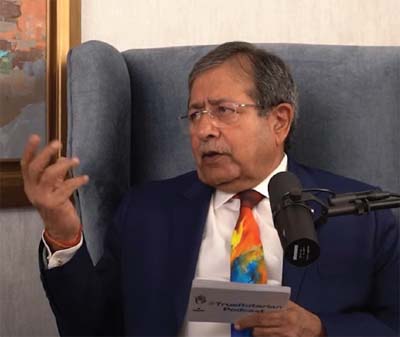 Hemant Bhasin: Then, it is the ecosystem which we have to jointly look at things and come together so that this kind of an inconvenience to the public is avoided totally. Obviously, there is a wake -up call for the government to see why so many airlines are going down. I’m sure government of India is already looking at it. And I’m sure the airline industry is also looking at things to avoid this kind of inconvenience because no businessman likes to see its customers suffering.
Now, any message to indiGo and how do we go forward and make sure that this kind of repetitive errors are not happening?
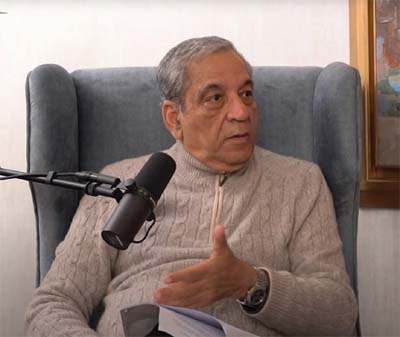 Navin Berry: When you’re talking about the government, I think just to wrap up from my side, yes, this sector must be able to excite and invite more investments, with more investors to run airlines, to run more airports without becoming monopolies. Now monopolies is also a matter of market forces. If there is no one else and I’m the only one who’s adding aircrafts and adding routes, then I will become a monopoly.
Now there’s so much of a euphoria in today’s newspapers that the government has given licenses to two or three airlines and they’re saying, see, we told you we will distribute traffic. I don’t know the credentials of these few new entrants. Full respect to them. I hope they have big pockets that they can actually think big, think long term. It’s a long-term industry.
But your question for IndiGo? A wake-up call, yes, for everyone, this has been a wake-up call. And I think for IndiGo, the way I should see it is that they must be able to somewhere loosen up their system. It’s like I said earlier, possibly when they tried to implement, they didn’t find any more elasticity available to them in the system. And it just snapped. It’s like a rubber band. I mean, how much can you stretch? You’ve stretched it to the maximum already. And the moment you tried to do more, it just collapsed.
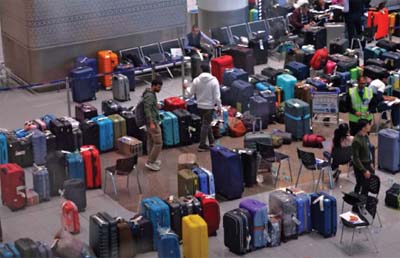 So, I think they need to loosen that rubber band a little bit. The government has already done that. They’ve loosened the rubber band by asking them to reduce capacity by 10%. So, I think that reduction or that loosening has already happened.
And I am sure the government will make sure that unless they are convinced, this 10% is not coming back till they are very sure. But then they have also announced today a new flight from Delhi to Heathrow on their long-haul aircrafts. Which I said, they were earlier single aircraft, single aircraft type airline. Now they are diversifying. They have long haul aircrafts. So, they are now moving into a domain where that also will test their system.
Hemant Bhasin: Navin, thank you so much for sharing your insight. Today’s discussion highlights the importance of preparedness, professionalism and passenger interest in a rapidly growing economy aviation industry. The conversation is about learning and strengthening systems and not assigning any blames.