
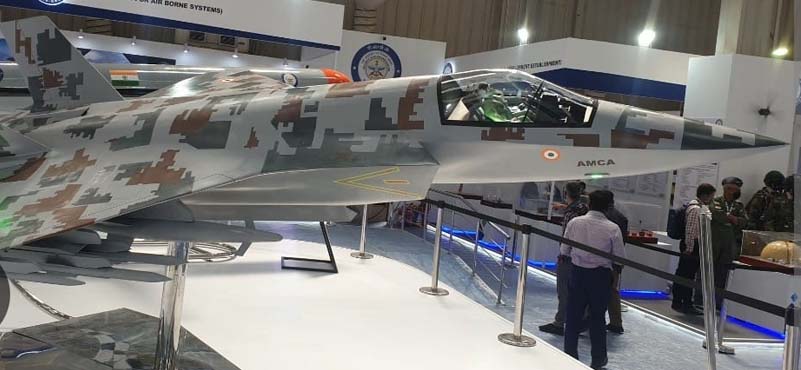
India’s Advanced Multirole Combat Aircraft (AMCA) programme has reached a critical juncture with Tata Advanced Systems, Larsen & Toubro and Bharat Forge shortlisted to develop the nation’s fifth generation stealth fighter while Hindustan Aeronautics Limited (HAL) has been conspicuously left out of contention. This represents far more than a contract award; it’s a fundamental transformation in India’s defence industrial strategy and a race against time to secure air superiority in an increasingly hostile neighbourhood.
The stakes couldn’t be higher. As China deploys its J-20 stealth fighters and Pakistan seeks advanced aircraft through Chinese partnerships, India’s window to develop indigenous fifth generation capability is narrowing rapidly. The AMCA program isn’t just about national pride it’s about ensuring the Indian Air Force can dominate contested airspace in the 2030s and beyond.
The Painful Lessons of Past Delays
To understand why this moment is so critical, one must examine India’s troubled history with indigenous fighter development. The Light Combat Aircraft (LCA) Tejas program stands as both an achievement and a cautionary tale. Conceived in the 1980s to replace aging MiG-21s, the Tejas took over three decades to achieve operational capability, with initial operational clearance coming only in 2013 nearly 30 years after the program began.
The delays had cascading consequences. The IAF was forced to continue operating obsolete MiG-21s far beyond their intended service life, resulting in numerous fatal crashes and earning the aircraft the tragic moniker “flying coffin.” Meanwhile, adversaries modernised their fleets with advanced fourth and fifth generation platforms, creating capability gaps that India scrambled to fill through expensive foreign purchases.
HAL’s production challenges compounded these problems. Despite orders for over 120 Tejas aircraft, HAL’s manufacturing rate has struggled to exceed 8-10 aircraft per year far below the IAF’s operational requirements. Delays in the Tejas Mk 1A variant, integration issues and slow ramp up of production lines have left the IAF with a shrinking squadron strength that currently stands at approximately 29 squadrons against an authorised strength of 42.
The HF-24 Marut, India’s first indigenous jet fighter developed in the 1960s, tells a similar story. Despite initial promise, the programme was plagued by engine development failures and was eventually retired without achieving its full potential. These historical failures aren’t just technical footnotes they represent strategic vulnerabilities that adversaries have exploited.
What Makes This Deal Fundamentally Different
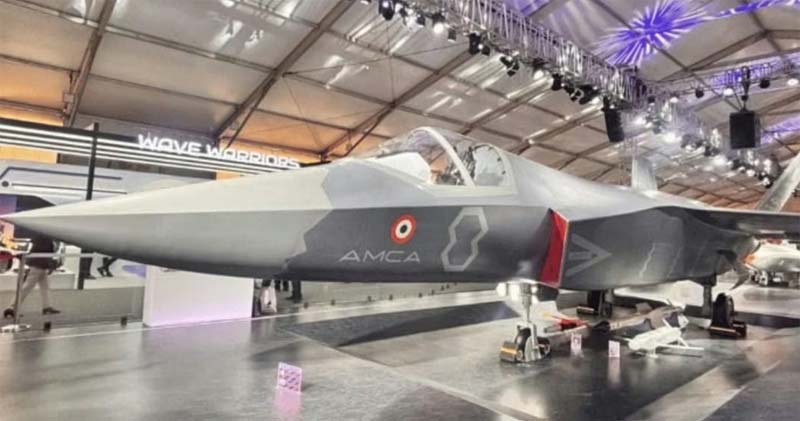
Unlike traditional defence procurement where HAL dominated as the sole manufacturer, this competition marks India’s first major fighter jet programme genuinely open to private sector leadership from inception. The selection criteria emphasised technical expertise, manufacturing scalability, financial strength, and order book capacity not legacy relationships or bureaucratic convenience. This competitive approach signals that India is prioritising delivery capability and innovation over incumbency.
The Rs 15,000 crore prototype development contract, with eventual orders expected for at least 120 aircraft and potentially several hundred as advanced variants are developed, creates unprecedented opportunity for private sector companies to lead cutting-edge aerospace development alongside the Aeronautical Development Agency (ADA). More importantly, the three month timeline for final selection and the expedited development schedule reflect an understanding that time is the scarcest resource India possesses.
The chosen partner will work with ADA to produce five prototypes, with the clear expectation that these will rapidly transition to production aircraft. The government has signalled its intent to compress development timelines dramatically compared to the Tejas experience a necessity given the operational urgency facing the IAF.
The Urgent Strategic Imperative
The geopolitical context makes AMCA development a national security priority of the highest order. China has already deployed over 200 J-20 stealth fighters and continues expanding production. These fifth-generation aircraft possess capabilities stealth, super cruise, advanced sensors, data fusion that fundamentally change air combat dynamics. Fourth generation fighters, no matter how upgraded, face severe disadvantages against stealth platforms in BVR combat.
Pakistan’s growing partnership with China raises the concern of J-31 stealth fighters potentially entering Pakistani service by the 2030s. Combined with Pakistan’s existing JF-17 fleet and F-16s, this would create a qualitative edge that India’s current inventory cannot adequately counter without fifth generation platforms.
The IAF’s squadron shortage amplifies this urgency. With retirement of legacy MiG-21, MiG-27 and aging Jaguar fleets, India faces the prospect of falling to 25 squadrons by early 2030s without aggressive procurement. While imports can fill some gaps, they come with strategic dependencies, technology transfer limitations and financial costs that drain resources from indigenous development.
AMCA represents India’s only pathway to strategic autonomy in air power. Fifth generation technology cannot simply be purchased off the shelf with full technology transfer. The United States restricts F-35 sales to close allies and provides no meaningful technology transfer. Russia’s Su-57 programme has faced development challenges and offers questionable stealth capability. European options remain conceptual. For India to possess genuine fifth-generation capability, it must develop it indigenously.
R&D Catalyst for MSME Ecosystem Transformation
The AMCA programme’s R&D requirements will catalyse India’s MSME aerospace ecosystem in transformative ways that extend far beyond this single programme.
Technology Transfer and Capability Building: Developing fifth-generation capabilities radar absorbent materials, advanced composites, thermal management systems, AI integration, sensor fusion, electronic warfare suites require specialised components that the winning consortium must increasingly source domestically under Make in India mandates. This creates unprecedented opportunities for MSMEs to develop niche
competencies in areas like carbon fibre composites, precision CNC machining, specialised coatings, avionics sub-systems and additive manufacturing for complex geometries.
Supply Chain Deepening and Certification: With production targets of 120+ jets initially and potentially 300-400 aircraft over the programme’s lifetime including advanced variants, AMCA demands robust, quality-certified supplier networks operating to international aerospace standards. MSMEs that achieve AS9100 aerospace certifications, NADCAP accreditations, and demonstrate quality systems for AMCA will gain credentials directly applicable to global aerospace markets potentially enabling them to supply Boeing, Airbus, and other international manufacturers.
Innovation Partnership Ecosystems: The programme’s advanced technology requirements unmanned loyal wingman teaming, directed energy weapons integration, LR precision strike capabilities, cognitive AI driven mission systems necessitate R&D partnerships extending well beyond traditional tier-1 contractors. MSMEs with specialised capabilities in artificial intelligence, machine learning, advanced materials science, power electronics and quantum sensing can become critical innovation partners, often moving faster than large bureaucratic organisations.
Skilled Workforce Development: Large-scale fighter development creates sustained demand for specialised engineering talent across disciplines aerodynamics, structural analysis, propulsion, avionics, software engineering, systems integration. Training programmes, Centres of Excellence, and university partnerships established for AMCA will build a skilled workforce pool that benefits the broader manufacturing ecosystem. These engineers will seed future aerospace startups and technology companies, creating a virtuous cycle of innovation.
Export Potential and Global Integration: MSMEs that prove themselves in AMCA’s demanding environment become potential suppliers for global aerospace programmes. This positions Indian manufacturing for exports in aerospace components a sector where India has historically been marginalised but which represents hundreds of billions of dollars in global market opportunity.
HAL’s Exclusion: Strategic Calculations and Difficult Truths
HAL’s absence from the shortlist represents perhaps the most significant decision in India’s defence industrial policy in decades. The implications ripple across multiple dimensions.
Performance Accountability: HAL has faced persistent and justified criticism for delays across virtually every major programme LCA Tejas, HTT-40 trainer, Light Combat Helicopter, Su-30MKI production, Hawk trainer assembly and numerous upgrade programmes. Despite being a monopoly manufacturer with guaranteed orders and government support, HAL’s delivery timelines have consistently slipped, sometimes by years. Excluding HAL from AMCA sends an unambiguous message, past performance matters and even established players face consequences for chronic underperformance.
Breaking Monopolies and Introducing Competition: For decades, HAL’s monopoly position eliminated competitive pressure. Without rivals threatening market share, the urgency to innovate, improve production efficiency, or meet delivery schedules diminished. Opening India’s most ambitious and strategically critical fighter programme to private players introduces competitive discipline. The shortlisted companies know that performance on AMCA will determine their access to future defence programmes worth hundreds of billions of rupees.
Manufacturing Culture and Efficiency: Private sector manufacturers bring fundamentally different operational cultures. Tata, L&T and Bharat Forge operate in competitive global markets where delays mean lost contracts and inefficiency means bankruptcy. This commercial discipline lean manufacturing, continuous improvement, supply chain optimization, project management rigor contrasts sharply with public sector approaches. AMCA’s aggressive timelines require this efficiency.
Global Partnership Experience: The shortlisted companies bring extensive experience partnering with global aerospace majors. Tata collaborates with Lockheed Martin, Boeing, and Airbus. L&T works with Rafael, MBDA and numerous international defence firms. Bharat Forge has partnerships across aerospace and defence. These relationships enable technology absorption, knowledge transfer, and access to global best practices that can accelerate AMCA development while maintaining indigenous intellectual property.
Risk Distribution and Programme Management: With HAL already managing production of Tejas variants, Su-30MKI upgrades, helicopter programmes, transport aircraft and numerous other commitments, loading AMCA onto an already stretched organisation creates programme risk. HAL’s track record suggests that adding another complex programme would likely result in delays across multiple platforms. Diversifying AMCA to private manufacturers with dedicated focus reduces this risk.
The Path Forward: Urgency Meets Opportunity
The decision expected within the next three months will determine whether India achieves fifth-generation capability by the mid 2030s when it will be operationally essential or faces another decade of delays that leave the IAF vulnerable and dependent on foreign suppliers.
The winner must move with unprecedented urgency. Prototype development cannot stretch across decades as Tejas did. The first AMCA prototype must fly by 2028-2029, with production aircraft entering service by 2035-2036. This compressed timeline is ambitious but achievable provided the winning consortium brings commercial discipline, manufacturing expertise, adequate capital investment and unwavering commitment.
For India’s MSME sector, AMCA represents a generational opportunity to break into high-technology aerospace manufacturing. The companies that successfully integrate into AMCA’s supply chain won’t just support one programme they’ll build capabilities and certifications that position Indian aerospace for global competitiveness across civil and military sectors.
The Moment of Truth
The AMCA programme represents more than aircraft development, it’s a test of India’s industrial capabilities, strategic autonomy and national will. By trusting private manufacturers with India’s most advanced military technology, the government is betting that competition, commercial discipline and innovation will deliver better outcomes than protected monopolies.
The geopolitical environment offers no patience for further delays. China’s military modernisation continues relentlessly. Regional tensions remain high. The IAF’s squadron strength continues declining. India must move with urgency or accept permanent strategic disadvantage in the most critical domain of military power.
This is India’s moment. The question is whether the nation will seize it or repeat the painful delays of the past. The decision in the coming weeks will answer that question and shape Indian air power for the next half century.
ABOUT THE AUTHOR
 Air Marshal (Dr) Sanjeev Kapoor (Retd) a pilot, with over 8000 hrs of flying. He is a flying instructor and a pioneer in aerial refuelling in IAF. He commanded the air-to-air refuelling squadron, a large operational base, Air Force Academy and National Defence Academy. He holds an Airline Pilot License and is part of various think tanks, boards and studies.