If you know the enemy, and know yourself, you need not fear the results of a hundred battles – Sun Tzu.
Looking Back at Galwan
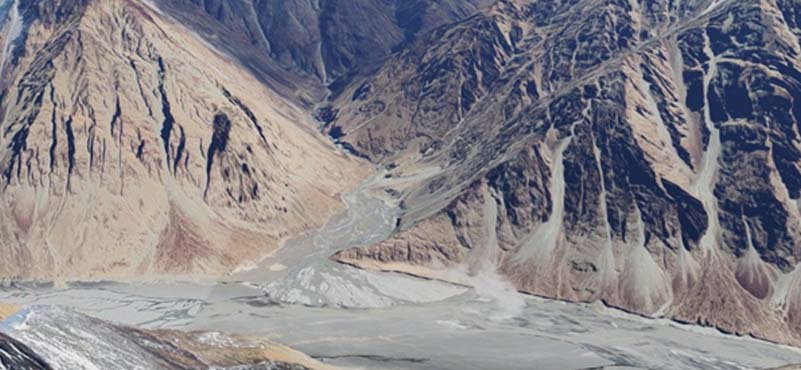
As we recall the indomitable spirit, bravery, and supreme sacrifice of the Indian Army soldiers on the icy heights of Ladakh’s Galwan Valley, that fateful night in June 2020, the question does crop up, how did this happen? More importantly, how did we allow this to happen?
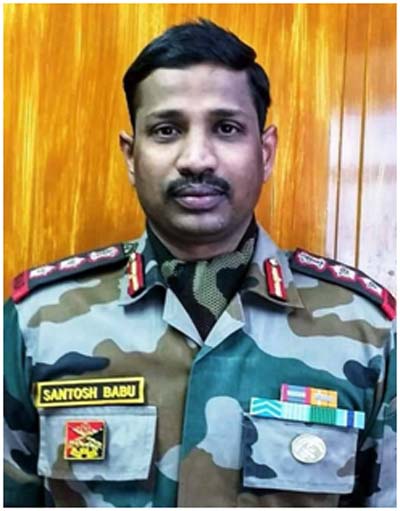
COLONEL SANTOSH BABU,
MAHA VIR CHAKRA COMMANDING OFFICER 16 BIHAR
It was the night of 15 June 2020 when the Chinese carried out an unprovoked attack on Indian soldiers with iron rods and studded clubs, resulting in the death of 20 brave Indian soldiers, including the Commanding Officer of 16 BIHAR, Colonel B Santosh Babu.
In early June 2020, tension was already mounting at Galwan. Senior Commanders of the two sides held a meeting on 06 June 2020 and agreed on a process of disengagement that involved reciprocal actions. Both sides also agreed to respect and abide by the LAC and not undertake any activity to alter the status quo. On 14 June, an Indian Army detachment of about 50 soldiers, led by Colonel Santosh Babu, Commanding Officer of 16 BIHAR, reached near Patrolling Point (PP) 14. Their purpose was to confirm if the Chinese had indeed withdrawn from the location as per the de-escalation plan agreed upon between Indian and Chinese officers. However, the Indian detachment discovered that the Chinese were very much there. When the Chinese were confronted, they were adamant and refused to vacate their positions. At this point, the Indians were in larger strength than the Chinese, and they started to remove the Chinese physically. However, suddenly a large number of Chinese reinforcements arrived and the Indians found themselves on the backfoot.
It appeared that the Chinese were waiting for a chance to start a physical brawl and as it turned out they were totally prepared for it. What ensued was one of the most horrific and gruesome military encounters in modern times, fought with medieval age weapons. The hand-to-hand fighting between Indian and Chinese troops, broke out at around 7 pm, and continued for several hours in pitch dark conditions. The Indians were totally outnumbered. Colonel Santosh Babu and 19 Indian soldiers lost their lives that night.
Zhenbao Island Incident
On 2 March 1969, what appeared to be a routine border patrol encounter escalated into the deadliest Sino-Soviet confrontation since the end of World War II. Encounters were common along the disputed border, typically resulting in verbal confrontations and demands that the opposing side withdraw from contested territory. However, this incident fundamentally differed from previous encounters because it represented a carefully planned Chinese ambush rather than a spontaneous confrontation.
According to Soviet accounts, approximately 30 Chinese soldiers were observed crossing the frozen Ussuri River toward Zhenbao Island, prompting Soviet Border Guard Senior Lieutenant Ivan Strelnikov to lead a patrol of border guards to intercept them.
Soviet investigations later revealed that approximately 300 Chinese soldiers had infiltrated the island under cover of darkness on March 1, positioning themselves in concealed positions throughout the island’s terrain.
When the Soviet patrol approached the visible Chinese contingent on the morning of March 2, the first line of Chinese soldiers suddenly scattered, revealing a second line of troops who immediately opened fire on the exposed Soviet forces. The resulting firefight lasted several hours and involved mortars, artillery, and anti-tank weapons from both sides. The Soviet casualties were devastating: 31 border guards were killed on March 2 alone, including Senior Lieutenant Strelnikov, with 14 additional personnel wounded. The Chinese too, suffered casualties, but their exact numbers were never disclosed.
The Chinese forces, benefiting from their prepared positions and numerical superiority, inflicted these casualties before withdrawing to their side of the border.
Escalation and the 15 March 1969 Battle
The 2nd March incident was only the beginning of an escalating series of confrontations between the two warring nations.
The Soviet leadership, stunned by what they perceived as unprecedented Chinese aggression, began planning a massive retaliation. On March 15, a much larger and more destructive battle erupted when Chinese forces moved as many as 2,000 troops onto Zhenbao Island to confront approximately equal numbers of Soviet forces. The March 15 engagement represented a significant escalation in both scale and intensity. Soviet forces employed heavy artillery, including massive barrages.
The battle resulted in 24 additional Soviet casualties (both border guards and regular army personnel), while Chinese losses, though officially stated at only 12 men, were likely to be much higher.
The psychological impact of these confrontations on Soviet leadership cannot be overstated. It was a surprise to Moscow… none of the border provocations had ever resulted in a military clash. They were entirely unprepared for a serious confrontation.
The Soviets had grown accustomed to routine border incidents that were resolved through diplomatic protests rather than armed confrontation, making the Chinese willingness to shed blood particularly shocking to Moscow’s leadership.
Regard your soldiers as your children, and they will follow you into the deepest valleys; look on them as your own beloved sons, and they will stand by you even unto death – Sun Tzu.
Analysis
A very simple analysis shows a great deal of similarity in both the Galwan and Zhenbao incidents. The modus operandi was exactly the same, and in fact the numbers used as decoy and attack were also almost exactly the same. Both incidents were well planned ambushes, with well thought through contingency planning.
The psychological impact of these series of confrontations on Indian military and political leadership shows that initially they were entirely unprepared. India then responded by rebalancing and reorientation of troops and assets as also quid pro quo actions. But there is no doubt that we were unprepared to visualise and meet the Chinese escalation. This dilemma has also been expressed in the unpublished book by General Naravane; in the directions he received from the political hierarchy “jo ucchit samjho woh karo.”
Perhaps, the only dis-similarity was the choice of weapons used. However, a weapon is a weapon. No border agreement states, that rifles and bullets will not be used against each other, but iron rods and nail studded rods are permitted.
The incidents also show that nothing should be taken on its face value. Nothing that China does, is without deep planning and detailed thought. Repeated faceoffs, were a method of incitement, a trap, a bait, that we fell for hook, line, and sinker.
Another aspect is that, we too should be well prepared and well updated with Chinese strategy and method of functioning. Every military action, past and present, by China should be studied and known to all commanders at every level, who share the border with China.
China does not like to be taken by surprise or be subjected to a strong retaliation. This fundamental lesson emerges from Lt Gen Sagat Singh’s boldness, where during the 1967 clashes at Nathu La, he responded with aggression and gave a befitting response to the Chinese.
Another similarity can also be seen in the Sumdorong Chu incident. In June 1986, an Indian patrol found and objected to the Chinese constructing semi-permanent structures in the Wangdung pasture area, which was Indian territory. The Chinese denied intrusion and asserted that the area belonged to them. The Indian response was measured but resolute. Operation Falcon was launched in which a brigade was airlifted and dominating features around the pasture were occupied. The Chinese then mobilised more than 20000 troops from the 13 and 53 Army Corps. India launched Operation Chequerboard as a show of strength, which finally diffused the situation.
Other Unorthodox Chinese Tactics
The Chinese are possibly the only country to use water a weapon of war. This is another area of deep concern for India. China has been able to control the water flows in all the rivers emanating from Tibet. The two rivers that concern India, where control over water flows has already been established and is in the process of being established are the Sutlej and Brahmaputra respectively.
Sutlej River
At 1.30 am on 1 August 2000, a 50-ft high wall of water, tore from Pari Chu into Sutlej River from Khab on the border of Himachal Pradesh & Tibet. The mountain gorges of Kinnaur, Shimla and Mandi districts in Himachal Pradesh washed away everything that came in its path. By 05.15 am, the water reached Nathpa Jhakri Project. More than 100 persons lost their lives, 120 km of the strategic old India-Tibet Highway was washed away and 98 bridges of various sizes and shapes were destroyed.
The Indian Space Research Organisation (ISRO) had credible evidence that China caused these flash floods. Satellite images showed massive water bodies or lakes upstream in Sutlej basin before the flash floods took place. These lakes disappeared soon after the disaster struck Indian territory. Was this just a trial run or a trailer of what is likely to follow.
Brahmaputra River
As one has been reading for quite some time now, that the Chinese are building a 38-Gigawatt Hydroelectric Power Station at the Great Bend on the Yarlung Tsangpo River just a few kilometres before the river enters India. A gigantic hydropower project will undoubtedly have effect on the quantity and quality of water flow in the Brahmaputra, especially if it can be controlled.
Similar to the situation painted above but on a larger scale, is that, untimely release of Brahmaputra waters by China, could unleash havoc in Assam. This is especially so because the Brahmaputra is a wide river, not a deep river. More the water the wider it will become. The Brahmaputra’s channel is the widest water channel in India, extending more than 10 Km at certain places. Geographically Arunachal Pradesh rests on the Brahmaputra towards the South. One can cross over from Assam to Arunachal Pradesh only over existing bridges. What if sudden release of water increases the Brahmaputra water channel to 20-30 Km. Such an eventuality would be disastrous for India.
Historical Uses of Water as a Weapon by China
China has never hesitated to use water as a weapon. In fact, there is adequate proof of the Chinese inundating large tracts of land to defeat their enemies. During the Song dynasty 960-1279 AD, defenders diverted rivers or broke dams to flood invading armies. During the Ming dynasty 1368-1644 AD, similar tactics were used against Mongol and rebel forces.
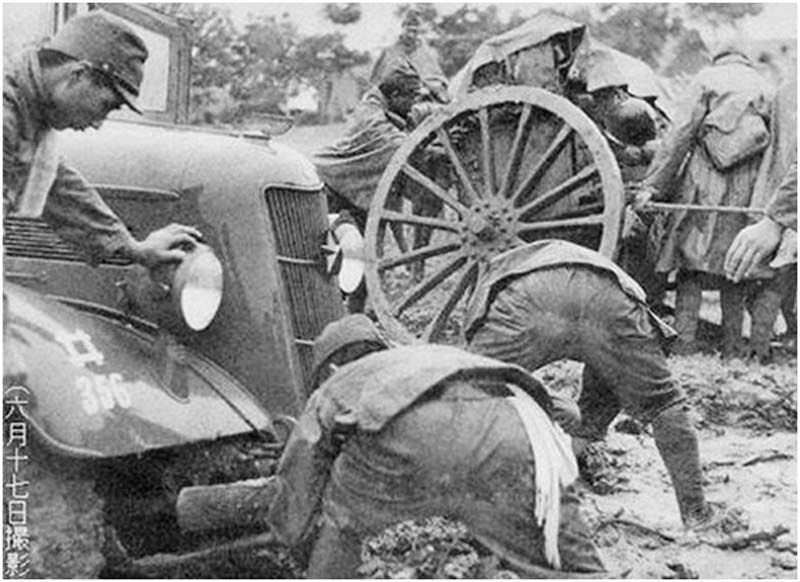
More recently in May 1938 the Japanese 1st Army, threatened the Henan province cities of Kaifeng and Xinzheng. The Nationalist Chinese central government was desperate to slow the Japanese advance. Former Zhejiang Governor Chen Guofu, whose administration had great success rerouting the Huai River to improve irrigation and to control flooding, suggested breaking dikes on the Yellow River, thus creating a flood to slow the Japanese. Between 5-7 Jun 1938, the dike near Huayuankou, Henan Province was destroyed by tunnelling, resulting in the flooding of about 54,000 square kilometres of land. Thousands of villages were destroyed, killing many and forcing several million Chinese civilians to relocate. Several thousand Japanese troops were also killed. It prevented the Japanese from exercising effective control over the entire flooded region. When the Chinese have no qualms about killing their own people, why would they hesitate to use this hydraulic warfare across the borders.
Conclusion
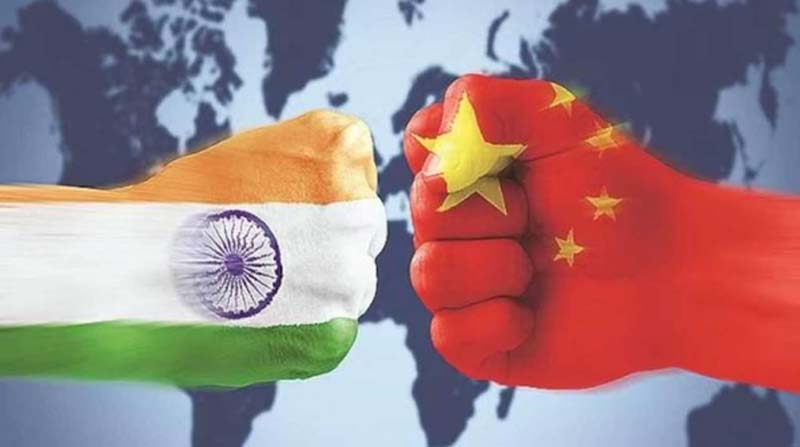
The 3488 km long Line of Actual Control LAC is neither delineated on the map nor demarcated on the ground and lies in one of the most inhospitable high-altitude terrains and icy cold climatic conditions. There are some areas where the Chinese and Indian perception of LAC overlap. It is precisely this difference of perception that China has been continuously exploiting and carrying out salami slicing of Indian territory. Obviously, the LAC does not hold any sanctity for the Chinese. The last one decade has been a decade of military confrontations between India and China, including Depsang in 2013, Chumar in 2014, Doklam in 2017 and Galwan in 2020.
All violations have been initiated by China. India has not once crossed the line or attacked. India has never had any extra territorial designs. China has settled all boundary disputes with Myanmar, Nepal, North Korea, Mongolia, Pakistan, Afghanistan, Laos, Vietnam, Russia, Kazakhstan, Kyrgyzstan, and Tajikistan. Only India and Bhutan border disputes remain to be resolved. Is this a mere coincidence? Or is there a message? It clearly tells you that we are passing through another lull before the storm. It also tells you that you need to change the method of response to Chinese aggression.
On the other hand, water, too much or too little, can create crisis situations. If employed as part of a military strategy it can have unimaginable repercussions. It is a huge bomb sans gunpowder. Can you imagine that while our two neighbours are involving us in a border skirmish, akin to Operation Sindoor, a tidal wave of water is tearing down the Sutlej and Brahmaputra Rivers!
For India the lesson is clear that, till a resolution on the territorial dispute is reached we need to build on our strategic response, our hard power, which is reflected not only in troop strength but also technology, capability and operational readiness backed by doctrines and resolve.
ABOUT THE AUTHOR
 Maj Gen VK Singh, VSM was commissioned into The Scinde Horse in Dec 1983. The officer has commanded an Independent Recce Sqn in the desert sector, and has the distinction of being the first Armoured Corps Officer to command an Assam Rifles Battalion in Counter Insurgency Operations in Manipur and Nagaland, as well as the first General Cadre Officer to command a Strategic Forces Brigade. He then commanded 12 Infantry Division (RAPID) in Western Sector. The General is a fourth generation army officer.
 Major General Jagatbir Singh was commissioned into 18 Cavalry in December 1981. During his 38 years of service in the Army he has held various command, staff and instructional appointments and served in varied terrains in the country. He has served in a United Nations Peace Keeping Mission as a Military Observer in Iraq and Kuwait. He has been an instructor to Indian Military Academy and the Defence Services Staff College, Wellington. He is a prolific writer in defence & national security and adept at public speaking.