Asia’s coffee culture masterfully blends traditions that are centuries old with bold modern innovations, creating irresistible flavors that captivate coffee drinkers globally. The popularity of Asian specialty coffee has grown exponentially over the decades. From Vietnam’s iconic egg coffee and Malaysia’s traditional kopitiam blends to Turkey’s ancient art of brewing finely ground beans, each nation offers a signature style. Today, I believe Asia is no longer confined to the role of raw-bean supplier, it has burgeoned into a driving force in global coffee innovation, turning local traditions into sought-after experiences and making coffee a powerful draw for culture-driven tourism. While several countries have already taken the lead in this movement, India has a strong opportunity to expand and capitalize on its coffee culture beyond its traditional stronghold in the southern part of the country.
Being a coffee aficionado, coffee has always been an integral part of my global travel. Over the decades, a few Asian countries have stood out for their strong coffee culture.
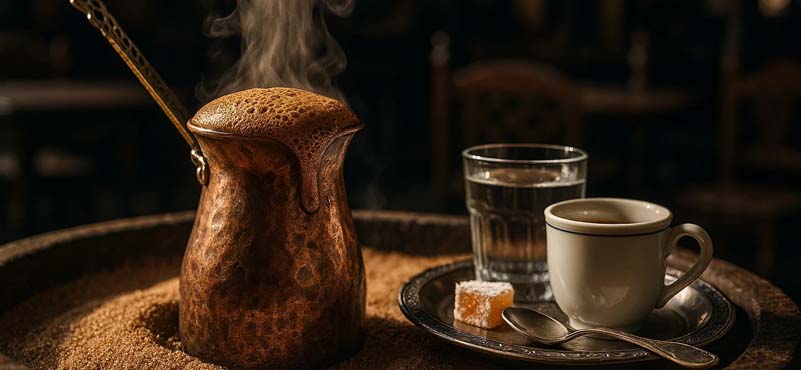
I visited Turkey in 2012 and had the opportunity to witness coffee preparation which unfolded like a ceremony in its own right. Freshly roasted beans ground into an ultra-fine powder, combined with cold water and sugar, simmered over gentle heat in a small pot. The result, a bold, aromatic coffee that represents an essential element of Turkish culture, reflecting generations of craftsmanship, care, and enduring heritage.
Turkey has historically been famous for its coffee. Turkish coffee dates back to the 16th century, its global importance officially recognized in 2013, when UNESCO inscribed Turkish coffee culture on the Intangible Cultural Heritage of Humanity list. Traditional Turkish coffee plays a vital role in the social life and cultural tradition of the country but also has a strong presence across the Middle East and Europe.
In comparison to Turkey, Vietnam has only emerged as a country of growing interest among passionate coffee drinkers over the past few decades. As tourism to Vietnam increased, global attention to its distinctive and innovative coffee culture rose sharply, bringing its traditions under the international spotlight. The Vietnamese have done more than cultivate coffee beans; they have reshaped how coffee is made, consumed, and understood. I believe that Vietnam offers a compelling example of how coffee can move beyond a daily beverage to become a defining feature of national culinary identity. Each coffee shop in Vietnam offers Vietnamese style coffee, not just Italian style coffee. For visitors, experiencing the country’s inventive coffee culture is an essential part of the journey.
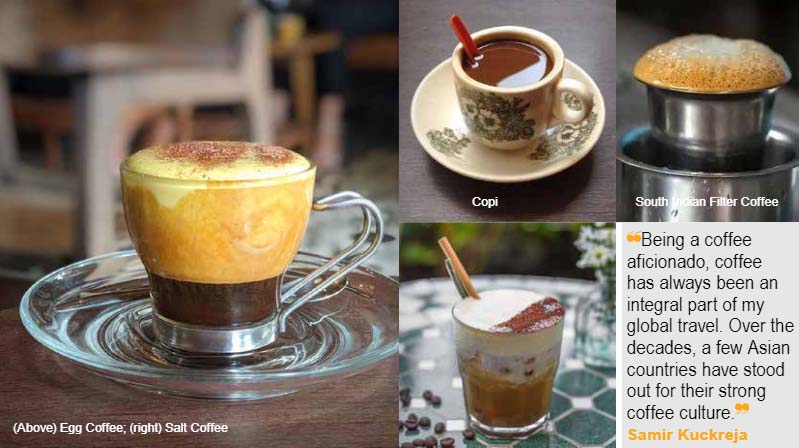
Among its most iconic creations is the Egg Coffee (cà phê trứng), a rich and unconventional drink that has become a symbol of Vietnamese coffee culture. I highly recommend it to complete the Vietnamese experience. First created in the 1940s at Hanoi’s Metropole Hotel, Egg Coffee was born out of necessity during wartime, when fresh milk was scarce. In its place, baristas turned to a mixture of egg yolk, sugar, and condensed milk, producing a creamy topping that transformed robust coffee into a dessert-like experience. Vietnam’s coffee innovation has not stopped with history. In the 21st century, new variations continue to emerge, the most notable includes the Salt Coffee (cà phê muối), which was invented in 2010 in the central city of Huế. Developed by a small local café, the drink gained rapid popularity, both domestically and internationally. By combining the bitterness of robusta coffee with sweet condensed milk and a subtle layer of salted cream, salt coffee provides a very unique sensory experience with a distinctive flavour profile, unlike anything I have tried before. I believe that Vietnam is a prime example of how intrinsic coffee culture can be for tourism.
Not as globally popular or innovative as Vietnamese or Turkish coffee, but worth noting for their deep-rooted coffee culture, is that of Malaysia and Singapore, not just focused on the coffee itself but the entire experience. The coffee culture is rooted in centuries-old coffee shops known as ‘kopitiams’, many of which were established in the years following World War II as communal gathering spaces for migrant communities. The word ‘kopi’, derived from Malay, reflects the region’s localized interpretation of coffee. Traditionally made, using robusta beans roasted with margarine and sugar, then brewed by straining the coffee through a cloth, kopi delivers a bold, distinctive flavor unlike Western-style brews. Even today, kopitiams remain deeply woven into everyday life, always popular with locals either reading the paper or coming with family or friends. They serve not only as places to drink coffee but as enduring social and cultural institutions that reflect the shared history and identity of both Singapore and Malaysia.
Coffee consumption in India is on the rise, driven largely by urban millennials who increasingly favor single-origin Arabica and high-quality Robusta blends with pronounced flavor characteristics such as fruity, nutty, spiced and chocolate notes. In 2024, the Indian coffee shops and cafés market was valued at USD 345.89 million and is forecast to grow to USD 523.08 million by 2030, reflecting a compound annual growth rate of 12.78%. This expansion is primarily supported by rising disposable incomes, accelerated urbanization, and shifting lifestyle preferences. A growing middle class, particularly younger consumers, is increasingly viewing cafés as social and lifestyle spaces rather than places for just coffee consumption.
Asian coffee traditions have also gained traction, with both Indian cafés and consumers showing greater openness to exploring new taste profiles and brewing styles. Vietnamese coffee, for instance, typically served as black coffee sweetened with condensed milk, has become a common menu offering across many Indian cafés. Similarly, Malaysian kopitiam concepts are being recreated in urban centers, such as Kopitiam Lah in Bengaluru.
In this context, I believe India holds significant potential to strengthen and leverage its coffee culture and create tourism around its unique south Indian filter coffee also known as ‘Kappi’ – both within the domestic market and globally. However, a major reason behind the lack of popularity of Indian filter coffee is that India has moved towards a western cafe culture, serving varieties of coffee, specifically Italian espressos and cappuccinos.
However, unlike Vietnamese, Malaysian and Singaporean coffee that has moved into modern coffee shops, Indian filter coffee remains primarily in Indian homes and local restaurants within South India, whereas in North India it remains limited to south Indian restaurants. Certain modern brands such as Sleepy Owl and Third Wave Coffee have a south Indian coffee on offer; however, it is not a common item in premium or experimental café menus. South Indian coffee lacks any specific unique promotion, as its origins and process of production are not publicized enough.
A similar story to that of south Indian filter coffee, that does not have a clear unique ingredient, is that of Singaporean and Malaysian Kopi. However, the latter’s popularity has been supported by the emphasis laid on the historical and social aspect of drinking coffee, its promotion by the government to actively showcase kopi as culinary heritage, as an experience for tourists to understand the different kinds of coffee. In addition, Vietnam is a prime example of how new inventions of coffee drinks are consistently adding to the popularity of Vietnamese coffee culture, building on historical innovation.
Similarly, Indian cafes should also focus on innovating new and unique Indian coffee-based beverages, especially at a time where the demand for coffee within India is increasing. Coffee shops have evolved into multifunctional social spaces, places to work, hold meetings, and spend time with friends and family. This shift has raised consumer expectations, prompting casual dining restaurants and all-day cafes to elevate their coffee offerings. As this demand grows, there is a clear opportunity to move beyond standard Italian-style beverages and embrace coffee experiences that are rooted in Indian tastes and traditions.
To fully realize this potential, India’s engagement with coffee must extend past the export of raw beans toward celebrating its distinctive brewing methods and consumption rituals. Positioning south Indian filter coffee as a culturally rich and globally relevant beverage can serve as a powerful starting point. At the same time, sustained innovation in Indian-inspired coffee creations, drawing from regional flavors, techniques, and culinary heritage, will be essential in shaping a more authentic and confident Indian presence within the global coffee culture.
ABOUT THE AUTHOR
 Samir is the Founder & CEO of Tasanaya Hospitality Pvt. Ltd. which specializes in consultancy work for the hospitality and retail industries. Areas of work include advising start-ups, food technology companies, operational optimization and growth strategies for F&B brands, executive search and organization development and fund raising.
Samir Kuckreja has over 35 years of experience in the hospitality industry. He was CEO of Nirula’s from June 2006 till April 2012. He earlier worked with Yum Restaurants and Mars Hotel & Restaurants.