
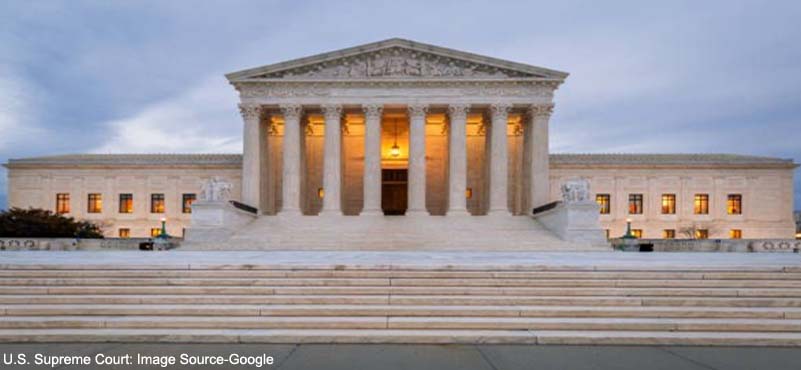
The U.S. Supreme Court’s decision (Learning Resources, Inc. v. Trump, consolidated with Trump v. V.O.S. Selections, Inc.) on February 20, 2026, striking down key Trump-era tariffs, is among the most consequential rulings in modern American trade policy. Beyond invalidating specific tariff actions, it redefines the constitutional boundaries of executive power, congressional authority over trade, and the limits of emergency economic measures (Amy Howe, Supreme Court strikes down tariffs, SCOTUSblog (Feb. 20, 2026, 11:00 AM), https://www.scotusblog.com/2026/02/supreme-court-strikes-down-tariffs/). “Under the current fragile balance between China and the US, Trump has now lost one card, while China still holds all of its cards,” said Hu Xijin, a former editor-in-chief of the state-run tabloid Global Times, on Chinese social media Weibo.
Harold Wilson once observed that “a week is a long time in politics.” This decision demonstrated that, in jurisprudence, even a single day can feel just as long. “If it shakes the whole equilibrium which people in trade have got used to…it is going to bring about disruptions,” European Central Bank president Christine Lagarde said on CBS’s “Face the Nation”. “You want to know the rules of the road before you get in the car. It’s the same with trade. It’s the same with investment.” People “want to do business. They don’t want to go into lawsuits,” she said. She hoped any subsequent U.S. tariff plans would be “sufficiently thought through so that we don’t have, again, more challenges, and the proposals will be in compliance with the Constitution.” Now, uncertainty abounds. The implications extend globally, affecting supply chains, trade diplomacy, and strategic competition, including with partners like India.
Background
The Trump administration imposed sweeping tariffs citing trade imbalances, unfair practices, and national security. These measures relied on: Section 232 of the Trade Expansion Act (national security), Section 301 of the Trade Act (unfair trade practices), and the International Emergency Economic Powers Act (IEEPA). The tariffs covered hundreds of billions of dollars in imports and disrupted global supply chains. Critics argued that “national security” was stretched to justify economic protectionism.
The Court’s Ruling -“The Times They Are A-Changing” (Bob Dylan)
The Court held that the tariffs exceeded congressional authorisation and violated constitutional separation-of-powers principles. Its reasoning centred on three pillars:
- Non-Delegation & Major Questions Doctrine. Congress cannot grant vast economic authority without clear limits. Tariffs reshaping global trade require explicit authorisation.
- Limits on National Security Claims. “National security” cannot be equated with general economic competitiveness. Courts may review and require a direct security nexus.
- Procedural Failures The administration failed to meet statutory requirements, including timelines and consultation standards.
The decision is a major setback for President Trump, who responded by imposing a 10 per cent global tariff after lashing out at the justices who ruled against him. The ruling prompted a defiant response from the president: In a news conference at the White House, Trump excoriated the justices who had ruled against him as “fools and lapdogs” and suggested that they had bowed to foreign influence.

Shortly after the Supreme Court handed down its tariff ruling, Trump announced that he would slap a 10% global tariff on imports under Section 122 of the 1974 Trade Act, a different authority that was not struck down by the high court. Trump over the weekend raised that tariff to 15% – the maximum level allowed for Section 122 tariffs, which also require Congressional approval beyond 150 days, although Trump seemed to brush off that limitation. His administration is already exploring using other laws that can be used to impose tariffs.
The Dissent
The minority argued that trade policy intersects with foreign affairs and national security—areas where the President deserves broad deference. They warned the ruling risks judicial micromanagement and weakens
U.S. Negotiating Leverage
Future options for aggressive trade policy could seek explicit congressional approval; use Section 232 more narrowly, with stronger evidentiary support; apply Section 301 with stricter procedural compliance; rely on WTO-consistent measures; and shift toward industrial policy tools (subsidies, tax incentives, reshoring). At this moment of political churn, critics are questioning the legality of the provision President Trump has used to replace his earlier tariff schedule, raising the prospect of yet another legal battle. However, “Trump will face an uphill battle if he invokes other statutes … to raise substantial revenue through tariffs, rather than as instruments to address specific foreign practices,” Gary Clyde Hufbauer, Nonresident Senior Fellow at the Peterson Institute for International Economics, said.
Global Impact
Despite Trump’s furious reaction and plans for new tariffs, the ruling creates uncertainty for the federal budget and raises questions about refunding approximately $133 billion to $175 billon in collected duties (See U.S. International Trade Commission, ‘Economic Impact of Section 232 and 301 Tariffs on U.S. Industries’, 2023, and related tariff-tracking estimates). The ruling reinforces rule-based trade governance, reduces uncertainty for businesses, and stabilises supply chains. It complicates unilateral economic containment strategies, particularly against China, by subjecting future actions to stricter legal scrutiny. Trade policy can, thus, no longer rest on executive discretion alone. It must operate within constitutional limits while navigating economic interdependence and geopolitical competition.
Theoretical Underpinnings and Empirical Evidence
I have repeatedly demonstrated (e.g., “Aggressive Trump’s Tariffs – Tactical Pause Not A Strategic Reorientation” IMC Journal – March April 2025) that contrary to Trump’s perception of catalysing manufacturing and turbocharging foreign investment in America, this myopic policy would have led not to a win-lose situation but a lose-lose scenario with all participants in the process of global trade becoming worse off in a vicious cycle of higher cost of imported goods, concomitantly higher inflation, fragile trade relations, lower volume of trade, and reduced economic growth and declining confidence from both investors and consumers.
World merchandise trade has expanded from roughly 60–70 billion dollars in the late 1940s to about 24–25 trillion dollars by 2023, according to WTO and World Bank estimates, while global GDP rose roughly 20–30 times over the same period (WTO, ‘Statistics on Merchandise Trade’, WTO Data Portal; World Bank, ‘Merchandise Exports (current US$)’, accessed 2025). This frenzied growth was facilitated by progressive multilateral tariff reductions under the GATT rounds and, later, the WTO framework, which expanded membership and coverage (WTO, World Trade Statistical Review 2019 and subsequent issues).
The Latin expression res ipsa loquitur (the thing speaks for itself), which is a doctrine in common law and Roman-Dutch law jurisdictions, suggests that one of the basic reasons for America’s prosperity is the humongous, internal, free trade area. It would, therefore, be illogical to be oblivious to the highest tariffs America imposed since 1933. Analysts have noted that the effective U.S. tariff rate under recent Trump measures approached or even exceeded levels last seen under Smoot–Hawley in 1930, underscoring the historical magnitude of this policy turn. This thesis can be substantiated by the Smoot–Hawley Tariff Act of 1930, which sharply raised U.S. tariff levels and is widely regarded by economic historians as having aggravated the international dimensions of the Great Depression (Encyclopaedia Britannica, ‘Smoot-Hawley Tariff Act’; Douglas A. Irwin, ‘The Smoot-Hawley Trade War’, The Economic Journal, 2022).
What was prognostically alarming was that this move would have become an exercise in futility with the treatment being worse than the disease – a classic case of the Cobra Effect, when good intentions backfire spectacularly. Such short-sighted, myopic policies strike at the fundamental tenet of capitalism and free trade.
The ominous impact of trade wars and escalating tariffs on growth and inflation across countries constitutes conventional wisdom. Shared prosperity necessitates a more connected, secure, and efficient trading environment – an environment where the size of the global pie not only increases but is also more equitably distributed.
Impact of the Ruling on India
Trump’s actions threw U.S.-India relations into crisis, roiling what was once hailed as the “defining partnership of the twenty-first century.” The US Supreme Court’s ruling represents a pivotal moment in global trade governance, restoring legal clarity to tariff authority and limiting the scope of unilateral emergency-based tariff action. For India, the removal of elevated reciprocal tariffs provides meaningful relief and improves export competitiveness relative to the earlier regime. However, the temporary 10% duty ensures that tariff pressures will remain in the near term. Most importantly, the ruling introduces greater legal discipline and predictability into US trade policy. Protectionist pressures have not disappeared, but they are now more structured, time-bound, and legally defined. This creates a more stable long-term foundation for Indian exporters and strengthens India’s strategic trade positioning, even as near-term tariff risks continue to require careful monitoring.

“Nothing changes. They’ll be paying tariffs, and we will not be paying tariffs,” Trump said at the press conference, when asked about the status of the deal with India. India and the United States have postponed their meeting on the proposed interim trade pact. Both nations have agreed to reschedule the talks for a later date. Officials have indicated that engagement between the two countries continues. The trade talks remain on track.
While the earlier analysis outlined broad economic and strategic consequences, a deeper examination reveals sector-specific effects across trade flows, industrial policy, geopolitics, diplomacy, legal strategy, and long-term development planning. More specifically, five interrelated dimensions will be impacted:
Trade and Sector-Specific Impact
1. Steel and Aluminium
India was directly affected by Section 232 tariffs on steel and aluminium imports, justified on “national security” grounds. If the Court ruling constrains the use of national security as a pretext for economic protectionism, the risk of sudden tariff shocks on Indian steel exports declines. Indian firms gain improved predictability in accessing U.S. markets. The threat of quota-based restrictions becomes less likely without strong evidentiary backing. However, removal of tariffs on other countries, especially China, could increase competition in the U.S. market, compressing margins for Indian exporters. Thus, stability improves, but competitive pressure may intensify.
2. Pharmaceuticals and Healthcare Exports
India is a major supplier of generic drugs to the U.S. Under an expansive executive tariff regime, pharmaceuticals could theoretically have been targeted on “supply chain security” grounds. Judicial limits now reduce risks of abrupt tariff impositions, protect U.S.-India pharmaceutical interdependence, and encourage long-term contract stability. Given that Indian pharma underpins affordable healthcare in the U.S., this ruling strengthens supply reliability and shields Indian exporters from politically motivated tariff threats.
3. Textiles and Labour-Intensive Manufacturing
Indian textile and garment exports were indirectly affected by tariff wars, especially as global supply chains shifted away from China. If U.S.-China tariff differentials narrow due to judicial constraints, India may lose some “tariff arbitrage” advantages. Exporters must compete more directly on cost and quality. Policy focus must shift to logistics, infrastructure, and productivity. This accelerates India’s need to improve competitiveness rather than rely on geopolitical trade distortions.
4. Technology and IT Services
Although tariffs primarily targeted goods, trade tensions influenced digital and technology regulation. Judicial reinforcement of constitutional limits reduces unpredictability in digital trade measures, encourages stable cross-border data and service flows, and enhances investor confidence in long-term U.S.-India tech partnerships. Stability in trade governance benefits firms such as Infosys, TCS, and Wipro operating in an integrated services ecosystem.
Investment and Supply Chain Implications
1. China+1 Strategy Recalibration
Trump-era tariffs accelerated global diversification away from China, positioning India as a potential alternative manufacturing hub. With judicial constraints limiting sweeping tariffs, U.S.–China economic decoupling is likely to proceed more gradually. As a result, diversification decisions will increasingly be driven by structural risk considerations rather than abrupt tariff shocks. India must therefore focus on strengthening core fundamentals, such as infrastructure, labour reform, and policy clarity, since it can no longer rely heavily on U.S.–China tariff tensions as a catalyst for investment relocation.
2. Foreign Direct Investment (FDI)
Greater legal predictability in U.S. trade policy enhances cross-border joint ventures, lowers political risk premiums, and supports long-term capital allocation decisions. Indian firms investing in the U.S. benefit from reduced exposure to sudden trade reversals. U.S. investors in India gain confidence that bilateral economic ties are less likely to be destabilised by unilateral tariff escalations.
3. Global Supply Chain Financing
Regulatory stability plays a key role in determining supply chain financing costs. The ruling reduces uncertainty premiums, lowers hedging costs for Indian exporters, and improves access to trade finance. Reduced transaction costs, in turn, strengthen India’s export competitiveness in global markets.
Geopolitical Strategic Landscape and Security Implications
1. Indo-Pacific Alignment
While India and the U.S. cooperate strategically in the Indo-Pacific to balance China’s rise, economic statecraft became an instrument of geopolitical pressure in the tariff era. Judicial constraints now limit the weaponisation of tariffs, encourage structured, rule-based strategic cooperation, and reduce economic unpredictability within security partnerships. This strengthens trust between India and the U.S. by ensuring that trade disputes do not easily spill over into strategic relations.
2. Defence and Critical Technology Cooperation
India’s growing defence relationship with the U.S. relies on stable economic relations. Reduced trade volatility supports long-term procurement agreements, enhances semiconductor collaboration, and encourages co-production initiatives. Given India’s ambitions in defence manufacturing and advanced technologies, a stable U.S. trade environment enhances strategic convergence.
3. Economic Security Frameworks
The ruling may influence how the U.S. designs future economic security instruments, such as export controls, investment screening, and technology restrictions. If courts demand clearer congressional authorisation for sweeping measures, India gains greater transparency in regulatory risks, improved ability to anticipate compliance obligations, and reduced exposure to sudden unilateral measures.
Diplomatic and Geopolitical Consequences–Syntax of Transformation
Under the Trump administration, India faced trade frictions, including removal from the Generalised System of Preferences (GSP). Judicial constraints reduce the likelihood of rapid punitive tariffs, executive retaliation in negotiation contexts, and unilateral trade escalation. This creates diplomatic breathing space for structured trade negotiations.
The ruling indirectly strengthens rule-based trade governance and may encourage renewed engagement with the World Trade Organisation (WTO). For India, multilateralism aligns with its traditional trade diplomacy, and WTO dispute resolution gains renewed legitimacy. Smaller economies gain protection from unilateral tariff pressure. India benefits when large powers are legally constrained from unilateral action.
India positions itself as a voice of the Global South. The ruling reinforces legal accountability in economic governance, resistance to unilateral coercive trade measures, and advocacy for equitable global trade norms. Diplomatically, India can leverage this moment to strengthen its image as a champion of fair-trade practices.
Macroeconomic and Long-Term Structural Implications of Sprouting Pain Points
1. Export-Led Growth Strategy
India’s export strategy must now rely more on Production-linked incentives (PLI), infrastructure improvements, trade agreements, and domestic reforms. Tariff-induced distortions are less likely to provide windfall advantages.
2. Currency and Capital Markets
Reduced global trade volatility contributes to more stable capital flows, lower exchange rate volatility, and improved macroeconomic predictability. For India, which remains sensitive to global capital movements, this stability is economically valuable.
3. Legal and Institutional Lessons
The ruling demonstrates how constitutional checks can shape economic policy. India may draw institutional lessons regarding Parliamentary oversight of trade policy, limits of executive discretion, and judicial review in economic governance. Comparative constitutional reflection may influence future Indian trade law reforms.
Potential Risks for India
While largely beneficial, risks of loss of preferential advantage over China (weakened tariffs against Chinese goods, regaining competitiveness to intensifying competition for Indian exporters), slower supply chain migration from China if tariff differentials diminish, and reduced U.S. leverage in containing China, potentially altering regional strategic balances in ways India must carefully assess, exist.
Transformed Narrative – Assessment for India
In the near term, there will be greater trade predictability, reduced tariff volatility, and stabilised export planning. In the medium term, there will be a need for structural competitiveness and strengthened diplomatic positioning. Over the long haul, a reinforced rule-based trade order, improved investor confidence, and deeper U.S.-India strategic convergence are likely.
Global ramifications-Where Do We Go from Here?
This measured and carefully reasoned ruling by the U.S. Supreme Court delivers a significant setback to Trump. Given his consistent disregard for domestic legal constraints, his expansive interpretation of executive authority, his indifference to the global rules-based order, long-standing diplomatic relationships, and established norms of civil conduct, such judicial scrutiny was perhaps inevitable. The reckoning, when it came, was emphatic.
The Supreme Court decision to limit sweeping executive tariff powers marks a paradigm shift in the global trade environment. For India, the ruling is more stabilising than transformative. It reduces exposure to sudden, unilateral tariff actions, strengthens legal certainty in bilateral trade, improves investor confidence, and reaffirms the importance of multilateral trade principles. At the same time, it removes some of the incidental benefits India derived from the U.S.–China tariff conflict. Ultimately, however, India’s long-term gains will depend far less on external judicial developments and far more on domestic reform, structural competitiveness, and strategic economic planning. Stability provides a foundation, but it must be leveraged through sustained policy improvements to yield enduring economic dividends.
In the medium term, the trajectory of India’s textiles and apparel, leather and footwear, pharmaceuticals, and electronics industries will be shaped less by temporary tariff advantages and more by the depth of their structural strength. Durable progress will depend on cost efficiency across the production chain, tighter value-chain integration, calibrated diversification beyond traditional export markets, and a more strategic refinement of product portfolios. While new trade arrangements, such as those involving Bangladesh, intensify competition in certain segments, they do not fundamentally undermine India’s established global position, provided domestic firms continue upgrading productivity, strengthening compliance, and enhancing export responsiveness. The decisive factors lie within sustained policy reform, accelerated technological adoption, logistics modernisation, workforce skill enhancement, and deeper integration into global supply networks.
If pursued consistently and coherently, these measures can transform India’s manufacturing ecosystems from volume-driven suppliers into value-driven global partners. Over the next decade, such a transition could expand both domestic and export footprints, generate large-scale employment, particularly for women and semi-skilled workers, and promote more balanced regional industrial development. The implications are therefore not only economic, but also social and structural.
For now, global markets watch with cautious expectation as this recalibration unfolds. The core question is not merely whether India can withstand heightened competition, but whether it can convert pressure into renewal. Will it retreat, fracture, or emerge stronger? The challenge calls to mind Tennyson’s enduring words in Ulysses: “To strive, to seek, to find, and not to yield.” The lines capture a philosophy of perseverance—a refusal to be limited by circumstance or temporary adversity.
What is required is a reform-driven and forward-looking mindset: deeper domestic value chains; stronger investment in innovation and design; business process reengineering to boost productivity; and a deliberate shift from commoditised, price-sensitive goods toward differentiated, high-value products. In an increasingly interconnected and demanding global marketplace—where supply chains are fluid, compliance standards exacting, and consumer preferences rapidly evolving—strategic clarity and operational discipline are essential. This situation, therefore, demands a structural reset in India’s industrial sectors. By aligning policy with technological modernisation, sustainability standards, skill development, and export diversification, India can navigate this transition and realise its long-articulated development ambitions. The path ahead is challenging but attainable: competitiveness must be earned rather than presumed; reform must be institutional rather than episodic; and global engagement must be proactive rather than reactive.
For more than four decades, I have consistently maintained—most explicitly in my article “The North–South Dialogue,” published in The Eastern Anthropologist (October–December 1981)—that what are commonly described as political problems are, at their core, economic in nature. In other words, the struggles that present themselves in ideological, diplomatic, or strategic language are fundamentally rooted in material conditions, resource distribution, patterns of production, and structures of economic power.
My long-held position has been that political tensions between nations, regions, or social groups, particularly those framed within the context of North–South relations, cannot be fully understood without examining the underlying economic inequalities that shape them. Issues of sovereignty, governance, conflict, and even cultural assertion often emerge from disparities in wealth, access to markets, control over natural resources, technological capacity, and terms of trade.
Thus, while political discourse may focus on leadership, policy, or diplomacy, these are frequently surface expressions of deeper economic realities. Political alignments shift, alliances form or fracture, and ideological narratives evolve. But the driving forces typically lie in questions of economic dependency, development, exploitation, and redistribution. To address political instability meaningfully, therefore, one must engage with its economic foundations rather than treating political symptoms in isolation. This perspective, which I articulated more than forty years ago, remains central to my analysis: politics is, in large measure, the organised expression of economic interests.
As the writer Dara Henderson wisely said: “Don’t wait for the light to appear at the end of the tunnel—stride down there and light the bloody thing yourself.” Indeed, tough times are much like physical exercise: challenging in the moment but strengthening in the long run. If India embraces this strategic inflexion point with determination, it can emerge not simply as a survivor of global realignments but as a cornerstone of inclusive growth, industrial revitalisation, and long-term economic resilience amid shifting global dynamics.
ABOUT THE AUTHOR
 Dr. Manoranjan Sharma, Chief Economist, Infomerics Ratings is a globally acclaimed scholar. With a brilliant academic record, he has over 350 publications and six books. His views have been published in Associated Press, New York; Dow Jones, New York; International Herald Tribune, New York; Wall Street Journal, New York.