A rare moment of awakening for Indian Aviation Eco-system
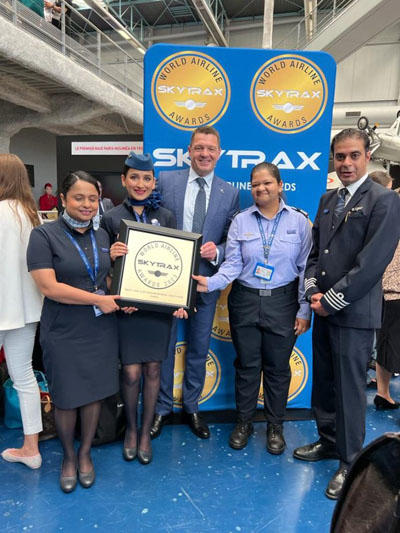
This was a tectonic moment for the airline that has built a global recognition in almost every aspect of the aviation business. A world leader.
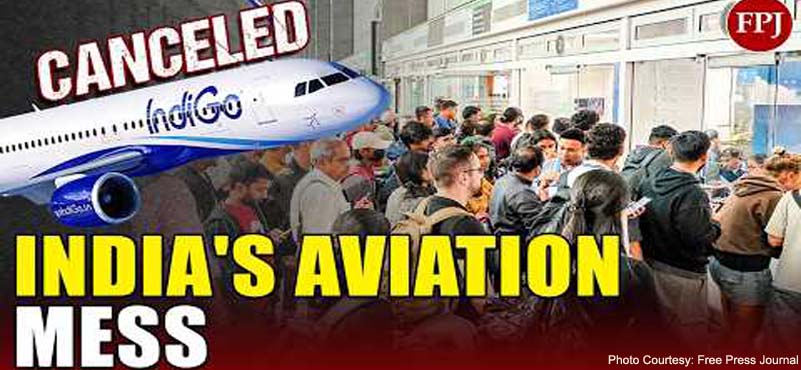
This too could possibly be that other moment – a world beater in cancellations over consecutive days, leading to upheavals across airports, travel plans, families and corporate offices.
We have a successful airline operating under tight conditions becoming world class amidst the equally iconic stress of Indian aviation regulations. Where did it go wrong possibly? Did not hire adequate pilots on time, while its flights were known for being on time? Did not plan for the transition well enough? Or did the implementation go wrong? Earlier reprieves were timely and necessary. After all, this is the country’s vital connectivity, the life line? The far-reaching solution is to address all the issues that have surfaced to ensure an eco-system where aviation is seen as important and pampered just as much as roads and highways. Air transport is the key to growth economy trade and business. Is the system fair, that allows sustainability without being stretched?
In its run up to success, has 6E mastered that enviable market share, it is the Maruti in the skies. It has grown steadily amidst drifting players, including the former combine of Air India, when it was run by the government. Has it manipulated the system, or learnt from it, to remain sustainable, like with its sell and lease aircraft, keep its eyes steady on one aircraft type, stay focussed as an airline and airline only. Keep an eye on costs, while going all out to conquer the skies?
It has been a success story that few Indian companies can talk about. Right now, as the crisis unfolded, yes, there are questions, of a different type, and these would need to be both answered and addressed.
In the winter schedule the airline was given another increase of flights – 1,323 additional flights that constituted growth of 5.9% year on year. How come it would fly them, in the face of the soon to be implemented FDTL rules? Where from would it bring those pilots to fly those additional flights? Does it underscore the possibility that the airline had been given an indication that they would get another extension, and that did not come, last minute. Should it have then preferred to pay the penalty (or whatever other consequences) rather than enforce these new rules, when it knew it could not implement them? Isn’t there a roster capability that gives the planner heads up on what he can do, and what he cannot?

Did the understanding of yet another reprieve break down to a point where the airline said they will implement them knowing full well they cannot? What brought this final crisis to a head, when it could have been averted – face those consequences of not falling in line last minute, as per commitment made to the High Court, rather than bring this disruption? Clearly, those responsible for this error in judgment and its consequences, leaving a few thousands of passengers stranded across airports, should be taken to task?
The new FDTL rules were a regulatory change by the DGCA, but their timely rollout was a commitment given to the High Court. The rules increased mandatory weekly rest from 36 to 48 hours and imposed stricter limits on night operations, among other safety measures. The controversy and mass flight cancellations (primarily by IndiGo) arose because the airline was reportedly not prepared to implement the stricter norms by the November 1, 2025 deadline, leading to a pilot shortage when the rules came into full effect.
While knives are drawn out, it also important to support a network that provides 65% air transport to the nation. A high-level enquiry has been instituted, and the truth will prevail, soon. Meanwhile, let us also examine other related issues with regard to the bigger picture. A good time to give a run down on the bigger picture around our aviation eco-system.
THE BIG DISRUPTION
As per reports, the airline has submitted to the DGCA, that disruptions arose primarily from “misjudgement and planning gaps in implementation of the second phase of the new FDTL rules, with the airline accepting that the actual crew requirement for the new rules exceeded what it had anticipated”. This was a mistake for which the travelling public paid heavy. It also showed the vulnerability of our eco-system, with dependence upon a single airline holding as much as 65% of the national inventory.
In its run-up, has it been too oblivious to the human factor? Did it treat its pilots like monkeys with a hard day’s night and day included, which is one of the allegations going around? With an eye on costs, running with at least 65 pilots short, with its pilot to aircraft ratio less favourable than its competitors? Was this then playing with safety? How much of it was a necessary price to pay – when all others have ducked, Indigo has stayed firm in the cockpit, held its head high, not only in India but amongst its global peers.
Should that be enough to allow this incident to pass? Or the hidden truth is somewhere in between. That to be profitable under the Indian circumstances, you have to be lean and thin, stretch as much as you can, which it did, till this moment happened, when it snapped. Which ironically, Jet and Kingfisher did not do, and went down!
6E AND THE NEED FOR A NATIONAL AIR TRANSPORT VISION
India’s aviation story has always been one of high ambition operating under tight constraints. Airlines are expected to deliver world-class reliability in a system that is still evolving — from infrastructure to regulation to talent pipelines. In this ecosystem, IndiGo (6E) has stood out as a rare Indian example of consistent operational excellence, efficiency, and scale. And yet, even the most successful airline can come under stress when the system around it remains fragile.
For one reason or the other, Indian aviation has also been the graveyard of many an airline – from the early days of privatisation, witness the fall of East West, Damania, Air Deccan, Air Sahara, Kingfisher and yet another world beater, in Jet Airways.
The Making of a World-Class Airline Under Constraints
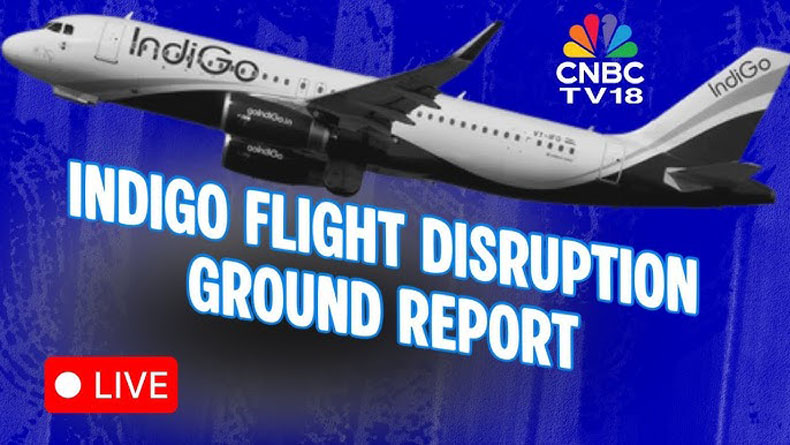
IndiGo’s rise has been extraordinary: Operational discipline almost unmatched in global low-cost aviation, its market share built on consistency, not glamour, even as other airlines were equally free to grow. There has been no instance of the airline trying to stifle the growth of any other. It has built its own distinct brand identity tied to reliability, not merely tickets sold. It has been steady and persistent to a cause – building its fleet strategy aligned to cost control and network depth, inextricably linked to the prevailing cost structure, the need to keep your head over the water, as otherwise it is easier to sink than to swim, leave alone ensure a steady tailwind. What it has built is an abiding culture of simplicity and punctuality that passengers have trusted, as the airline has continued to grow, build scale, profits for its stakeholders and comfort for the travelling public, the ease in travel. If it has been Indigo, it has been trusted to be on time, bringing a known and tried standard of service to the customer.
This is what made 6E an iconic Indian airline, one that became central to India’s air mobility. But even world-class operators operate within the system they belong to. The Indian system has not been easy. We are gradually coming out of a mindset, still not out completely, that air travel was luxury, for the elite and had to be frowned upon. Yes, mobility, thanks to government initiatives, especially in the last ten years, giving rise to airports, upgraded infrastructure, air travel has caught on. But yet the ruling class in government perhaps still considers airlines and airports as secondary in importance to railways and highways.
IndiGo is not just an airline. It is 65% of India’s air transport system, the single largest driver of domestic connectivity, the primary carrier for India’s aspirational middle class, the backbone for small-city travel and economic participation, a stabilising force in a volatile aviation market. At this juncture, 6E needs time to stabilise operations while the ecosystem catches up within the airline. Its transition stress is not a failure — it is a systemic signal. Which does not mean we can overlook this immediate incident, which in itself needs to be probed, and lessons learned from it. Both for the airline and for all concerned.
The Stress Points: Where Did Things Tighten?
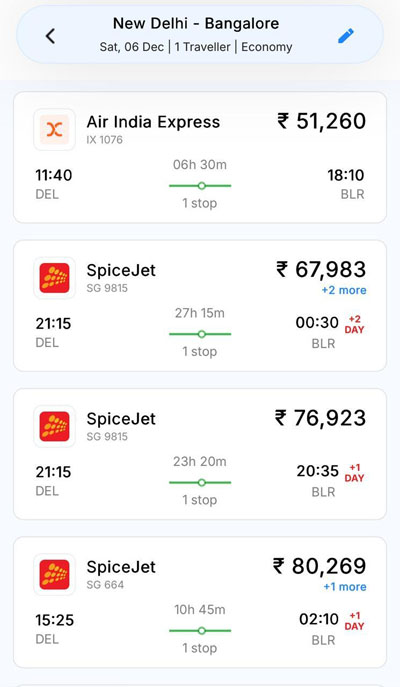
India’s aviation environment is uniquely complex. This incident is a clarion call to align all the stakeholders onto the same page.
- Regulatory stress & compliance burden: Indian carriers operate with some of the strictest cost-adding regulations — from crew norms to airport charges and taxation. Compliance is non-negotiable, but the lack of predictability in regulatory evolution creates shocks.
- Talent and pilot shortages: This is where the industry also falls short — including IndiGo. India does not create enough pilot training capacity, airlines cannot not hire fast enough to match growth, transitions to new aircraft types (A320 to A321neo, potentially XLR) demand massive re-training cycles, a shortage does not appear overnight; it slowly grows until it becomes visible.
- Planning and the reality on the ground: On paper, fleet transitions are mathematical. In practice, they are human, operational, and regulatory. Did the planning fall short? — Possibly on the pace of pilot availability, possibly on anticipating regulatory tightening, possibly on managing simultaneous fleet and schedule transitions. But more than that, implementation becomes vulnerable when the ecosystem is stretched.
- Making money is not a crime: businesses must make money, they need to be sustainable, make profits. It is important to compare with competing eco-systems around the world. Take examples of world class carriers like Singapore Airlines, Emirates and others – our airlines must be given an environment that helps nurture them.
The Far-Reaching Solution: Aviation as Essential Infrastructure
Air transport and National Interest. Aviation is not just another industry. It is vital national connectivity — the circulatory system of a modern economy. Indians travel more than ever before; air links support tourism, trade, supply chains; India’s Tier 2–3 cities depend on IndiGo for access to opportunity; a 65% network provider and the government need to align better. This is not about favouring an airline. It is about protecting the nation’s connectivity spine.
India pampers highways. It celebrates expressways. It invests heavily in metros. Aviation must be treated the same way. A far-reaching corrective plan means:
- Building pilot capacity with more flying schools, that bring quality training, not fly by night; faster type-rating pipelines, domestic simulators instead of foreign training, long-term planning aligned to fleet additions.
- Regulatory stability should ensure systems where predictability is oxygen. Regulation must be strict, but it must also be stable, digital, and time-bound. There has been talk of an independent regulator for long, but apparently never taken seriously enough. An FAA kind system needs to be put into place. Independent oversight is critical to a healthy air transport system.
- Airport expansion with airline realities in mind, with fewer slot constraints, overpricing, and inconsistent airport processes add to airline stress. For too long, we have tried to balance airport interests along with those of airlines. Not every time these have been successful. Airports need to be smart and functional; they do not have to be statements in themselves.
- Accepting aviation as a nation-building tool: Air transport is not a luxury — it is essential infrastructure for economic growth, business connectivity, tourism, supply chains and global competitiveness. Time is money, and air travel is smooth, quick and reliable – this is what Viksit Bharat will need. Therefore, the country needs to understand and accept that aviation needs to be nurtured exactly like roads, rails, ports, and digital infrastructure.
It is that rare national aviation moment?
India is entering an era where aviation will define competitiveness, mobility, and economic aspiration. Airlines cannot be left to navigate growth alone while the system lags behind. IndiGo’s challenges are not just IndiGo’s. They are India’s aviation challenges. And the solution is not piecemeal relief — it is a full recalibration of how India sees, regulates, and supports aviation.
This is a defining moment to rebuild aviation as a national priority — so that world-class airlines can grow in a world-class ecosystem.
A point to ponder over. In this rush to claim the tag as being the fastest growing aviation market in the world, do we have all hands-on-deck? Are we ensuring that critical balance between aircrafts, pilots, airports, ATC and the mechanism that oversees them in totality. A qualitative and honest study is the immediate need of the hour. Critical gaps need to be plugged.
Another lesson, another kind of introspection. Should success breed arrogance? What about Humility! On the ground, in service of the commuting public. In recent times, Indigo staff, especially at airports, appeared stretched, almost in vain at times, that they were doing their duty, following procedures, with less regard to convenience and comfort of the passenger. Often enough, rude to the point of saying take it or leave it. Is this moment giving vent to pent up frustrations of the travelling public?
Finally, has the airline been pressing too hard, in its quest to keep up to its laurels won? Is the pace of inducting new aircrafts being balanced adequately by strengthening every department, with people, processes and results? The airline’s senior management may well need to introspect. Don’t stretch the system that it gets over-stretched, and it snaps, like it did this time. This incident would mean taking stock of capacity, resources to deploy it; a moment to take a pause, looking back and looking ahead!
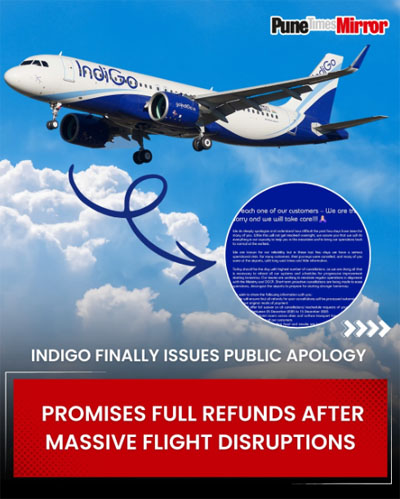
Meanwhile operations are returning to normal. As of 8th November, the airline reported that it operated over 1800 flights, up from 1,650 the previous day. It had a 90% on-time performance (OTP) across the entire network, up from 75% the previous day. Network coverage was fully restored. While IndiGo is progressing further on the path to full recovery, the airline has repeated its commitment to assisting its customers and addressing their queries and requests on a war footing. To this end, they had expedited several internal processes. INR 827 crores had been refunded, and the rest was under process for cancellations upto 15 December 2025; facilitated stranded customers had been facilitated between 1 to 7 December 2025 to ensure well-being with over 9,500 hotel rooms and close to 10,000 cabs/buses; over 4500 bags had been delivered to respective customers, and the airline was on track to deliver the rest in the next 36 hours. Such was the enormity of the problem that the airline had created, no wonder, there has been hue and cry across the travelling public.
ABOUT THE AUTHOR
 Navin Berry, Editor, CS Conversations, over five decades has edited publications like CityScan, India Debates and Travel Trends Today. He is the founder of SATTE, India’s first inbound tourism mart, biggest in Asia.
Blogs at: https://www.csconversations.in/nb-blogs