
Background
Every profession has its own nuances and peculiarities. Same goes for the defence forces. It is an institution that thrives on tradition and legacy. There is no written rule book on how an officer must conduct himself within a unit, or even vis a vis Officers, Junior Commissioned Officers (JCOs) and Other Ranks (OR). An officer learns by carefully watching others, absorbing the culture and ethos of the regiment, and understanding the sentiments of men under command. Some things are done unsaid. One such activity revolves around the religious parades that are conducted within the unit. An officer is expected to partake in all activities that are conducted within the religious place, be it a Mandir, Gurdwara, Masjid or a Church, irrespective of his/her own religion. All hesitations are put aside for the sake of being one of the team and earning respect of the men. If that does not happen, there would be counselling, more than once. Every possible attempt will be made to make the officer understand. Only if the problem persists then the legal option comes in. Such reluctance to accept another faith is not uncommon. This not about Christian, Muslim, Sikh, or Hindu, it does and can happen to anyone, but better sense eventually prevails. The Army has been led by officers of all religions, but the Army Officer per se has no religion. His/her religion is the same as the men under command. Therefore, do not let this narrative get highjacked into a Hindu versus Christian, because that is exactly what it is not, it is about obedience and discipline. There have been legendary Christian commanders of this very army like Brigadier Desmond Hayde, MVC, and Major General Salim Caleb, MVC, who have done their Regiments and the Nation proud.
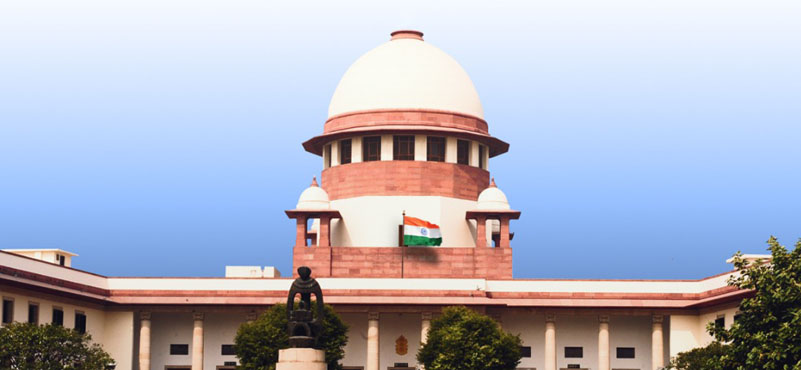
On 25 November 2025 a Supreme Court bench of Chief Justice Surya Kant and Justice Joymalya Bagchi declined to interfere with the Delhi High Court’s 30 May order that had upheld the dismissal of Lieutenant Samuel Kamalesan saying the officer had kept his religion above a lawful command from a superior, which was “clearly an act of indiscipline” Describing him as a “misfit,” the top court backed the Army’s decision to terminate his service in 2021.
The officer had reportedly argued that participating in religious rituals went against his Christian beliefs. Commissioned in 2017, Lieutenant Samuel Kamalesan was posted to a Sikh Squadron of 3 CAVALRY. He faced disciplinary proceedings for declining to enter the inner sanctum of the Regiment’s mandir and gurudwara during mandatory parades.
There is no doubt that his attitude vitiated the atmosphere in his Regiment, undermined unit cohesion and troop morale. Hence, his dismissal was the only logical option.
Un Becoming Conduct
Senior Advocate Gopal Sankaranarayanan, who appeared for Lieutenant Samuel Kamalesan, argued that the officer had committed only a “single infraction” by refusing to enter the sanctum at his place of posting. He went on to state that: “entering the sanctum sanctorum is a violation of my faith… It is not that when you join the Army, you lose the vestiges of your faith,” he said, adding, “No one had a problem. Only one person.”
That ‘one’ person happened to be the Commandant of the Regiment who is entrusted with the responsibility of command and control and upholding the honour and traditions of the Regiment apart from looking into the welfare of the men he commands. Command of a unit is undoubtedly the most significant responsibility entrusted to an officer. He is not just ‘one person’ but ‘the person’ as far as a unit is concerned. He is the person who has to hold the Unit together through thick and thin, and must be completely impartial and fair in all respects.
But apart from that it can be said with certainty that this was not a solitary decision but was supported and upheld by Commanders in the chain till the highest level.
Justice Bagchi noted that Lieutenant Samuel Kamalesan was counselled by a Pastor who said there was no issue entering the sanctum sanctorum. But the officer had his own personal interpretation and did not conform.
CJI Surya Kant said the leaders of troops must “lead by example.” “You are the group leader. In your team, there are Sikh soldiers, and because of them, there is a Sikh gurudwara… A gurudwara is one of the most secular places to visit. The tone and tenor and manner in which he is acting, is he not insulting his own soldiers? We are surprised he does not even follow the advice of the Pastor,” he said.
“What kind of message is he sending? Gross indiscipline by an Army officer. He may be an outstanding officer but he is a misfit for the Indian Army. The amount of responsibilities our forces have at this time… this is not what we want to entertain,” the Court added.
3 CAVALRY
The 3rd CAVALRY is one of the oldest Armoured Regiments of the Indian Army. It owes its origin to two older Regiments, the 7th Irregular CAVALRY, which was raised in 1841 at Bareilly, and the 17th CAVALRY, which was raised at Sultanpur in 1846.
Third CAVALRY earned the sobriquet of ‘Patton Wreckers’ when their Centurion tanks stopped the advance of Pakistan’s Armoured Division in the battle of Assal Uttar in Punjab during the 1965 War. The Regiment commanded by Lieutenant Colonel (later Major General) Salim Caleb (a Christian) led his troops valiantly to victory, earning for the Regiment the Battle Honour, ‘Asal Uttar’ and a Theatre Honour, ‘Punjab 71.’ He was deservedly awarded the Maha Vir Chakra.
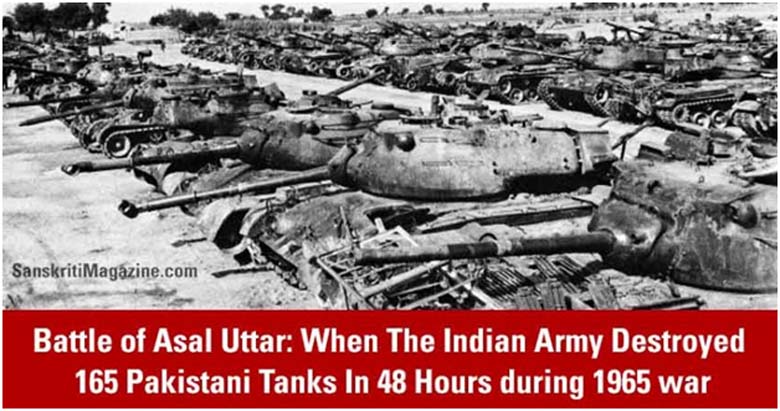
The troops of the 3rd CAVALRY Regiment, comprise of a squadron each (approximately 120 men), of Jats, Rajputs, and Sikhs. Since raising the Regiment has been commanded by officers who have been Hindu, Sikh, Muslim, and Christian. In fact, Colonel (later Brigadier) Kutab Hai was a Muslim officer who commanded the same Regiment. As a Squadron Commander he was at the forefront of all religious activities in the Gurdwara. This is most common in the Indian army.
Another example is Lt Gen Ata Hasnain of the GARHWAL RIFLES who says, I quote, “most importantly, as a young company commander and a Commanding Officer (CO), I would ensure every operation began and ended with a short gathering at a small makeshift temple constructed by the troops. Not because it was my ritual — but because it was ours.”
At the Regimental level the officer would have been guided and schooled regarding the rich traditions, history, and ethos of the Regiment as well as about the culture and religious beliefs of its troops. But he chose to put his own faith and belief above the considerations of the Regiment. The act of dismissing him would also have been well thought out and resorted to only after all counseling’s had failed.
The Ethos of the Army
The Indian Army, like the other sister services, is defined by its values, ethos, and traditions. While the Army is a large organization, its core is a unit/regiment/batallion, that can best be termed as the ‘soul of the Army.’
There are units which are based on one class or community such as the Sikh, Jat, Rajput, Dogra, and Gorkha Regiments. These maintain the places of worship of their troops and have Religious Teachers posted as per the religion of their men. Then there are those that have a mix of communities but from a particular area such as the JAK LIGHT INFANTRY and JAK RIFLES, where the men mainly belong to Jammu & Kashmir and maintain a Mandir, Masjid and Gurdwara.
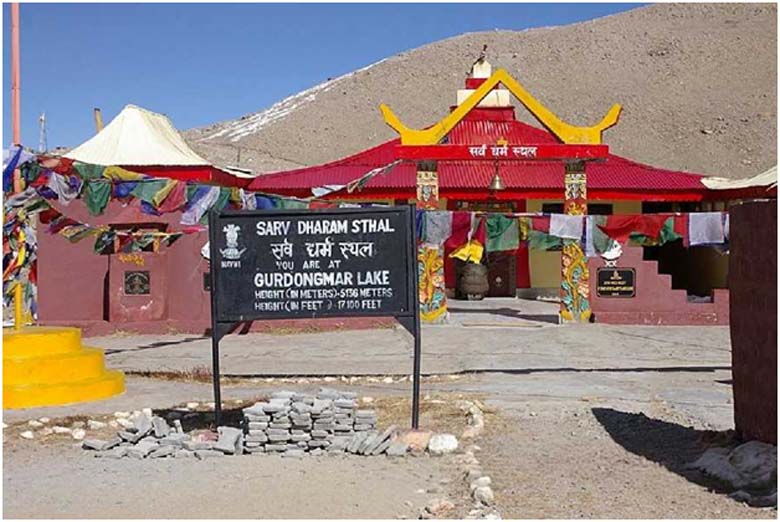
The older Armoured Regiments such as 3 CAVALRY are fixed class with each Sabre Squadron belonging to a particular class composition. Some of the newer regiments are based on All India All Class, concept. Since the troops in some cases belong to more than one religion, the unit has a Sarv Dharm Sthan, which is a building with a Mandir, Gurudwara, Masjid and Church, all in one. It is very common and apparently natural for troops irrespective of religion to collect at the Church during Christmas, or the Masjid for Eid celebrations, or the Gurudwara for Gurpurab. In fact, there have been occasions when the Maulvi has welcomed the birth of Sri Krishna during Janamastmi, because the Pandit was on leave.
Religion in the Armed Forces is a binding force that is visible during operations and this needs to be clearly understood. The basic function of all military units is to undertake operational tasks in war and train for that during peace. It is the faith of the troops in their religion and their training that affords the strength to press-home against a well-entrenched adversary at such times. Faith is used to strengthen the fraternity which in turn has faith in each other.
For an officer in the Indian Army, it would be fair to say that, the mother is the Nation, the father is the Indian Army, family is the Regiment and religion is that of your troops. Your own religion does not figure anywhere. We are proud to say that one of authors is a Sikh and the other Hindu, but we both participated in the religious beliefs of the troops we commanded, in which the former prayed with his troops in both Mandir and Masjid and the latter in the Gurdwara. This is the very essence of the Indian Army.
Religion in the Defence Forces is a facilitator. It is there because it provides the belief and support in difficult situations. Acting against the ethos of a regiment/unit/battalion, a failure to obey a lawful command, can be termed as rebellion. Such an act cannot be overlooked, as it would have devastating effects. It would breakdown the very ethos of command and control, as it would open doors to questioning every lawful command, and may well result in a mutiny. Therefore, the decision of the Commanding Officer to terminate the services of the officer in question, though difficult, had to be taken for the good of the Regiment and the Indian Army, and must be respected.
Though the Army does have a very structured way of judging an individual by means of the Services Selection Board (SSB) before he is found fit to be trained as an officer. Kamalesan’s rigidity regarding his belief overriding that of the organisation seems to have been overlooked. There definitely needs to be an examination of his reports including those of the psychologist at the SSB and while he was in the Training Academy.
Conclusion
While all officers in the Army are free to practice their own beliefs and religion, in private, publicly in the Armed Forces, they adopt the religion of the men they command. It is this practice that results in officers attending and partaking in the various religious rituals of their troops irrespective of their own faith.
The fundamental right to practice religion cannot be applied in such circumstances as the individual’s interpretation of religious right is not offended. In fact, in the Army religion is seen as a uniting factor for all communities. To quote Lieutenant General Ata Hasnain “in uniform, personal belief cannot be allowed to overshadow institutional duty.”
It is the religion of the men that is paramount for an officer and not his own and that’s why it is often said that the Army has its own religion and an officer assumes the identity of his unit. It is this very tradition that was challenged by Lieutenant Samuel Kamalesan.
This judgment is not against any individual or faiths, but it is in support of traditional military ethos. The Army and the Regiment come above everything else. Any attempt by anyone, to upset this balance must be dealt with a heavy hand. Personal belief has no place in regimental duty. Regimental Mandirs, Gurdwaras, Churches and Sarv Dharm Sthals, are symbols of regimental identity, tradition, morale, and shared purpose. They nurture a sense of belonging, not just worship. Any action to obfuscate this matter or to give it a political or religious fervor should be vehemently resisted. We must respect the last bastion standing and not interfere in the ethos of a perfectly well functioning institution.
ABOUT THE AUTHOR
 Maj Gen VK Singh, VSM was commissioned into The Scinde Horse in Dec 1983. The officer has commanded an Independent Recce Sqn in the desert sector, and has the distinction of being the first Armoured Corps Officer to command an Assam Rifles Battalion in Counter Insurgency Operations in Manipur and Nagaland, as well as the first General Cadre Officer to command a Strategic Forces Brigade. He then commanded 12 Infantry Division (RAPID) in Western Sector. The General is a fourth generation army officer.
 Major General Jagatbir Singh was commissioned into 18 Cavalry in December 1981. During his 38 years of service in the Army he has held various command, staff and instructional appointments and served in varied terrains in the country. He has served in a United Nations Peace Keeping Mission as a Military Observer in Iraq and Kuwait. He has been an instructor to Indian Military Academy and the Defence Services Staff College, Wellington. He is a prolific writer in defence & national security and adept at public speaking.