
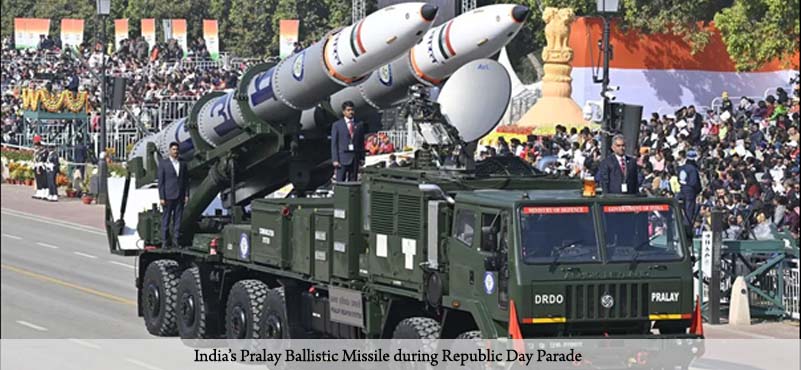
When India launched Operation Sindoor in May 2025 following the horrific Pahalgam terror attacks, it wasn’t just a retaliation—it was a glimpse into the future of warfare. Over the course of 88 intense hours, India executed a flawless “non-contact war.” Instead of sending thousands of ground troops across a heavily fortified border and risking mass casualties, India relied on BrahMos and SCALP missiles to systematically dismantle terror infrastructure deep inside Pakistan, from Bahawalpur to Muridke. The enemy was paralysed before they even knew they were under attack.
Across the globe, the character of war is undergoing a radical, irreversible makeover. Modern conflicts increasingly revolve around precision strike capability, rapid response systems, long-range missiles, drones, electronic warfare, and integrated surveillance networks. In this changing combat environment, the ability to hit strategic targets quickly and accurately has become a central pillar of deterrence. India today faces a unique and demanding security situation. It confronts two nuclear-armed adversaries — China and Pakistan — both of whom are investing heavily in missile systems, rocket artillery, and stand-off strike capabilities. China’s People’s Liberation Army Rocket Force (PLARF) has emerged as one of the most sophisticated missile forces in the world, while Pakistan continues to expand its tactical and battlefield missile inventory. In such an environment, India must ask whether its existing conventional strike capabilities are sufficient for future conflicts.
The answer increasingly points towards the need for a dedicated conventional Rocket Force. A Rocket Force would not be a nuclear command. Nor would it rely on intercontinental ballistic missiles or intermediate-range ballistic missiles. Instead, it would consist of conventional precision-guided rockets, short- and medium-range missile systems, cruise missiles, hypersonic strike platforms, and long-range rocket artillery designed specifically for conventional deterrence and battlefield dominance. While India boasts a highly capable and homegrown missile arsenal, these world-class weapons are currently scattered across the Army, Navy and Air Force. It is a fragmented setup born out of rigid, 20th-century thinking, and it is holding India’s military potential back. To truly secure its borders, project power across the Indian Ocean, and deter multi-front aggression, it is time for India to consolidate its long-range firepower assets and establish a dedicated, tri-service Integrated Rocket Force (IRF).
Lessons from the Frontlines
You don’t have to look far to see why long-range precision strikes are the new language of the battlefield. The era of the prolonged tank battle is fading; the era of the standoff strike is here. Recent conflicts around the world strongly reinforce this requirement. Look at the grinding, brutal conflict in Ukraine. The weapons making the biggest headlines and shifting the tactical momentum aren’t massive infantry battalions; they are precision rocket systems like HIMARS, relentless waves of cruise missiles, and autonomous drones and loitering munitions. Russia’s heavy reliance on missile strikes to cripple Ukrainian energy grids from hundreds of miles away, and Ukraine’s devastating use of rockets and drones, to obliterate Russian supply lines and command posts, prove that deep, persistent fires dictate the pace and outcome of a modern war. The Russia–Ukraine War has shown that missile warfare can determine the operational tempo of an entire conflict. Similarly, the recent US-Israel-Iran conflict has fundamentally redefined how nations wage war, impose costs, and send strategic warnings. When Iran launched its unprecedented, coordinated ballistic and cruise missile barrages, the attack was met not just by interceptor jets, but by a highly networked, multi-layered missile defence and retaliatory strike architecture coordinated between the US and Israel. We witnessed adversaries trade devastating, hyper-precise blows across hundreds of miles without a single soldier ever crossing a physical border. In this conflict, missiles were the primary currency of “escalation control”—allowing nations to inflict severe, calculated damage and clearly communicate geopolitical redlines without committing to a messy, unpredictable, all-out ground invasion. The ongoing Gulf conflicts have demonstrated the growing importance of drones, precision rockets, and layered strike systems. Most importantly for India, Operation Sindoor highlighted the importance of rapid precision retaliation, integrated surveillance, and stand-off conventional strike capability under a nuclear backdrop. One of the most significant lessons was the value of stand-off strike capability. Precision strikes allow India to impose military costs without necessarily crossing escalation thresholds associated with deep territorial offensives. Missile and rocket systems provide exactly such an option. The operation also highlighted several operational realities:
- Speed of retaliation matters as much as scale.
- Precision is more important than mass bombardment.
- Real-time intelligence and targeting are essential.
- Mobile launch systems improve survivability.
- Conventional strike systems strengthen deterrence credibility.
Another important lesson was the growing role of integrated surveillance. Precision warfare depends not only on missiles but also on satellites, drones, battlefield sensors, and network-centric command systems. A Rocket Force without a strong intelligence and surveillance architecture would largely remain ineffective. Operation Sindoor therefore reinforced the idea that future Indian responses will require an institutionalised long-range conventional strike capability that can respond rapidly while remaining below the nuclear threshold.
The PLA Rocket Force: Setting the Dangerous New Standard
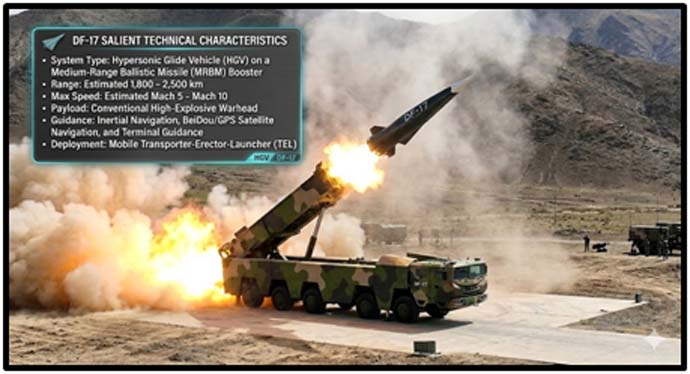
To understand why India is racing against the clock, we must look across the Himalayas. China saw this missile-centric future coming over a decade ago and reorganized its entire military apparatus to master it. In 2015, Beijing enacted a massive military reform, elevating its Second Artillery Corps to an independent, full-fledged service branch: the People’s Liberation Army Rocket Force (PLARF). This wasn’t just a rebranding; it was a fundamental shift in how China plans to fight. By centralizing its nuclear and conventional missile capabilities under one unified command, the PLARF has achieved devastatingly fast response times and unparalleled operational synergy. Today, the PLA Rocket Force commands an arsenal of thousands of ballistic and cruise missiles. They have fielded terrifyingly advanced platforms like the DF-21D and DF-26 “Carrier Killers,” designed to sink American warships from thousands of miles away, alongside the DF-17 hypersonic glide vehicle, which evades traditional radar. Its primary mission is Anti-Access/Area Denial —essentially creating a massive “no-go” zone in the Indo-Pacific that can obliterate enemy airbases before a war even officially begins. For China, the PLARF is both a psychological weapon to intimidate neighbours and the actual spearhead of any future invasion. By mastering the art of the massive, coordinated missile salvo, China has set a dangerous new gold standard that India cannot afford to ignore.
India’s Strategic Nightmare
India’s security calculus is uniquely complex and unforgiving: a continuous, active two-front threat from an expansionist China and an unstable Pakistan. Across the Himalayas, China’s Western Theatre Command has explicitly deployed elements of the PLARF, positioning an intimidating array of conventional solid-fuelled missiles aimed squarely at Indian forward airbases, logistics choke points, and communication nodes in Ladakh and Arunachal Pradesh. On the western front, Pakistan relies heavily on a wide spectrum of ballistic missiles—ranging from the tactical ‘Nasr’ to the longer-range ‘Shaheen’ series—specifically designed to offset India’s superior conventional army and quickly lower the threshold for nuclear war. Pakistan’s current missile doctrine shows a distinct evolution. For decades, the focus was purely on nuclear parity using the ASFC. As of 2025–2026, the establishment of the Army Rocket Force Command and the rapid unveiling of the supersonic Fatah-III missile indicate a major pivot toward building a robust, highly mobile conventional strike capability that can be utilized in high-intensity regional conflicts without risking immediate nuclear escalation.
India’s Fragmented Firepower
Over the past two decades, India’s Defence Research and Development Organisation has been successful in building a formidable and largely indigenous arsenal. While the weapons themselves are world-class, handing them out piecemeal to the Army, Navy, and Air Force creates major operational challenges.
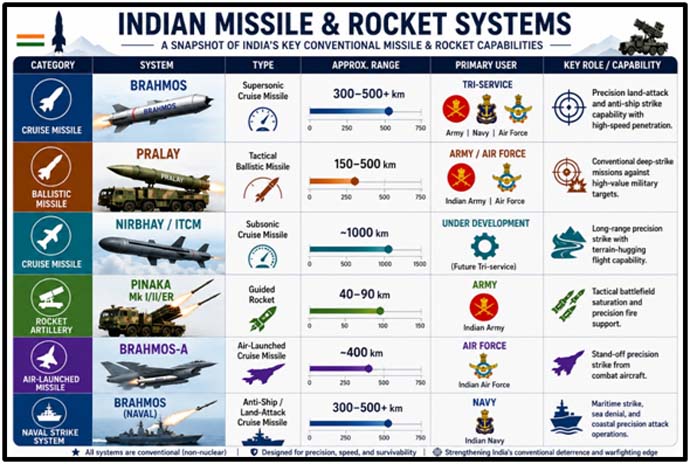
The most critical casualty of this fragmentation is time. Modern precision warfare relies on compressing the “sensor-to-shooter loop.” If a high-altitude surveillance drone spots a fleeting, high-value target—like a mobile missile launcher creeping out of a tunnel—that data needs to reach a firing unit in seconds. But if the drone belongs to the Air Force, and the closest, most suitable missile battery belongs to the Army, cross-service bureaucratic delays and incompatible communication networks mean the target will likely escape before the order to fire is even given. Furthermore, this siloed approach is a logistical nightmare. When each Service writes its own requirements and buys its own weapons, the military misses out on price discovery, shared maintenance facilities, and unified training protocols. We end up paying three times the administrative cost for what is essentially a single operational mission.
Why a Rocket Force Just Makes Sense
Creating an IRF isn’t just about shuffling organizational charts; it is about fundamentally upgrading the lethality of how India fights. Here is why it makes strategic sense:
- Coercive Credibility and Strategic Deterrence. The operationalization of a centralized, hyper-responsive IRF would fundamentally alter the strategic calculus of potential adversaries. The capacity to decisively neutralize critical economic nodes and military infrastructure within a severely compressed time window following a kinetic incursion serves as a profound disincentive to armed conflict. This solidifies a robust paradigm of deterrence by denial—convincing adversarial leadership that a decisive military victory is physically unattainable. Furthermore, it enforces a strategy of cost imposition, compelling adversaries to divert fiscal resources towards complex ballistic missile defence architectures.
- Avoiding the Nuclear Trap When geopolitical tensions spike, policymakers desperately need military options that sit somewhere between “doing nothing” and “launching nukes.” A dedicated conventional Rocket Force allows India to strike punishingly hard without crossing the nuclear threshold. By keeping conventional tactical missiles strictly separate from our nuclear-armed Strategic Forces Command, we prevent deadly miscalculations. During Op Sindoor, India’s strikes were devastating but clearly conventional, successfully calling the adversary’s nuclear bluff without triggering an Armageddon.
- The Economics of Destruction A barrage of precision missiles costs a fraction of that and incurs zero risk to human life. Missiles offer a highly cost-effective way to pulverise enemy defences on day one, saving our expensive, hard-to-replace fighter fleets for the dynamic, complex missions that require human judgement. By letting the IRF shoulder the heavy burden of destroying static, heavily defended targets like radar stations, bridges, and ammunition dumps, the Air component can focus its finite resources on what it does best: securing air superiority, executing dynamic air-to-air combat, and hunting unpredictable, moving targets.
Building the Force: A Pragmatic Blueprint
We don’t need the bureaucratic nightmare and massive overhead of creating a completely new, fourth branch of the military. Instead, the IRF should be structured as a lean, joint command directly under the Chief of Defence Staff. At the apex, an Integrated Targeting Organisation would act as the brain of the operation. Utilising Artificial Intelligence and big data, it would constantly process satellite imagery, drone feeds, and cyber intelligence, automatically matching identified enemy targets with the best available missile platform to destroy them instantly.
The actual kinetic fighting could be handled by three geographically aligned operational structures:
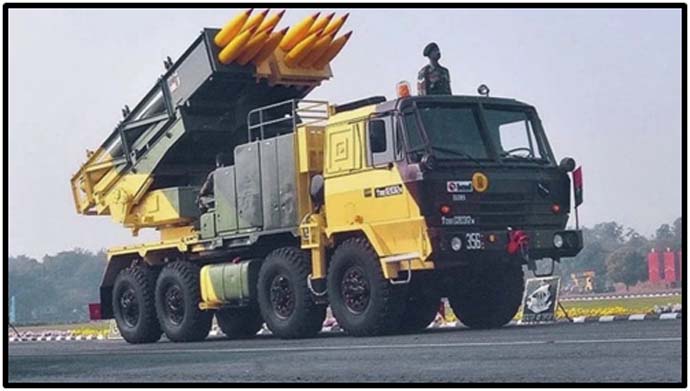
- Northern Rocket Command: Specially focused on the freezing, rugged terrain of the Himalayas, utilizing highly mobile “shoot-and-scoot” systems like the Pralay missile and Pinaka Rocket Systems that can fire and relocate before enemy counter-battery fire arrives.
- Western Rocket Command: Tasked with massing devastating fires across the plains and deserts to disrupt advancing enemy armour formations and blind radar networks deep within hostile territory.
- Maritime Rocket Command: Armed with long-range coastal defence missiles integrated with naval sensors to secure India’s waters, projecting an impenetrable anti-ship bubble over the Bay of Bengal and the Arabian Sea.
ISR and Space Integration Wing
An effective Rocket Force cannot operate solely on the strength of missiles and launch platforms; it must be supported by a highly sophisticated Intelligence, Surveillance, and Reconnaissance network capable of providing real-time battlefield awareness. Modern precision strike warfare depends fundamentally on accurate targeting information, rapid data processing, and continuous monitoring of enemy movements. India would therefore need to integrate military satellites, long-endurance surveillance drones with multiple payloads, battlefield surveillance systems, AI-enabled targeting networks, and secure, hardened communication infrastructure into the operational framework of the Rocket Force. Satellites would provide strategic surveillance, navigation, and target tracking across multiple theatres, while drones and battlefield sensors would supply real-time intelligence regarding troop concentrations, logistics hubs, radar systems, and missile deployments. Artificial intelligence would further enhance operational efficiency by assisting in target prioritisation, trajectory optimisation, and rapid decision-making during high-intensity conflict. Equally important would-be secure communication systems capable of protecting missile operations from cyber-attacks, electronic warfare, and signal interception. Recent conflicts such as the Russia–Ukraine War and the ongoing Gulf wars have clearly demonstrated that modern missile warfare is ultimately information warfare, where battlefield dominance increasingly depends on the ability to detect, process, and strike targets faster than the adversary. However, operational brilliance is hollow without kinetic endurance. This overarching architecture must be supported by an impenetrable logistical triad: subterranean hardened facilities for absolute survivability, agile mobile-reload platforms for rapid turnaround, and highly resilient supply networks. This ensures the IRF can sustain a relentless, punishing tempo of fire—guaranteeing that India’s standoff dominance never degrades during a protracted, high-intensity conflict.
The Pushback: Why Some Say “No”
Of course, a shakeup of this magnitude faces fierce, entrenched resistance. The Indian Air Force has historically been sceptical, invoking the doctrine of the “indivisibility of aerospace power.” They fear that a massive capital investment in a new missile command will divert precious funds away from the desperately needed modernisation of India’s combat aircraft fleet, which is already struggling with depleted squadron numbers. The argument that a missile is a single-use asset, while a fighter jet is a reusable platform capable of flying several diverse missions over its lifespan is often justified in seminars and articles.
There is also the persistent “ambiguity dilemma” raised by strategic scholars. Sceptics worry that in the chaos and fog of war, a paranoid adversary might mistake an incoming conventional ballistic missile from the IRF for a pre-emptive nuclear strike, triggering a catastrophic, world-ending escalation. Finally, in India’s complex democratic and bureaucratic setup, getting the Army, Navy, and Air Force to seamlessly share their intelligence, budgets, and targeting radars without debilitating turf wars is viewed by many as a monumental, perhaps impossible, challenge.
The Bottom Line: Adapting to the Inevitable
The shift toward high-speed, missile-heavy warfare isn’t a passing military trend or a futuristic theory pondered in war colleges; it is the inescapable, brutal reality of modern-day combat. Operation Sindoor proved beyond a doubt that India has the indigenous technological prowess, the political will, and the strategic maturity to fight and decisively win high-stakes, non-contact wars. But world-class technology means very little if it is throttled by outdated bureaucracy and territorial squabbles between the military branches. While the Air Force’s fears regarding shrinking budgets and the strategic community’s concerns about escalation dynamics are highly valid and must be carefully managed, the cost of falling behind the curve is existential. Clinging to legacy military structures out of a sense of tradition or institutional turf protection is a luxury that India, surrounded by hostile neighbours, can no longer afford. By combining:
- rapid response,
- deep precision strike capability,
- survivability,
- operational flexibility,
- and cost-effective firepower,
India would gain the ability to respond decisively to future conflicts without immediate reliance on nuclear escalation or prolonged conventional mobilisation. In a future two-front scenario, the opening hours will not be defined by romanticised tank battles in the desert or heroic dogfights in the skies over the Himalayas. They will be decided in minutes by the speed, accuracy, and mass of long-range standoff fires. Whoever dominates that space will dictate the terms of the war and the survival of the nation. By pulling its conventional missiles out of their isolated silos and consolidating them into a unified IRF, India won’t just be preparing to fight the next war—it will be building a deterrent so lethal, so swift, and so formidable that it might just prevent the next war altogether. It is time to let go of the 20th century and fully embrace the merciless, high-speed future of deterrence.
“We are looking at creating a Rocket Force.”
General Bipin Rawat, India’s First Chief of Defence Staff
(September 2021)
ABOUT THE AUTHOR
 Lt Gen Tarun Chawla, was commissioned into the Regiment of Artillery in Jun 1984. He has served with the United Nations Mission in Liberia and has been an instructor at the College of Defence Management at Secunderabad. The officer has commanded an Artillery Brigade in the LC Sector in J&K, and an Artillery Division as part of Army’s Western Command. He was the Director General Financial Planning, prior to assuming the role of Director General of Artillery.